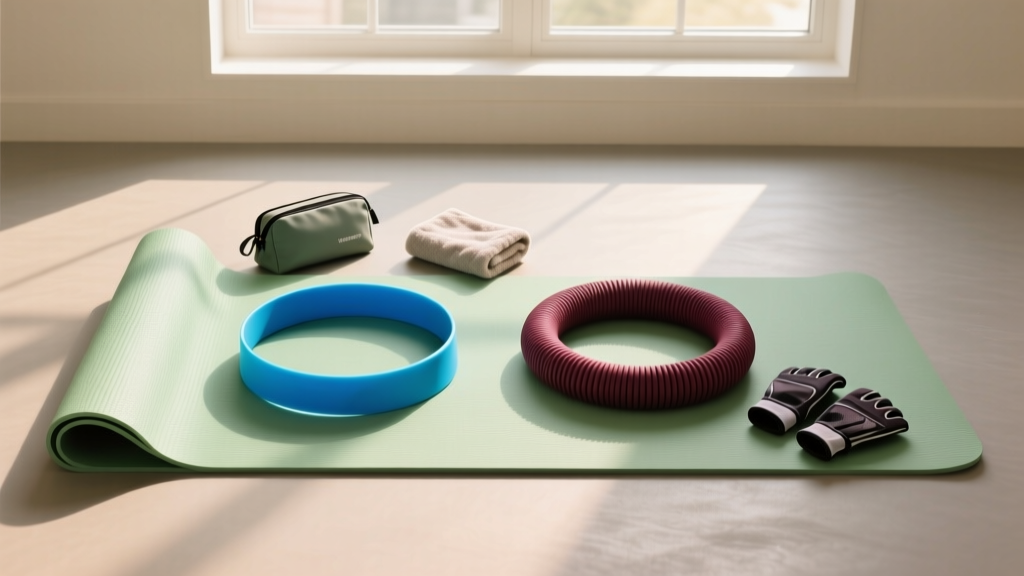
How to Maintain Your Gruper Yoga Mat & Pilates Gear
Maximize the lifespan of your Pilates gear. Learn expert maintenance tips for your Gruper yoga mat, magic circles, and resistance bands to prevent wear.

The True Cost of Neglected Pilates Accessories
Pilates is a discipline of precision, and the equipment you use must reflect that same standard. Yet, a surprising number of practitioners and studio owners treat their accessories as afterthoughts once the workout ends. In 2026, with premium Pilates gear prices rising—a high-quality reformer carriage or a specialized mat can easily exceed $120—understanding the material science behind your equipment is no longer optional; it is a financial necessity.
Neglecting maintenance doesn't just lead to aesthetic degradation; it fundamentally alters the biomechanical feedback of your gear. A degraded Pilates ring loses its tensile resistance, and a clogged mat loses the micro-suction required for stability during advanced roll-overs. This guide provides a rigorous, material-specific maintenance framework for your essential Pilates accessories, with a deep dive into caring for the highly sought-after Gruper yoga mat.
Deep Dive: Maintaining Your Gruper Yoga Mat
Whether you refer to it as a Gruper yoga mat, a high-traction gripper mat, or a polyurethane (PU) performance mat, the underlying technology is the same. These mats typically feature a 1.5mm to 2mm open-cell PU top layer bonded to a 3mm to 5mm natural rubber base. The 'grip' you experience is actually a micro-suction effect created by the open pores of the PU layer.
The Sebum and Sweat Breakdown
During an intense Pilates mat session, your body releases sebum (skin oils) and sweat. While sweat evaporates, sebum and the salts from your skin become trapped in the open-cell pores of the Gruper mat. Over time, this lipid buildup clogs the pores, effectively sealing the mat and destroying its signature gripper properties. Furthermore, the natural rubber base is highly susceptible to oxidative degradation when exposed to the acidic pH of human sweat over prolonged periods.
⚠️ Critical Material Warning: Never clean your Gruper or any natural rubber/PU mat with essential oils (like tea tree, lavender, or eucalyptus). According to material safety guidelines highlighted by Yoga Journal, essential oils act as solvents that break down the molecular bonds of natural rubber, causing the mat to flake, crumble, and lose its structural integrity within months.The 3-Step Deep Clean Protocol
To maintain the lifespan of your Gruper yoga mat (which should last 3 to 5 years with proper care), implement this specific cleaning routine:
- The Daily Wipe (Post-Session): Use a microfiber cloth lightly dampened with distilled water. Avoid tap water, as the chlorine and trace minerals can leave a micro-film on the PU layer. Wipe the mat in circular motions to lift surface sebum from the pores.
- The Weekly Deep Clean: Create a solution of 3 parts distilled water to 1 part witch hazel (alcohol-free). Witch hazel is a mild astringent that cuts through body oils without degrading the rubber base. Spray lightly and wipe with a clean, lint-free cloth.
- The Monthly Pore Unclogging: If your mat begins to lose its grip, the pores are clogged. Use a pH-balanced, specialized PU mat wash. Apply with a soft-bristled brush (like a horsehair shoe brush) using gentle, overlapping circles to physically dislodge trapped lipids from the open cells.
Pilates Accessories Care & Longevity Matrix
Beyond the mat, a comprehensive Pilates accessories guide requires understanding the distinct failure modes of every tool in your arsenal. The table below outlines the material composition and exact care requirements for standard Pilates accessories.
| Accessory | Primary Material | Primary Failure Mode | Recommended Cleaning Agent | Expected Lifespan |
|---|---|---|---|---|
| Gruper / Gripper Mat | PU Top / Natural Rubber Base | Pore clogging, rubber oxidation | Distilled water & witch hazel | 3–5 Years |
| Pilates Ring (Magic Circle) | Fiberglass Core / EVA Foam | Foam delamination, core snapping | Mild dish soap & damp cloth | 5–7 Years |
| Latex Loop Bands | Natural Latex / TPE | Micro-tears, ozone dry-rot | Rinse with water, air dry | 6–12 Months |
| Ankle Cuffs & Reformer Straps | Nylon Webbing / Neoprene | Fraying, carabiner gate fatigue | Antibacterial fabric spray | 2–4 Years |
Extending the Lifespan of the Magic Circle & Loop Bands
The Pilates ring, or Magic Circle, is deceptively durable but highly prone to user-error damage. The core is typically constructed from a flexible fiberglass composite, wrapped in a hard plastic sheath, and fitted with dual EVA (ethylene-vinyl acetate) foam pads.
Magic Circle Edge Cases and Failure Modes
The most common failure mode for a Pilates ring is foam delamination. This occurs when practitioners use harsh chemical disinfectants (like bleach or high-concentration isopropyl alcohol) that dry out the EVA foam, causing it to shrink and peel away from the adhesive backing. To prevent this, clean the foam pads only with a cloth dampened with water and a single drop of pH-neutral dish soap.
Structural Warning: Never step on the edge of the Pilates ring or drop heavy weights on it. While the fiberglass core is designed to withstand up to 150 lbs of lateral compressive force during inner-thigh squeezes, it has very low impact tolerance and will snap if subjected to sudden, localized point-loads.
Resistance and Loop Band Preservation
Latex loop bands are the workhorses of modern mat Pilates, but they are highly vulnerable to environmental factors. According to equipment maintenance standards outlined by the American Council on Exercise (ACE), latex degradation is accelerated by three main factors: UV exposure, heat, and ozone.
- The Talcum Powder Myth: Many older guides suggest dusting latex bands with baby powder to prevent sticking. However, modern talcum powders often contain moisture-wicking agents that can dry out the latex. Instead, if your bands are sticking, use a micro-dusting of 100% pure cornstarch or a specialized silicone-based rubber conditioner.
- Micro-Tear Inspection: Before every session, run your thumb and forefinger along the edge of the band. If you feel any nicks or micro-tears, discard the band immediately. A snapped latex band under tension can cause severe corneal or facial injuries.
Environmental Storage: The UV and Humidity Threat
How you store your Pilates accessories is just as critical as how you clean them. Natural rubber, latex, and EVA foam are all porous, organic-derived materials that react to their environment.
"The number one reason I see clients replacing their premium gripper mats and latex bands every year isn't overuse; it's improper storage. Rolling a damp mat traps moisture, leading to mold in the rubber base, while leaving bands near a sunlit window accelerates UV dry-rot by a factor of ten."
— Sarah Jenkins, Certified Master Pilates Instructor & Studio Owner
The Ideal Storage Framework
Implement this storage protocol to maximize your gear's ROI:
- The 24-Hour Drying Rule: Never roll up your Gruper yoga mat immediately after cleaning or a heavy sweat session. Hang it over a specialized mat drying rack or the back of a chair in a well-ventilated, shaded room for a minimum of 4 to 6 hours. Rolling a damp mat traps moisture against the rubber base, creating an ideal breeding ground for mildew.
- UV Shielding: Store all latex loop bands and PU mats in opaque, breathable cotton bags. Keep them away from direct sunlight and fluorescent studio lighting, both of which emit UV rays that break down polymer chains.
- Climate Control: Maintain your storage area at a stable temperature between 65°F and 75°F (18°C - 24°C) with a relative humidity of 40-50%. Extreme cold makes rubber brittle, while high humidity accelerates hydrolysis in PU layers.
Frequently Asked Questions
Can I use my Gruper yoga mat on a carpeted floor?
While you can, it is not recommended for longevity. The abrasive fibers of a carpet act like fine sandpaper against the natural rubber base of the mat. Over time, this friction will cause the rubber to pill and degrade prematurely. If you must practice on carpet, place a thin, smooth barrier (like a large canvas tarp or a dedicated low-pile rug pad) underneath your mat.
How do I remove white oxidation marks from my latex Pilates bands?
White, chalky marks on latex bands are a sign of 'blooming'—a natural process where insoluble waxes and antioxidants migrate to the surface of the rubber to protect it from ozone. This is normal and does not mean the band is defective. You can gently wipe the bloom away with a damp cloth and a tiny amount of silicone spray, but do not scrub aggressively, as this removes the protective layer.
Is it safe to put Pilates ankle cuffs in the washing machine?
Generally, no. The agitation and heat of a washing machine can warp the neoprene padding and weaken the structural integrity of the nylon stitching. Furthermore, the metal D-rings and carabiners can damage your machine's drum. Instead, hand-wash the cuffs in a basin with cold water and a mild antibacterial detergent, then air dry them completely before storing.
More gear to consider
All reviews
Exercise Ball Size Guide: Buying Tips and Grey Yoga Mat Pairings
Lululemon Yoga Mat Strap vs Pull-Up Bands: Sizing & Selection

Gaiam Cork Yoga Mat Care & Exercise Ball Size Guide

Manduka GRP Adapt Yoga Mat vs Liforme: Grip & Thickness Tested
Foam Roller Density vs. Yoga Mat Point Therapy: Head-to-Head