Is WellFit a Good Treadmill Brand? Motor HP Guide
Is WellFit a good treadmill brand? We analyze WellFit's motor specs, CHP vs Peak HP marketing, and compare them to premium brands for 2026 buyers.

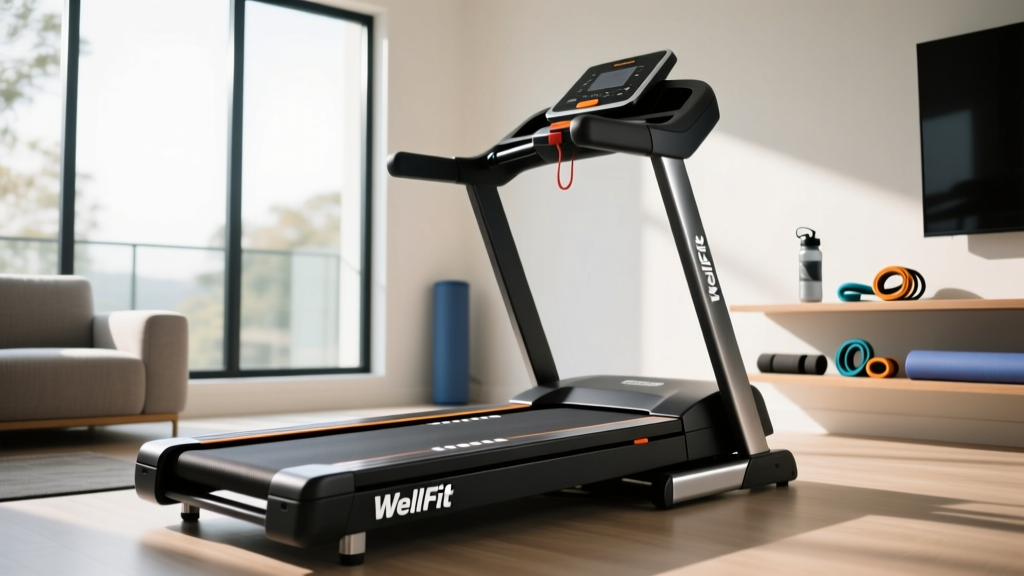
When outfitting a home gym in 2026, budget-conscious buyers frequently encounter the WellFit name on major retail platforms. With price tags hovering between $250 and $500, these machines look incredibly appealing on paper. But is WellFit a good treadmill brand? The answer hinges almost entirely on one critical component: the motor. While WellFit offers excellent value for specific use cases, understanding how their motor sizes and horsepower ratings compare to industry standards is vital before you invest your money.
This comprehensive treadmill motor size and horsepower guide uses WellFit as a primary case study to decode the confusing world of fitness equipment marketing. We will break down Continuous Horsepower (CHP) versus Peak HP, analyze real-world failure modes of budget motors, and provide a definitive matrix to help you match motor size to your specific biomechanical needs.
Buyer Beware: The Horsepower Marketing TrapMany budget treadmill brands, including some WellFit models, advertise '3.25 HP' or '4.0 HP' on their boxes. This is almost always Peak HP—the maximum output the motor can hit for a fraction of a second before tripping a breaker. It does not reflect the sustained power required for a 30-minute run. Always look for the CHP (Continuous Horsepower) rating in the fine print.
The Horsepower Illusion: Peak HP vs. CHP Explained
To accurately evaluate any fitness brand, you must first understand the metric by which treadmill motors are measured. According to the testing standards referenced by Consumer Reports, the treadmill industry relies on two distinct horsepower metrics, and confusing them is the most common mistake first-time buyers make.
Peak Horsepower (Peak HP)
Peak HP measures the absolute maximum output the motor can achieve under zero load or for a fleeting microsecond. Budget manufacturers love this number because it looks impressive on a spec sheet. A WellFit treadmill might advertise a 3.5 Peak HP motor, leading consumers to believe they are getting a commercial-grade machine. In reality, a 3.5 Peak HP motor often translates to a mere 1.5 or 1.75 CHP.
Continuous Horsepower (CHP)
CHP is the true measure of a treadmill's capability. It represents the power the motor can sustain indefinitely during a standard workout without overheating or experiencing voltage drop. When premium brands like Sole or NordicTrack advertise a 3.0 CHP motor, they are guaranteeing that the motor can handle the continuous friction and weight of a runner over long distances. As noted in the Runner's World Treadmill Buying Guide, CHP is the only metric serious runners should consider when evaluating belt consistency and motor longevity.
Inside the WellFit Motor Housing: What Are You Actually Getting?
So, is WellFit a good treadmill brand from a purely mechanical standpoint? To answer this, we have to look at the hardware inside their most popular folding models. Most WellFit treadmills in the $300 to $450 range utilize a brushed DC (Direct Current) motor delivering between 1.5 and 1.75 CHP, despite the higher Peak HP numbers printed on the box.
Brushed DC motors are cheaper to manufacture and rely on physical carbon brushes to conduct electricity to the spinning armature. Over time, these brushes wear down, generating friction and heat. While this is standard for entry-level treadmills, it dictates the machine's lifespan and user weight limits.
- The Pros: WellFit motors are highly energy-efficient for low-impact walking. They draw minimal amperage from standard 120V household outlets and keep the machine's overall weight low, making the treadmill easy to fold and move.
- The Cons: They lack the heavy-duty flywheels and brushless torque required to maintain belt speed when a heavier user's foot strikes the deck. This leads to 'stiction'—a micro-hesitation in the belt that can cause joint discomfort over time.
The 2026 Motor Sizing Matrix: Matching HP to Your Stride
Selecting the right motor size is not just about speed; it is a calculation involving user weight, stride impact, and workout duration. Use the matrix below to determine if a WellFit motor (typically 1.5 - 1.75 CHP) aligns with your fitness profile, or if you need to step up to a premium brand.
| User Profile | Weight Range | Minimum CHP Required | Is WellFit Suitable? |
|---|---|---|---|
| Light Walker | Under 150 lbs | 1.5 CHP | Yes (Excellent fit) |
| Power Walker / Light Jogger | 150 - 190 lbs | 2.0 - 2.5 CHP | Borderline (May experience belt lag) |
| Daily Runner (5K - 10K) | Any Weight | 3.0 CHP | No (Risk of thermal shutoff) |
| Heavy User / Sprinter | 220+ lbs | 3.5 - 4.0 CHP | No (Will void warranty) |
Real-World Failure Modes: When Undersized Motors Quit
When a user exceeds the CHP limitations of a budget treadmill motor, the machine does not always break immediately. Instead, it suffers from a cascade of mechanical and electrical failures. Understanding these edge cases is crucial for anyone researching treadmill motor size guides.
1. PWM Controller Burnout
The Pulse Width Modulation (PWM) controller is the circuit board that regulates power from your wall outlet to the DC motor. When a 200 lb runner uses a 1.5 CHP WellFit motor at 7 mph, the motor demands more amperage than it is designed to handle. The PWM controller works in overdrive to supply this current, generating immense heat. Over a few months, the solder joints on the board can melt or the capacitors can blow, resulting in a treadmill that turns on but refuses to move the belt.
2. Belt Stiction and Deck Friction
A motor lacking sufficient torque cannot instantly overcome the static friction of your body weight pressing down on the MDF deck. This results in 'stiction'—a micro-second hesitation of the belt every time your foot lands. While you might not consciously notice it, your knees and hips absorb this irregular deceleration, which can lead to joint inflammation over time.
3. Thermal Overload Shutoffs
Most modern DC motors are equipped with a thermal overload switch to prevent fires. If you attempt a 45-minute tempo run on a WellFit treadmill with a 1.75 CHP motor, the internal temperature of the motor housing will eventually cross the safety threshold (usually around 140°F). The machine will abruptly stop, display an error code (often E02 or E05), and refuse to restart until it cools down for 30 to 60 minutes.
Head-to-Head: WellFit vs. Industry Standards
To provide a complete picture of the 2026 cardio equipment market, we must compare WellFit's motor offerings against established mid-range and premium competitors. This comparison highlights the trade-off between upfront cost and long-term motor reliability.
| Brand / Model | Motor Spec (CHP) | Avg. Price (2026) | Motor Warranty |
|---|---|---|---|
| WellFit (Standard Folding) | 1.5 - 1.75 CHP (Advertised as 3.0+ Peak) | $299 - $449 | 1 Year Limited |
| Horizon T101 | 2.5 CHP | $599 - $699 | Lifetime |
| Sole F63 | 3.0 CHP | $799 - $999 | Lifetime |
As the data illustrates, the price gap between a WellFit and a Horizon T101 is roughly $250. However, that $250 buys you an extra 0.75 to 1.0 CHP, a heavier flywheel for smoother momentum, and a lifetime motor warranty that WellFit simply does not offer.
Final Verdict: Is WellFit a Good Treadmill Brand for You?
Ultimately, answering the question 'is WellFit a good treadmill brand' requires defining your specific use case. WellFit is not a 'bad' brand; rather, it is a highly specialized brand that excels in a very narrow lane.
The Bottom LineIf you weigh under 160 pounds and plan to use the treadmill primarily for walking, light jogging, or under-desk pacing at speeds below 4.5 mph, a WellFit treadmill is an excellent, space-saving, and budget-friendly choice. Their 1.5 CHP motors are perfectly adequate for low-impact, low-speed friction.
However, if you are training for a 10K, weigh over 190 pounds, or plan to do high-intensity interval training (HIIT), WellFit's motors will struggle with torque and heat dissipation. For runners and heavy users, investing in a 3.0 CHP machine from Sole or NordicTrack is non-negotiable to protect both your joints and your wallet.
Frequently Asked Questions
Can I upgrade the motor on a WellFit treadmill later?
No. Treadmill motors are matched to the specific PWM controller and wiring harness of the machine. Attempting to retrofit a higher CHP motor will likely fry the lower-voltage control board and void any remaining warranty.
Does treadmill motor size affect electricity bills?
Ironically, an undersized motor can cost more in electricity over time. If a 1.5 CHP motor is constantly running at 95% capacity to move a heavier user, it draws maximum amperage and generates excess heat. A 3.0 CHP motor handling the same user will operate at 50% capacity, running cooler and often more efficiently.
How do I maintain a budget DC motor to extend its life?
The single best way to protect a smaller WellFit motor is to reduce deck friction. Lubricate the belt with 100% silicone treadmill lubricant every 30 to 45 days, and ensure the belt is properly tensioned so it does not slip, which forces the motor to work harder to catch up.
More gear to consider
All reviews
Folding Treadmill for Small Spaces Review: Skip the Water Treadmill

Treadmill Motor Size Guide: Assault Treadmill vs Motorized
Treadmill Motor Guide: How Fast is 7 on a Treadmill & HP Needs
Treadmill Levels vs. Ellipticals: 2026 Noise Comparison
Elliptical vs Treadmill: Home Cardio & Doggie Treadmills for Small Dogs