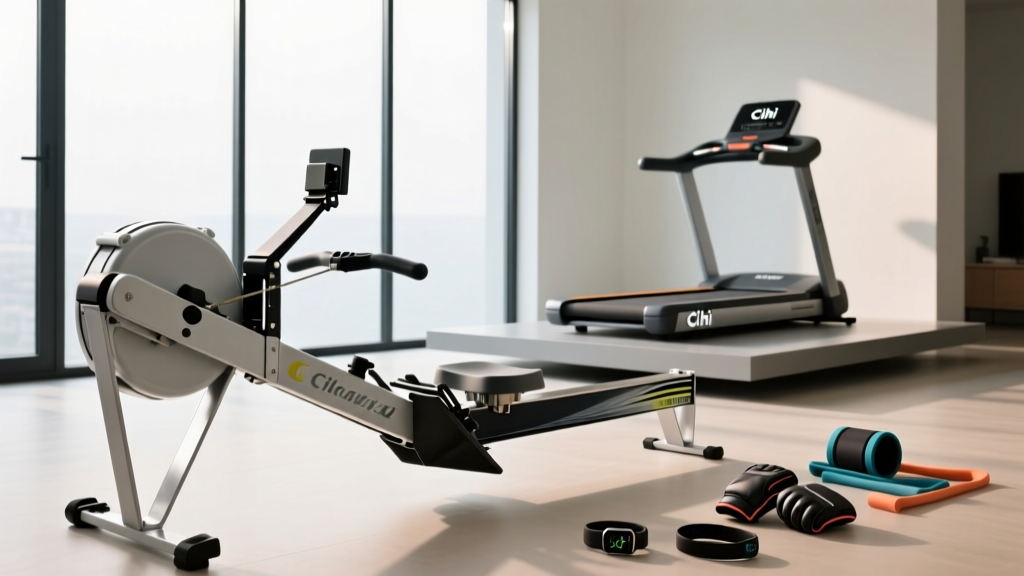
Ciihi Treadmill Upgrade: Rowing Machine Buying Guide & Technique
Upgrading from a Ciihi treadmill? Discover our 2026 rowing machine buying guide, mechanical troubleshooting tips, and expert technique corrections.

The Home Gym Evolution: Outgrowing the Budget Walking Pad
The Ciihi treadmill has become a ubiquitous entry point for home cardio. Typically priced between $169 and $229, these compact walking pads feature a 2.25 HP peak motor and a 40-inch run deck, making them ideal for under-desk stepping and light jogging. However, as your cardiovascular baseline improves, the limitations of a budget treadmill become glaringly apparent. The short deck restricts a natural running stride, the motor often bogs down or throws E01/E02 communication errors under sustained incline loads, and the repetitive impact begins to aggravate the knees and shins.
If you are troubleshooting chronic joint pain or simply hitting a caloric-burn plateau on your Ciihi treadmill, the most logical upgrade path is the rowing machine. Rowing recruits 86% of the body's musculature and offers a zero-impact, high-yield cardiovascular stimulus. This guide serves as your definitive transition manual: we will cover the 2026 rowing machine buying landscape, mechanical troubleshooting, and the critical technique mistakes that derail beginner rowers.
Comparing the Experience: Ciihi Treadmill vs. Concept2 RowErg
Before diving into the buying guide, it is vital to understand the physiological and mechanical shift you are making. Below is a direct comparison between the standard budget treadmill experience and the gold-standard indoor rower.
| Feature | Ciihi Treadmill (Budget Walking Pad) | Concept2 RowErg (Standard Rower) |
|---|---|---|
| Price Range (2026) | $169 - $229 | $1,195 - $1,295 |
| Muscle Recruitment | Lower body dominant (calves, quads) | Full body (86% of muscles: legs, core, back, arms) |
| Joint Impact | High (repetitive strike force on hard deck) | Zero (seated, fluid motion) |
| Common Error Codes | E01 (Motor), E02 (Sensor), E05 (Overcurrent) | N/A (Mechanical simplicity; PM5 monitor rarely fails) |
| Caloric Burn (150lb user, 30 min) | ~180 - 240 kcal (walking/light jog) | ~300 - 450 kcal (moderate to high intensity) |
The 2026 Rowing Machine Buying Guide
When upgrading from a motorized treadmill, you are trading electronic complexity for mechanical resistance. Your buying decision should hinge on three primary factors: resistance type, footprint, and telemetry.
1. Resistance Types: Air vs. Magnetic vs. Water
- Air Resistance (e.g., Concept2 RowErg, Assault AirRower): The flywheel is driven by a fan. The harder you pull, the more resistance it generates. This provides an infinite, dynamic curve that perfectly mimics water. Best for: Serious athletes, CrossFitters, and data-driven users.
- Magnetic Resistance (e.g., Sunny Health & Fitness SF-RW5515, Hydrow): Uses electromagnets to create drag on a metal flywheel. These are nearly silent and offer a smoother, albeit slightly less organic, stroke. Best for: Apartment dwellers and users who want interactive, screen-based classes.
- Water Resistance (e.g., WaterRower Natural Oak): A paddle spins inside a polycarbonate tank of water. It offers a beautiful aesthetic and a soothing 'swoosh' sound. Best for: Living room placement and users who prioritize sensory feedback over digital metrics.
2. Rail Length and Footprint Constraints
Unlike the Ciihi treadmill, which can slide under a bed, rowers require dedicated floor space. A standard air rower measures roughly 96 inches long and 24 inches wide. If you are over 6'2", you must verify the machine's maximum inseam capacity. The Concept2 RowErg accommodates up to a 38-inch inseam, while extended rails are required for taller athletes. Water rowers can typically be stood upright on their end (taking up a 22" x 22" footprint) when not in use.
Expert Buying Tip: Ignore the physical 'damper' setting when comparing machines; look at the Drag Factor. A drag factor of 110-130 mimics the feel of a sleek racing shell on water. Many budget magnetic rowers fail to disclose their max drag factor, leading to a 'mushy' feel at high intensities.Troubleshooting Common Rowing Machine Maintenance
While rowers lack the fragile motherboards and drive belts of budget treadmills, they are not maintenance-free. Here is how to troubleshoot the three most common mechanical failures.
- Chain Sag and 'Skipping': Over time, the steel chain stretches and loses lubrication, causing it to rattle or skip over the sprocket. The Fix: Wipe the chain with a paper towel and apply a teaspoon of 3-in-One oil or purified mineral oil. Never use WD-40, as it strips existing lubricants and attracts dust. According to the Concept2 maintenance manual, this should be done every 50 hours of use.
- Handle Fails to Retract (Bungee Failure): If the handle slowly creeps back to the cage or fails to return entirely, the internal elastic bungee cord has lost tension or snapped. The Fix: This requires opening the flywheel casing to adjust the tension knot or replace the bungee cord (a $10 part that takes 15 minutes to install).
- Rail Friction and 'Stuttering': If the seat wheels stutter during the recovery phase, the aluminum or steel rail has accumulated microscopic debris and skin oils. The Fix: Wipe the monorail down with isopropyl alcohol and a non-abrasive Scotch-Brite pad every two weeks to maintain a glass-smooth glide.
Technique Mistakes: Troubleshooting the Human Engine
The most significant hurdle when switching from a treadmill to a rower is the learning curve. On a treadmill, the belt dictates your pace; on a rower, you are the engine. Poor technique not only caps your caloric output but invites lower back injury. The Mayo Clinic emphasizes that proper form in low-impact aerobic exercise is critical to preventing lumbar strain.
The Power Distribution Myth
Beginners often treat the rower like a seated bicep curl, yanking the handle with their arms. The correct power distribution for the 'Drive' phase is:
- 60% Legs: An explosive push through the heels.
- 30% Core: A controlled hinge of the hips backward.
- 10% Arms: A simple draw of the handle to the lower sternum.
Three Fatal Form Errors (And How to Fix Them)
Mistake 1: 'Shooting the Slide'
The Error: Your legs push the seat backward, but your handle barely moves. This happens when the core disengages, transferring the leg power into hyperextending the lower back rather than moving the chain.
The Fix: Practice 'Legs-Only' rowing. Keep your torso locked in a slight forward hinge and arms fully extended. Push with the legs until they are nearly straight, ensuring the handle moves in perfect unison with the seat.
Mistake 2: Rushing the Recovery
The Error: You frantically slide forward to catch the next stroke, resulting in a 1:1 ratio of drive-to-recovery time. This spikes your heart rate without generating actual wattage and ruins your rhythm.
The Fix: Adopt a 1:2 ratio. The drive should be a powerful, 1-second explosion. The recovery (arms away, hinge forward, slide to the catch) should be a controlled, 2-second reset. As noted in Concept2's official technique guide, the recovery is where you catch your breath and prepare for force application.
Mistake 3: The Damper at 10
The Error: Setting the side damper lever to 10, assuming it equates to 'maximum workout.' This is the rowing equivalent of riding a bicycle in the heaviest gear up a steep hill. It causes muscular fatigue in the quads and lats long before your cardiovascular system reaches its VO2 max.
The Fix: Set the damper between 3 and 5. This allows the flywheel to spin faster between strokes, closely simulating the hydrodynamics of a real boat and allowing for sustained, high-calorie-burn aerobic sessions.
Final Verdict: Making the Transition
Upgrading from a Ciihi treadmill to a rowing machine is a transition from passive, low-yield movement to active, full-body power generation. While the upfront cost of a quality air or water rower is significantly higher than a budget walking pad, the return on investment—measured in joint longevity, muscular endurance, and caloric density—is unmatched in the home gym space. Respect the learning curve, maintain your chain, and let the legs do the heavy lifting.
More gear to consider
All reviews
Curved Manual vs C70 Treadmill: Common Mistakes & Fixes
Planet Fitness Treadmill Screen: Home Feature Guide

Under-Desk Treadmill for Office Use Review: ProForm 6 RT Treadmill
Coin Operated Treadmill Comparison: Top Models & Features (2026)

Can You Log Treadmill Runs on Strava? Curved vs Motorized Fixes
