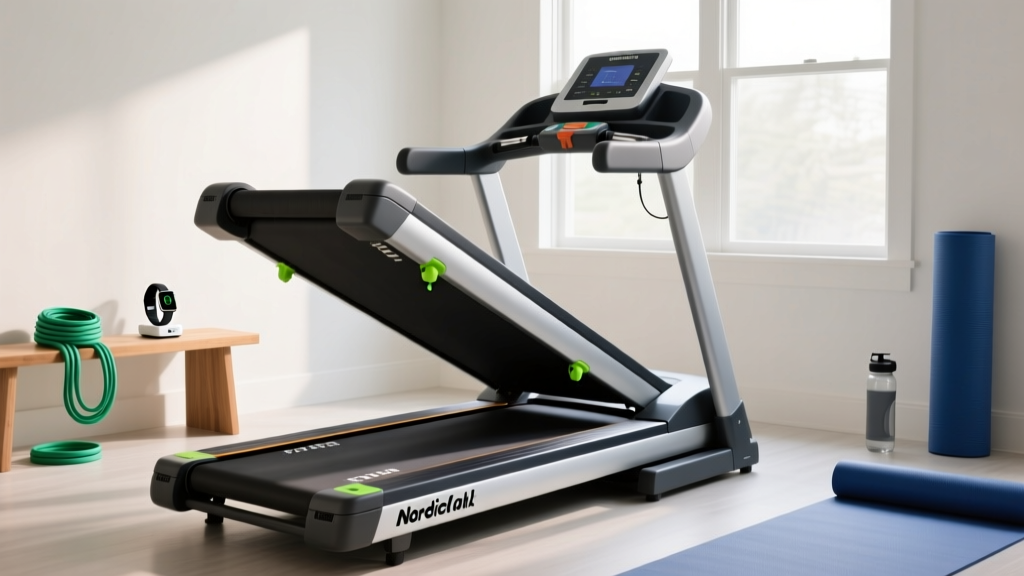
Weighted Vest Treadmill Workout vs Bikes: 2026 Market Trends
Analyze 2026 cardio market trends comparing the weighted vest treadmill workout boom against upright, recumbent, and spin bike sales and biomechanics.

Executive Summary: The 2026 Cardio Realignment
The home fitness equipment market in 2026 is undergoing a fascinating biomechanical realignment. For the past half-decade, connected cycling dominated the premium cardio space. However, recent consumer data indicates a massive pivot toward functional, load-bearing cardiovascular training. Specifically, the weighted vest treadmill workout—once a niche protocol reserved for military conditioning and ultramarathoners—has exploded into mainstream home fitness. This surge in 'indoor rucking' and loaded incline walking is directly disrupting the traditional stationary bike market. As a result, manufacturers of upright, recumbent, and spin bikes are being forced to defend their market share by highlighting joint preservation, localized muscular endurance, and specialized rehabilitation metrics.
Market Share Analysis: Weighted Walking vs. Stationary Bikes
According to the latest industry reports from the Health & Fitness Association, the cardio equipment sector has seen a distinct shift in consumer spending priorities. Buyers are increasingly prioritizing axial loading (bone-density-building impact) over zero-impact seated cycling. The table below illustrates the shifting market dynamics between loaded treadmill protocols and the three primary stationary bike categories.
| Equipment Category | 2024 Market Share (Cardio) | 2026 Projected Share | YoY Revenue Growth | Primary Consumer Driver |
|---|---|---|---|---|
| Treadmills (for Loaded/Incline Workouts) | 38% | 44% | +12.4% | Functional strength & bone density |
| Spin Bikes (Indoor Cycling) | 28% | 22% | -4.1% | High-intensity interval training (HIIT) |
| Recumbent Bikes | 14% | 16% | +6.8% | Active aging & lumbar rehabilitation |
| Upright Bikes | 12% | 8% | -9.5% | Budget-friendly general cardio |
Biomechanical Load: The Weighted Vest Treadmill Workout Advantage
Why is the weighted vest treadmill workout cannibalizing spin bike sales? The answer lies in endocrinology and osteology. A 2026 meta-analysis highlighted by the American College of Sports Medicine (ACSM) reinforces that axial loading is critical for maintaining bone mineral density (BMD) in adults over 35. Cycling, while excellent for cardiovascular VO2 max, provides zero osteogenic stimulus.
Metabolic & Biomechanical Comparison (60-Minute Session)
- Spin Bike (Vigorous, 90 RPM): ~8.5 METs | 600-750 kcal | Zero impact | No BMD stimulus.
- Weighted Vest Treadmill (15% Incline, 3.0 MPH, 20lb Vest): ~9.2 METs | 650-800 kcal | High impact | Significant BMD stimulus to lumbar spine and femoral neck.
Consumers are pairing heavy-duty treadmill decks (like the Sole F80 at $1,999 or the NordicTrack T Series 10 at $599) with low-profile weighted vests such as the Hyperwear Hyper Vest PRO ($179) or the 5.11 Tactical Plate Carrier ($120). This combination delivers a higher caloric burn and functional carryover to daily life than seated cycling, driving the 12.4% YoY growth in treadmill sales specifically marketed for incline loading.
Stationary Bike Segments: Upright, Recumbent, and Spin
Despite the loaded treadmill boom, the stationary bike market is not collapsing; it is fragmenting and specializing. To understand where bikes still win, we must break down the three distinct form factors.
1. Upright Bikes: The Steady Decline
The traditional upright bike—characterized by a small seat, vertical posture, and magnetic resistance (e.g., the Schwinn A10 at $399)—is experiencing a severe market contraction. Dropping to just 8% of the cardio market share in 2026, upright bikes are caught in a 'no-man's land.' They lack the aggressive, immersive geometry of a spin bike, and they do not offer the lumbar support of a recumbent. Furthermore, upright bikes fail to provide the posterior chain engagement that users now seek from a weighted vest treadmill workout. Manufacturers are phasing out standalone upright models in favor of hybrid dual-action air bikes or folding models for space-constrained apartments.
2. Recumbent Bikes: Niche Medical & Rehab Growth
Conversely, recumbent bikes are thriving in a highly specific, high-value niche. Driven by the 'silver economy' and physical therapy protocols, recumbent models like the Schwinn 270 ($899) and commercial-grade cross-trainers like the NuStep T4r ($4,200+) are seeing a 6.8% revenue bump.
Recumbent bikes are successfully defending their territory by leaning heavily into medical necessity, ergonomic seating, and low-impact active recovery.'When a patient presents with L4-L5 spinal stenosis or severe osteoarthritis in the knees, the axial loading of a weighted treadmill protocol is strictly contraindicated. The recumbent bike remains the undisputed gold standard for maintaining cardiovascular capacity without compromising joint integrity,' notes a 2025 clinical guideline from the National Strength and Conditioning Association (NSCA).
3. Spin Bikes: The Connected Plateau
The indoor cycling segment, led by the Peloton Bike+ ($2,495) and the Keiser M3i ($2,395), has hit a growth plateau. After years of pandemic-fueled hyper-growth, the spin bike market is contracting by 4.1% YoY. The issue is not product quality; Keiser's magnetic resistance and Peloton's software ecosystem remain industry-leading. The issue is consumer fatigue and the realization that exclusive seated cycling leads to tight hip flexors and weak glutes. Many former spin enthusiasts are now adopting a hybrid approach: using the spin bike 2 days a week for anaerobic threshold work, and utilizing a weighted vest treadmill workout 3 days a week for structural resilience and fat oxidation.
Consumer Spending & Equipment ROI in 2026
From a financial perspective, the barrier to entry for loaded treadmill walking is often lower than premium cycling. A high-quality, incline-capable treadmill capable of handling a 350-lb dynamic load (user + vest) costs between $1,200 and $2,500. A premium weighted vest adds $100 to $200. Total investment: ~$2,700.
In contrast, a commercial-grade spin bike with a smart screen and power meter (Watts) easily exceeds $2,800, not including mandatory monthly subscription fees for connected classes, which now average $44/month in 2026. The weighted vest treadmill workout requires no subscription, no proprietary shoes, and no digital ecosystem. This 'analog' appeal is resonating strongly with budget-conscious consumers who prefer free YouTube rucking guides over expensive monthly software lock-ins.
Future Projections: The Hybrid Home Gym
As we move through 2026, the market is not declaring a definitive 'winner' between loaded walking and cycling. Instead, we are witnessing the rise of the hybrid home gym. Consumers are increasingly purchasing modular equipment or splitting their budgets between a mid-tier incline treadmill for weighted rucking and a budget-friendly magnetic resistance bike for active recovery days. For retailers and manufacturers, the takeaway is clear: market your treadmills for their load-bearing, bone-building capabilities, and position your recumbent and spin bikes as specialized tools for joint preservation and anaerobic output.
More gear to consider
All reviews
Walking Pad vs Treadmill to Run: Complete Setup Guide

LifeSmart TM6500 Treadmill Setup & Motor Horsepower Guide

Does a Treadmill Use a Lot of Electricity? Belt Maintenance Impact
Walking Pad vs Treadmill: Choosing the Right Treadmill Tread (2026)

Space Planning: Used Treadmill vs Air Bike & Assault Bike