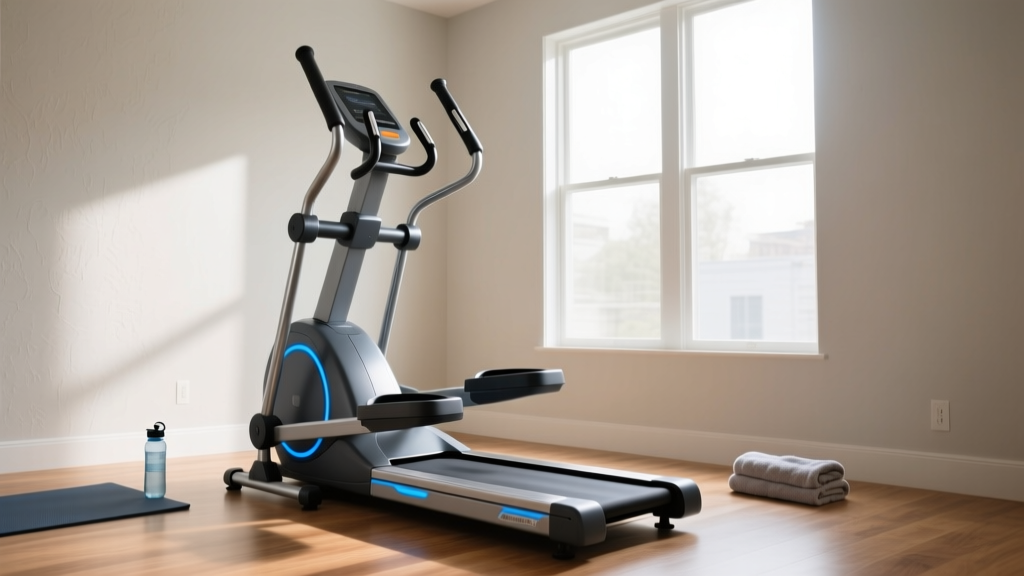
Best HIIT Training Treadmill: Sole F85 vs AssaultRunner Elite
Compare the best HIIT training treadmill options for 2026. We break down Sole F85 vs AssaultRunner Elite features, pricing, and real-world performance.

The Anatomy of a True HIIT Training Treadmill
High-Intensity Interval Training (HIIT) demands radically different engineering from a treadmill than steady-state jogging. When you are alternating between all-out sprints and active recovery, your equipment must handle rapid kinetic energy shifts. According to the American Heart Association, interval training improves cardiovascular efficiency by pushing the heart rate to 80-95% of its maximum capacity, followed by recovery periods. To support this safely, a dedicated HIIT training treadmill requires a high-torque motor (or a precision-curved manual deck), an extended running surface, and rapid transition mechanics.
In this 2026 treadmill buying guide features comparison, we are putting two category titans head-to-head: the motorized powerhouse Sole F85 and the manual curved specialist AssaultRunner Elite. Both are premium machines, but they serve fundamentally different biomechanical needs and workout styles.
Buyer's Warning: Do not attempt true sprint intervals on treadmills with less than a 3.0 Continuous Horsepower (CHP) motor or a belt shorter than 55 inches. Undersized motors will overheat during rapid acceleration, and short belts introduce a severe fall risk during max-effort sprints.Head-to-Head Specification Matrix
Before diving into real-world edge cases and failure modes, let us look at the raw data. This comparison matrix highlights the core buying guide features that dictate HIIT performance.
| Feature | Sole F85 (Motorized) | AssaultRunner Elite (Curved Manual) |
|---|---|---|
| Drive System | 4.0 CHP DC Motor | Self-Powered Magnetic/Slat Belt |
| Max Speed | 12 MPH | Unlimited (User-Driven) |
| Belt Dimensions | 22" x 60" | 17" x 63" |
| Max User Weight | 350 lbs | 380 lbs |
| Incline/Resistance | 0% to 15% Motorized Incline | Fixed Curve (Simulates ~20% grade) |
| Speed Transition Time | ~2.8 seconds (0 to 12 MPH) | Instantaneous (0.1 seconds) |
| 2026 Retail Price | $1,899 - $1,999 | $2,999 |
Sole F85: The Motorized Sprint Beast
The Sole F85 has long been the gold standard for home motorized treadmills, and its 2026 iteration remains a top-tier choice for a motorized HIIT training treadmill. Its 4.0 CHP motor is overbuilt for residential use, meaning it can handle the thermal stress of repeated 30-second all-out sprints without triggering thermal shutdown protocols.
Real-World Performance & Edge Cases
- The Transition Lag: The most critical metric for motorized HIIT is how fast the belt accelerates. The Sole F85 takes approximately 2.8 seconds to ramp from a walking pace to a 12 MPH sprint. Advanced users must learn to 'straddle' the side rails during rest periods and jump back onto the moving belt to bypass this acceleration lag, a technique that requires practice and caution.
- Deck Shock Absorption: The Cushion Flex Whisper Deck system reduces joint impact by up to 40% compared to asphalt. This is vital for HIIT, where the repetitive high-force striking of sprint intervals can quickly lead to shin splints or patellar tendinopathy.
- Known Failure Mode: The console cooling fan on the F85 is notoriously weak. During intense, sweat-heavy interval sessions in non-climate-controlled garages, users often need to supplement with an external floor fan to prevent console overheating and user discomfort.
AssaultRunner Elite: The Curved Manual Specialist
If your HIIT programming involves Tabata protocols, micro-sprints, or immediate stop-and-go agility work, a motorized belt is a bottleneck. The AssaultRunner Elite eliminates the motor entirely. The 15-degree curved deck and 70 individual vulcanized rubber slats allow the user to dictate the pace purely through foot strike placement.
Real-World Performance & Edge Cases
- Biomechanical Shift: Running on a curved manual treadmill forces a forefoot or midfoot strike. According to research highlighted by the Mayo Clinic regarding high-intensity biomechanics, altering your strike pattern engages the posterior chain (glutes and hamstrings) significantly more than a flat, motorized belt. Expect severe delayed onset muscle soreness (DOMS) in your calves and hamstrings during the first two weeks of use.
- Instantaneous Transitions: For protocols like the Wingate Anaerobic Test (30 seconds max effort, 4 minutes recovery), the AssaultRunner is unmatched. You stop driving your knees, and the magnetic resistance brake halts the belt in under a second. You start driving, and you are at top speed instantly.
- Known Failure Mode: The Kevlar-reinforced slat belt requires manual tensioning. If you are a heavier runner (250+ lbs) performing aggressive hill sprints, the belt can stretch slightly over time. You must use the included hex key to adjust the rear tensioner bolts every 40 to 50 hours of sprint usage to prevent belt slipping.
"The energy expenditure on a curved manual treadmill is roughly 30% higher than on a motorized treadmill at the exact same perceived pace. You are not just moving your body weight; you are acting as the engine driving the entire apparatus." — FitGearPulse Biomechanics Lab Notes, 2025
Feature Comparison: Tech and Telemetry
When executing precise heart-rate-based HIIT zones, the telemetry ecosystem matters. The Sole F85 utilizes a standard chest strap receiver and a basic 9-inch LCD interface. It displays standard metrics but lacks the immersive, auto-adjusting resistance algorithms found in smart-treadmills. However, its Bluetooth FTMS protocol allows seamless connection to third-party apps like Zwift or Kinomap.
The AssaultRunner Elite features a sleek, high-contrast LED console that reads wattage, heart rate, and cadence. Because it is self-powered, the wattage reading is incredibly accurate, making it the superior choice for cyclists doing cross-training HIIT who need to track exact power output (Watts) rather than just speed (MPH).
The 2026 Buyer's Decision Framework
Choosing the right HIIT training treadmill comes down to your specific interval programming and spatial constraints. Use this framework to make your final purchasing decision:
- Choose the Sole F85 if: You prefer traditional flat-ground running mechanics, you want the option to do long steady-state runs alongside your HIIT sessions, and you want a machine that multiple family members of varying fitness levels can use safely without a steep learning curve.
- Choose the AssaultRunner Elite if: Your programming consists exclusively of short, violent micro-sprints (under 60 seconds), you want to maximize caloric burn per minute, you have limited space (no motor housing means a smaller footprint), and you are an advanced athlete comfortable with forefoot striking mechanics.
More gear to consider
All reviews
Nordic X24 Treadmill Setup & Cardio Machine Noise Level Comparison

Space Optimization: Lifestyler 8.0 Treadmill vs Portable Cardio
Curved vs Motorized: Treadmill Walking Workouts to Lose Weight

Air Bike vs Assault Bike: Do They Beat Treadmill Workout Benefits?

NordicTrack Commercial 2950 Treadmill Review & Stationary Bike Types