
Weight Plate Trees & Vertical Dumbbell Storage: 2026 Guide
Compare the best weight plate storage trees and vertical dumbbell storage solutions for 2026. In-depth specs, safety tips, and space-saving layouts.

The Evolution of Home Gym Organization in 2026
As home gyms continue to evolve from makeshift garage setups into highly optimized training facilities, floor space has become the ultimate premium. In 2026, the focus of equipment storage has shifted entirely toward maximizing usable square footage for functional movement while maintaining strict safety standards. Two critical components of this spatial puzzle are the weight plate storage tree and vertical dumbbell storage systems. Leaving 45-pound bumper plates on the floor or sprawling 3-tier dumbbell racks across your lifting platform is no longer just an aesthetic issue; it is a tripping hazard and a barrier to effective training flow. This comprehensive buying guide breaks down the engineering, safety metrics, and spatial efficiency of the best plate trees and vertical dumbbell towers on the market.
The Engineering Behind Heavy-Duty Weight Plate Trees
Not all plate trees are created equal. The market is flooded with budget-friendly, thin-gauge steel trees that warp under the asymmetric load of a full set of Olympic plates. When evaluating a plate tree, you must look at three core engineering metrics: steel gauge, horn diameter, and base footprint.
Steel Gauge and Weld Penetration
For a freestanding tree holding upwards of 800 pounds, 11-gauge steel (0.120 inches thick) is the minimum acceptable standard. Budget models often use 14-gauge steel, which can bend at the weld joints when a user aggressively racks a 45-pound plate. Premium models, like those in the Rogue Fitness Monster Series, utilize 7-gauge or 11-gauge steel with reinforced gusset plates at the base-to-upright welds to prevent sheer stress fractures over time.
Horn Dimensions and UHMW Sleeves
Olympic plates require a 1.96-inch diameter horn. However, bare steel horns will quickly chew through the center inserts of urethane and crumb-rubber bumper plates. The best 2026 models feature UHMW (Ultra-High Molecular Weight) plastic sleeves over the steel horns. These sleeves reduce friction, eliminate the screeching sound of metal-on-metal, and preserve the lifespan of your expensive plate sets.
2026 Weight Plate Tree Comparison Matrix
Below is a data-driven comparison of the top freestanding and rack-mounted plate storage options available this year, factoring in load capacity, spatial footprint, and pricing.
| Model | Type | Steel Gauge | Max Capacity | Footprint | Est. Price |
|---|---|---|---|---|---|
| Rogue RM-4000 Monster Tree | Freestanding | 11-Gauge | 1,000+ lbs | 24' x 24' | $225 |
| Titan Fitness A-Frame Tree | Freestanding | 11-Gauge | 800 lbs | 30' x 24' | $149 |
| Rep Fitness PR-4000 Tree | Rack-Mounted | 11-Gauge | 600 lbs | 0' (Attaches to Rack) | $175 |
| BCC A-Frame Plate Tree | Freestanding | 14-Gauge | 500 lbs | 17' x 17' | $89 |
Expert Insight: If you own a power rack with integrated storage pins, avoid freestanding trees entirely. Rack-mounted trees lower the center of gravity of your entire rig, increasing stability and freeing up floor space.
Solving the Dumbbell Dilemma: Vertical Dumbbell Storage
While plate trees solve the barbell accessory problem, adjustable and fixed dumbbells present a unique spatial challenge. Traditional 3-tier dumbbell racks require a massive 4.5 to 6 square feet of floor space and force users to bend and twist to retrieve heavier pairs from the bottom tier. This is where vertical dumbbell storage becomes a game-changer for modern home gyms.
Vertical Towers vs. Traditional 3-Tier Racks
Vertical dumbbell storage systems, such as the Nuobell Vertical Stand or the PowerBlock Vertical Tower, stack the dumbbell handles upright or utilize a spiral footprint that occupies less than 1.5 square feet of floor space. This represents a 70% reduction in spatial footprint compared to a standard commercial 3-tier rack.
- Ergonomic Advantage: Vertical storage keeps the handles at waist-to-chest height, eliminating the lumbar strain associated with picking up 50+ pound dumbbells from a bottom rack tier.
- Adjustable Dumbbell Compatibility: Most vertical towers in 2026 are specifically engineered for the cradle dimensions of adjustable dumbbells (Nuobell, Bowflex 1090, PowerBlock Pro), securing the locking mechanisms so they do not disengage when stored upright.
- Weight Distribution: Because vertical towers have a smaller base, they rely on heavy-duty steel base plates (often exceeding 25 pounds themselves) to prevent tipping. Always ensure the tower is rated for the exact maximum weight of your dumbbell set.
Center of Gravity and Tipping Failure Modes
The most common failure mode of freestanding weight plate trees is not structural collapse, but tipping. According to facility safety guidelines outlined by the National Strength and Conditioning Association (NSCA), equipment storage must be situated in low-traffic zones with a minimum 36-inch clearance to prevent user collisions. However, user error in loading the tree is the primary cause of tipping accidents.
The Top-Heavy Hazard
Many lifters instinctively load the heaviest plates (45 lbs) onto the highest horns of the tree because it requires less bending. This raises the unit's center of gravity dramatically. If a tree has a narrow 17x17 inch base and is loaded top-heavy, a slight bump or an aggressive pull to remove a plate can cause the entire 800-pound structure to tip forward.
The Golden Rule of Plate Loading: Always load the heaviest bumper and cast-iron plates on the bottom horns, and place lighter fractional plates (10s, 5s, 2.5s) on the top horns. This anchors the base and keeps the center of gravity within the tree's footprint.
Space Optimization Layouts for the Modern Garage Gym
Integrating both plate trees and vertical dumbbell storage requires strategic placement. Independent testing and spatial analysis by Garage Gym Reviews suggests creating dedicated 'loading zones' rather than scattering storage units.
- The Barbell Zone: Position your freestanding plate tree exactly 24 inches from the end of your barbell. This allows you to slide the barbell directly off the floor or a rack and load it without taking a step, minimizing lower back fatigue during heavy deadlift sessions.
- The Accessory Zone: Place your vertical dumbbell storage tower near your adjustable bench. Because vertical towers have a small footprint, they can be tucked into corners or placed directly against a wall, provided the wall is not load-bearing or prone to moisture that could rust the dumbbell handles.
- Matting and Floor Protection: Even with rubber feet, a fully loaded plate tree exerts immense point-load pressure on epoxy or rubber flooring. Place a 3/4-inch thick horse stall mat directly under the tree's base to distribute the weight and prevent permanent indentation in your subfloor.
Frequently Asked Questions (FAQ)
Can I store bumper plates on a standard plate tree?
Yes, but bumper plates have a wider diameter (450mm) and thicker profile than cast-iron plates. If you use a full set of bumpers, ensure the tree's horns are spaced at least 5 inches apart vertically and horizontally, and that the total horn length is at least 10 inches to accommodate the thickness of multiple bumpers.
Is vertical dumbbell storage safe for adjustable dumbbells?
It is safe only if you use a manufacturer-approved vertical stand. Storing adjustable dumbbells (like Nuobell or Bowflex) vertically in generic PVC pipes or unapproved racks can cause the internal selector dials or locking pins to slip due to gravity, leading to plate detachment during your next lift.
How do I prevent my plate tree from scratching my plates?
Look for trees with UHMW plastic sleeves or powder-coated horns. If your current tree has bare steel horns, you can purchase aftermarket silicone horn covers or wrap the horns in heavy-duty self-fusing silicone tape to protect the center rings of your urethane plates.
More gear to consider
All reviews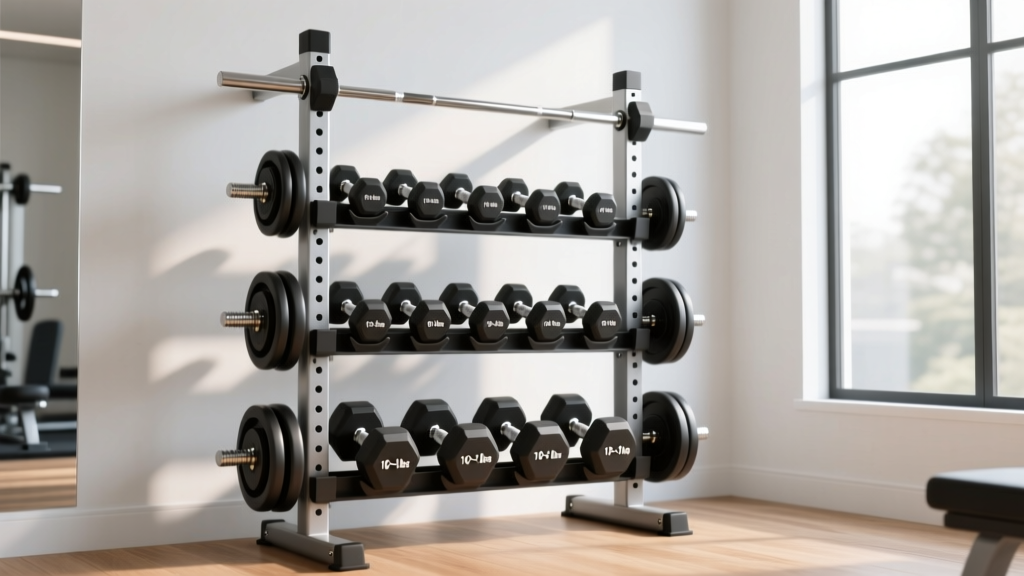
Dumbbell Storage Rack Fixes for the Dumbbell Standing Outer Thigh Lift

Titan Dumbbell Holder & 2026 Resistance Band Storage Trends
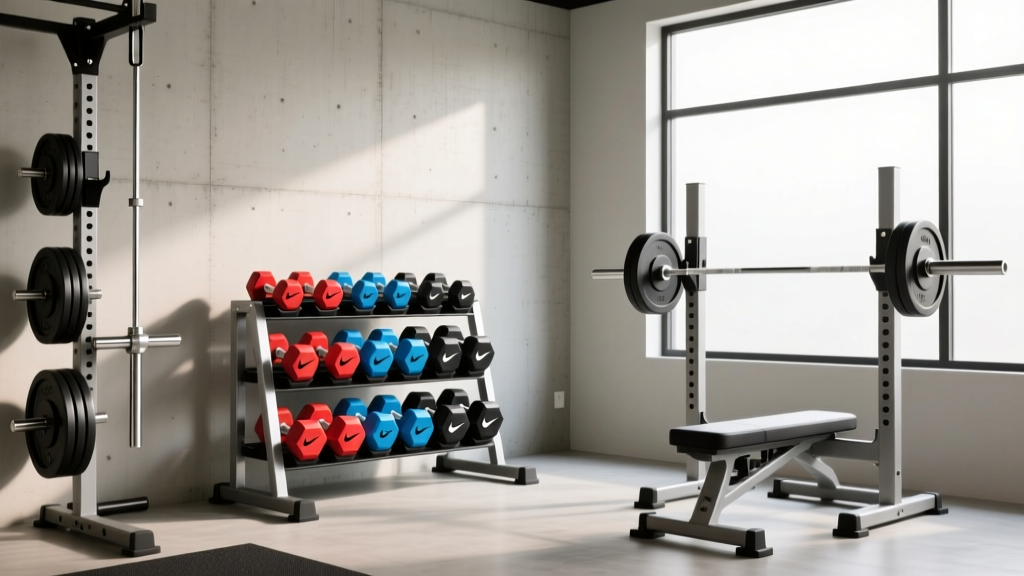
Nike Dumbbell Rack Sets vs Barbell Storage: Budget Breakdown

Home Gym Storage Console: Plate Tree vs Rack (2026)

How To Match Normatec With Recovery Balls: A Practical Guide for Home Gym Storage & Functionality
