
Matrix Dumbbell Rack & Barbell Storage: Horizontal vs Vertical Care
Master home gym longevity with our guide on horizontal vs vertical barbell storage rack maintenance and matrix dumbbell rack care protocols.

The Hidden Cost of Improper Equipment Storage
As of 2026, outfitting a premium home gym represents a significant financial investment. A high-quality chromoly Olympic barbell easily costs between $300 and $450, while a commercial-grade matrix dumbbell rack can push past $500. Yet, many lifters unknowingly degrade their equipment's lifespan through improper storage. The debate over barbell storage rack horizontal vs vertical configurations is not just about spatial efficiency or aesthetic preferences; it is fundamentally a question of metallurgy, lubrication mechanics, and long-term maintenance. When you factor in the specialized care required for tiered dumbbell organization, understanding the physics of storage becomes essential for protecting your gear from premature oxidation, bearing failure, and structural fatigue.
The Physics of Barbell Storage: Horizontal vs. Vertical
To understand why storage orientation matters, you must look inside the sleeve of your barbell. Olympic barbells utilize either bronze bushings or needle bearings to allow the sleeves to spin independently of the shaft. These internal components are packed with specialized greases or light oils.
Gravity and Lubrication Migration
When a barbell is stored vertically in a tree stand, gravity continuously pulls the internal lubricants toward the bottom of the sleeve. Over months of vertical storage, the top bearing or bushing can become starved of lubrication, leading to increased friction, micro-corrosion, and a noticeable 'grinding' sensation during dynamic lifts like snatches or cleans. Horizontal storage maintains an even distribution of lubricant across the entire sleeve assembly. According to Eleiko's care and maintenance guidelines, premium needle-bearing bars are particularly susceptible to lubricant pooling and should ideally be stored horizontally to preserve their precise spin mechanics.
Horizontal Barbell Rack Maintenance & Longevity
Horizontal storage typically involves wall-mounted 'gun racks' or horizontal shelf cradles. While optimal for barbell sleeve health, horizontal racks introduce unique maintenance requirements regarding the contact points between the rack and the bar shaft.
Expert Insight: The primary failure mode of horizontal wall racks (such as the popular Rogue 6-Gun Rack, priced around $185) is the degradation of UHMW (Ultra-High Molecular Weight) polyethylene protectors. Over time, chalk dust and oxidized iron particles embed into the UHMW, turning it into an abrasive surface that can scratch your barbell's knurling.Maintaining Horizontal Contact Points
- Monthly UHMW Cleaning: Wipe down the plastic cradles with isopropyl alcohol (70% or higher) to dissolve chalk buildup and lift embedded iron dust.
- Inspect for Wear-Through: UHMW strips are typically 1/8-inch thick. If you see the black powder-coated 11-gauge steel bracket showing through, replace the UHMW immediately. Generic adhesive UHMW tape costs less than $15 and can prevent $300 worth of knurling damage.
- Hardware Torque Checks: The cantilevered weight of a 45lb barbell exerts continuous sheer force on wall anchors. Every six months, use a torque wrench to ensure the lag bolts remain flush against the mounting studs.
Vertical Barbell Storage Maintenance (Trees & Bases)
Vertical barbell trees are the undisputed champions of footprint efficiency, often holding 6 to 10 bars in less than three square feet of floor space. However, they present distinct environmental and mechanical hazards that require proactive mitigation.
The Baseplate Condensation Trap
Vertical trees (like the Titan Fitness 10-Bar Tree, approximately $130) sit flat against the floor. In garage gyms or basement setups, the temperature differential between the concrete slab and the ambient air creates condensation. Because the heavy steel baseplate of the tree traps this moisture against the floor, it becomes a breeding ground for rust that can eventually creep up the main vertical post.
The Fix: Elevate the baseplate. Place a 1/2-inch high-density EVA foam pad or affix heavy-duty silicone furniture feet to the bottom of the rack. This 1/2-inch air gap allows for evaporation and completely eliminates the baseplate condensation trap.
Bottom Sleeve Impact Damage
When returning a barbell to a vertical tree, users often drop the bar into the PVC or steel-lined holster. The sudden deceleration forces the barbell's internal retaining pins and snap rings to absorb the shock. Over time, this can snap internal C-clips, causing the sleeve to detach during a lift. Always lower bars gently into vertical holsters, and ensure the holster interior is lined with UHMW or PVC to prevent shaft scratching.
Comparison Matrix: Horizontal vs. Vertical Storage Wear & Tear
| Maintenance Metric | Horizontal Storage (Gun Racks) | Vertical Storage (Trees) |
|---|---|---|
| Bearing Lubrication | Optimal (Even distribution) | Poor (Gravity pooling) |
| Knurling Abrasion Risk | Moderate (UHMW wear) | Low (Minimal shaft contact) |
| Base Rust Vulnerability | Low (Wall mounted) | High (Floor condensation) |
| Retaining Pin Stress | Low (Gentle placement) | High (Vertical dropping) |
Integrating and Maintaining Your Matrix Dumbbell Rack
While barbell storage gets the bulk of the attention, organizing your free weights is equally critical. A matrix dumbbell rack—characterized by its staggered, multi-tiered design (often 3-tier or 5-tier configurations with angled saddles)—is the gold standard for commercial and high-end home gyms. However, the very geometry that makes a matrix dumbbell rack so functional also creates unique maintenance liabilities.
The Runoff Effect on Angled Saddles
The tiers on a matrix dumbbell rack are typically inclined at a 5-degree to 10-degree angle to prevent the dumbbells from rolling forward and to make picking them up ergonomically easier. The unintended consequence of this incline is liquid runoff. Sweat, liquid chalk, and cleaning sprays naturally slide down the dumbbell handle and pool at the rear lip of the cradle. If left unattended, this salty, acidic moisture will eat through the powder coating and cause severe oxidation on the rack's weld points.
- Wipe Protocol: After every heavy session, use a microfiber cloth dampened with a pH-neutral cleaner to wipe the rear lips of the matrix cradles.
- Weld Inspection: Dropping 60lb+ hex dumbbells onto the rack creates acute sheer stress on the gusset welds connecting the cradle to the main upright. Inspect these welds bi-annually for hairline fractures or 'rust weeping' (a brown streak that indicates internal micro-cracking).
Environmental Controls: Rust Prevention for Stored Iron
No storage rack can protect your equipment if the ambient environment is hostile. The Rogue Fitness equipment FAQ explicitly notes that bare steel and black oxide finishes will oxidize rapidly in high-humidity environments. To protect both your horizontally stored barbells and your matrix dumbbell rack:
- Monitor Humidity: Keep your gym space below 60% Relative Humidity (RH). Invest in a smart hygrometer that alerts your phone when moisture levels spike.
- VCI Emitters: For enclosed storage areas or cabinets, utilize Vapor Corrosion Inhibitor (VCI) capsules. These emit a microscopic, odorless gas that forms a protective molecular layer over bare steel, halting oxidation without leaving a greasy residue.
- Proper Oiling: Avoid standard WD-40, which is a solvent that strips existing lubricants. Instead, use 3-in-One oil or food-grade mineral oil. Apply a few drops to a nylon brush, scrub the barbell knurling and the dumbbell handles, and wipe away the excess.
Step-by-Step Monthly Maintenance Routine
To ensure your horizontal racks, vertical trees, and matrix dumbbell racks survive decades of use, implement this 20-minute monthly maintenance checklist:
The 20-Minute Storage Audit
- Clear the Racks (5 mins): Remove all barbells and dumbbells from their respective storage units.
- Vacuum and Wipe (5 mins): Use a brush attachment to vacuum chalk dust from horizontal UHMW cradles and vertical tree holsters. Wipe down the matrix dumbbell rack's angled lips with a pH-neutral cleaner.
- Inspect Hardware (5 mins): Check the lag bolts on wall-mounted horizontal racks and the baseplate stability of vertical trees. Tighten any loose connections.
- Lubricate and Protect (5 mins): Apply a light coat of mineral oil to the barbell shafts and dumbbell handles before returning them to the racks. Ensure vertical trees have adequate airflow beneath the baseplate.
Final Thoughts on Equipment Longevity
Choosing between a horizontal vs vertical barbell storage rack ultimately depends on your spatial constraints and the specific types of barbells you own. If you exclusively use high-end needle bearing bars, horizontal storage is non-negotiable for long-term bearing health. If space dictates a vertical tree, you must be vigilant about baseplate moisture and gentle loading habits. Furthermore, integrating a matrix dumbbell rack requires a commitment to managing liquid runoff and inspecting tier welds. By treating your storage equipment as an active component of your gym's ecosystem rather than a passive metal skeleton, you will protect your investments and ensure flawless performance for years to come.
More gear to consider
All reviews
Best Kettlebell Racks for Small Home Gym Storage (2026)

Marcy 3 Tier Dumbbell Rack for Kettlebell Storage: Full Setup
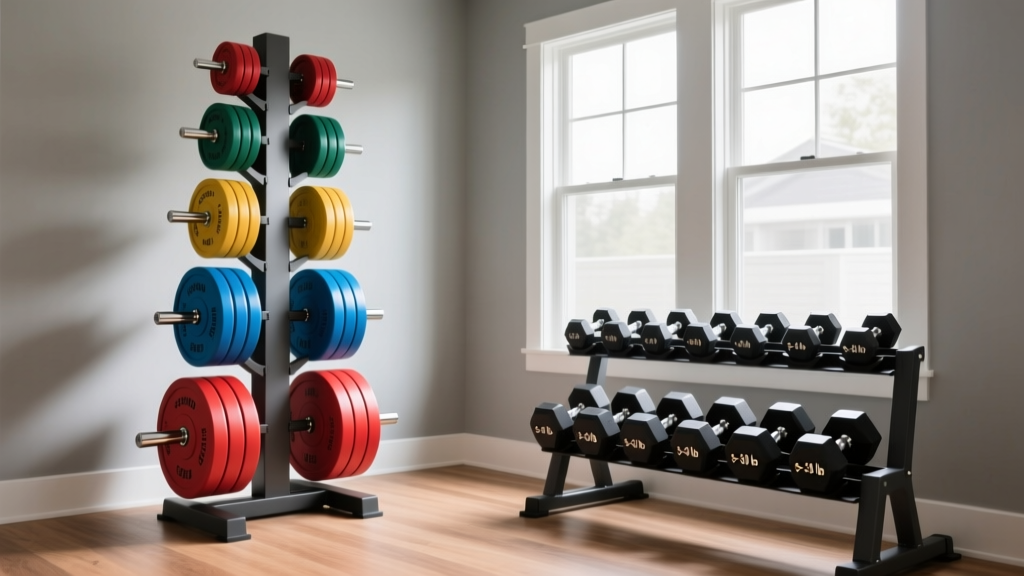
Best Weight Plate Storage Trees & Dumbbell Rack 5-50 Setups

Horizontal vs Vertical Barbell Racks & DIY Dumbbell Stand Guide
The Ultimate Sports Guide: Smart Storage, Space-Saving Solutions, and Home Gym Organization for Real Life
