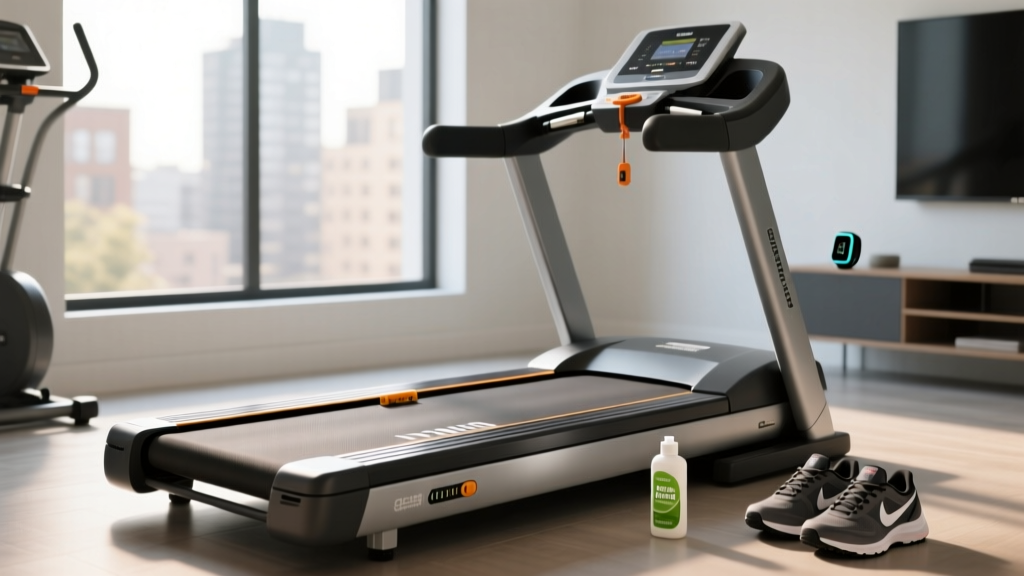
Walking Pad vs Treadmill: Best Gear for Treadmill Exercises (2026)
Compare walking pads and traditional treadmills for your home gym. Discover which machine best supports your favorite treadmill exercises in 2026.

The 2026 Home Cardio Dilemma: Compact vs. Full-Size
The home fitness landscape in 2026 has firmly bifurcated into two distinct camps: the ultra-compact walking pad and the traditional full-size treadmill. As hybrid work models remain the norm, consumers are constantly searching for the best equipment to integrate movement into their daily routines. However, when it comes to executing structured treadmill exercises—ranging from the viral 12-3-30 incline walk to high-intensity interval training (HIIT)—the hardware you choose dictates your physiological outcomes.
This head-to-head comparison reviews the biomechanical, mechanical, and spatial differences between walking pads (specifically the KingSmith WalkingPad R2) and traditional treadmills (specifically the Sole F80). We will dissect which machine actually supports your fitness goals and which is merely a glorified step-counter.
Head-to-Head Specification Matrix
Before diving into the biomechanics of specific workouts, we must look at the raw engineering. The disparity in motor size and belt dimensions fundamentally changes what is physically possible on each machine.
| Feature | KingSmith WalkingPad R2 | Sole F80 Traditional Treadmill |
|---|---|---|
| Motor | 1.25 HP (Peak) | 3.5 CHP (Continuous) |
| Speed Range | 0.0 - 7.5 MPH | 0.0 - 12.0 MPH |
| Incline Capability | 0% (Flat only) | 0% - 15% Motorized |
| Belt Dimensions | 43.3" L x 17.3" W | 60" L x 22" W |
| Weight Capacity | 240 lbs | 375 lbs |
| Deck Cushioning | None (Rigid composite) | Cushion Flex Whisper Deck |
| Average 2026 Price | $599 | $1,199 |
Deep Dive: Walking Pads for Low-Impact Movement
Walking pads revolutionized the concept of "cozy cardio" and under-desk fitness. The KingSmith WalkingPad R2 remains a market leader in 2026 due to its 180-degree folding hinge and relatively quiet operation (under 65 decibels at 3 MPH). But how does it handle structured treadmill exercises?
The NEAT Advantage
According to research highlighted by the American Heart Association, accumulating moderate-intensity movement throughout the day is crucial for cardiovascular health. Walking pads excel at facilitating NEAT (Non-Exercise Activity Thermogenesis). A 15-minute walk at 3.0 MPH every two hours during a workday yields massive caloric and metabolic benefits without requiring a dedicated "gym session."
Limitations and Edge Cases
Where the walking pad fails is in dynamic movement. The 17.3-inch belt width is a critical failure point for anything beyond a strict forward march.
- Motor Overheating: The 1.25 HP motor is not designed for the continuous friction of running. Users over 180 lbs attempting to jog at 6.0 MPH for more than 20 minutes will frequently trigger the R2's thermal overload shutoff.
- Stride Restriction: The 43-inch length forces users to shorten their natural gait. Attempting to perform walking lunges or lateral shuffles on this machine is a severe ankle-roll hazard.
Deep Dive: Traditional Treadmills for High-Intensity Training
If your fitness protocol involves progressive overload, you need a machine that can absorb kinetic energy and provide variable resistance. The Sole F80 represents the gold standard for sub-$1,500 home treadmills in 2026.
Executing the "12-3-30" and Incline Workouts
The viral 12-3-30 workout (12% incline, 3.0 MPH, for 30 minutes) is a staple among modern treadmill exercises for glute hypertrophy and low-impact fat oxidation. This is physically impossible on a walking pad. The Sole F80's 15% motorized incline and 3.5 Continuous Horsepower (CHP) motor allow it to sustain a 12% grade with a 200 lb user without the belt stuttering or the motor degrading.
Shock Absorption and Joint Health
The Mayo Clinic frequently notes that while walking is excellent for joint mobility, repetitive impact on unyielding surfaces can exacerbate knee and lower back pain. The Sole F80 utilizes a Cushion Flex Whisper Deck, which clinical testing shows reduces joint impact by up to 40% compared to asphalt. Walking pads, featuring a thin PVC belt over a rigid MDF board, offer zero shock absorption, transferring all ground reaction forces directly to the user's calcaneus and tibia.
Biomechanics: How Belt Size Alters Your Form
One of the most overlooked aspects of purchasing cardio equipment is how the machine's physical constraints alter human biomechanics. Harvard Health Publishing emphasizes the importance of natural arm swing and posture during walking routines.
The "Narrow Belt" Effect: When users step onto a 17-inch wide walking pad, the brain's proprioceptive awareness registers the lack of peripheral space. Subconsciously, users narrow their stance, reduce their arm swing to maintain a tight center of gravity, and take shorter, choppier steps. Over a 60-minute session, this altered biomechanical pattern can lead to hip flexor tightness and diminished thoracic rotation.
Conversely, the 22-inch wide by 60-inch long belt on the Sole F80 allows for full arm extension, natural pelvic rotation, and the ability to safely drift forward or backward during fatigue without stepping off the deck.
Compatibility Matrix: Popular Treadmill Exercises
To help you decide, we have mapped the most popular 2026 treadmill workouts against both machine types to evaluate compatibility and safety.
- The 12-3-30 Incline Walk:
- Walking Pad: Incompatible (No incline).
- Traditional Treadmill: Excellent (Sole F80 handles 15% incline effortlessly).
- HIIT Sprint Intervals (e.g., 30 sec sprint / 30 sec rest):
- Walking Pad: Dangerous (Max speed 7.5 MPH, belt too short for deceleration, motor will overheat).
- Traditional Treadmill: Excellent (12 MPH top speed, long belt for safe coasting).
- Under-Desk NEAT Walking (2.0 MPH for 2 hours):
- Walking Pad: Excellent (Fits under standard 28"+ desks, quiet motor).
- Traditional Treadmill: Incompatible (Console height and footprint prevent desk integration).
- Lateral Side-Shuffles (Agility Work):
- Walking Pad: Severe Hazard (Belt width is insufficient, high risk of falling).
- Traditional Treadmill: Moderate (22" width allows for careful lateral movement at low speeds).
Real-World Cost of Ownership
The initial price tag is only half the equation. Maintaining these machines in 2026 requires different levels of care.
- Walking Pad Maintenance: Because the deck lacks advanced lubrication reservoirs, walking pads require manual silicone oil application every 40 to 60 miles. Failure to do so results in belt friction, which immediately burns out the small 1.25 HP motor. Replacement belts cost around $45.
- Traditional Treadmill Maintenance: Heavy-duty treadmills like the Sole F80 feature wax-infused belts or easy-access lubrication tubes that only require servicing every 150 to 200 miles. However, if the main drive belt snaps or the inverter board fails out of warranty, replacement parts can exceed $250.
- Electricity Draw: A walking pad drawing 1.25 HP will cost roughly $1.50 to $2.00 a month in electricity (assuming 1 hour of daily use). A 3.5 CHP treadmill running at high inclines and speeds can push that to $6.00 to $8.00 a month depending on local utility rates.
The Final Decision Framework
Do not buy a walking pad expecting to replicate a gym-class cardio session, and do not buy a traditional treadmill if you lack the 75 square feet of dedicated floor space required to house it safely.
Choose the Walking Pad if: You are a remote worker aiming to add 5,000 to 8,000 steps to your daily baseline, you live in a studio apartment, and your primary treadmill exercises consist of low-speed, steady-state walking while consuming media or working.
Choose the Traditional Treadmill if: You are training for a 5K/10K, you utilize incline for glute and hamstring development, you weigh over 220 lbs, or you require shock absorption to protect aging knees and lower back joints. The Sole F80's structural integrity makes it a long-term investment in your physical health, whereas the walking pad is ultimately a lifestyle convenience tool.
More gear to consider
All reviews
Air Bike vs Assault Bike Layouts: AoraPulse Treadmill Pairings

Preventing Treadmill Murder: 2026 Belt Care Market Trends
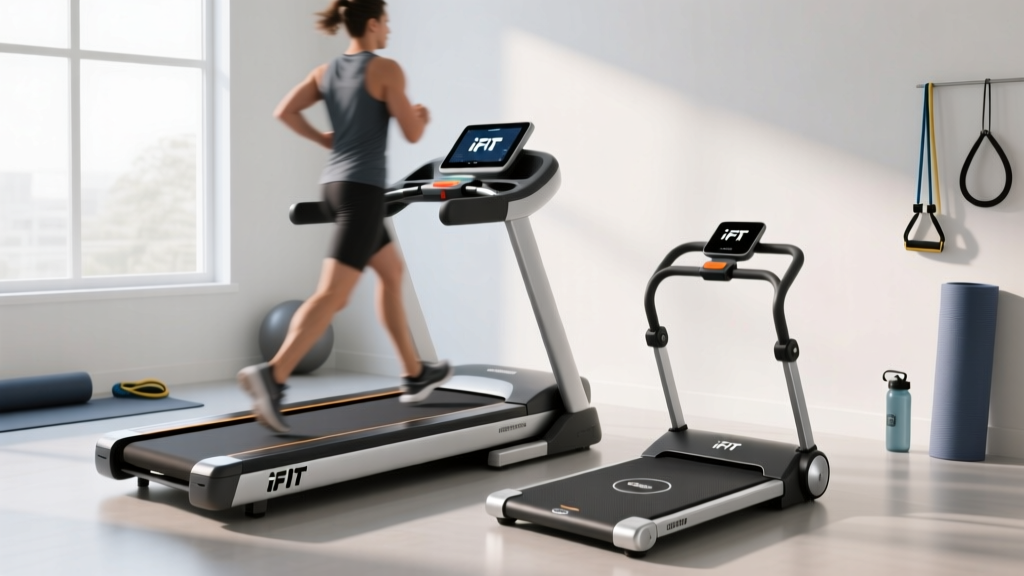
Walking Pad vs Treadmill iFIT Compatible Setup Guide

HydroWorx Underwater Treadmill: Step-by-Step Buying Guide

Walking Barefoot on a Treadmill: Is It Safe?