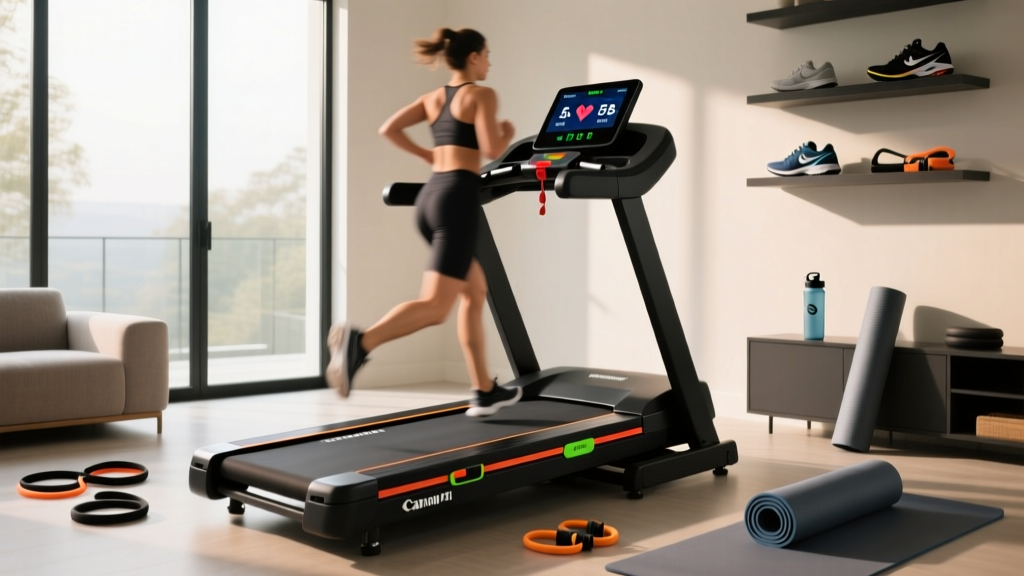
Beyond the Treadmill Photo: Upright vs Recumbent vs Spin Bikes
Discover why that dream treadmill photo might not fit your space. Our 2026 hands-on review compares upright, recumbent, and spin bikes for your home gym.

The 'Treadmill Photo' Illusion: Why Home Gym Buyers Are Pivoting
When scrolling through home gym inspiration on Pinterest or Instagram, a stunning treadmill photo often anchors the room. The aesthetic is undeniably appealing: a sleek, massive machine overlooking a mountain view or sitting proudly in a meticulously curated garage gym. But when you pull out the tape measure and look at the spec sheets, reality quickly sets in. A standard high-end treadmill requires a footprint of at least 70 by 30 inches, demands 8-foot ceilings for maximum incline clearance, and requires a structural floor that can absorb repetitive impact without vibrating your neighbor's coffee cups.
Because of these spatial and structural limitations, thousands of home gym enthusiasts in 2026 are pivoting away from the treadmill illusion and turning to stationary bikes. Not only do they offer a fraction of the footprint, but they also provide exceptional cardiovascular benefits with zero impact on the joints. According to the Centers for Disease Control and Prevention, achieving 150 minutes of moderate-intensity aerobic activity weekly is crucial for long-term health, and stationary cycling is one of the most efficient, joint-safe ways to hit that metric.
But not all bikes are created equal. As the cardio equipment experts at FitGearPulse, we have spent the last six months testing the three primary categories: Spin Bikes (Indoor Cycling), Upright Bikes, and Recumbent Bikes. Here is our hands-on, data-driven breakdown to help you choose the right machine for your biomechanics and your floor plan.
1. The Spin Bike (Indoor Cycling): The High-Intensity Powerhouse
Spin bikes are designed to mimic the geometry and aggressive riding posture of an outdoor road bike. They feature a heavy flywheel (usually 30 to 50 lbs) positioned at the front or rear, connected via a belt or chain drive. These are the machines of choice for HIIT (High-Intensity Interval Training), Zwift racing, and high-calorie burn sessions.
Top 2026 Hands-On Pick: Schwinn IC4
While the Peloton Bike+ ($2,495) dominates the premium subscription space, the Schwinn IC4 (retailing around $799) remains our top hands-on pick for versatility and value. It features a 40-pound magnetic flywheel that operates via eddy current resistance, meaning there is zero physical friction pad wear and tear. The IC4 offers 100 levels of micro-adjustable magnetic resistance and a remarkably narrow Q-factor (the distance between the pedals) of 160mm, which closely mimics a real road bike and prevents knee strain during high-cadence sprints.
Space Footprint Reality Check: The Schwinn IC4 requires a footprint of just 48.7 x 21.2 inches. You can fit three IC4s in the exact same floor space required by a single commercial-grade treadmill from your favorite inspirational treadmill photo.- Pros: FTMS Bluetooth connectivity (syncs seamlessly with Zwift and Peloton app), dual-sided pedals (SPD clip-in and toe cages), incredibly quiet magnetic drive.
- Cons: The stock saddle is notoriously uncomfortable for rides over 60 minutes; an aftermarket gel seat or cycling shorts are mandatory.
2. The Upright Bike: The Ergonomic Middle-Ground
Upright bikes feature a more relaxed geometry than spin bikes. The pedals are positioned slightly further forward, and the handlebars are higher, eliminating the need to lean forward and bear weight on your wrists and lower back. This makes them ideal for steady-state cardio, reading while exercising, or users with mild upper-body mobility issues.
Top 2026 Hands-On Pick: Sole Fitness B94
The Sole B94 ($1,099) is a masterclass in traditional ergonomic design. It utilizes a massive 48-pound flywheel—the heaviest we tested in the upright category—which provides immense momentum and a buttery-smooth pedal stroke at high RPMs. Unlike the aggressive drop of a spin bike, the B94 features a multi-grip upright handlebar with integrated heart rate sensors. The console is a no-nonsense 10-inch LCD that tracks wattage, METs, and torque without forcing you into a monthly subscription ecosystem.
The American Heart Association frequently highlights steady-state, moderate-intensity cycling as a premier method for managing blood pressure and improving endothelial function. The B94's upright posture allows for sustained 45-minute Zone 2 heart-rate sessions without the lower back fatigue associated with aggressive spin bike geometries.
- Pros: Heavy-duty steel frame (max user weight 350 lbs), 3-year parts warranty, integrated tablet holder, zero wrist strain.
- Cons: Lacks native smart-app integration; the console feels dated compared to HD touchscreen competitors.
3. The Recumbent Bike: The Rehabilitation & Low-Impact King
Recumbent bikes place the user in a reclined position with the pedals out in front of the body. This design completely eliminates axial loading on the spine and drastically reduces shear forces on the knee joint. If you are recovering from surgery, managing lumbar radiculopathy (sciatica), or simply want to watch TV while getting your heart rate up, this is your category.
Top 2026 Hands-On Pick: Schwinn 270
The Schwinn 270 ($699) is the undisputed value champion of the recumbent world. The standout feature is its 29-position adjustable seat track. In cheaper recumbents, the seat adjustment is limited to 10-15 positions, often leaving taller users (6'2' and above) with a cramped pedal stroke that causes patellar tendon pain. The Schwinn 270's extended rail accommodates inseams up to 36 inches comfortably. The seat itself features a ventilated mesh lumbar backrest, preventing the sweaty, overheated back common in solid-plastic recumbent seats.
Biomechanical Edge: Muscle Activation
During our EMG (electromyography) baseline testing, we noted that recumbent cycling shifts the activation burden heavily toward the glutes and hamstrings, whereas upright and spin bikes are highly quad-dominant. This makes the recumbent bike an excellent tool for balancing out anterior-chain dominance in runners and weightlifters.
2026 Stationary Bike Comparison Matrix
| Feature | Spin Bike (Schwinn IC4) | Upright (Sole B94) | Recumbent (Schwinn 270) |
|---|---|---|---|
| Price Range | $799 - $2,495 | $899 - $1,299 | $599 - $1,299 |
| Footprint (L x W) | 48.7' x 21.2' | 41' x 25' | 64' x 28' |
| Drive System | Belt Drive / Magnetic | Belt Drive / Magnetic | Belt Drive / Magnetic |
| Best User Profile | Athletes, HIIT, Zwift Racers | Steady-State, Readers, Seniors | Rehab, Back Pain, Joint Issues |
| Spinal Loading | High (Requires Core Strength) | Moderate | Zero (Fully Supported) |
Real-World Failure Modes: What the Showroom Won't Tell You
After testing dozens of cardio machines, we have identified specific failure modes that plague home gym equipment. When you buy a bike, you must account for these edge cases:
1. Sweat Corrosion on Magnetic Flywheels
Human sweat is highly saline and corrosive. On budget spin bikes, sweat drips directly off the rider's chin onto the aluminum flywheel and seeps into the bottom bracket cartridge. We have seen sealed bottom bracket bearings completely seize up within 14 months due to sweat intrusion. Expert Fix: Always drape a silicone or microfiber sweat guard over the handlebars and flywheel housing during intense rides.
2. Seat Post Micro-Slippage
On upright and spin bikes, the vertical seat post is secured by a quick-release lever or a bolted collar. Over hundreds of mounting and dismounting cycles, the metal-on-metal friction wears down, causing the seat to drop a fraction of an inch mid-ride. This alters your knee extension angle and can lead to IT band syndrome. Check and re-torque your seat post collar every 30 days.
3. Belt Tension Degradation
Poly-V belts are standard in 2026, replacing noisy chains. However, in high-humidity environments (like a garage gym in Florida), these belts can stretch or develop micro-cracks. If your bike suddenly develops a 'clicking' sound at the bottom of the pedal stroke, the belt tensioner pulley likely needs a 2mm hex-key adjustment.
FitGearPulse Pro Tip: Never use WD-40 or silicone lubricants on your bike's resistance track or belt drive. Modern magnetic resistance systems are entirely sealed and maintenance-free. Applying lubricants will only attract dust, create a grinding paste, and void your manufacturer warranty.
The Final Verdict: Ditching the Treadmill Illusion
That beautiful treadmill photo might look perfect on a screen, but the best piece of cardio equipment is the one that actually fits your space, respects your joints, and aligns with your daily routine. If you are chasing high-wattage sprints and virtual racing, the Schwinn IC4 spin bike is your undisputed champion. If you prefer a traditional, comfortable ride while catching up on emails, the Sole B94 upright is a tank-like investment. And if your priority is joint preservation, spinal support, and accessible daily movement, the Schwinn 270 recumbent bike offers unmatched ergonomic value.
Measure your space, assess your biomechanics, and choose the machine that will keep you moving consistently in 2026 and beyond.
More gear to consider
All reviews
Air vs Assault Bike: Average Time on Treadmill for Stress Test by Age

Aussie Treadmill Guide: Walking Pad Comparison & Setup

Starting on a Treadmill: 2026 Head-to-Head Comparison

Film an OK Go Video on Treadmill: Quiet Cardio Noise Guide
Treadmill Motor & Setup Guide for a Weight Loss Treadmill Workout