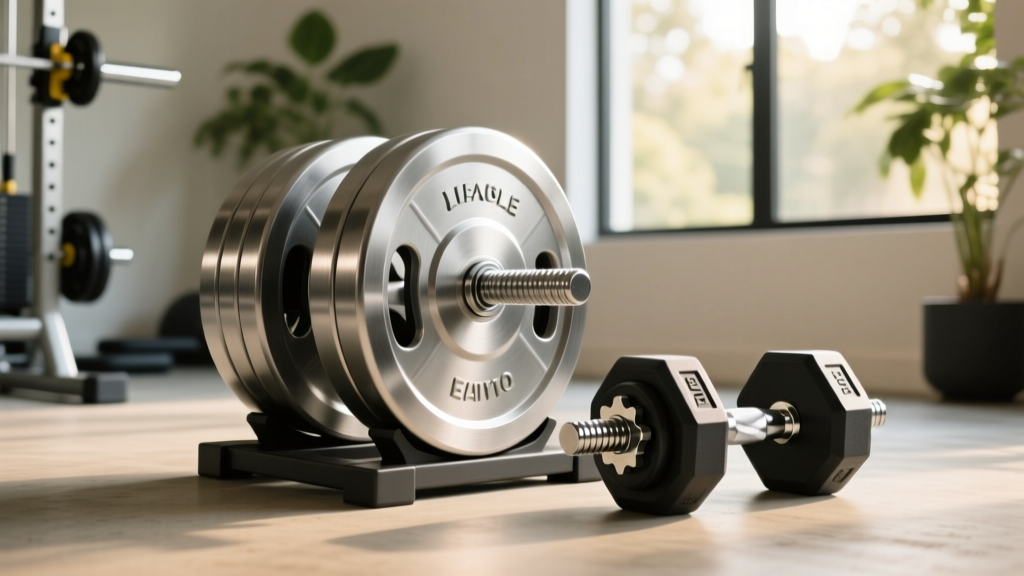
Beyond Vinyl Dumbbells: 2026 Loadable Plate Market Trends
Discover why 2026 fitness trends show a massive shift from fixed vinyl dumbbells to loadable dumbbells with interchangeable plates for home gyms.

The 2026 Market Correction: Moving Past Vinyl
For years, the entry-level home fitness market was heavily saturated with fixed-weight vinyl dumbbells. Often constructed from a PVC or vinyl shell filled with sand, cement, or low-grade iron scrap, these implements served as an accessible entry point during the initial home-gym boom. However, as we navigate the 2026 fitness landscape, a definitive market correction is underway. According to industry analyses from Grand View Research, modern consumers are increasingly prioritizing spatial efficiency, long-term durability, and progressive overload capabilities. This macro-trend has triggered a massive migration away from bulky, fixed vinyl sets toward the highly versatile loadable dumbbell with interchangeable plates.
The shift is not merely about aesthetics or space; it is rooted in the biomechanical necessity of micro-loading and the economic reality of equipment lifespan. While a 50-pound set of vinyl dumbbells might cost under $80, it represents a hard ceiling for strength progression. In contrast, a pair of loadable handles paired with a set of interchangeable cast iron or urethane plates offers infinite scalability, transforming a stagnant home gym into a lifelong training facility.
The Hidden Costs and Failure Modes of Fixed Vinyl Dumbbells
To understand the surge in loadable systems, we must first examine the structural failure modes inherent to cheap vinyl dumbbells. Market data and long-term user reviews highlight three critical flaws:
- Seam Degradation and Leakage: Vinyl and PVC shells are typically molded in two halves and welded. Over time, exposure to UV light, sweat (which is highly corrosive), and temperature fluctuations causes the plasticizers to leach out. The vinyl becomes brittle, leading to split seams and the leakage of sand or cement fillers onto gym floors.
- Hidden Metallurgical Flaws: In vinyl-coated iron dumbbells, the thick coating often hides poor casting quality and weak handle welds. It is not uncommon for the handle to snap at the weld point during heavy lateral raises, a dangerous failure mode masked by the outer shell.
- The Spatial Tax: A full set of fixed vinyl dumbbells ranging from 5 to 50 lbs (in 5 lb increments) requires a specialized multi-tier rack and occupies roughly 6 to 8 square feet of floor space. For the modern apartment dweller or garage gym owner in 2026, this spatial footprint is entirely unjustifiable.
Anatomy of the Modern Loadable Dumbbell System
The loadable dumbbell with interchangeable plates solves the spatial and progressive overload crises simultaneously. However, not all loadable handles are created equal. The 2026 market has segmented into distinct tiers based on sleeve geometry, knurling patterns, and collar mechanics.
Handle Geometry and Knurling
Premium loadable handles, such as the Rogue Fitness Loadable Dumbbell Handles (retailing around $95 per pair) or the Titan Fitness 14-inch Standard Handles (approx. $45 per pair), feature deep, volcano-pattern knurling. This ensures grip security during heavy pressing movements where sweat compromises friction. Entry-level spinlock handles often feature shallow, decorative knurling that becomes slick under loads exceeding 40 lbs per hand.
Sleeve Tolerances and Collar Mechanics
The interface between the handle sleeve and the interchangeable plate is where budget equipment fails. Standard 1-inch sleeves often suffer from wide manufacturing tolerances, resulting in a "wobble" effect when plates are loaded. Furthermore, the traditional star-lock (spinlock) collar requires two hands and significant time to secure, disrupting workout cadence. The 2026 trend heavily favors lever-lock collars and quick-release spring collars, which reduce plate-changing time from 45 seconds to under 5 seconds per dumbbell.
2026 Market Insight: The Rise of Fractional Plates
The most significant driver for loadable dumbbells is the integration of fractional micro-plates (0.25 lb to 1.25 lb). Upper body isolation movements like lateral raises require micro-progression. Fixed vinyl dumbbells force a minimum 5 lb jump (a 25% increase on a 20 lb lift), which frequently leads to joint strain and plateauing. Loadable systems accommodate fractional plates, enabling seamless progressive overload.
Cost, Space, and Longevity Matrix
When evaluating the transition from fixed vinyl to loadable systems, the initial price tag can be misleading. The table below illustrates the 5-year total cost of ownership and spatial footprint for a home gym aiming for a maximum dumbbell weight of 50 lbs per hand.
| Metric | Fixed Vinyl Dumbbell Set (5-50 lbs) | Loadable Handle + Cast Iron Plates |
|---|---|---|
| Initial Equipment Cost | $160 - $220 (including basic rack) | $135 - $180 (Handles + 100lbs plates + collars) |
| Space Footprint | ~7.5 sq. ft. (Multi-tier A-frame rack) | ~1.5 sq. ft. (Single plate tree or floor stack) |
| Progressive Overload | Capped at 50 lbs; 5 lb jumps | Infinite (up to sleeve capacity); 0.25 lb jumps |
| 5-Year Replacement Risk | High (Vinyl cracking, seam splitting) | Near Zero (Cast iron and steel are virtually indestructible) |
2026 Innovations in Interchangeable Plates
The plates themselves have evolved. While raw cast iron remains the most economical choice (averaging $1.20 to $1.50 per pound in 2026), the market has seen a surge in urethane-coated interchangeable plates designed specifically for loadable dumbbell sleeves. According to equipment roundups by BarBend, modern urethane plates offer the floor-dampening and noise-reduction benefits of rubber without the harsh chemical off-gassing or the tendency to become sticky and degrade over time.
Furthermore, specialized "grip plates" with integrated handles are now being manufactured with precise 1-inch and 2-inch Olympic center holes, allowing users to easily swap them between barbells and loadable dumbbell handles without pinching their fingers during plate changes.
Real-World Edge Cases and Troubleshooting
Transitioning to a loadable system is not without its nuances. Expert lifters and home-gym builders should be aware of the following edge cases:
- The 2-Inch Olympic Sleeve Problem: Many users attempt to use standard 45-lb Olympic barbell plates on 2-inch loadable dumbbell handles. While this works for heavy floor presses, the massive diameter of a 45-lb plate (17.7 inches) severely restricts the range of motion for exercises like dumbbell lunges or goblet squats, as the plates hit the floor or the user's torso prematurely. Solution: Utilize 10-lb and 25-lb diameter plates (which are smaller in circumference) or invest in specialized 2-inch fractional bumpers.
- Collar Slippage on Angled Movements: During tricep kickbacks or inclined chest presses, gravity pulls the plates laterally against the collar. Cheap spring clips will compress and fail under this lateral load, causing plates to slide off the sleeve mid-rep. Solution: Always use lock-jaw collars or threaded spinlock collars for any movement where the sleeve is not perfectly horizontal.
- Sleeve Length Limitations: A standard 14-inch loadable handle typically offers only 6 to 7 inches of loadable sleeve space. If you are using thick, rubber-grip cast iron plates, you may physically run out of sleeve space before reaching your target weight. Upgrading to an 18-inch or 20-inch handle is mandatory for lifters pressing over 60 lbs per hand.
"The modern home gym is no longer about accumulating cheap, single-use implements. It is about investing in modular, high-tolerance steel systems that adapt to the human body's need for incremental progression. The era of the vinyl dumbbell is ending; the era of the modular loadable system is here."
— 2026 Home Fitness Equipment Consumer Report, Consumer Reports
The Buyer’s Framework: Building Your Loadable System
If you are ready to liquidate your fixed vinyl dumbbells and transition to a loadable dumbbell with interchangeable plates, follow this 2026 buying framework:
Step 1: Choose Your Sleeve Diameter
Commit to either 1-inch (Standard) or 2-inch (Olympic). 1-inch systems are lighter, cheaper, and feature more compact plates, making them ideal for general fitness, isolation work, and smaller spaces. 2-inch Olympic systems are built for heavy pressing, powerbuilding, and users who already own Olympic barbell plates. Do not mix the two; standardize your home gym ecosystem.
Step 2: Select the Handle Length
For loads under 45 lbs per hand, a 14-inch handle with a 6-inch sleeve is perfectly adequate and keeps the overall center of gravity tight. For loads exceeding 50 lbs, you must purchase 18-inch to 20-inch handles to accommodate the extra plate width and maintain safe collar threading.
Step 3: Invest in Quality Collars and Micro-Plates
Do not skimp on collars. Allocate at least $30 to $50 for a pair of high-quality lever-lock or aluminum clamp collars. Simultaneously, purchase a set of fractional plates (0.5 lb and 1.25 lb). These small investments are the exact mechanisms that will allow your loadable system to outperform any fixed vinyl set on the market, ensuring continuous strength gains well into the future.
More gear to consider
All reviews
Olympic vs Standard Plates for the Single Hand Dumbbell Row
Dumbbell to Bench Press Calculator & Olympic Bar Guide

Beyond Dumbbells vs Resistance Bands: Bumper vs Iron Plate Trends

Bumper vs Iron Plates: Value Analysis & Wide Grip Dumbbell Curl Form

Standard vs Olympic Plates: Optimizing the Dumbbell Triceps Pushdown
