2026 Adjustable Dumbbell Guide: Mid Back Workout With Dumbbells
Discover the best adjustable dumbbells for back training in 2026. Follow our beginner-friendly, step-by-step mid back workout with dumbbells for real results.

Why Your Mid Back Demands Adjustable Dumbbells
Building a thick, resilient mid back requires consistent progressive overload. The rhomboids, middle trapezius, and rear deltoids respond best to incremental weight increases, which is exactly where adjustable dumbbells shine. Unlike fixed-weight racks that consume massive floor space and capital, a high-quality adjustable set allows you to jump from 15 lb isolation flyes to 60 lb heavy rows in seconds.
However, not all adjustable dumbbells are created equal—especially for pulling movements. When designing a mid back workout with dumbbells, handle ergonomics, weight distribution, and durability during high-tension rows are critical. A poorly designed grip will cause your forearms to fail before your back muscles are fully stimulated.
Biomechanics Insight: Grip Thickness & Back Activation
According to kinesiology principles outlined by the ExRx Back General Directory, a thicker handle increases forearm and grip recruitment, which can prematurely limit your mid-back stimulus. For beginners, a standard 1.1 to 1.2-inch knurled steel handle is optimal for maintaining a secure grip during heavy single-arm rows without needing lifting straps immediately.
2026 Adjustable Dumbbell Comparison for Back Training
We tested the top models on the market specifically for back-day durability, grip comfort, and weight increment suitability. Here is how the leading contenders stack up for your home gym.
| Model | Max Weight | Handle Type | Price (2026) | Back-Training Rating |
|---|---|---|---|---|
| Nuobell 80 LB | 80 lbs | Knurled Steel (Standard) | $449 | 9.5/10 (Excellent) |
| Bowflex SelectTech 552 | 52.5 lbs | Smooth Rubber/Plastic | $399 | 7.0/10 (Good) |
| PowerBlock Elite USA | 50 lbs (Expandable) | Caged Steel / Urethane | $419 | 8.0/10 (Very Good) |
| Snode AD62 | 62 lbs | Knurled Steel (Contoured) | $349 | 8.5/10 (Great) |
1. Nuobell 80 LB: The Undisputed King of Rows
The Nuobell 80 LB feels exactly like a traditional commercial gym dumbbell. The handle is genuine knurled steel, meaning your grip won't slip when your hands get sweaty during heavy bent-over rows. The twisting mechanism is intuitive, and the 5 lb increments up to 80 lbs provide ample room for mid-back progression.
- Pros: Authentic gym feel, aggressive knurling, compact footprint.
- Cons: Internal mechanism can jam if dropped on a hard floor; requires careful handling.
2. Bowflex SelectTech 552: Best for Micro-Progressions
The Bowflex 552 remains a staple because of its 2.5 lb micro-increments (up to the 25 lb setting). This is phenomenal for beginners doing rear delt reverse flyes, where jumping 5 lbs can compromise form. However, the handle is relatively short (5.25 inches of usable space) and encased in plastic, which can feel slippery during heavy single-arm rows.
- Pros: Unmatched micro-loading, very intuitive dial system.
- Cons: Bulky physical length at lower weights, plastic housing is fragile if dropped.
3. PowerBlock Elite USA: The Tank
PowerBlock's cage design makes them virtually indestructible. You can drop them after a grueling set of dumbbell pullovers without fearing a broken dial. However, the rectangular cage shape can occasionally press against the wrist during deep stretches on chest-supported rows or reverse flyes, requiring slight grip adjustments.
Step-by-Step: The Ultimate Mid Back Workout With Dumbbells
Now that you have the right equipment, it is time to execute. The ACE Fitness Exercise Library emphasizes the importance of scapular retraction for mid-back development. Follow this beginner-friendly, step-by-step routine twice a week, resting 90 seconds between sets.
Step 1: Chest-Supported Dumbbell Row
Target: Rhomboids, Mid-Traps, Lats (Isolation focus)
- Set an adjustable bench to a 30-degree incline.
- Grab your adjustable dumbbells (start with 15-25 lbs) and lie face down on the bench, letting your arms hang straight down with a neutral grip (palms facing each other).
- The Pull: Drive your elbows up toward the ceiling, squeezing your shoulder blades together at the top. Imagine pinching a pencil between your spine and shoulder blade.
- The Tempo: Pull up in 1 second, hold the squeeze for 1 second, and lower slowly for 3 seconds.
- Volume: 3 sets of 10-12 reps.
Step 2: Single-Arm Tripod Row
Target: Lats, Lower Traps, Core Stability
- Place your left knee and left hand on a flat bench. Plant your right foot firmly on the ground.
- Grab a heavier dumbbell (30-50 lbs) with your right hand.
- The Pull: Pull the dumbbell toward your hip pocket, not your armpit. Pulling to the armpit shifts tension to the rear delts; pulling to the hip engages the lats and mid-back.
- Volume: 3 sets of 8-10 reps per arm.
Step 3: Dumbbell Reverse Fly (Rear Delt & Mid-Trap Focus)
Target: Rear Deltoids, Rhomboids
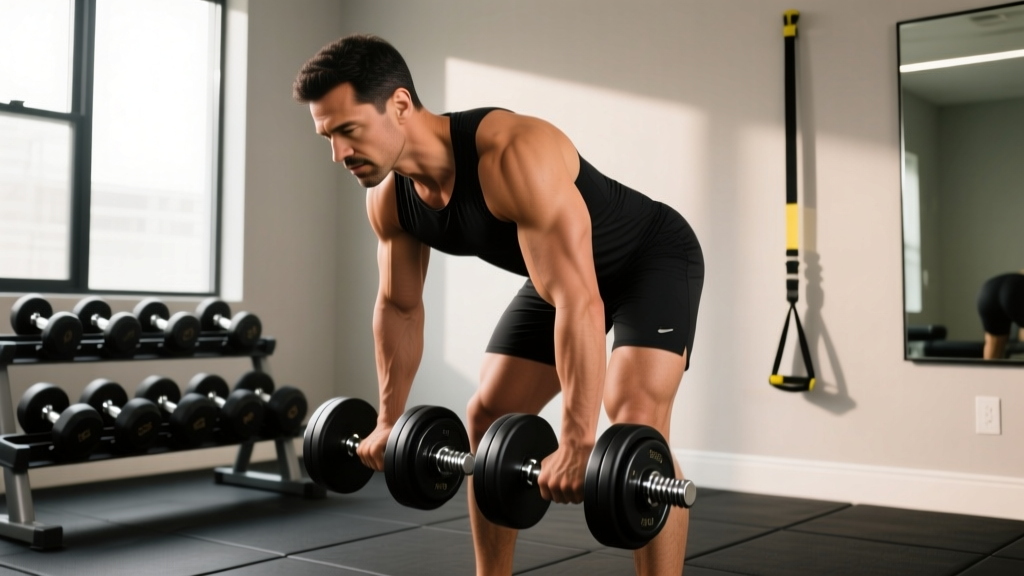
- Hinge at your hips until your torso is nearly parallel to the floor. Keep a soft bend in your knees and a neutral spine.
- Hold lighter dumbbells (10-20 lbs) with palms facing inward.
- Raise the weights out to the sides in a wide arc, leading with your elbows. Stop when your arms are parallel to the floor to avoid shoulder impingement.
- Volume: 3 sets of 12-15 reps.
Do not use momentum to swing the weight up during rows. If your torso twists or jerks upward to complete the rep, the weight is too heavy. Drop the weight by 5 lbs and focus strictly on the mind-muscle connection in your mid back.
Real-World Edge Cases & Maintenance Tips
Adjustable dumbbells are precision instruments. To protect your investment and ensure safety during heavy back workouts, adhere to these real-world maintenance rules:
- Never Drop Them: Unlike cast-iron hex dumbbells, dropping adjustable dumbbells (especially dial-based models like Bowflex or Nuobell) can shatter the internal plastic gears or misalign the weight selector plates. Always lower them to the floor or rack them gently.
- Clean the Knurling: Back workouts mean sweaty hands. Use a stiff nylon brush and a light wipe of mineral oil on steel handles once a month to prevent rust and maintain grip traction.
- Fully Seat the Dumbbell: Before adjusting the weight, ensure the dumbbell is perfectly seated in its cradle. Adjusting the dial while it is slightly tilted can bend the selector pin, rendering the unit useless.
Frequently Asked Questions
Can I build a big back with just adjustable dumbbells?
Yes. While barbells allow for absolute maximum loading, adjustable dumbbells provide superior range of motion and unilateral balance correction. By utilizing techniques like slow eccentrics (3-4 second lowering phases) and 1.5 rep styles, you can stimulate massive hypertrophy without needing a barbell.
How heavy should my adjustable dumbbells go for back training?
For most beginners and intermediates, a set that reaches 50 to 60 lbs per hand is sufficient for the first 1-2 years of consistent training. If you are exceptionally strong or plan to focus heavily on Kroc rows, investing in an 80 lb set (like the Nuobell 80) is highly recommended to prevent outgrowing your gear.
Do I need lifting straps for dumbbell rows?
Initially, no. Spend the first 8 weeks building your raw grip strength. Once your mid-back muscles become strong enough that your grip fails before your back does, introduce basic cotton lifting straps for your heaviest working sets to ensure the target muscles reach true failure.
More gear to consider
All reviews
Olympic Barbell Buying Guide: Thomas Inch Dumbbell & Brian Shaw

Dumbbell Rack Storage: Budgeting for Your Dumbbell Bench Lunge Setup

Space-Saving Gym Layout: Kettlebells & Dumbbell Chest and Arm Workout
Barbell Collars vs. Clamps: Securing Weights for Dumbbell Leg Curls

Rack Setup: Power vs Squat Racks for Simple Dumbbell Workouts
