
Optimizing Gym Layout: Rubber Hex vs Urethane 45 lb Dumbbell
Discover how choosing between a rubber hex and urethane 45 lb dumbbell impacts your gym layout, rack footprint, and space optimization strategies.

The Spatial Science of Dumbbell Materials
When designing a high-performance home gym or optimizing a commercial fitness floor in 2026, layout efficiency is no longer just an aesthetic choice—it is a geometric necessity. With commercial real estate costs remaining high and home gym builders increasingly converting compact spaces like spare bedrooms and garages, every square inch of floor plan matters. While most buyers focus on the durability debate between rubber and polyurethane, facility designers look at volumetric efficiency. The choice of coating material directly dictates the physical footprint of your equipment, which in turn governs your rack selection, walkway clearances, and overall spatial flow.
The 45 lb Dumbbell: The Spatial Tipping Point
Why isolate the 45 lb dumbbell as our benchmark for spatial design? In both commercial and advanced residential layouts, the 45 lb mark represents the transitional threshold in storage methodology. Weights ranging from 5 to 40 lbs are easily accommodated on standard 3-tier horizontal shelving. However, once you reach 45 lbs and above, the physical bulk of the dumbbell heads often forces facility managers to upgrade to heavy-duty 5-tier floor racks, vertical saddle storage, or deeper reinforced shelving.
By analyzing the 45 lb dumbbell, we can precisely measure how material density influences whether a full weight set can remain on a space-saving wall-mounted rack or if it will require a floor-standing unit that consumes valuable square footage. According to facility design principles outlined in NSCA's Essentials of Strength Training and Conditioning, maintaining proper clearance zones around storage equipment is critical for safety and traffic flow, making the physical dimensions of your heaviest rack-stored weights a primary layout variable.
Material Density and Volumetric Breakdown
To understand the spatial differences, we must look at the material science of the coatings. Standard rubber dumbbells utilize a blend of natural and synthetic rubber (SBR). To achieve adequate shock absorption and prevent the rubber from tearing upon impact, manufacturers must mold a relatively thick outer shell—typically between 4mm and 6mm—over the cast iron or steel core.
Polyurethane (PU), conversely, boasts superior tensile strength and tear resistance. According to the Omnexus SpecialChem polymer database, premium gym-grade polyurethane operates at a higher density and structural rigidity than SBR rubber. Because urethane is inherently tougher, manufacturers can achieve the same level of floor protection and impact resistance with a much thinner shell, often just 2mm to 3mm. Furthermore, the cast iron core inside a urethane dumbbell can be machined to tighter tolerances, resulting in a significantly more compact final product.
Dimensional Comparison Matrix: The 45 lb Benchmark
The following data highlights the physical discrepancies between premium rubber hex and urethane hex dumbbells at the 45 lb mark, based on industry-standard manufacturing specifications seen in models like the Rogue Fitness Urethane Hex series and comparable rubber hex lines.
| Metric | Rubber Hex (Standard) | Urethane Hex (Premium) | Spatial Variance |
|---|---|---|---|
| Head Width (Across Flats) | ~7.1 inches | ~6.2 inches | -0.9 inches |
| Head Thickness | ~3.8 inches | ~3.4 inches | -0.4 inches |
| Total Overall Length | ~14.5 inches | ~13.6 inches | -0.9 inches |
| Required Shelf Depth | 18 - 20 inches | 14 - 16 inches | -4.0 inches |
Rack Selection and Walkway Geometry
How does a sub-one-inch difference in head width translate to macro-level gym layout? The compounding effect across a full set of dumbbells is where the spatial ROI materializes. Consider a standard 5 lb to 50 lb dumbbell set, which comprises 10 pairs of weights.
- Horizontal Space Savings: With rubber hex dumbbells, the 45 lb and 50 lb pairs are so wide that they often require a 6-foot wide rack to sit comfortably side-by-side without overhang. By switching to urethane, the reduced head width allows the entire 5-50 lb set to fit snugly on a 5-foot wide rack. You instantly reclaim 12 inches of horizontal wall space, which can be reallocated to a functional trainer attachment or a medicine ball storage column.
- Depth and Walkway Clearance: Because the urethane 45 lb dumbbell is physically shorter and less bulky, it can be stored on compact 14-inch deep shelving. Rubber hex dumbbells require 18-inch to 20-inch deep shelves to prevent the handle from protruding into the walkway. If your rack is pushed against a wall, saving 4 to 6 inches of shelf depth directly expands your primary walkway. Maintaining a minimum 36-inch clearance in high-traffic zones is a foundational safety standard; reclaiming those inches from your rack depth ensures compliance without expanding the room's footprint.
Vertical Storage and the Center of Gravity
For micro-gyms where wall space is entirely consumed by mirrors and functional rigs, vertical dumbbell trees or 5-tier A-frame racks are common. Urethane's compact profile lowers the center of gravity on these vertical units. Because the 45 lb and 50 lb urethane dumbbells are narrower, they sit deeper in the vertical saddles, reducing the lateral sway and tipping hazard associated with bulky rubber hex dumbbells protruding outward from a vertical tower.
Acoustic Dampening and Multi-Story Layouts
Space optimization is not strictly two-dimensional; it also involves the vertical acoustic footprint. In 2026, multi-tenant commercial gyms, apartment complex fitness centers, and second-floor home gyms are increasingly common. The acoustic footprint of your equipment dictates whether you can legally or practically occupy a specific space.
Rubber is highly elastic. When a 45 lb rubber hex dumbbell is dropped, the material compresses and rebounds, transferring kinetic energy into the floor joists as low-frequency vibration and audible noise. Urethane is a 'dead' material; it absorbs and dissipates kinetic energy as heat rather than rebounding it.
From a layout perspective, if you are designing a gym on an upper floor or in a shared-wall environment, choosing urethane allows you to position your dumbbell rack and primary lifting zone closer to property lines or shared walls. The reduction in acoustic vibration means you do not need to allocate extra buffer zones or install expensive, space-consuming acoustic dampening mats beneath the rack area.
The Financial-Spatial ROI Matrix
The primary barrier to urethane is cost. In the current market, premium rubber hex dumbbells average $1.50 to $2.00 per pound, while commercial-grade urethane hex dumbbells command $3.50 to $4.50 per pound. For a 5-50 lb set (550 total lbs), you are looking at a price delta of roughly $1,100 to $1,375.
However, when viewed through the lens of spatial optimization, the math shifts:
- Commercial Real Estate: In urban markets where commercial fitness space leases exceed $40 per square foot annually, the ability to use a 5-foot rack instead of a 6-foot rack, combined with shallower shelf depths, can save 8 to 10 square feet of floor plan. The annual lease savings on that reclaimed space often subsidize the cost of the urethane upgrade within three to four years.
- Home Gym Reallocation: In a 12x12 garage gym, saving a 12-inch by 20-inch footprint from your dumbbell rack might be the exact spatial key required to fit a standard 4x3 foot power rack in the center of the room, transforming a basic conditioning space into a comprehensive strength facility.
Final Layout Verdict
If your primary constraint is budget and you possess a sprawling garage or open-warehouse commercial space where walkway clearances are naturally abundant, rubber hex dumbbells remain a highly functional, cost-effective choice. The spatial penalty of their bulk is easily absorbed by excess square footage.
However, if you are executing a precision layout—optimizing a compact home gym, designing an upscale boutique studio, or navigating strict multi-tenant acoustic and walkway regulations—the urethane 45 lb dumbbell is a superior spatial tool. Its denser molecular structure yields a physically smaller footprint, allowing for narrower racks, shallower shelves, and safer traffic flow. In the geometry of modern fitness design, choosing urethane is not just an investment in equipment longevity; it is an investment in your floor plan.
More gear to consider
All reviews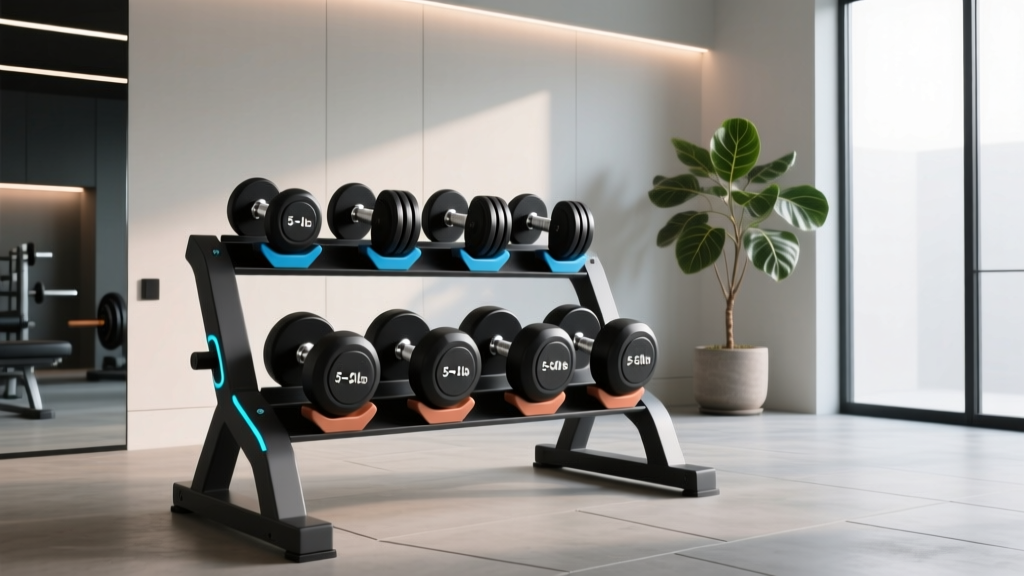
2026 Dumbbell Rack Trends: Optimizing Proper Incline Dumbbell Press

Space-Saving Ladies Dumbbell Workout With Loadable Plates

Overhead Tricep Extension Dumbbell Single Arm: Adjustable Mistakes

Beyond the Best Beginner Dumbbell Workout: Barbell Knurling & Weight

Optimizing Gym Space: Bumper vs Iron Plates & Push Up Rows Dumbbells
