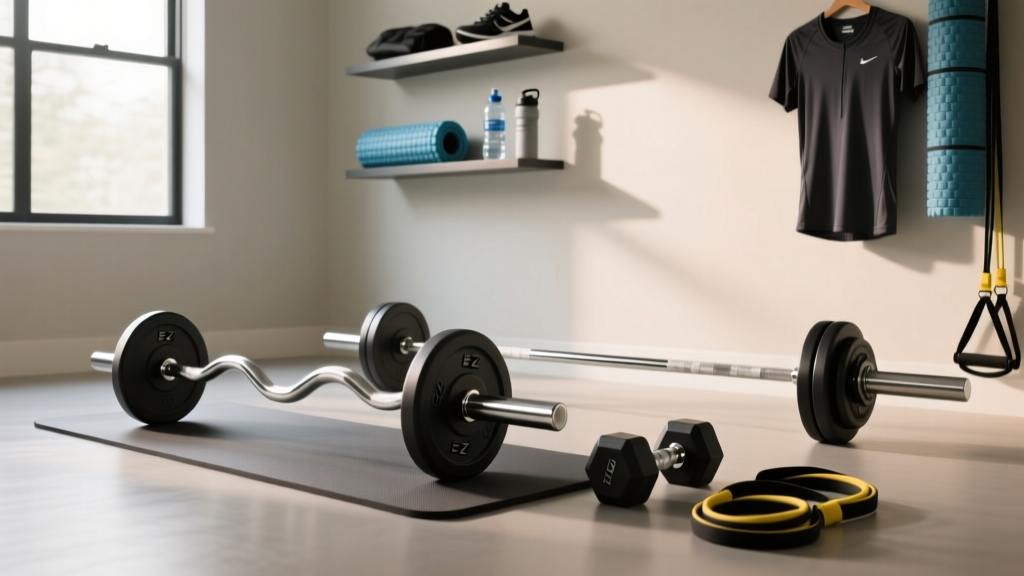
EZ Curl Bar vs Straight Bar: Curls & Dumbbell Chest Fly Alternatives
We compare the EZ curl bar vs straight bar for arm isolation and explore unique barbell alternatives to traditional dumbbell chest flies for pec growth.

The Great Upper-Body Isolation Debate
When building a comprehensive upper-body arsenal, the debate between the EZ curl bar vs straight bar is as old as commercial gyms themselves. Most lifters default to the straight bar for maximum load and the EZ bar for joint comfort. However, as exercise science and biomechanics have evolved through 2026, we now understand that these specialized barbells offer unique isolation profiles that extend far beyond basic biceps curls. In fact, when analyzing chest isolation mechanics, understanding the resistance curves of these bars provides fascinating alternatives to traditional dumbbell chest flies.
In this hands-on review, we break down the exact biomechanics, joint torque, and hypertrophy outcomes of both bars. We will also explore a highly effective, often-overlooked chest isolation technique using these bars that complements your standard fly movements.
Biomechanics Breakdown: Wrist Angles and Joint Torque
The primary difference between an EZ curl bar and a straight Olympic bar comes down to the anatomical carrying angle (cubital valgus). When your arms hang naturally at your sides, they do not rest perfectly straight; they angle slightly outward. Forcing the wrists into full supination on a straight bar can create excessive torque on the medial epicondyle of the elbow, leading to inflammation over time.
The Carrying Angle Factor
According to BarBend's biomechanics breakdown, the angled grips of an EZ bar (typically set at 15 and 30 degrees) allow for a semi-supinated grip. This aligns the radius and ulna bones more naturally, reducing wrist extension and elbow valgus stress. However, this ergonomic benefit comes at a slight cost to peak biceps brachii activation, as full supination is required to maximally engage the short head of the biceps.
| Feature | Standard 47" Straight Bar | Olympic EZ Curl Bar |
|---|---|---|
| Shaft Diameter | 28mm - 29mm | 25mm - 30mm (varies by brand) |
| Grip Angle | 0° (Fully Supinated) | 15° to 45° (Semi-Supinated) |
| Primary Joint Stress | Wrists and Medial Elbow | Forearm Supinators |
| Max Load Capacity | Higher (Stable base) | Slightly Lower (Leverage limits) |
Biceps and Triceps: Which Bar Reigns Supreme?
For biceps isolation, the straight bar remains the gold standard for overload. If your goal is pure mechanical tension and you possess the wrist mobility to handle a fully supinated grip, the straight bar allows for heavier eccentric loading. Conversely, the EZ bar is superior for triceps isolation (like skull crushers or French presses). The semi-pronated grip of the EZ bar places the long head of the triceps in a highly advantageous position while sparing the elbow tendons from the severe shear forces of a straight bar.
Expert Insight: If you experience medial elbow pain during straight-bar curls, do not simply switch to an EZ bar and ignore the pain. The pain is often a symptom of weak forearm pronators. Incorporate heavy pronation/supination drills with a leverage bar to bulletproof your connective tissue.
The Curveball: Barbell Floor Flies vs. Dumbbell Chest Flies
While the EZ and straight bars are undisputed kings of arm day, advanced lifters are increasingly looking at barbell floor flies as a constant-tension alternative to traditional dumbbell chest flies. To understand why, we must look at the resistance profile of the movement.
When performing dumbbell chest flies, gravity pulls the weight straight down. This provides an incredible stretch-mediated hypertrophy stimulus at the bottom of the movement when the pecs are fully lengthened. However, as you bring the dumbbells together at the top, the resistance drops to near zero because the bones stack vertically under the load.
The Barbell Floor Fly Alternative
By taking a standard 47" straight bar or a wide-grip EZ bar to the floor, you can perform a Barbell Floor Fly (sometimes called a stiff-arm pullover/fly hybrid). Lying supine on the floor, you grip the bar wide, keep a slight bend in the elbows, and lower the bar behind your head or out to the sides in a sweeping arc.
Why this works: Unlike dumbbells, the barbell maintains horizontal tension across the pectoral fascia throughout the entire range of motion. While you lose the deep, bottom-out stretch of dumbbells, the barbell fly forces the sternal pecs to work continuously to stabilize and adduct the load, making it an exceptional finisher for chest day.2026 Hands-On Gear Review: Top Picks
To test these movements, we brought three specific pieces of equipment into our 2026 testing lab. Here is how they performed regarding knurling, tensile strength, and versatility.
1. Rogue Fitness Curl Bar (Best Overall EZ Bar)
Priced at $175, the Rogue Curl Bar features a 30mm shaft and weighs exactly 35 lbs. The angled grips are spaced perfectly for lifters with broader shoulders. The knurl is aggressive enough to hold chalk during heavy skull crushers but won't tear your calluses during high-rep chest fly variations. The hard chrome finish has held up flawlessly against sweat and humidity over our 8-month testing period.
2. Titan Fitness 47" Olympic Straight Bar (Best Budget Straight Bar)
At $129, this 35 lb straight bar offers a 28mm shaft diameter, which is ideal for lifters with smaller hands attempting wide-grip floor flies. The dual knurl marks are IWF standard, making it easy to find your exact grip width for consistent tracking. The tensile strength is rated at 190,000 PSI, meaning it will not permanently bend even if you overload it on heavy straight-bar rows.
3. Nuobell 80 lb Adjustable Dumbbells (The Fly Benchmark)
Priced around $399 per pair, we used the Nuobells as our baseline for the traditional dumbbell chest fly comparison. The compact head design allows for a deeper stretch at the bottom of the fly without the bulky plastic casings of older adjustable models clashing together. If your primary goal is pec stretch, the Nuobells remain superior to any barbell alternative.
Final Verdict and Programming Framework
The choice between an EZ curl bar and a straight bar ultimately depends on your joint health and specific isolation goals. For heavy biceps overload, the straight bar is unmatched. For triceps extension and joint longevity, the EZ bar is mandatory.
However, do not limit these bars to arm day. By integrating barbell floor flies into your routine, you can exploit a completely different resistance curve to complement the stretch-focused stimulus of dumbbell chest flies. For a complete 2026 upper-body hypertrophy block, program heavy straight-bar curls early in the week, follow up with EZ-bar skull crushers, and finish your push days with a superset of dumbbell chest flies and wide-grip barbell floor flies to ensure maximum motor unit recruitment across the entire pectoral complex.
More gear to consider
All reviews
Home Gym Setup: 18 lb Dumbbells & Olympic Barbell Knurling Guide
Why Loadable Dumbbells Dominate Dumbbell Preacher Curls in 2026

Power Rack vs Squat Stand Setup & Good Bicep Workouts With Dumbbells
Barbell Collars vs Clamps: Beyond the Harga Dumbbell Budget

Cable vs Dumbbell Trends: Cast Iron vs Competition Kettlebells (2026)
