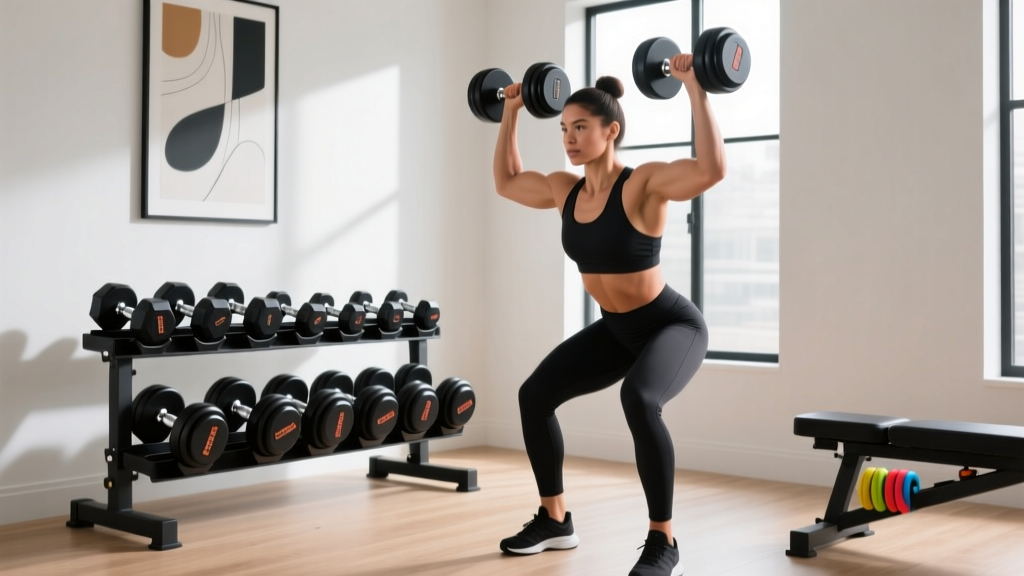
Good Shoulder Workouts With Dumbbells: Loadable Space Setup
Discover how to execute good shoulder workouts with dumbbells using space-saving loadable sets. Compare top 2026 models and optimize your home gym layout.

When designing a compact home gym, the deltoids often become the most problematic muscle group to train effectively. Unlike the chest or back, which can be heavily taxed with a single barbell or a pair of heavy kettlebells, the shoulder complex requires a wide spectrum of resistance. Executing good shoulder workouts with dumbbells demands heavy loads for pressing movements and remarkably light, precise increments for isolation work. For fitness enthusiasts prioritizing space optimization and layout design in 2026, traditional 3-tier dumbbell racks are practically obsolete in small spaces. Instead, loadable dumbbells with interchangeable plates offer a brilliant, space-saving solution—provided you choose the right model for shoulder biomechanics and layout constraints.
The Space vs. Function Dilemma: A standard 3-tier commercial dumbbell rack (5 to 50 lbs) requires a 5-foot wide by 2-foot deep footprint, plus an additional 3 feet of clearance to safely retrieve weights. That is roughly 25 square feet of dedicated floor space. A high-quality loadable dumbbell set reduces this footprint to under 3 square feet, but introduces unique mechanical challenges for shoulder isolation exercises.The Biomechanics of Shoulder Training: Why Handle Geometry Matters
The shoulder joint (glenohumeral joint) is the most mobile joint in the human body, which also makes it the most vulnerable to impingement during resistance training. According to ScienceDirect anatomical reviews, the deltoid is divided into three distinct heads: anterior (front), lateral (side), and posterior (rear). Each head requires a different resistance profile and range of motion (ROM).
When performing overhead presses for the anterior deltoid, wrist stability and a neutral grip are paramount. However, when executing lateral raises for the medial deltoid, the wrist must naturally supinate and rotate through the movement. Many space-saving adjustable dumbbells fail here. Caged designs restrict wrist rotation, forcing the lifter to compensate with the rotator cuff, leading to fatigue and potential injury. True loadable dumbbells—those with a central handle and screw-on or pin-lock collars—mimic the biomechanics of fixed hex dumbbells much more closely, making them vastly superior for comprehensive shoulder development.
2026 Loadable Dumbbell Comparison Matrix for Shoulder Hypertrophy
Not all loadable dumbbells are created equal when it comes to space efficiency and shoulder ergonomics. Below is a comparative analysis of the top three loadable systems available in 2026, evaluated specifically for shoulder training and spatial footprint.
| Model | Storage Footprint | Shoulder Ergonomics | 2026 Price Range | Micro-Loading Capability |
|---|---|---|---|---|
| Ironmaster Quick-Lock V2 | 14" x 8" per pair | Excellent. Square knurled handle mimics standard DBs; allows full wrist supination. | $459 - $899 | Yes (2.5 lb add-on pins) |
| PowerBlock Elite EXP | 12" x 6" per pair | Fair. Cylindrical cage restricts wrist rotation during lateral raises. | $259 - $499 | Yes (2.5 lb internal weights) |
| Titan Fitness Loadable | Variable (Sleeve length) | Poor for isolation. Wide plate spread interferes with ROM on front/lateral raises. | $89 - $129 | Depends on owned plates |
As highlighted in the Garage Gym Reviews adjustable dumbbell analysis, the Ironmaster Quick-Lock V2 remains the gold standard for lifters who prioritize traditional barbell and dumbbell feel. However, its footprint is slightly larger than the PowerBlock. The Titan Fitness loadable handles are incredibly budget-friendly but introduce a massive spatial problem: standard 10-pound iron plates are wide. When loaded onto the Titan handles, the total width of the dumbbell can exceed 18 inches, making it physically impossible to perform front raises or close-grip overhead presses without the plates colliding with your thighs or each other.
Space Optimization: Designing Your Shoulder Training Zone
Integrating loadable dumbbells into a small home gym requires deliberate layout planning. You are no longer designing around a massive rack; you are designing around your body's clearance zone during dynamic movements.
Calculating Your Overhead Clearance
The most common layout failure in apartment and garage gyms is ignoring vertical clearance. To perform a full-ROM seated overhead press with loadable dumbbells, measure your height, add the length of your arm (roughly 30 inches), and add the height of your bench (18 inches). For a 6-foot-tall lifter, you need a minimum ceiling height of 8.5 feet to avoid driving the dumbbell collars into drywall or exposed joists at the peak of the press.
The Lateral Raise Swing Zone
For lateral raises and rear delt flyes, your wingspan dictates the floor plan. Stand against your intended training wall and extend your arms fully to the sides. Add 6 inches of buffer on each side to account for the width of the loaded dumbbells. Mark this zone on your floor mats. Your weight storage tray must sit outside this swing zone to prevent tripping hazards during drop sets.
Pro-Tip for Micro-Loading: The lateral deltoid is a small muscle group. Jumping from 15 lbs to 20 lbs is a 33% increase in load, which often leads to form breakdown and trap dominance. Invest in fractional magnetic micro-plates (0.5 lb to 1.25 lbs) that can be stuck to the ends of your loadable dumbbells. This allows for precise progressive overload without altering the physical footprint of the weight.
The Space-Optimized Loadable Shoulder Routine
To maximize the utility of your loadable dumbbells without requiring a massive clearance zone, this routine utilizes a single adjustable bench and a compact 5x5 foot footprint. According to the Exercise Prescription Directory, hitting all three heads of the deltoid requires varying angles and resistance curves. Perform this routine twice a week for optimal hypertrophy.
- Seated Overhead Press (Anterior & Medial Deltoid): Set bench to 75 degrees. Press up and slightly back. Space Need: 4x4 ft. Keep elbows tucked at a 30-degree angle to protect the rotator cuff. (4 sets of 6-8 reps)
- Chest-Supported Rear Delt Flyes (Posterior Deltoid): Set bench to a 45-degree incline. Lie face down and raise the dumbbells laterally. Space Need: Minimal. This eliminates the need to bend over, saving lower back fatigue and reducing the forward floor clearance required. (3 sets of 12-15 reps)
- Seated Lateral Raises (Medial Deltoid): Sit on the edge of the bench, leaning slightly forward. Space Need: 6x4 ft wingspan. Use the micro-loading pins to find the exact weight where you can control the eccentric (lowering) phase for 3 seconds. (4 sets of 10-12 reps)
- Single-Arm Dumbbell Upright Row (Traps & Lateral Delt): Stand near your storage tray. Pull the dumbbell to chest height, leading with the elbow. Space Need: 2x2 ft. Highly compact movement that finishes off the shoulder girdle. (3 sets of 10 reps per arm)
Edge Cases and Troubleshooting Loadable Sets
While loadable dumbbells solve the spatial issue, they introduce mechanical edge cases that you must troubleshoot for shoulder training:
- Plate Rattle During Isolation: Screw-collar loadable dumbbells can loosen slightly during high-rep lateral raises due to rotational torque. Always use a locking nut or apply a drop of blue Loctite to the threads if your model permits.
- Knurling Bite: The aggressive knurling on handles like the Ironmaster is great for heavy presses but can tear calluses during high-rep rear delt flyes where the grip shifts. Use lifting straps or chalk to stabilize the grip without squeezing the life out of the handle.
- Sleeve Interference: If using Olympic-style loadable handles with 2-inch sleeves, you must purchase specialized narrow urethane grip plates. Standard iron bumper plates are too thick and will ruin your range of motion on pressing movements.
Frequently Asked Questions
Can I build massive shoulders using only loadable dumbbells?
Absolutely. Muscle tissue responds to mechanical tension and progressive overload, not the type of equipment used. As long as your loadable dumbbells allow you to incrementally increase weight and provide enough maximum resistance (at least 50-70 lbs per hand for advanced lifters), you can achieve elite-level shoulder hypertrophy in a 30-square-foot space.
Are adjustable dial dumbbells better than loadable plate dumbbells for shoulders?
For pure space savings, dial dumbbells (like the Bowflex 552) are excellent. However, for shoulder training specifically, loadable plate dumbbells are superior. Dial dumbbells have bulky plastic housings that frequently collide with each other during close-grip overhead presses and can crack if dropped during a heavy set failure. Loadable iron dumbbells are virtually indestructible and offer a more compact physical profile at the point of the handle.
What is the minimum ceiling height for a home gym focused on dumbbell shoulder workouts?
You need a minimum of 8 feet of clearance for most lifters. If you are taller than 6'2", you will need at least 8.5 to 9 feet of ceiling height to safely execute standing or seated overhead presses with full lockout without damaging your ceiling or the dumbbell collars.
More gear to consider
All reviews
Power Rack vs Squat Stand: How to Draw Dumbbells & Plan Your Gym

Barbell Back Squat With Dumbbells: Best Loadable Sets 2026
Best Adjustable Dumbbells for Dumbbell Chest Exercises (2026)
Best Adjustable Dumbbells for a Fast Dumbbell Workout (2026)

Dumbbell Halos & Barbell Collar Types: A Setup Walkthrough
