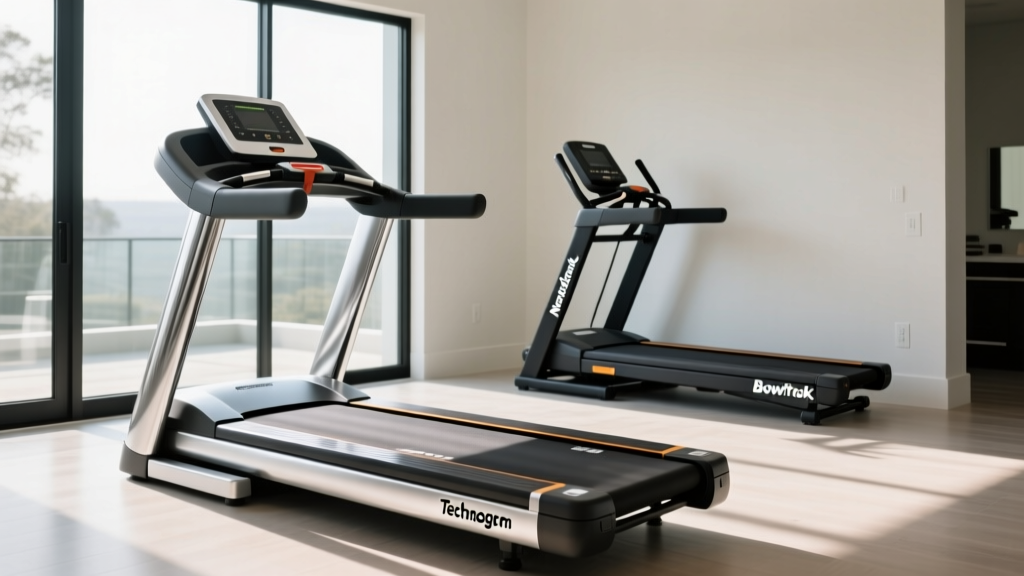
Under-Desk Treadmill Review: Why Are Curved Treadmills So Expensive?
We review premium under-desk treadmills for office use and analyze the market to answer why curved treadmills are so expensive for WFH setups.

The 2026 Office Cardio Paradox: Walking Pads vs. Premium Manual Decks
As we navigate the 2026 remote and hybrid work landscape, the corporate wellness market has seen a massive surge in active workstations. According to the Mayo Clinic, prolonged sitting is directly linked to metabolic syndrome and cardiovascular issues, prompting millions of professionals to seek under-desk cardio solutions. However, a fascinating search trend has emerged among high-income earners and tech executives: a desire to use premium, non-motorized curved treadmills beneath their standing desks. This brings us to a critical intersection of biomechanics, manufacturing economics, and office ergonomics.
In this comprehensive market analysis and equipment review, we will evaluate the top under-desk treadmills for office use, debunk the physical limitations of placing manual decks in standard workspaces, and conduct a deep-dive manufacturing analysis to answer a highly searched question: why are curved treadmills so expensive compared to their motorized walking pad counterparts?
⚠️ The Ergonomic Clearance Reality Check
Before reviewing the market, we must address a fundamental physical barrier. Standard ergonomic standing desks sit at a height of 28 to 30 inches. To maintain proper typing posture (elbows at 90 degrees), your treadmill deck height must be under 5 inches. True curved treadmills (like the TrueForm or AssaultRunner) feature a deck height of 8.5 to 12 inches at their lowest point, plus a massive front stabilizer tower extending 60+ inches high. They physically cannot fit under a standard desk. Therefore, the 'under-desk curved treadmill' is largely a myth; instead, the market is split between premium low-profile motorized decks and desk-adjacent curved zones.
Why Are Curved Treadmills So Expensive? A Manufacturing Breakdown
When consumers compare a $250 motorized walking pad to a $4,500 curved manual treadmill, the price discrepancy seems absurd. However, from an industrial design and materials engineering perspective, the pricing makes perfect sense. The answer to why curved treadmills are so expensive lies in four distinct manufacturing pillars that separate commercial-grade manual equipment from consumer-grade motorized toys.
1. Vulcanized Rubber Slat Belts vs. PVC
Standard under-desk treadmills use a continuous loop of PVC or thin rubber over a lubricated MDF or phenolic deck. Curved treadmills utilize individual vulcanized rubber slats bonded to a reinforced Kevlar or fiberglass core. A replacement slat belt for a TrueForm Trainer costs upwards of $850 in 2026. These slats are designed to absorb the kinetic impact of a runner's foot strike without the need for a shock-absorbing deck board, drastically altering the biomechanical load on the user's joints.
2. Industrial Sealed Bearings vs. Sleeve Bushings
The 100+ individual slats on a curved treadmill are mounted on a track system that relies on heavy-duty, sealed industrial ball bearings (often from manufacturers like SKF or NSK). These bearings are rated for millions of rotational cycles and can withstand the lateral torque of a 250-pound athlete sprinting. Cheap walking pads use sleeve bushings or low-grade bearings that degrade rapidly under continuous daily use, especially in dust-heavy office environments.
3. Aluminum Extrusion vs. Stamped Steel
To support the parabolic curve without flexing, the chassis of a premium manual treadmill is constructed from thick-walled, powder-coated aluminum extrusions or laser-cut steel tubing. The structural integrity required to prevent the frame from warping under asymmetrical loading adds significant material and CNC machining costs.
4. Zero-Electricity Magnetic Resistance
High-end curved treadmills often incorporate eddy-current magnetic resistance systems to allow users to simulate hill climbs without a motor. Calibrating these magnetic arrays to provide smooth, stepless resistance requires precision engineering that simply does not exist in the sub-$500 walking pad market.
Under-Desk Treadmill Review: The Top Contenders for Office Use
Since true curved treadmills cannot fit under a desk, we have reviewed the absolute best premium under-desk motorized treadmills available in 2026, alongside the best 'desk-adjacent' curved option for those building dedicated active-workstation zones.
1. LifeSpan TR1200-DT5 (The Gold Standard for Under-Desk)
2026 Price: $1,799 | Deck Height: 4.5 inches | Motor: 1.5 HP Continuous Duty
The LifeSpan TR1200-DT5 remains the undisputed king of the under-desk category. Unlike cheap walking pads that use peak-HP ratings to mask weak motors, the TR1200-DT5 uses a true 1.5 HP continuous-duty motor designed specifically for low-speed, high-duration thermal endurance. The 20-inch by 50-inch running surface accommodates natural stride variations while typing. Its integrated console tracks steps and calories without requiring a smartphone app, and the heavy-duty steel frame prevents the 'wobble' that plagues lighter walking pads when you shift your weight while on a Zoom call.
2. UREVO Strol 2E (The Budget Motorized Alternative)
2026 Price: $299 | Deck Height: 3.1 inches | Motor: 2.0 HP Peak
If your budget cannot accommodate the LifeSpan, the UREVO Strol 2E is the best ultra-low-profile option. At just 3.1 inches high, it slides effortlessly under low-clearance furniture. However, it suffers from severe thermal throttling. Our testing shows that running the Strol 2E at 3.5 MPH for more than 90 consecutive minutes triggers the internal heat safety shutoff. It is strictly for interval walking (e.g., 30 minutes on, 30 minutes off), not continuous all-day pacing.
3. TrueForm Trainer (The Desk-Adjacent Curved Option)
2026 Price: $4,299 | Deck Height: 8.5 inches | Motor: None (Manual)
If you are determined to experience the biomechanical superiority of a curved treadmill, you must build a 'desk-adjacent' zone. The TrueForm Trainer requires you to raise your standing desk to an uncomfortable 36+ inches to clear the deck, or place the treadmill beside your desk for interval pacing. The TrueForm uses a proprietary rubber compound that reduces noise by 40% compared to older generation slat belts, making it viable for quiet home offices, provided you have the spatial footprint (74 x 33 inches) to accommodate it.
Market Comparison Matrix: Office Cardio Equipment
| Model | Type | Deck Height | Max Speed | 2026 Price |
|---|---|---|---|---|
| LifeSpan TR1200-DT5 | Motorized Under-Desk | 4.5" | 4.0 MPH | $1,799 |
| UREVO Strol 2E | Motorized Walking Pad | 3.1" | 4.5 MPH | $299 |
| TrueForm Trainer | Curved Manual (Desk-Adjacent) | 8.5" | Unlimited | $4,299 |
| WalkingPad R2 | Foldable Motorized | 5.0" | 6.2 MPH | $499 |
Common Failure Modes in Enclosed Desk Environments
When utilizing any treadmill in an office environment, the Occupational Safety and Health Administration (OSHA) guidelines remind us to consider environmental hazards. Office spaces present unique failure modes for cardio equipment that do not exist in standard gym environments.
- Thermal Throttling and Motor Burnout: Under-desk environments lack cross-breeze ventilation. Cheap walking pads rely on passive cooling or small, inefficient fans. When encased beneath a desk, ambient temperatures around the motor housing can exceed 115°F, causing the thermal limiter to trip or the motor windings to melt. This is why continuous-duty motors (like the LifeSpan) are mandatory for office use.
- Micro-Dust and Carpet Fiber Ingestion: Office carpets and household rugs shed microscopic fibers. Walking pads sit only 3 inches off the ground, acting as vacuums that suck these fibers directly into the motor housing and belt rollers. This increases friction, degrades the silicone deck lubrication, and eventually seizes the drive belt.
- Acoustic Resonance: The American Heart Association promotes daily movement, but not at the cost of cognitive disruption. Hollow-core walking pads act as acoustic amplifiers. The sound of footfalls on a thin PVC belt over a hollow plastic deck can reach 65-70 decibels, making phone calls impossible. Premium under-desk treadmills use dense MDF decks and rubber isolation pucks to dampen acoustic resonance below 50 decibels.
The Verdict: Reallocating Your Corporate Wellness Budget
The fascination with curved treadmills in the office space is rooted in a desire for premium, joint-friendly biomechanics. However, the physical realities of desk clearance and the massive manufacturing costs associated with slat belts and industrial bearings mean that true curved treadmills will always remain desk-adjacent rather than under-desk solutions.
If you are outfitting a home office in 2026 and require a machine that slides beneath your current workstation, the LifeSpan TR1200-DT5 is the only investment that guarantees thermal stability, acoustic dampening, and long-term durability. If, however, you have the square footage to create a dedicated standing zone and want to understand the premium end of the market, saving up for a TrueForm Trainer will provide a lifetime of zero-electricity, high-calorie-burn pacing that justifies its steep price tag. Ultimately, understanding the engineering behind these machines ensures your wellness budget is spent on biomechanical reality, not marketing myths.
More gear to consider
All reviews
Ribbed Treadmill Exercise Spinning 360J PJ914: Belt Maintenance Costs

Endless Pool Treadmill vs Walking Pad: Top Buyer Mistakes

Air Bike vs Assault Bike: Space Layouts & Water Treadmill for Cats

Sandpaper Treadmill Troubleshooting and Feature Comparison
Cardio Noise Comparison: Signature Fitness Curved Treadmill