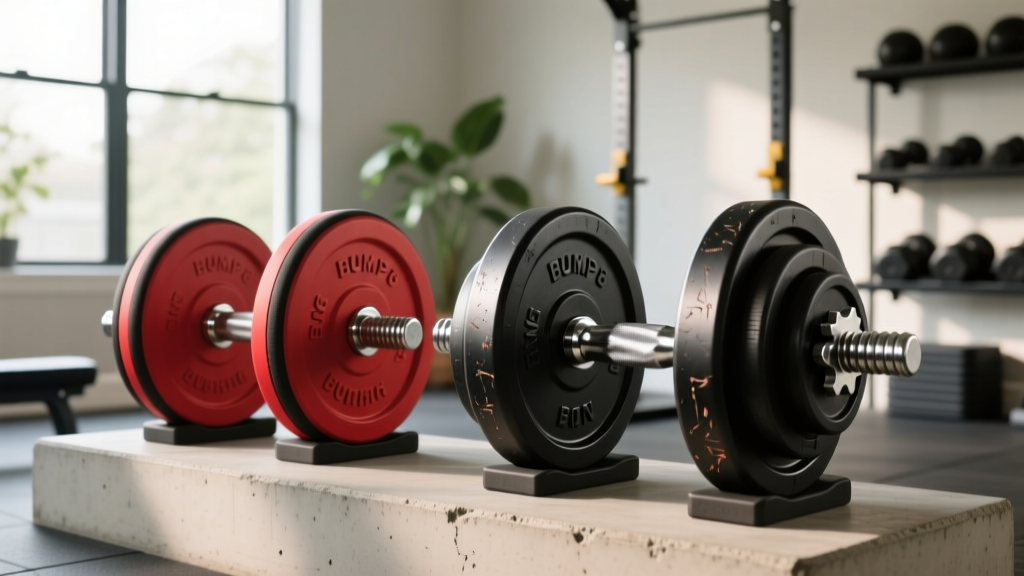
Troubleshooting Dumbbell Zottman Curls with Neoprene Home Weights
Master dumbbell Zottman curls at home. Fix grip slip, wrist strain, and loading mistakes when using neoprene coated dumbbells in your home gym.

The Biomechanical Clash: Zottman Curls vs. Neoprene Handles
Neoprene-coated dumbbells are a staple in millions of home gyms. They are affordable, floor-friendly, color-coded, and resist rust. Brands like Yes4All, CAP Barbell, and Amazon Basics dominate the entry-level market, making them the default choice for casual lifters. However, when home gym owners attempt advanced isolation movements like dumbbell Zottman curls, they frequently hit a frustrating wall. The Zottman curl is a hybrid bicep and forearm builder that requires a supinated (palms-up) concentric lift and a pronated (palms-down) eccentric descent.
This 180-degree wrist rotation exposes the fundamental design flaws of neoprene dumbbells for advanced arm training. Unlike bare steel or knurled urethane handles, neoprene rubber is smooth, often slightly porous, and prone to becoming slippery when exposed to sweat. Furthermore, the handle diameter on most fixed-weight neoprene dumbbells ranges from 35mm to 40mm—significantly thicker than the standard 25mm to 28mm found on Olympic bars and premium hex dumbbells. When you combine a thick, smooth handle with the biomechanical demands of a pronated eccentric phase, grip failure and wrist compensation become almost inevitable.
⚠️ Warning: Wrist Strain RiskAttempting heavy Zottman curls with thick, unknurled neoprene handles often forces the lifter into excessive wrist extension to keep the weight from rolling out of the fingers. This compensation shifts the load away from the brachioradialis and places dangerous shear stress on the lateral epicondyle, a primary trigger for lateral epicondylitis (tennis elbow).
3 Critical Mistakes When Using Neoprene Dumbbells for Zottmans
If your forearm burns out before your biceps, or if you feel a sharp ache in your outer elbow during the descent, you are likely falling victim to one of these three common troubleshooting failures.
Mistake 1: Overloading the Pronated Eccentric Phase
The most common error is using the same weight for Zottman curls as you do for standard supinated bicep curls. During the supinated concentric phase, the biceps brachii is the primary mover. However, when you rotate your wrist to a pronated position for the descent, the biceps brachii is mechanically disadvantaged. The load shifts heavily to the brachialis and the brachioradialis. Because the brachioradialis is a smaller, weaker muscle group than the biceps brachii, using your standard curl weight will cause your grip and forearms to fail prematurely, ruining the muscle-building stimulus.
Mistake 2: Ignoring the 35mm+ Handle Diameter
Grip strength is highly dependent on handle diameter. A standard Olympic barbell is roughly 28mm to 29mm. Most neoprene dumbbells in the 15 lb to 30 lb range feature handles that swell to 35mm or even 40mm to accommodate the internal molding of the rubber coating. This thicker grip requires significantly more crush strength to hold, especially when the hand is pronated and the fingers are fighting gravity to keep the smooth rubber from sliding out of the palm.
Mistake 3: Rushing the Wrist Rotation
The transition at the top of the movement is where the magic happens. Many lifters use momentum to flick their wrists from supinated to pronated. With smooth neoprene, this rapid rotation often causes the dumbbell to slip slightly in the hand, forcing the lifter to micro-adjust their grip while the weight is already moving downward. This breaks muscular tension and eliminates the time-under-tension required for hypertrophy.
Handle Specs & Load Adjustments: Neoprene vs. Hex
To understand why your form is breaking down, look at the physical differences between the equipment you are using and the equipment the movement was designed for.
| Feature | Standard Neoprene Dumbbell | Urethane Hex Dumbbell |
|---|---|---|
| Handle Diameter | 35mm - 40mm (Thick) | 28mm - 32mm (Standard) |
| Surface Texture | Smooth / Slightly Tacky Rubber | Medium to Aggressive Knurling |
| Grip Slip Risk (Pronated) | High | Low |
| Recommended Zottman Load | 70% - 75% of 10-Rep Max Curl | 80% - 85% of 10-Rep Max Curl |
Step-by-Step Troubleshooting Protocol
If you are committed to using your current neoprene dumbbell set for Zottman curls, you must adapt your technique to mitigate the lack of knurling and the increased handle thickness. Follow this protocol to salvage the movement.
- Apply the 25% Reduction Rule: Take your working weight for standard dumbbell curls and drop it by 25%. If you curl 20 lb neoprene dumbbells for 10 reps, use the 15 lb dumbbells for Zottman curls. This accounts for both the brachioradialis strength deficit and the grip limitation of the neoprene.
- Use Liquid Chalk: Traditional gym chalk can stain floors and degrade the neoprene coating over time. Instead, use a liquid chalk (like Spider Chalk or Gripzilla). Apply a dime-sized drop to your palms, let it dry for 10 seconds, and grip the dumbbell. This creates a tacky barrier that neutralizes the slip-factor of the smooth rubber.
- Implement a 3-1-1 Tempo: Explode up (supinated) for 1 second, pause at the top for 1 second to deliberately rotate the wrist 180 degrees without momentum, and lower the weight (pronated) for a strict 3-second count. This slow eccentric prevents the dumbbell from slipping and maximizes brachialis activation.
- Neutral Wrist Alignment: Actively think about keeping your wrist completely straight (neutral) during the descent. Do not let the back of your hand bend backward toward your forearm. If you cannot maintain a neutral wrist, the weight is too heavy or your grip has failed.
"The Zottman curl is an exceptional tool for building the brachialis and brachioradialis, pushing the biceps up for a thicker peak. However, the eccentric pronated phase is only as effective as your grip allows. If you are fighting the equipment rather than the weight, the stimulus is lost."
— Adapted from principles found in the ACE Fitness Exercise Library regarding joint alignment and resistance training.
When to Upgrade: Neoprene vs. Urethane Hex for Home Gyms
While troubleshooting your form can help, there is a hard ceiling to how much you can progress using thick, smooth neoprene handles for advanced isolation work. If your primary goal is arm hypertrophy and you are training at home, upgrading your equipment is often more cost-effective than spending months fighting grip fatigue.
Cost-Benefit Breakdown (2026 Market Pricing)
As of early 2026, the home gym equipment market has seen a stabilization in shipping and raw material costs, making premium urethane dumbbells more accessible than in previous years. Here is a real-world comparison for a pair of 25 lb dumbbells:
- Entry-Level Neoprene (e.g., Yes4All / CAP Barbell SDN Series): ~$55 to $65 per pair. Pros: Cheap, protects floors. Cons: Thick handles, zero knurling, bulky heads limit range of motion.
- Premium Urethane Hex (e.g., REP Fitness Urethane Hex / Rogue Urethane): ~$130 to $160 per pair. Pros: Precision-machined steel handles with medium knurling, standard 30mm diameter, compact heads, highly durable. Cons: Higher upfront cost, can chip hardwood floors if dropped.
The Verdict: If you are doing high-rep conditioning, floor work, or basic presses, keep the neoprene. But if you are actively programming Zottman curls, reverse curls, and heavy isolation work, the $75 difference for a knurled urethane pair will immediately unlock heavier loading, better mind-muscle connection, and zero grip slip.
Frequently Asked Questions
Can I use lifting straps for Zottman curls with neoprene dumbbells?
No. Lifting straps are designed to wrap around a barbell to support pulling movements (like deadlifts or rows). Wrapping a strap around a dumbbell handle for a curl restricts the necessary 180-degree wrist rotation and alters the biomechanics of the exercise, rendering the Zottman curl ineffective.
Why do my forearms burn before my biceps on the way down?
This is a classic sign of grip failure compounded by handle thickness. The smooth neoprene forces your finger flexors to work in overdrive to prevent the dumbbell from sliding out of your pronated hand. Switch to liquid chalk, drop the weight by 20%, and focus on a slower eccentric tempo to shift the tension back to the brachioradialis.
Are adjustable dumbbells better than neoprene for Zottman curls?
Generally, yes. High-quality adjustable dumbbells (like PowerBlock or Nuobell) feature bare steel or chrome handles with some degree of knurling and a standard grip diameter. This provides the necessary friction and ergonomic sizing to execute the pronated eccentric phase safely and effectively without premature grip failure.
More gear to consider
All reviews
Power Rack vs Squat Rack: Setup for a Push Pull Dumbbell Workout
Cast Iron vs Competition Kettlebells & One Dumbbell Biceps Workouts

Best Adjustable Dumbbells for the Dumbbell Triceps Kickback (2026)

Olympic Barbell Knurling & Centr Rubber Dumbbell Set Setup Guide
Optimize Home Workouts with Dumbbells: Rack & Storage Guide