
Can Running on a Treadmill Help Lose Weight? Rower vs Treadmill 2026
Wondering if running on a treadmill helps lose weight? We compare treadmill vs. rowing machine calorie burn, technique, and top 2026 models.

The Calorie Burn Debate: Treadmill vs. Rowing Machine
Many fitness enthusiasts start their weight loss journey by asking a fundamental question: can running on a treadmill help lose weight effectively? The short answer is yes. Treadmill running is a highly accessible, weight-bearing cardiovascular exercise that elevates your heart rate and burns significant calories. However, when we put the treadmill head-to-head against the rowing machine (ergometer) for long-term fat loss, joint preservation, and muscle engagement, the rowing machine frequently emerges as the superior tool for a broader demographic of home gym users.
According to data from Harvard Health Publishing, a 155-pound person running at a moderate 6 mph pace on a treadmill burns approximately 372 calories in 30 minutes. The same person rowing vigorously for 30 minutes burns roughly 316 calories. While the treadmill wins on pure caloric expenditure per minute, it comes at a high biomechanical cost: repetitive impact forces equivalent to 2.5 to 3 times your body weight on every footstrike.
Expert Insight: Weight loss is ultimately dictated by a caloric deficit, not just the machine you use. However, the rowing machine engages 86% of your muscle mass per stroke compared to the treadmill's predominantly lower-body focus. More muscle engagement means a higher post-exercise oxygen consumption (EPOC) effect, leading to continued calorie burn hours after your workout ends.| Metric | Treadmill (Running 6mph) | Rowing Machine (Vigorous) |
|---|---|---|
| Calories Burned (30 min / 155lb user) | ~372 kcal | ~316 kcal |
| Joint Impact | High (Knees, Hips, Ankles) | Zero (Seated, Non-Weight Bearing) |
| Muscle Engagement | ~70% (Mostly Lower Body) | 86% (Full Body) |
| Space Footprint | ~70' x 30' (Cannot fold easily) | ~95' x 24' (Stores upright) |
2026 Rowing Machine Buying Guide: Top Models Head-to-Head
If you are pivoting from the treadmill to a rower to save your joints while maximizing fat loss, choosing the right resistance type is critical. Below is our head-to-head comparison of the top three rowing machines dominating the home fitness market in 2026.
1. Concept2 RowErg (Standard Legs)
- Price: $1,195
- Resistance Type: Air
- Best For: Serious athletes, CrossFitters, and data purists.
The Concept2 RowErg remains the undisputed gold standard. Its air resistance provides an infinite, variable curve—the harder you pull, the more resistance it generates. The PM5 monitor is incredibly accurate and connects seamlessly to third-party apps like ErgZone. Failure Mode & Edge Case: Air rowers are inherently loud. If you live in an apartment with thin walls, the 'whoosh' of the flywheel at high stroke rates may disturb neighbors. Additionally, the nickel-plated steel chain requires maintenance; you must oil it with 10W-30 motor oil or purified petroleum every 50 hours of use to prevent rust and ensure a smooth catch.
2. Hydrow Apex
- Price: $2,495 (Plus $38/mo subscription)
- Resistance Type: Computer-controlled Electromagnetic
- Best For: Tech enthusiasts and visual learners.
The Hydrow Apex uses an electromagnetic drag system that perfectly mimics the feel of water resistance without the maintenance of actual water tanks. It is virtually silent, making it ideal for shared living spaces. The 22-inch HDR touchscreen offers immersive, on-water workouts led by world-class rowers. Failure Mode & Edge Case: The machine is essentially a giant tablet. Without the mandatory $38/month all-access membership, you lose access to the library of guided workouts, severely limiting its value proposition. Furthermore, the electromagnetic brake can occasionally require recalibration if the machine is moved frequently.
3. Echelon Row
- Price: $599
- Resistance Type: Magnetic
- Best For: Budget-conscious beginners.
The Echelon Row offers a quiet, smooth magnetic resistance system with 32 levels of adjustment. It folds compactly, making it a great space-saver. Failure Mode & Edge Case: Magnetic resistance lacks the dynamic 'infinite' feel of air; the resistance curve can feel slightly artificial at high stroke rates. Additionally, the footplate straps on budget models like this tend to fray and stretch after 12 to 18 months of heavy, aggressive HIIT rowing, requiring aftermarket replacement straps.
Mastering the Erg: Technique for Maximum Fat Loss
Unlike a treadmill, where you simply step on and press start, rowing requires technical proficiency. Poor technique not only limits your calorie burn but is the primary cause of lower back pain in novice rowers. According to the biomechanical guidelines established by Concept2, the rowing stroke is broken down into four distinct phases.
'Rowing is not an upper-body pull; it is a lower-body push. The power distribution should be roughly 60% legs, 20% core swing, and 20% arms.' - Elite Rowing Biomechanics Consensus
The Four Phases of the Stroke
- The Catch: Your shins should be perfectly vertical, arms fully extended, and torso hinged slightly forward at the '11 o'clock' position. Your heels may lift slightly.
- The Drive: Initiate the movement by pushing explosively with your legs. Your arms remain completely straight until your legs are nearly fully extended. Only then do you swing your torso back to '1 o'clock' and pull the handle to your lower ribs.
- The Finish: Legs are flat and fully extended, core is braced, and the handle is drawn into your sternum. Elbows are drawn back and slightly elevated.
- The Recovery: The exact reverse of the drive. Extend the arms, hinge the torso forward past vertical, and finally bend the knees to slide back to the catch. The recovery should be relaxed and controlled.
Demystifying the Damper Setting
Most beginners slide the damper lever on the side of the Concept2 flywheel up to 10, assuming higher is better for weight loss. This is a myth. A setting of 10 is equivalent to rowing a heavy, slow wooden boat. For the most efficient cardiovascular workout and highest calorie burn, you want to mimic a sleek racing shell. Check the 'Drag Factor' in the PM5 menu and aim for a number between 110 and 130. For most machines, this corresponds to a damper setting between 3 and 5.
Programming Your Cardio: Treadmill Intervals vs. Rowing Erg Sprints
To answer the question of whether running on a treadmill helps lose weight faster than rowing, we must look at programming. High-Intensity Interval Training (HIIT) is highly effective for fat oxidation, but doing HIIT on a treadmill carries a high risk of shin splints and Achilles tendonitis. The rower allows for max-effort sprints with zero impact.
The 20-Minute Fat-Loss Rowing Pyramid
- Warm-up: 5 minutes at 20 strokes per minute (spm), light pressure.
- Level 1: 4 minutes at 22 spm, moderate pressure.
- Level 2: 3 minutes at 24 spm, firm pressure.
- Level 3: 2 minutes at 26 spm, hard effort.
- Level 4 (Peak): 1 minute at 28+ spm, max effort sprint.
- Cool Down: 5 minutes of easy paddling to flush lactic acid.
This pyramid structure forces your heart rate into the anaerobic threshold (Zone 4) safely, maximizing EPOC and post-workout calorie burn without the joint degradation associated with treadmill sprinting.
Maintenance & Edge Cases: Keeping Your Machine Running
Whether you stick to the treadmill or switch to the rower, maintenance is non-negotiable for equipment longevity.
- Treadmill Deck Lubrication: If you choose the treadmill, you must apply 100% silicone lubricant under the belt every 3 months or 130 miles. Failure to do so increases friction, which will eventually burn out the drive motor—a $400+ replacement.
- Rower Monorail Cleaning: For rowing machines, the wheels on the seat leave microscopic debris on the monorail. Wipe the rail with a damp paper towel after every session. Never use harsh chemical cleaners like bleach or ammonia, as they will degrade the nickel plating and cause the seat to stutter during the recovery phase.
Final Verdict: Which Should You Choose?
So, can running on a treadmill help lose weight? Absolutely. If you are training for a 5K or prefer the simplicity of walking and running, a treadmill is a fantastic investment. However, if your primary goal is sustainable, long-term fat loss while preserving joint health and building posterior chain strength, the rowing machine is the superior choice. By mastering the technique and selecting a machine that fits your budget and space—like the indestructible Concept2 RowErg or the immersive Hydrow Apex—you can achieve profound body composition changes safely and efficiently in 2026 and beyond.
More gear to consider
All reviews
Curved vs Motorized: How to Lose Weight on a Treadmill in 2 Weeks
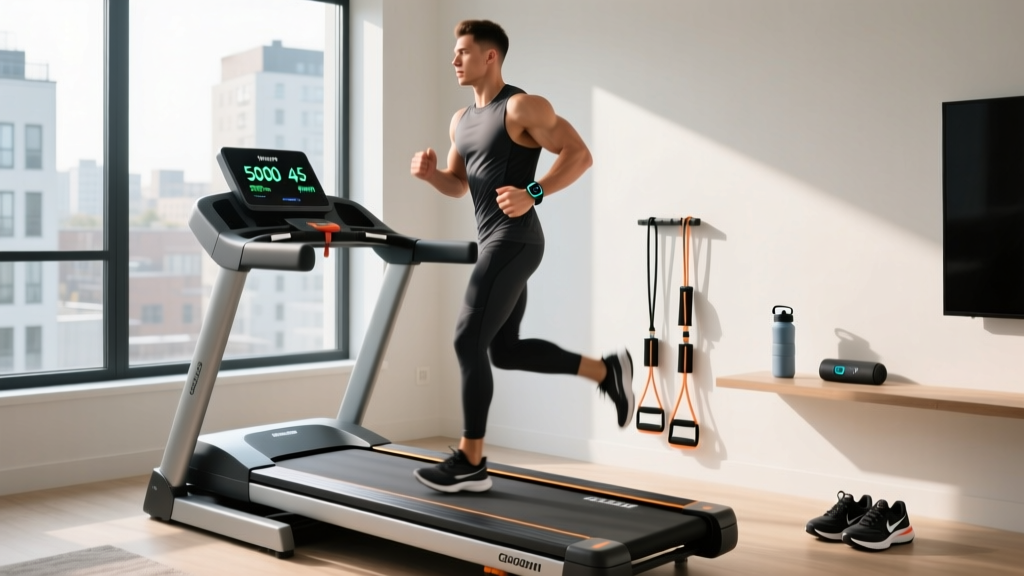
How Long to Walk 5000 Steps on a Treadmill: Feature Guide & Fixes
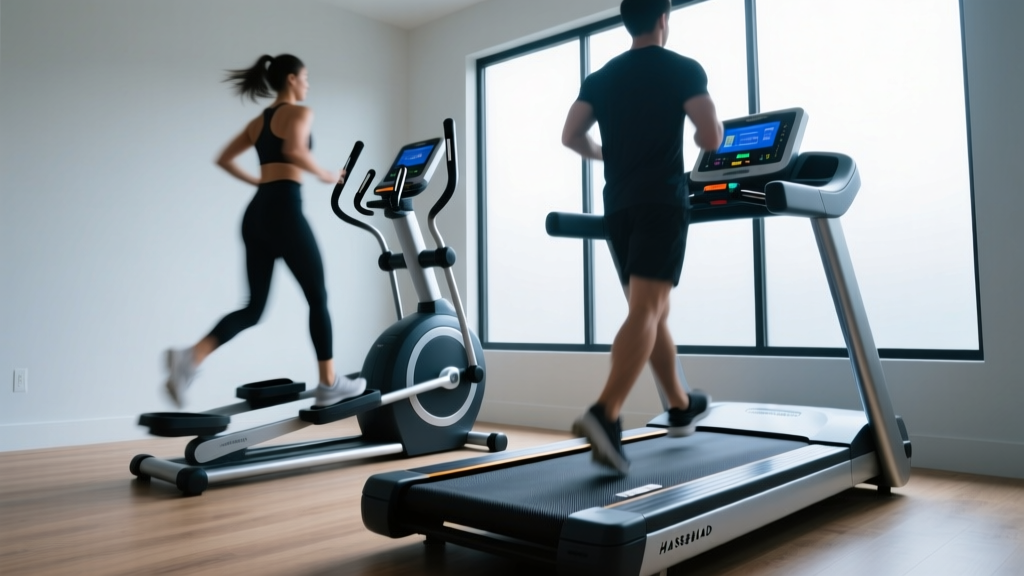
Elliptical vs Treadmill: 2026 Data on the Treadmill Walking Workout

Under-Desk Treadmill Belt Length Trends & 2026 Office Market Review
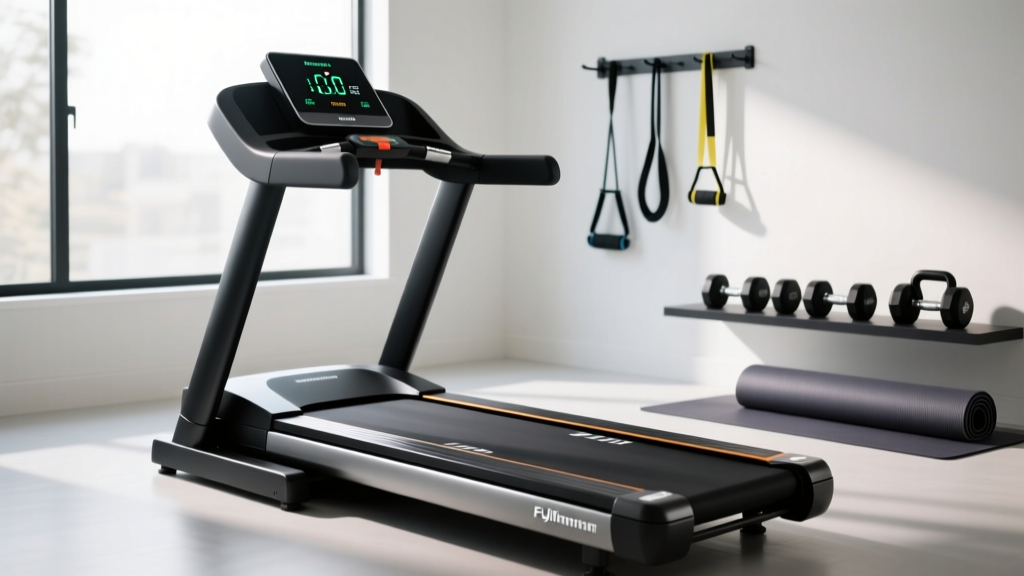
Free Treadmills: Motor Size Guide & Common Troubleshooting Mistakes
