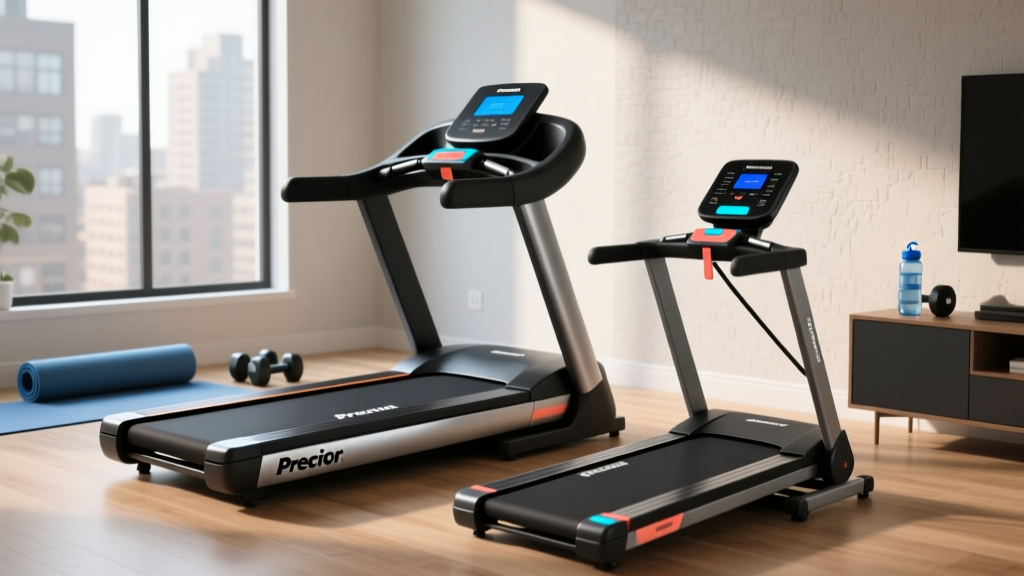
The Ultimate Treadmill Motor HP & Deck Def. Buying Guide
Master treadmill motor sizing with our HP guide. Learn how continuous horsepower and deck def. impact performance, longevity, and belt friction.

When shopping for a home cardio machine, most buyers fixate on touchscreen dimensions, streaming integrations, and incline ranges. Yet, the true heartbeat of any treadmill lies hidden beneath the plastic cowling: the drive motor. In 2026, as home treadmills integrate heavier AI-driven resistance adjustments and high-torque interval programming, understanding motor sizing is no longer optional—it is critical to protecting your investment.
Furthermore, motor performance does not exist in a vacuum. It is intrinsically tied to a biomechanical factor often overlooked in consumer marketing: treadmill def (short for deck deflection). This in-depth buying guide decodes continuous horsepower, exposes peak HP marketing myths, and explains exactly how deck flex dictates motor lifespan.
Key Terminology: In biomechanical and engineering terms, treadmill def (deflection) measures the millimeters of vertical flex a running deck exhibits under footstrike. Optimal home treadmill def ranges from 10mm to 12mm. Anything exceeding 15mm introduces excessive belt-to-deck friction, forcing the motor to overwork.The Hidden Link: Motor Horsepower and Treadmill Def.
To understand why a 3.0 CHP motor might burn out on one machine but last a decade on another, you must understand the physics of the running belt. The motor’s primary job is to overcome the friction between the belt and the deck.
When a treadmill features high deck deflection (a highly flexible, bouncy board), the runner's footstrike pushes the deck downward, increasing the surface area and pressure of the belt against the lubrication layer. According to biomechanical testing highlighted in the RunRepeat Treadmill Lab Guide, excessive deck flex can increase belt drag by up to 18%. This drag forces the motor to draw higher amperage to maintain speed. Over time, this sustained amp draw degrades the motor's internal windings and overwhelms the Pulse Width Modulation (PWM) controller on the lower control board.
The 2026 Baseline: Why 2.5 CHP is Obsolete
A decade ago, a 2.5 Continuous Horsepower (CHP) motor was considered adequate for walking and light jogging. Today, with the average user weight trending upward and high-intensity interval training (HIIT) becoming the standard for home fitness, 2.5 CHP motors are prone to thermal throttling. For any user over 180 lbs engaging in running (6.0+ MPH), a 3.0 CHP motor is the absolute minimum threshold recommended by fitness equipment technicians.
Decoding Treadmill Motor Specs: What You Actually Need
Manufacturers frequently use inflated numbers to confuse buyers. Here is how to read the spec sheet like an industry insider.
- Peak Horsepower (HP): This is a marketing metric. It represents the maximum power the motor can generate for a fraction of a second before tripping a thermal cutoff switch. A '4.0 Peak HP' motor might only sustain 2.25 CHP. Ignore this number entirely.
- Continuous Horsepower (CHP): This is the metric that matters. CHP measures the power the motor can deliver continuously throughout an entire workout without overheating.
- Motor Duty Cycle: Commercial gym treadmills (like the Life Fitness Integrity Series) use heavy-duty motors rated for a 100% duty cycle (24/7 operation). Home treadmills typically operate on a 60-80% duty cycle, meaning they require cool-down periods if pushed to their absolute limits.
Motor Size Comparison Matrix by User Weight & Activity
Use the table below to determine the exact motor size required for your household's specific biomechanical profile. This matrix accounts for both user mass and the kinetic energy generated during footstrike.
| User Profile | Primary Activity | Minimum CHP | Ideal CHP | 2026 Benchmark Model |
|---|---|---|---|---|
| Under 150 lbs | Walking / Light Jog | 2.75 CHP | 3.0 CHP | Horizon 7.0 ($799) |
| 150 - 200 lbs | Jogging / 5K Training | 3.0 CHP | 3.5 CHP | Sole F80 ($999) |
| 200 - 250 lbs | Running / HIIT Sprints | 3.5 CHP | 4.0 CHP | NordicTrack Commercial 1750 ($1,999) |
| Over 250 lbs | Walking / Incline Hiking | 3.5 CHP | 4.0+ CHP | Peloton Tread+ / Matrix T7xe |
Note: If your household features multiple users with varying weights, always size the motor to accommodate the heaviest user's intended activity level. As noted in the Consumer Reports Treadmill Buying Guide, undersizing a motor for the primary user is the leading cause of premature drive-belt snapping and control-board failure.
Real-World Failure Modes: When Undersized Motors Burn Out
What actually happens when you put a 220 lb runner on a 2.75 CHP treadmill with high deck deflection? The failure cascade is predictable and expensive:
- Thermal Cutoff Tripping: During a sustained run, the motor's internal temperature exceeds 105°C. The thermal protection switch cuts power abruptly, causing the belt to stop while the user is in motion—a major safety hazard.
- MOSFET Blowout: To maintain speed against high friction, the lower control board pushes maximum voltage through the MOSFET transistors. These components overheat and short out, requiring a $150 to $300 control board replacement.
- Drive Belt Glazing: The motor struggles to turn the heavy flywheel, causing the small ribbed drive belt to slip. This friction melts the rubber, creating a 'glazed' surface that squeals loudly and eventually snaps.
Expert Insight: If your treadmill emits a faint burning plastic smell after 20 minutes of running, or if the belt hesitates for a microsecond upon footstrike, your motor is starving for amperage. Do not increase the speed; stop the machine and check your belt tension and deck lubrication immediately.
The 2026 Maintenance Protocol for Motor Longevity
A 4.0 CHP motor will die prematurely if neglected, while a well-maintained 3.25 CHP motor can last a decade. Follow this strict maintenance protocol to minimize the friction that kills motors:
1. The 100% Silicone Lubrication Rule
Never use WD-40 or petroleum-based lubricants. You must use 100% silicone treadmill lubricant. Apply exactly 0.5 ounces (one standard squeeze bottle tube) under the belt every 150 miles or every 3 months, whichever comes first. This single action reduces amp draw by up to 30%.
2. The Belt Tension Deflection Test
A belt that is too tight puts massive lateral strain on the motor bearings. With the machine off, lift the edge of the running belt in the center of the deck. You should be able to lift it exactly 2 to 3 inches. If it is tighter, loosen the rear roller adjustment bolts by a quarter-turn.
Expert Buying Framework: 4 Steps to Sizing Your Motor
Before checking out, run your prospective treadmill through this four-point framework:
- Verify the CHP: Ensure the spec sheet explicitly states 'Continuous' or 'CHP'. If it just says '3.5 HP', email the manufacturer for clarification.
- Check the Motor Weight: Heavier motors contain more copper winding and larger magnets, which dissipate heat better. A high-quality 3.0 CHP motor should weigh at least 18-20 lbs.
- Evaluate the Warranty: A manufacturer confident in their motor will offer a Lifetime warranty on the motor and frame. If the motor warranty is only 1 to 5 years, the manufacturer expects it to fail.
- Assess the Deck Construction: Look for reversible, phenolic-coated decks (like those used by Sole and Matrix) which minimize friction and protect the motor from the negative effects of extreme treadmill def.
Frequently Asked Questions
Is a DC motor better than an AC motor for home use?
For 95% of home users, a high-quality DC (Direct Current) motor is superior. DC motors are quieter, offer smoother speed transitions, and are more cost-effective to replace. AC (Alternating Current) motors are found in commercial gym treadmills; they are incredibly durable but loud, heavy, and require specialized 220V electrical outlets.
Does incline training require more motor horsepower?
Interestingly, running at a steep incline (e.g., 12-15%) actually places slightly less rotational friction on the belt than running flat at high speeds, because your footstrike is softer and stride length is shorter. However, the lift motor (which handles the incline mechanism) works much harder. Ensure your treadmill has a dedicated, high-torque lift motor if you plan on doing frequent incline hiking.
Can I upgrade my treadmill motor to a higher CHP later?
No. Treadmill motors are paired specifically with the lower control board's PWM output and the machine's physical flywheel ratio. Installing a larger motor on a board designed for a smaller one will result in immediate electrical failure or void your warranty.
More gear to consider
All reviews
The Eschelon Treadmill Motor Size & Horsepower Guide
Curved vs Motorized Treadmill Speed Conversion & Troubleshooting

Does Hotworx Have Treadmills? The Ultimate Home Stair Climber Guide
Elliptical vs Treadmill Longevity: Beyond Feier Treadmill Reviews

Small Space Cardio: Elliptical vs Treadmill & Fat Burner on Treadmill