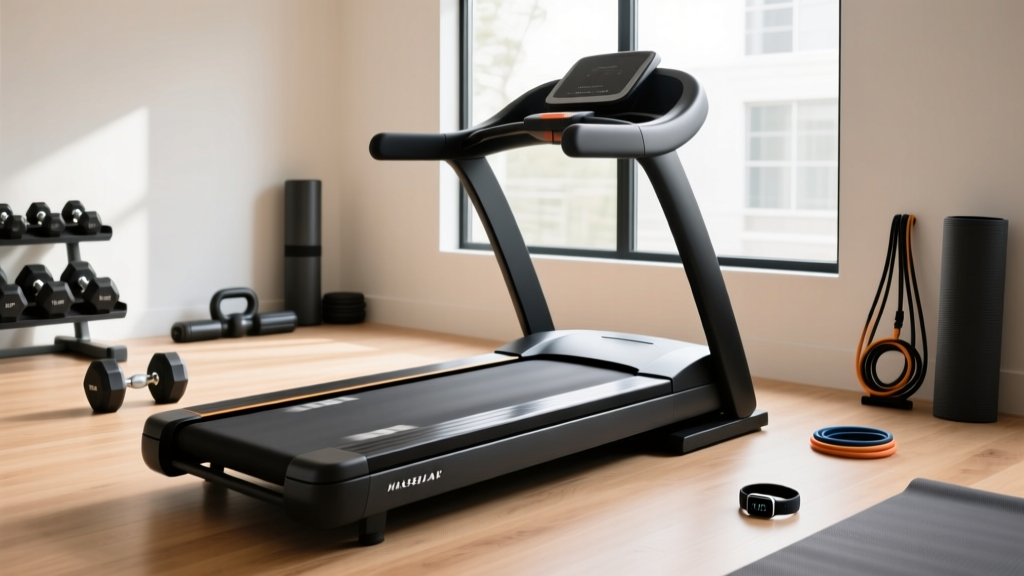
Working Out on a Treadmill: Cardio Machine Noise Comparison Guide
Compare cardio machine noise levels before buying. Learn the decibel ratings for working out on a treadmill, ellipticals, and bikes to keep your home quiet.

The Acoustic Footprint of Home Fitness
As home gyms evolve in 2026, the focus has shifted from merely fitting equipment into a spare room to managing the acoustic footprint of our workouts. Whether you live in a multi-story apartment, share a wall with a home office, or have a sleeping infant down the hall, noise pollution is a critical buying factor. According to the Environmental Protection Agency (EPA), chronic exposure to indoor noise pollution can elevate stress hormones and disrupt sleep cycles, making the decibel (dB) output of your cardio equipment just as important as its performance metrics.
When working out on a treadmill, the combination of a high-torque motor, belt friction, and repetitive footstrike creates a complex noise profile that differs vastly from the smooth hum of a magnetic resistance bike. This in-depth guide breaks down the exact noise levels of popular cardio machines, compares specific models, and provides an actionable framework for soundproofing your home gym.
Quick Acoustic Rule of Thumb: Normal conversation is roughly 60 dB(A). A standard vacuum cleaner operates at 75 dB(A). For a home gym in a shared living space, you want to keep sustained equipment noise below 65 dB(A) to avoid disrupting adjacent rooms.Understanding Airborne vs. Structure-Borne Noise
To accurately compare cardio machines, we must divide noise into two distinct categories:
- Airborne Noise: Sound waves traveling through the air. This includes the whir of a treadmill motor, the 'whoosh' of an air rower's flywheel, and the digital beeps of a console.
- Structure-Borne (Impact) Noise: Vibrations transmitted through the floor joists and walls. This is the primary culprit for angry downstairs neighbors and is generated almost exclusively by the heavy footstrike of running or the mechanical clanking of a poorly maintained drivetrain.
The CDC's National Institute for Occupational Safety and Health (NIOSH) notes that while brief spikes in decibels are tolerable, sustained low-frequency vibrations (structure-borne noise) are the most difficult to mitigate and the most likely to cause structural resonance in residential buildings.
2026 Cardio Machine Noise Comparison Matrix
The following table summarizes the average acoustic output of major cardio categories, measured at a distance of three feet during moderate-to-high intensity use.
| Machine Type | Avg. dB(A) Range | Primary Noise Source | Apartment Suitability |
|---|---|---|---|
| Magnetic Spin Bikes | 40 - 50 dB | Drivetrain hum, pedal bearings | Excellent (Whisper Quiet) |
| Front-Drive Ellipticals | 48 - 55 dB | Track rollers, pivot joints | Excellent (Low Impact) |
| Air Resistance Rowers | 60 - 72 dB | Fan blade wind displacement | Moderate (Airborne Noise) |
| Motorized Treadmills | 65 - 82 dB | Motor, belt slap, footstrike | Poor (High Impact/Vibration) |
| Air Bikes (e.g., Rogue Echo) | 70 - 85 dB | Massive fan displacement | Poor (Extremely Loud) |
Working Out on a Treadmill: Why It’s the Loudest
When working out on a treadmill, you are essentially operating a heavy industrial conveyor belt while repeatedly striking it with 1.5 to 2.5 times your body weight. The noise generated is a triad of mechanical, frictional, and impact sounds.
1. The Motor: AC vs. Brushless DC
Cheaper treadmills (under $800) often use standard DC motors that emit a high-pitched whine as the belt speed increases. Premium models, like the NordicTrack Commercial 1750 or the Sole F85, utilize Brushless DC (BLDC) motors. These operate significantly quieter, generally hovering around 60-65 dB at the motor housing during a 6.0 mph jog. However, the motor is rarely the loudest component.
2. Belt Friction and Slap
If a treadmill belt lacks proper lubrication, the friction between the deck and the belt creates a loud, rhythmic slapping sound that easily pierces drywall. A dry belt can push the machine's acoustic output past 75 dB. Furthermore, as belts stretch over time, the tension roller can create a low-frequency hum that reverberates through the floor.
3. The Footstrike Impact (Structure-Borne)
This is where treadmills fail the apartment test. A 180 lb runner generates roughly 450 lbs of downward force per step. On a standard MDF or phenolic deck, this impact translates directly into the floor joists. Occupational Safety and Health Administration (OSHA) guidelines highlight that low-frequency, repetitive impact noises are highly disruptive in shared environments because they bypass standard acoustic insulation.
Expert Insight: If you absolutely must run indoors but have strict noise constraints, bypass traditional slat belts and look into vulcanized rubber slat-belt treadmills like the Woodway 4Front ($7,200+). The individual rubber slats absorb up to 80% of the footstrike impact, dropping the structure-borne noise by nearly 15 dB compared to standard phenolic decks.
The Stealth Contenders: Ellipticals and Magnetic Bikes
If your primary constraint is acoustic discretion, magnetic resistance machines are the undisputed champions of the home gym.
Ellipticals: Zero-Impact Biomechanics
Because your feet never leave the pedals, ellipticals eliminate structure-borne impact noise entirely. The Sole E95 Elliptical, for example, uses a heavy 27 lb flywheel and sealed track bearings that produce less than 55 dB of airborne noise at maximum stride. The only maintenance required to keep it whisper-quiet is an occasional wipe-down of the track rails to prevent dust buildup, which can cause a grinding sound over time.
Magnetic Spin Bikes: Eddy Current Silence
Bikes like the Schwinn IC4 or the Peloton Bike+ utilize magnetic resistance. Unlike friction-pad bikes that squeak and grind, magnetic resistance relies on eddy currents—magnets moving closer to or further from a metal flywheel without ever touching it. The result? The only sound you hear is the faint whir of the belt drive and your own breathing. These machines routinely operate below 45 dB, making them completely silent to anyone in the next room.
Air Bikes and Rowers: The Wind Tunnel Effect
Do not let the lack of a motor fool you; air-resistance machines are incredibly loud. The Concept2 RowErg and the Assault AirBike rely on fan blades pushing through the air to create drag. At a moderate stroke rate or RPM, the airborne noise easily reaches 70 dB. During an all-out sprint, the wind displacement can peak at 85 dB—equivalent to standing next to a busy highway. While they don't create the heavy floor vibrations of a treadmill, the sheer volume of the 'whooshing' air makes them unsuitable for use while a partner is sleeping in an adjacent room.
The 4-Step Acoustic Mitigation Framework
If you already own a loud machine, or if you refuse to compromise on running, implement this soundproofing protocol to minimize your acoustic footprint:
- Step 1: The 3/8-Inch Rubber Mat Rule. Never place a treadmill directly on hardwood or carpet. Purchase a 3/8-inch thick, high-density vulcanized rubber equipment mat (approx. $80-$120). This specific thickness is required to decouple the machine's vibration from the subfloor. Thinner PVC mats (1/8-inch) do nothing to stop structure-borne noise.
- Step 2: Anti-Vibration Isolation Pads. For extreme apartment living, place 4-inch neoprene or sorbothane isolation pads under the feet of your treadmill or elliptical. These industrial-grade shock absorbers compress under the machine's static weight and neutralize the kinetic energy of footstrikes before it reaches the floor joists.
- Step 3: Strict Belt Lubrication Schedule. Treadmill manufacturers recommend lubricating the belt every 130 to 150 miles. Use only 100% silicone treadmill lubricant. Apply exactly 1 oz per side, spreading it evenly from the center to the edges. This single maintenance step can reduce motor strain and belt-slap noise by up to 8 dB.
- Step 4: Spatial Placement. Avoid placing cardio equipment in the corner of a room. Corners act as acoustic amplifiers, trapping low-frequency motor hum and bouncing it back into the space. Keep the machine at least 18 inches away from any drywall partition to allow sound waves to dissipate.
Final Verdict: Choosing Your Machine Based on Acoustics
When outfitting a home gym, matching the machine to your living situation is paramount. If you live in a detached home with a dedicated basement gym, a motorized treadmill or an air rower offers unparalleled cardiovascular benefits without the worry of noise complaints. However, if you are in an apartment, a condo with shared walls, or a house with light sleepers, the physics of impact noise make working out on a treadmill a risky proposition unless heavily mitigated with isolation pads and premium slat-belt technology.
For guaranteed acoustic stealth, magnetic spin bikes and front-drive ellipticals remain the gold standard, delivering elite cardiovascular conditioning while keeping the decibel meter well below the threshold of household disruption.
More gear to consider
All reviews
Bowflex T6 Treadmill Review: Long-Term Belt Maintenance Tips
Cherokee D'Ass Treadmill Review & Office Care Guide
Rowing Buying Guide & Technique vs WalkingPad A1 Pro Treadmill

The Complete Treadmill Guide: Weekly Nutrition & Training Plan

Stationary Bike or Treadmill for Weight Loss in Small Spaces