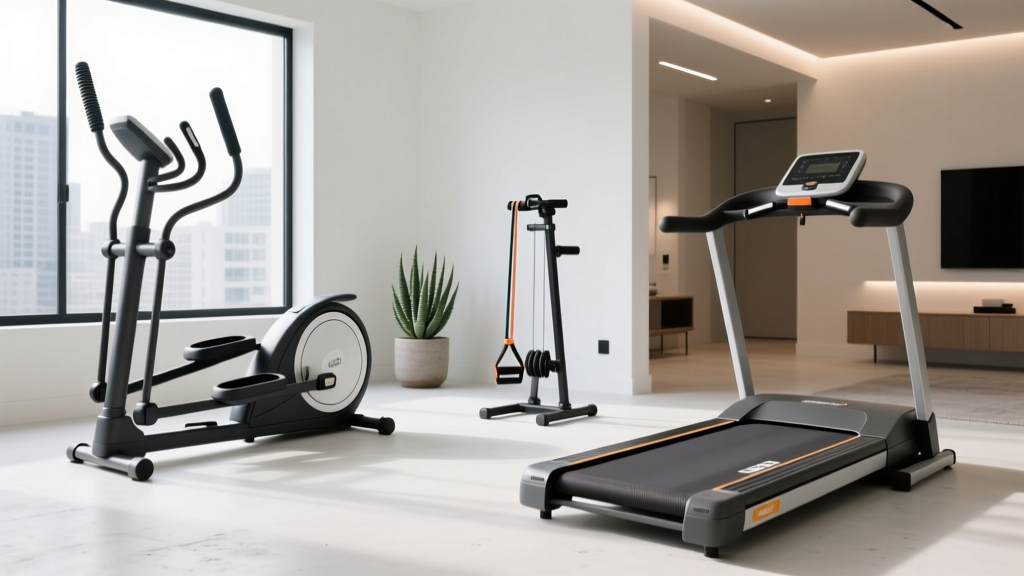
Treadmill Broken Deck? Compact Portable Cardio Options & Care
Dealing with a treadmill broken deck? Explore top compact portable cardio equipment options, plus expert maintenance tips to maximize longevity.

Hearing a sharp, splintering crack from beneath your feet while walking is a home fitness enthusiast's worst nightmare. If you are dealing with a treadmill broken deck, you already know the frustrating reality: compact and portable treadmills are notoriously vulnerable to deck fractures. Because these space-saving machines prioritize a slim profile, manufacturers often sacrifice deck thickness, leading to premature warping, delamination, or catastrophic snapping under dynamic loads.
When a walking pad or compact treadmill deck fails, repairing it is rarely cost-effective. A replacement deck and belt kit often exceeds $150, while a brand-new budget walking pad costs around $200. This pivotal moment forces a decision: do you upgrade to a more resilient portable treadmill, or pivot to alternative compact portable cardio equipment options? Below, we break down the mechanics of deck failure, the best alternative compact machines on the market, and the exact maintenance protocols required to maximize their longevity.
The Anatomy of a Treadmill Broken Deck
To understand why your machine failed, you must look at the materials. According to Consumer Reports, the vast majority of sub-$500 portable treadmills utilize Medium-Density Fiberboard (MDF) coated with a thin layer of phenolic wax.
⚠️ The Friction Heat Trap: When a treadmill belt lacks proper 100% silicone lubrication, friction between the PVC belt and the MDF deck generates excessive heat. This heat melts the factory wax coating, causing the belt to stick. The motor then works harder, pulling the belt tighter, which increases downward pressure. Eventually, the MDF core dries out, splinters, and snaps—usually right beneath the primary foot-strike zone.Furthermore, environmental factors play a massive role. MDF is highly hygroscopic. If your compact treadmill is stored in a humid garage or a damp basement, the wood fibers absorb moisture, swelling and compromising the structural integrity of the deck long before your feet even touch the belt.
Top Compact Portable Cardio Equipment Options
If your treadmill deck is beyond repair, it is time to explore alternatives that fit the same small footprint but eliminate the risk of a broken deck entirely. The Centers for Disease Control and Prevention (CDC) recommends at least 150 minutes of moderate-intensity aerobic activity weekly, which can easily be achieved with the right compact gear.
1. Upgraded Resilient Portable Treadmills
If you prefer walking or running, you must upgrade from MDF to advanced composite materials. The UREVO Strol 2E (approx. $399) features a specialized 'honeycomb' shock-absorption deck that distributes weight laterally rather than absorbing it directly into a flat board. For runners, the KingSmith WalkingPad X21 (approx. $599) utilizes an aluminum alloy frame beneath the running area, drastically reducing the chance of a mid-strut snap, even for users up to 240 lbs.
2. Under-Desk Ellipticals
As noted by the Mayo Clinic, ellipticals provide excellent cardiovascular benefits with significantly less impact on the joints compared to treadmills. The Cubii Jr2 (approx. $249) is the gold standard for compact, seated cardio. It features a zero-deck design, utilizing a dual-track steel rail system that completely eliminates the risk of board snapping.
3. Hydraulic Mini Steppers
For high-intensity, low-footprint cardio, the Sunny Health & Fitness SF-S020016 Mini Stepper (approx. $79) is a powerhouse. Instead of a deck, it relies on two heavy-duty hydraulic cylinders. It occupies less than 2 square feet of floor space and can be tucked under a desk or into a closet.
| Equipment Type | Top Model Example | Avg. Price | Deck Failure Risk | Primary Maintenance Focus |
|---|---|---|---|---|
| Budget Walking Pad | Generic MDF Pads | $150 - $250 | High | Constant silicone lubrication |
| Premium Portable Treadmill | UREVO Strol 2E | $399 | Low | Belt tension & alignment |
| Under-Desk Elliptical | Cubii Jr2 | $249 | None | Track cleaning & bearing care |
| Hydraulic Mini Stepper | Sunny Health SF-S020016 | $79 | None | Cylinder heat management |
Preventative Maintenance: Saving Your Next Portable Treadmill
If you decide to replace your broken machine with another compact treadmill, strict adherence to maintenance is non-negotiable. Follow this exact protocol to ensure your new deck survives.
- The 30-Day Silicone Rule: You must lubricate the deck every 30 days or every 40 miles, whichever comes first. Use only 100% pure silicone treadmill lubricant. Never use WD-40 or petroleum-based oils, which will instantly dissolve the PVC belt and ruin the deck coating.
- Precision Application: Lift the belt on one side and apply exactly 5ml to 10ml of silicone in a zigzag pattern down the center third of the deck. Repeat on the other side. Run the treadmill at 2.0 MPH for 3 minutes to distribute the oil evenly.
- The Quarter-Turn Tension Check: A belt that is too tight puts immense downward pressure on the deck, bowing it and leading to stress fractures. You should be able to lift the center of the belt exactly 2 to 3 inches off the deck. If it is tighter, use an Allen wrench to loosen the rear roller bolts by exactly one quarter-turn.
Longevity Care for Non-Treadmill Compact Cardio
If you have pivoted to an under-desk elliptical or a mini stepper, your maintenance routine shifts from deck preservation to mechanical and track care.
Cubii and Elliptical Track Maintenance
The most common failure point on compact ellipticals is the roller track. Dust, pet hair, and dead skin cells accumulate on the steel rails, creating a grinding paste that destroys the internal ball bearings of the pedals. Weekly Care: Wipe down the dual steel tracks with a microfiber cloth lightly dampened with 70% isopropyl alcohol. Do not use household glass cleaners, as they leave a sticky residue that attracts more dust. Every six months, apply a single drop of PTFE (Teflon) dry lubricant to the pedal arm pivot joints to eliminate squeaking.
Hydraulic Stepper Cylinder Care
Hydraulic cylinders operate via fluid compression, which inherently generates heat. The primary failure mode of the Sunny Health Mini Stepper is cylinder blowout caused by overheating. Usage Rule: Never use a hydraulic stepper for more than 45 continuous minutes. If the base of the cylinders feels hot to the touch, stop immediately and allow the fluid to cool. Additionally, check the pivot nuts connecting the pedals to the main frame monthly; the vibration from stepping can loosen these over time, causing lateral wobble and premature wear on the plastic bushings.
Troubleshooting Compact Cardio Symptoms
- Symptom: Treadmill belt hesitates or slips when stepping on it.
Fix: The belt is too loose, or the deck wax has worn off. Tighten rear bolts by 1/4 turn and apply silicone lubricant. - Symptom: Elliptical pedals feel 'gritty' or skip during the forward push.
Fix: Debris on the track. Clean rails with isopropyl alcohol and inspect the front roller wheels for flat spots. - Symptom: Stepper pedals sink to the floor and do not rebound.
Fix: The hydraulic cylinder seal has blown. The cylinders must be replaced (usually under $30 for a pair), as they cannot be refilled.
A broken deck is rarely a sudden accident; it is the culmination of friction, moisture, and neglect. By choosing the right compact portable cardio equipment for your specific biomechanics and adhering to a strict, material-specific maintenance schedule, you can ensure your home fitness gear lasts for years, not just months.
More gear to consider
All reviews
Stair Climber vs Treadmill for Weight Loss: Elliptical vs Treadmill

Small Space Folding Treadmill Review & Resistance Bands on Treadmill

Can Incline on Treadmill Help You Lose Thigh Fat? Bike Budget Breakdown

Can an Under Desk Treadmill Hit an 8.0 Treadmill Pace? 2026 Review

2026 Stationary Bike Types vs HIIT Cardio Treadmill Beginner
