Stair Climber vs Treadmill for Weight Loss: Elliptical vs Treadmill
Compare elliptical vs treadmill for home cardio, explore stair climber vs treadmill for weight loss, and learn 2026 maintenance care for longevity.

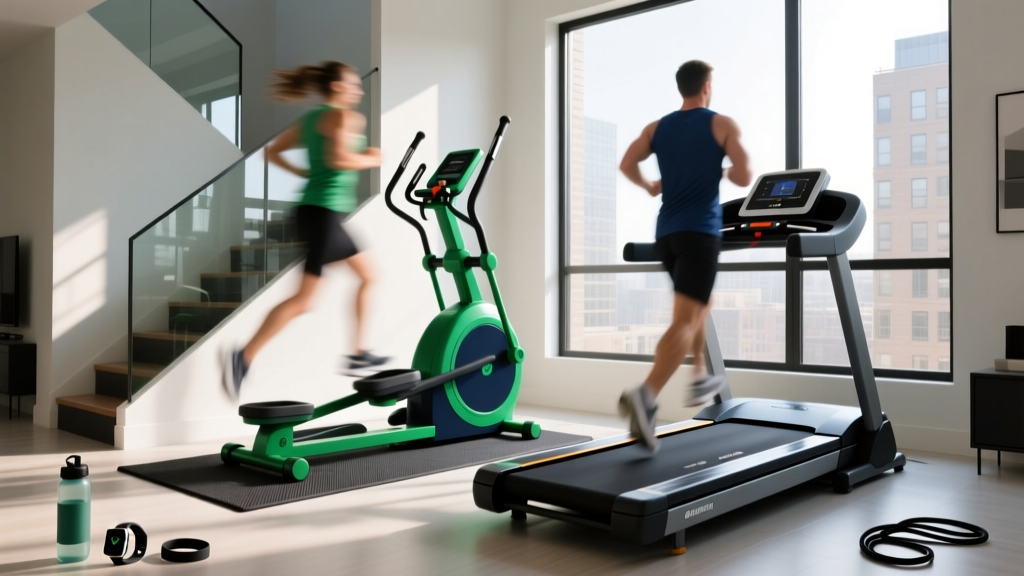
Investing in premium home fitness equipment is a significant financial commitment. In 2026, flagship models like the NordicTrack Commercial 1750 treadmill (retailing around $2,799) or the Sole E95 Elliptical (approximately $2,199) represent the pinnacle of domestic cardio engineering. However, the true cost of ownership extends far beyond the initial purchase price. The ongoing debate regarding the elliptical vs treadmill for home cardio usually centers on joint impact and spatial footprint. Yet, for the home gym owner, the ultimate differentiator is long-term mechanical longevity and the rigorous maintenance required to protect your investment.
Whether you are logging high-mileage marathon training or engaging in low-impact cross-training, understanding the specific failure modes of your machine is critical. This guide bypasses generic cleaning advice to deliver deep-dive, technical maintenance protocols that will extend the lifespan of your cardio equipment by years.
The Biomechanical Toll: Elliptical vs Treadmill Wear and Tear
To properly maintain your equipment, you must first understand the physical forces acting upon it. Treadmills and ellipticals degrade in fundamentally different ways due to their distinct mechanical architectures.
Treadmill Impact and Friction Degradation
When you run on a treadmill, your foot strikes the deck with a force equivalent to 2.5 to 3 times your body weight. For a 180-pound runner, that is up to 540 pounds of localized, repetitive impact. Over time, this compresses the elastomer shock-absorption cushions beneath the deck and accelerates the wear of the phenolic deck coating. If the deck wears through to the raw MDF (medium-density fiberboard) core, the resulting friction will overheat the drive motor and trigger the machine's internal thermal cutoff switch.
Elliptical Rotational Stress and Pivot Fatigue
Ellipticals eliminate the harsh impact of running, replacing it with continuous rotational momentum. The primary failure points here are not the deck, but the pivot joints, the Poly-V drive belt, and the magnetic resistance eddy-current brakes. In 2026, most premium ellipticals utilize sealed cartridge bearings at the crank arms, but the upper body linkages often rely on bushings that require periodic lubrication to prevent the dreaded 'elliptical squeak' that plagues older models like the early ProForm Smart Striders.
Stair Climber vs Treadmill for Weight Loss: The Maintenance Factor
When analyzing the stair climber vs treadmill for weight loss, most fitness guides focus purely on metabolic equivalents (METs) and caloric expenditure. However, from a biomechanical and maintenance perspective, machine degradation directly impacts your workout efficacy.
A poorly maintained treadmill with a dry, high-friction belt forces the motor to work harder, which can cause micro-stutters in the belt speed. This alters your natural gait and reduces true metabolic output, even if the console displays an inflated calorie burn.
Conversely, stair climbers (such as the commercial-grade StairMaster StepMill) rely on heavy internal chains and sprockets. If the internal chain lacks proper lithium-based grease, the mechanical drag increases. While this might feel like a 'harder' workout, it is actually inconsistent resistance that places uneven torque on the alternator, leading to premature electronic failure. True weight loss requires consistent, measurable output, which is only possible on a meticulously calibrated machine.
The 2026 Preventative Maintenance Matrix
Use the following matrix to schedule your home gym maintenance. Adhering to these intervals will prevent 85% of common catastrophic failures.
| Machine Type | Primary Wear Component | Maintenance Interval | Action Required | Est. DIY Cost |
|---|---|---|---|---|
| Treadmill | Running Belt & Deck | Every 150 miles / 3 months | Apply 100% silicone lubricant; check belt tracking | $12 (Silicone) |
| Treadmill | Motor Compartment | Every 6 months | Vacuum dust from lower motor board cooling fan | $0 |
| Elliptical | Pivot Bushings & Rails | Every 300 hours | Wipe rails with isopropyl alcohol; apply PTFE grease to pivots | $15 (PTFE Grease) |
| Elliptical | Poly-V Drive Belt | Annually | Inspect for fraying; adjust tensioner bracket if slipping | $0 |
| Stair Climber | Drive Chain & Sprockets | Every 500 hours | Apply white lithium grease to internal chain links | $10 (Grease) |
Deep-Dive Troubleshooting: Edge Cases and Failure Modes
Even with preventative care, edge cases occur. Here is how to diagnose and address complex mechanical failures without immediately calling an expensive technician.
Treadmill Edge Case: Lower Motor Board Failure
Symptom: The treadmill powers on, the console lights up, but the belt jerks violently or stops entirely after 30 seconds of use, displaying an 'E1' or 'LS' (Loss of Signal) error code.
Diagnosis: In homes with pets or high dust levels, the cooling fan on the lower motor controller board becomes clogged. The PWM (Pulse Width Modulation) board overheats and fails to send consistent voltage to the drive motor.
Solution: Unplug the machine, remove the front motor hood (usually 4 to 6 Phillips-head screws), and use a shop vac with a brush attachment to clean the board and fan. If the board is already scorched, replacement boards for models like the Sole F80 cost between $140 and $220 and can be swapped by disconnecting the color-coded wire harnesses.
Elliptical Edge Case: Poly-V Belt Tension Loss
Symptom: A rhythmic squeaking noise that correlates with your stride, or a 'slipping' sensation when pushing hard on the pedals.
Diagnosis: The Poly-V drive belt has stretched over time, losing tension against the motor flywheel.
Solution: Locate the belt tensioner bracket near the front crank assembly. Using a 13mm socket wrench, loosen the mounting bolt just enough to allow the bracket to slide. Push the tensioner pulley outward to tighten the belt, then retorque the bolt to 25 Nm. Do not overtighten, as this will destroy the motor's front bearing.
Lubrication Protocols: What to Use and What to Avoid
CRITICAL WARNING: Never Use WD-40 or Petroleum Distillates
Applying standard WD-40, 3-in-One oil, or any petroleum-based lubricant to a treadmill belt or elliptical rail will permanently destroy the equipment. Petroleum breaks down the rubber compounds in the treadmill belt and strips the factory-applied wax coating on elliptical rails. Always use 100% pure liquid silicone for treadmills and PTFE (Teflon) or white lithium grease for metal-on-metal elliptical joints.
Step-by-Step Treadmill Silicone Application
- Loosen the rear roller adjustment bolts (usually a 6mm Allen key) by exactly three full turns on each side to slacken the belt.
- Lift the edge of the belt and insert the nozzle of the 100% silicone lubricant bottle.
- Squeeze a single, continuous 1/2-ounce line of silicone across the center of the deck, from left to right.
- Retighten the rear roller bolts by exactly three turns to restore original tension.
- Walk on the treadmill at 2.0 MPH for three minutes to distribute the silicone evenly across the deck.
Environmental Factors: Humidity and Electronics
Modern cardio machines are essentially large computers. According to the American Council on Exercise (ACE), the integration of HD touchscreens and Bluetooth connectivity in home gyms has made these machines highly susceptible to environmental damage.
If your home gym is located in a garage or basement, ambient humidity is your biggest enemy. High humidity causes condensation to form on the internal optical speed sensors and the membrane keypads. To combat this, keep the room's relative humidity between 40% and 50%. Furthermore, always use a heavy-duty surge protector (rated for at least 2000 joules) to protect the machine's sensitive logic boards from micro-surges caused by HVAC systems cycling on and off in your home.
For users seeking more comprehensive guidelines on how physical environment affects exercise consistency and equipment upkeep, the Centers for Disease Control and Prevention (CDC) and the Mayo Clinic both emphasize that a dedicated, climate-controlled space significantly increases long-term adherence to home fitness routines while protecting your financial investment.
Expert Verdict: Which Machine Survives the Decade?
When evaluating longevity, the elliptical generally outlasts the treadmill in a home environment. The absence of high-impact foot strikes means the structural frame and deck of an elliptical rarely suffer catastrophic fatigue. A high-end elliptical like the Life Fitness Club Series can easily survive 15 years with basic pivot lubrication.
Treadmills, while offering unparalleled specificity for runners, require a much stricter adherence to maintenance schedules. A neglected treadmill belt will destroy a $600 drive motor in a matter of months. Ultimately, the choice between these machines should not just be about your joints or your weight loss goals, but about your willingness to perform the necessary mechanical upkeep to keep the machine running smoothly for the next decade.
More gear to consider
All reviews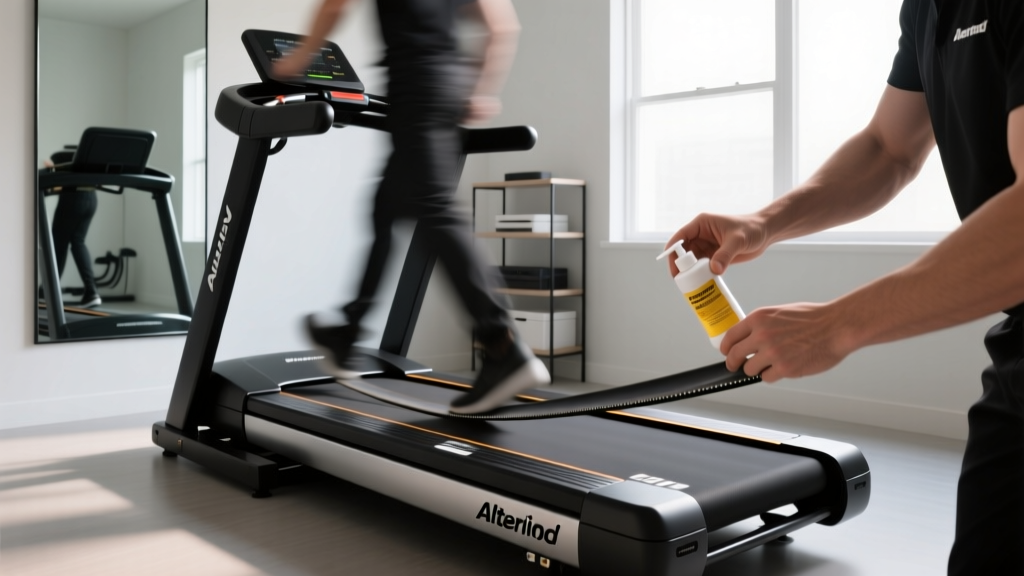
AlterG Treadmill Belt Maintenance in Compact Gym Layouts
Cardio Machine Noise Levels & pawg on treadmill Troubleshooting

Air Bike vs Assault Bike Care & Treadmill Toning Workout Maintenance

Upright, Recumbent, Spin Bikes vs. Sole Treadmill Comparison Chart

Treadmill Features Comparison & Where to Donate Treadmill Near Me