
Walk on Treadmill to Lose Weight vs Stationary Bike Types
Is it better to walk on a treadmill to lose weight or ride a bike? We review upright, recumbent, and spin bikes for 2026 fat loss and joint health.

Stationary Bike vs Walking on Treadmill: The Core Answer
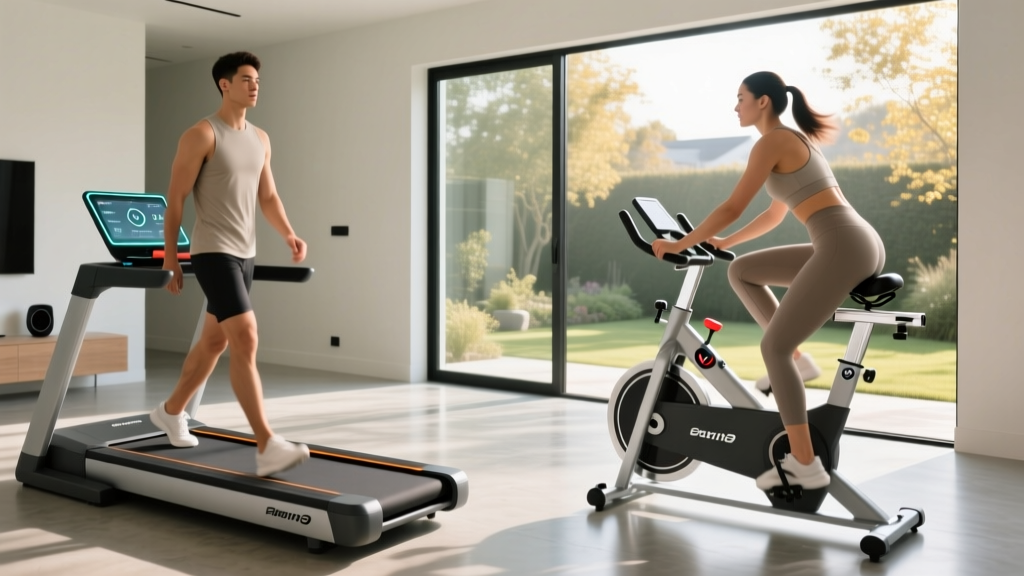
For home gym builders, physical therapy patients, and beginners evaluating a stationary bike vs walking on treadmill, the optimal choice depends strictly on joint health and metabolic goals. Walking on a treadmill burns approximately 15% more calories per hour than moderate cycling and builds bone density through weight-bearing impact. Conversely, a stationary bike delivers zero-impact, closed-chain movement ideal for knee rehabilitation and sustained cardiovascular conditioning. Choose treadmill walking for caloric maximization and bone health; select a stationary bike for joint preservation and lower-body arthritis management.
Key Takeaways
- Calorie Burn: Treadmill walking burns 250 to 350 calories per hour, outpacing moderate cycling by roughly 15%.
- Joint Impact: Stationary bikes eliminate ground reaction forces, making them the gold standard for osteoarthritis patients.
- Equipment Cost: Quality treadmills average $1,500 to $3,000, while reliable magnetic resistance bikes cost $800 to $1,500.
Caloric Expenditure and Metabolic Impact
According to data from Harvard Medical School, a 155-pound (70-kilogram) individual burns approximately 252 calories during 30 minutes of moderate stationary cycling. The same individual burns 288 calories walking on a treadmill at a brisk 3.5 miles per hour (mph) pace. This 14% to 15% caloric advantage for treadmill walking stems from the energy required to support and propel your entire body weight against gravity.
However, stationary bikes allow for easier manipulation of resistance levels. Increasing the magnetic resistance on a bike can elevate your heart rate into Zone 4 (80% to 90% of maximum heart rate) without the biomechanical pounding associated with faster treadmill speeds.
Biomechanics and Joint Preservation
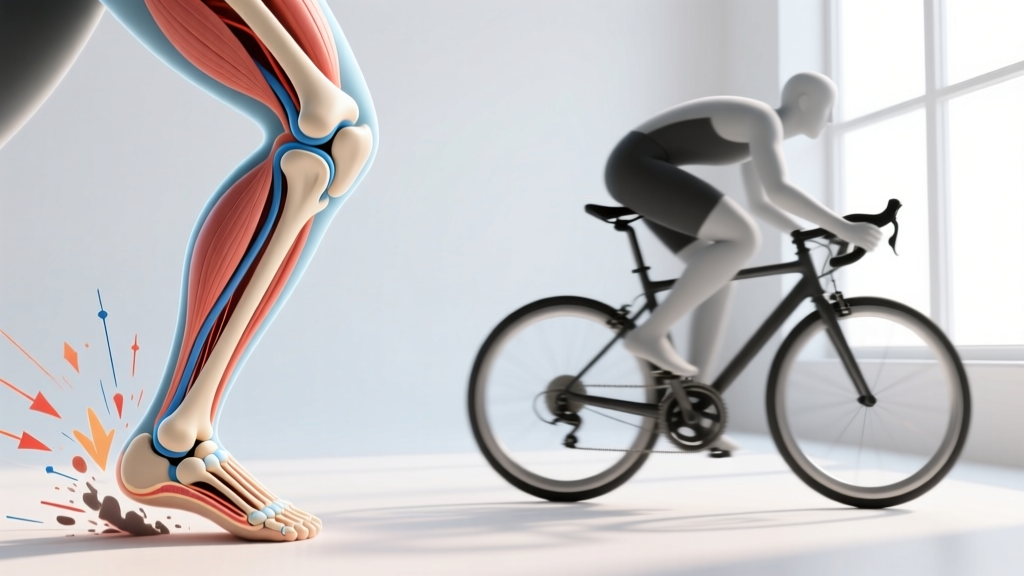
Treadmill walking is a weight-bearing exercise. The Centers for Disease Control and Prevention (CDC) recommends weight-bearing activities to maintain bone mineral density and prevent osteoporosis in aging populations. Each footstrike generates a ground reaction force equivalent to 1.2 to 1.5 times your body weight, stimulating osteoblast activity in the femur and tibia.
Conversely, cycling is a non-weight-bearing activity. While it does not build bone density, it eliminates the repetitive impact stress on the meniscus and articular cartilage. Physical therapists routinely prescribe stationary cycling for patients recovering from anterior cruciate ligament (ACL) reconstruction or managing severe knee osteoarthritis.
Defining Weight-Bearing vs Closed-Chain Movement
Weight-Bearing Exercise: Any physical activity performed while standing that forces your muscles and bones to work against gravity. This mechanical loading is essential for stimulating bone growth and maintaining skeletal density throughout adulthood.
Closed-Kinetic Chain Exercise: Movements where the distal segment (like the foot on a pedal) remains fixed. This creates joint compression rather than shear force, significantly reducing the risk of ligament strain during rehabilitation.
Equipment Types, Footprint, and Pricing
When evaluating the physical footprint, treadmills require substantial floor space. A standard motorized treadmill measures roughly 70 inches long by 30 inches wide and requires a dedicated 20-amp electrical circuit. High-quality models with continuous duty horsepower (CHP) motors typically cost between $1,500 and $3,000.
Stationary bikes, particularly upright and indoor cycling variants, occupy a much smaller footprint of approximately 48 inches by 24 inches. They do not require specialized electrical wiring, and premium models featuring electromagnetic resistance systems range from $800 to $2,000. Recumbent bikes, which feature a bucket seat and backrest, take up more length (around 65 inches) but offer superior lumbar support.
Decision Framework: Choosing Your Cardio Machine
| Primary Goal | Recommended Machine | Key Rationale |
|---|---|---|
| Maximize Calorie Burn | Treadmill (Walking/Incline) | Weight-bearing nature demands 15% more energy expenditure. |
| Joint Rehabilitation | Recumbent Stationary Bike | Zero ground reaction forces protect healing cartilage and ligaments. |
| Small Apartment Living | Upright Stationary Bike | Compact 48x24 inch footprint fits easily into tight spaces. |
| Bone Density Maintenance | Treadmill | Impact forces stimulate osteoblast activity in the lower extremities. |
| Multitasking / Reading | Recumbent Stationary Bike | Stable upper body and seated posture allow for hands-free activities. |
Frequently Asked Questions
Is a stationary bike better than a treadmill for bad knees?
Yes. The Mayo Clinic notes that stationary cycling provides cardiovascular benefits without the compressive joint loading of walking or running. The smooth, circular pedal stroke strengthens the quadriceps and hamstrings, which stabilize the knee joint, without aggravating inflamed cartilage.
Which burns more calories: walking on a treadmill or riding a bike?
Walking on a treadmill burns more calories than moderate stationary cycling. According to the American Council on Exercise (ACE), supporting your own body weight during treadmill walking requires roughly 15% more metabolic energy than sitting on a bike seat where the machine supports your mass.
Can I lose belly fat using a stationary bike or treadmill?
Spot reduction is a physiological myth. Both machines create the caloric deficit necessary for overall fat loss. Treadmills yield a slightly higher total caloric burn per hour, but stationary bikes often allow users to sustain longer workout durations due to lower perceived exertion and less muscular fatigue in the lower back.
Final Verdict and Next Steps
Choosing between a stationary bike and walking on a treadmill ultimately requires matching the equipment to your biomechanical needs and living space. Treadmills win for bone density and raw caloric output, while stationary bikes dominate in joint preservation, accessibility, and spatial efficiency.
Your immediate next step is to assess your joint health and measure your available floor space. If you have a history of knee or hip pain, purchase a magnetic resistance upright bike. If your joints are healthy and you prioritize bone density, invest in a treadmill with a minimum 2.5 CHP motor and integrated shock absorption.
More gear to consider
All reviews
Curved vs Motorized: Is the Precor TRM 445 Treadmill Right for You?

Elliptical vs Treadmill for Home Cardio & Donate Treadmill Pickup

Curved Treadmill vs Normal Treadmill: 2026 Buyer's Guide
Treadmill Stress Test Interpretation: Motor HP Setup Guide

High Intensity Workouts Treadmill: 2026 Compact Budget Breakdown
