TR4000i Treadmill vs Walking Pads: 2026 Home Office Cardio Guide
Compare the LifeSpan TR4000i treadmill with top 2026 walking pads. Discover which home office cardio machine fits your space, budget, and fitness goals.

The 2026 Home Office Cardio Dilemma: Heavy-Duty vs. Ultra-Compact
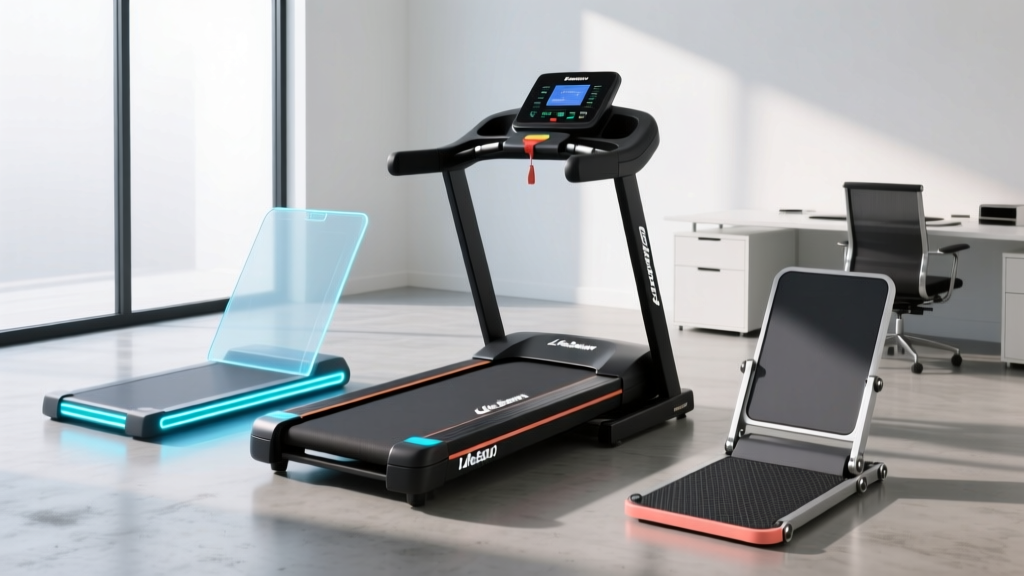
As hybrid work models solidify in 2026, the home office cardio market has split into two distinct camps: ultra-compact under-desk walking pads and premium folding treadmills. For professionals trying to hit the American Heart Association's recommendation of 150 minutes of moderate aerobic activity per week without leaving their home office, choosing the right equipment is critical. The LifeSpan TR4000i treadmill has long been the gold standard for light-commercial and home-office folding treadmills, but how does it actually stack up against the latest generation of high-end walking pads like the KingSmith WalkingPad X21 or the UREVO Strol 2E?
This in-depth buying guide and comparison review breaks down the exact specifications, hidden failure modes, and biomechanical realities of the TR4000i treadmill versus modern walking pads to help you make a data-driven purchasing decision.
The Contenders: Specifications and Design Philosophy
LifeSpan TR4000i Folding Treadmill
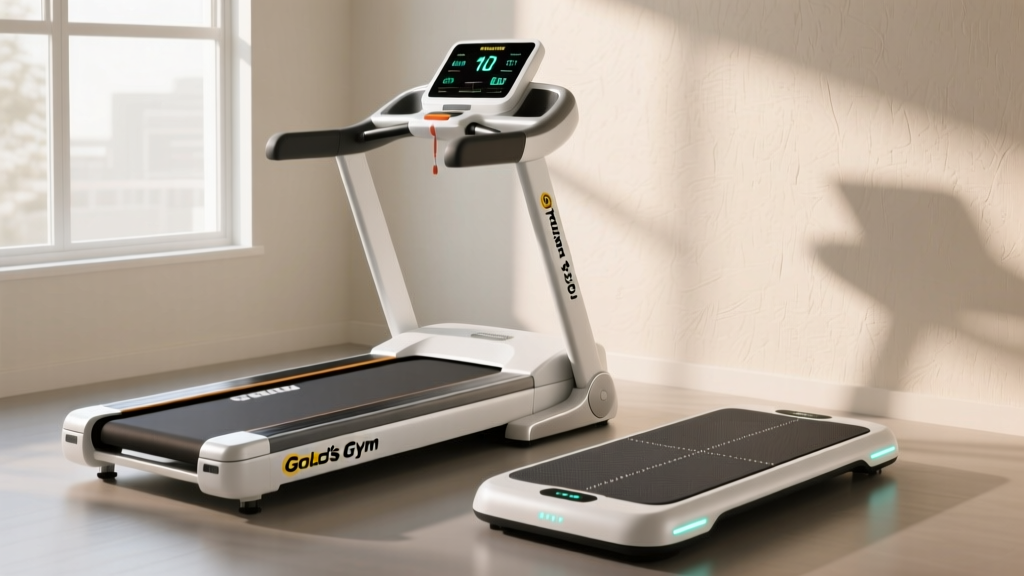
The LifeSpan TR4000i is engineered for high-volume, continuous use. Priced around $1,599, it features a robust 3.25 HP continuous-duty motor, a spacious 20-inch by 56-inch running surface, and a 300-pound weight capacity. Weighing in at 185 pounds, it utilizes a hydraulic folding mechanism that reduces its footprint to roughly 36 x 30 inches when stored. It is designed for users who want to transition seamlessly from a 3.0 mph walking pace while answering emails to a 10.0 mph interval run during lunch breaks.
Premium Walking Pads (KingSmith X21 & UREVO Strol 2E)
Walking pads prioritize extreme space efficiency and low-profile aesthetics. The KingSmith WalkingPad X21 (approx. $599) features a foldable 180-degree design and a 1.25 HP motor, while the UREVO Strol 2E (approx. $459) offers a fixed handrail and a 2.5 HP peak motor. These machines typically feature shorter belts (around 43 x 17 inches), weigh between 55 and 70 pounds, and are designed to slide under a bed or couch. They are strictly built for low-impact walking, generally capping out between 3.7 mph and 7.6 mph.
Head-to-Head Comparison Matrix
| Feature | LifeSpan TR4000i | KingSmith WalkingPad X21 | UREVO Strol 2E |
|---|---|---|---|
| Motor Type | 3.25 HP Continuous Duty | 1.25 HP Peak | 2.5 HP Peak |
| Belt Dimensions | 20' x 56' | 44' x 17' | 41' x 16.5' |
| Max Speed | 12.0 mph | 7.6 mph (unfolded) | 7.6 mph |
| Weight Capacity | 300 lbs | 240 lbs | 265 lbs |
| Machine Weight | 185 lbs | 61 lbs | 68 lbs |
| Incline | 0% to 15% Auto | None | None |
| Price Range (2026) | $1,599 | $599 | $459 |
Motor Thermals and Continuous Duty: The Hidden Failure Point
When evaluating cardio machines for an 8-hour workday, motor thermals are the most common point of failure. Walking pads are notorious for overheating during prolonged, low-speed use. A 1.25 HP motor on a walking pad lacks the internal cooling fans and heavy-duty heat sinks found in full-sized treadmills. When a user walks at 2.0 mph for three consecutive hours, the friction between the belt and the deck generates immense heat. Without adequate airflow, the walking pad's thermal breaker will trip, or the motor control board will fry.
Conversely, the TR4000i treadmill utilizes a 3.25 HP continuous-duty motor. 'Continuous duty' means the motor can sustain that output indefinitely without overheating. The TR4000i features an active cooling fan that pulls ambient air through the motor housing, making it entirely capable of handling a 6-hour cumulative daily usage pattern without thermal degradation.
Expert Warning: Never plug a heavy-duty treadmill like the TR4000i into a standard power strip. The initial startup surge can exceed 15 amps, which will degrade cheap surge protectors and potentially damage the treadmill's inverter board. Always use a dedicated 15-amp wall outlet.Biomechanics: Stride Length and Joint Impact
According to Harvard Health Publishing, maintaining a natural gait is essential for preventing joint strain and maximizing the cardiovascular benefits of walking. This is where the physical dimensions of the machines create a massive divergence in user experience.
- The TR4000i Advantage: The 56-inch belt length and 20-inch width allow for a completely natural walking or running stride. You do not need to look down to check your foot placement, reducing cervical spine (neck) strain while working at a standing desk.
- The Walking Pad Compromise: With belt lengths hovering around 43 inches and widths of 17 inches, walking pads force a shortened cadence. Users subconsciously 'clip' their stride to avoid stepping on the front motor shroud or slipping off the side rails. Over a 4-hour workday, this unnatural gait can lead to hip flexor tightness and altered pelvic tilt.
Furthermore, the TR4000i offers up to 15% automatic incline. Incline walking at 3.0 mph significantly increases caloric expenditure and glute activation without the high joint impact of running—a feature entirely absent in the walking pad category.
Space, Storage, and Setup Realities
Walking pads win the initial space battle, but the reality of daily use tells a different story. A walking pad can easily slide under a standard 28-inch high sofa. However, if you are using it in a home office, it must be pulled out, unfolded (in the case of the X21), and positioned in front of your standing desk every single day. Lifting a 60-pound awkwardly shaped piece of machinery daily leads to high abandonment rates after the first three months.
The TR4000i requires a dedicated footprint of roughly 32 x 72 inches when in use. While its hydraulic folding mechanism makes it easy to tip up and roll away on transport wheels, its 185-pound weight means it is best suited for a dedicated corner of a home office or bedroom where it can remain semi-permanently deployed. If you have the square footage, the 'roll-out and use' friction of the TR4000i is vastly superior to the 'bend, unfold, and plug-in' routine of a walking pad.
Total Cost of Ownership and Maintenance
Upfront pricing heavily favors walking pads, but long-term maintenance narrows the gap. All treadmills require deck lubrication to prevent the belt from delaminating and overworking the motor.
Maintenance Protocols
- TR4000i: Requires 100% pure silicone lubrication applied under the belt every 30 miles or every 3 months. The console features a built-in maintenance alert that tracks belt mileage. Replacement belts cost around $80, and the heavy-duty deck is reversible, effectively doubling its lifespan.
- Walking Pads: Often marketed as 'maintenance-free,' which is a misleading industry claim. Walking pads actually require oiling every 100 miles. Because the decks are thinner and non-reversible, a dry belt will burn through the deck coating in under a year, rendering the $600 machine useless. Replacement parts for proprietary walking pad motors are also notoriously difficult to source post-warranty.
From a 5-year total cost of ownership perspective, the TR4000i's $1,599 price tag is amortized over a machine built for a 10-year lifespan, whereas walking pads typically require full replacement every 2 to 3 years under heavy daily use.
Final Verdict: Which Should You Buy in 2026?
The choice between the TR4000i treadmill and a premium walking pad comes down to your specific spatial constraints and daily usage volume.
Buy the LifeSpan TR4000i If:
- You plan to use the machine for more than 2 hours per day.
- You want the option to run, jog, or walk on a steep incline.
- You suffer from lower back or hip issues and require a full-length belt to maintain a natural, unclipped stride.
- You have a dedicated 32' x 72' footprint in your home office.
Buy a Walking Pad (X21 / Strol 2E) If:
- You live in a micro-apartment or dorm where permanent floor space is unavailable.
- Your budget is strictly capped under $600.
- You only plan to walk for 30 to 60 minutes a day while watching TV or taking calls, rather than integrating it into an 8-hour workday.
- You are physically capable of lifting and unfolding a 60-pound device on a daily basis.
Ultimately, if your budget and floor plan allow, the TR4000i treadmill remains the superior biomechanical and mechanical investment for serious home-office cardio in 2026, offering commercial-grade durability that walking pads simply cannot match.
More gear to consider
All reviews
Preparing for a Nuclear Stress Test on Treadmill: 2026 Folding Treadmill for Small Spaces Review

Star Trac 10TRx FreeRunner Treadmill Noise Test vs Top Rivals
Superfit Treadmill vs. UREVO: 2026 Compact Buying Guide

T Series 8 Treadmill Motor Guide: Sizing & Troubleshooting

2026 Air Bike vs Assault Bike Guide & Horizon 7 AT Treadmill