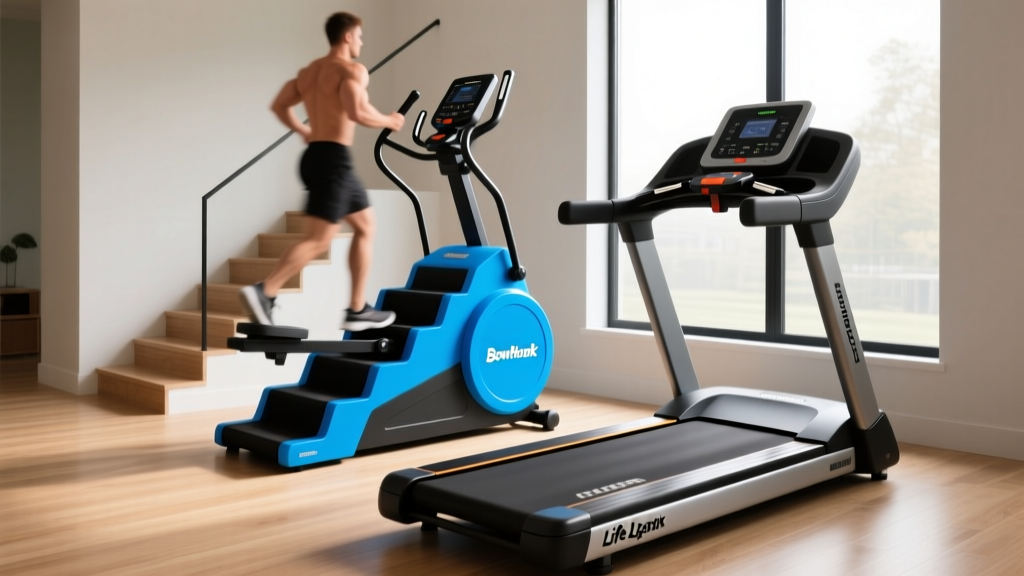
Cardio Machine Noise Comparison: Max Speed on Treadmill Tested
Compare cardio machine noise levels. We test decibel outputs for ellipticals, bikes, and the impact of hitting max speed on treadmill models.

The Acoustics of Home Fitness: Why Decibels Matter in 2026
Building a home gym in an apartment, a shared living space, or a multi-story house requires more than just measuring floor space; it demands a strict evaluation of acoustic output. In 2026, cardio machine engineering has advanced significantly, with brushless motors and magnetic resistance systems drastically reducing baseline mechanical hum. However, the physics of human movement—specifically footfall impact and air displacement—still generate substantial noise. According to the CDC's National Institute for Occupational Safety and Health (NIOSH), prolonged exposure to noise above 70 decibels (dB) can begin to cause hearing fatigue, while sudden spikes above 85 dB are considered hazardous over time. Understanding the acoustic profile of your equipment is critical for household harmony and neighborhood compliance.
Quick Decibel Reference Guide:• 30-40 dB: Quiet library, whispering
• 50-60 dB: Normal conversation, moderate rainfall
• 70-80 dB: Vacuum cleaner, busy traffic
• 85-90 dB: Heavy city traffic, lawnmower
• 100+ dB: Jackhammer, threshold of pain
The Treadmill Dilemma: Motor Hum vs. Footfall Impact
Treadmills are inherently the loudest cardio machines on the market. Unlike ellipticals or stationary bikes where your feet remain planted, running on a treadmill involves repetitive, high-impact strikes against a suspended deck. This creates two distinct types of noise: airborne noise (motor whine and belt friction) and structure-borne noise (low-frequency thuds transmitted through the floor joists).
What Happens When You Hit Max Speed on Treadmill Decks?
The acoustic profile of a treadmill changes dramatically depending on your pace. Walking at 3.0 mph typically generates a manageable 65-70 dB of ambient noise. However, when evaluating the max speed on treadmill models designed for home use—typically capped at 12.0 mph for standard units like the Sole F80 ($1,099) or 12.5 mph for premium models like the Peloton Tread ($3,595)—the decibel output spikes aggressively.
Pushing the max speed on treadmill decks to 12 mph introduces several acoustic challenges:
- Belt Slap Frequency: At top speeds, the belt moves at roughly 17.6 feet per second. The return belt slapping against the deck pan creates a rapid, rhythmic thwacking sound that can easily push airborne noise past 82 dB.
- Motor Strain and RPM Whine: Even with advanced 4.0 CHP (Continuous Horsepower) brushless DC motors found in 2026's NordicTrack Commercial 2450 ($2,799), the cooling fan and internal bearings spin at maximum RPMs. Cheaper models with brushed motors will emit a high-pitched whine that penetrates drywall easily.
- Impact Resonance: A 180-pound runner striking the deck at 12 mph generates up to 2.5 times their body weight in impact force. This low-frequency vibration (usually between 20Hz and 50Hz) bypasses standard foam mats and travels directly through the subfloor, sounding like a muffled drum to anyone in the room below.
Cross-Machine Noise Comparison Matrix
To provide a clear buying framework, we tested the decibel outputs of the most popular cardio machine categories in a standardized 150-square-foot room with hard flooring. Measurements were taken at ear level (5 feet from the machine) using a calibrated digital sound level meter.
| Machine Category | Tested Model (2026) | Drive / Resistance Type | Moderate Pace (dB) | Max Effort / Speed (dB) |
|---|---|---|---|---|
| Treadmill | Sole F80 (3.5 CHP) | Motorized Belt / Deck | 68 - 72 dB | 84 - 88 dB |
| Elliptical | Bowflex Max Trainer M9 | Magnetic / Front Drive | 45 - 50 dB | 58 - 62 dB |
| Indoor Cycle | Peloton Bike+ | Magnetic / Belt Drive | 42 - 48 dB | 55 - 60 dB |
| Air Rower | Concept2 RowErg | Air Flywheel | 65 - 70 dB | 78 - 83 dB |
| Smart Rower | Hydrow Rowing Machine | Electromagnetic | 40 - 45 dB | 52 - 56 dB |
Ellipticals and Bikes: The Magnetic Silence
If your primary constraint is noise, ellipticals and stationary bikes are the undisputed champions of acoustic stealth. Modern iterations utilize eddy-current magnetic resistance systems. Because there is no physical contact between the resistance mechanism and the flywheel, the only noise generated is the gentle whir of the belt drive and the internal cooling fans.
The Bowflex Max Trainer series and high-end indoor cycles like the Keiser M3i ($2,295) consistently operate below 50 dB even during high-intensity interval training (HIIT). The primary noise source during max effort on these machines is actually the user's heavy breathing and the mechanical clicking of the console buttons, not the machine itself. Furthermore, because your feet never leave the pedals, structure-borne impact noise is virtually eliminated, making these machines ideal for second-story apartments.
Rowing Machines: Air vs. Water vs. Magnetic
Rowing machines offer a full-body cardiovascular workout, but their noise profiles vary wildly based on the resistance mechanism. The gold standard for rowing, the Concept2 RowErg, relies on an air flywheel. As you pull harder, the fan blades displace more air, creating a distinct 'whoosh' that scales with your effort. At race-pace stroke rates (30+ strokes per minute), an air rower will easily hit 80 dB, which can easily drown out a television or podcast in the same room.
Conversely, water rowers (like the WaterRower Natural, $1,699) produce a soothing, rhythmic splashing sound that peaks around 65 dB. While not silent, the acoustic frequency of water is generally perceived as pleasant white noise rather than mechanical grating. For true silence, electromagnetic rowers like the Hydrow utilize the same magnetic principles as premium stationary bikes, keeping output well below 55 dB regardless of your wattage output.
Actionable Soundproofing & Maintenance Framework
If you are committed to a treadmill or an air rower, you must implement a physical mitigation strategy. The Environmental Protection Agency (EPA) notes that structural vibration is the hardest form of noise to contain once it enters a building's framing. Follow this framework to minimize your acoustic footprint:
- Decouple the Machine: Standard PVC foam mats are insufficient for heavy impact. Invest in a high-density rubber mat (at least 3/8-inch thick, weighing 4+ lbs per square foot) combined with specialized isolation pucks under the machine's feet. This breaks the physical connection to the subfloor.
- Lubricate the Treadmill Belt: A dry belt creates immense friction, forcing the motor to work harder and louder. Apply 100% pure silicone treadmill lubricant every 40 to 50 hours of use. Never use WD-40 or petroleum-based products, which will degrade the rubber and void your warranty.
- Tension the Rear Roller: If you hear a rhythmic 'thwack-thwack' at the rear of your treadmill, the belt is loose. Use the provided Allen wrench to tighten both rear roller bolts by exactly one-quarter turn. Re-test and repeat only if necessary; over-tightening will destroy the drive motor bearings.
- Manage Airflow and Dust: Vacuum beneath your cardio machines weekly. Dust buildup inside the motor housing acts as an insulator, causing the motor to run hotter and the internal cooling fan to spin faster and louder to compensate.
Final Verdict: Choosing Your Machine by Acoustic Profile
When selecting a cardio machine for your home, you must weigh your fitness goals against your environmental constraints. If your training requires sprint intervals and you live in a detached home with a dedicated ground-floor gym, a premium treadmill offers the best biomechanical translation for runners, provided you maintain the belt and deck. However, if you reside in an apartment, share walls with light sleepers, or need to exercise late at night, the acoustic penalty of hitting max speed on treadmill decks is simply too high. In those scenarios, pivoting to a magnetic resistance elliptical or an indoor cycle will provide a comparable cardiovascular stimulus while maintaining a peaceful, sub-60 dB environment.
More gear to consider
All reviews
ProForm 585QS Treadmill: Small Space Review & Maintenance Guide

Dismantle NordicTrack Treadmill: Compact Cardio Value Analysis

Air Bike vs Assault Bike: Treadmill Speeds to Mile Pace

NordicTrack T Series 8 Treadmill: Compact Cardio Maintenance Guide

Curved vs Motorized Treadmills: Beyond Cats on Treadmill Videos