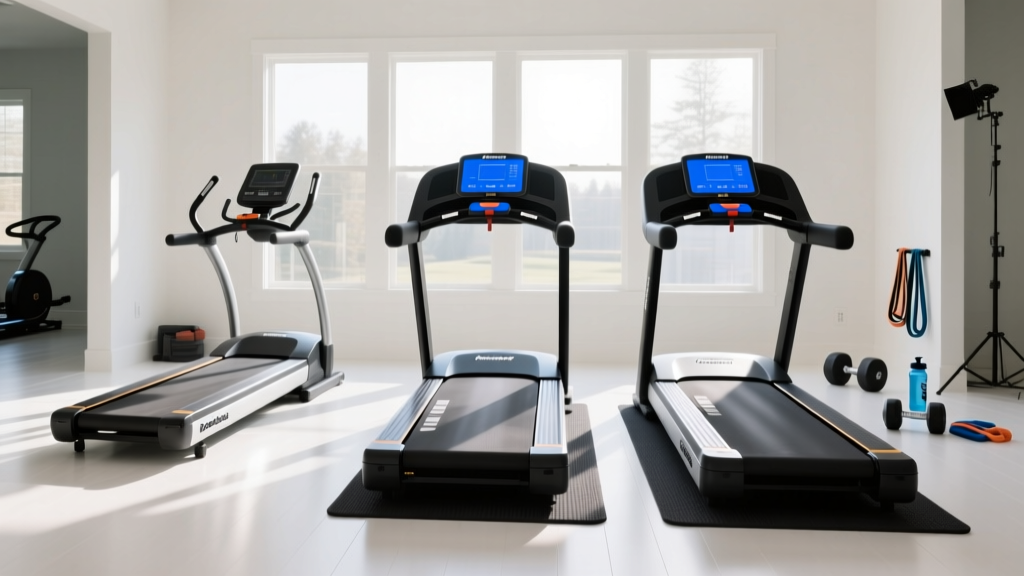
Elliptical vs Treadmill vs Treadmill Bike Maintenance
Compare elliptical, treadmill, and treadmill bike maintenance. Expert tips on lubrication, belt care, and longevity for home cardio machines.

The True Cost of Home Cardio: Beyond the Price Tag
When debating the merits of an elliptical vs treadmill for home cardio, most buyers focus on joint impact, calorie expenditure, and footprint. However, as we navigate the home fitness landscape in 2026, the most critical factor in long-term ROI is often ignored: maintenance and mechanical longevity. A $1,500 machine that requires a $250 motor control board replacement every three years is a poor investment compared to a slightly more expensive model with a sealed drivetrain.
Furthermore, the rise of compact home offices has introduced a new contender to the floor plan: the treadmill bike hybrid. These innovative units—combining under-desk walking pads with stationary cycle bases or featuring specialized pedal-treadmill mechanics—offer unique mechanical challenges. According to the American Council on Exercise (ACE), proper equipment maintenance is not just about preserving the machine; it is a critical safety standard to prevent mid-workout failures and biomechanical injuries.
This guide provides a deep-dive, technician-level comparison of the maintenance requirements, failure modes, and longevity profiles of ellipticals, traditional treadmills, and modern treadmill bike hybrids.
Elliptical Maintenance: Pivot Points and Magnetic Resistance
Ellipticals are generally favored for low-impact cardio, but their complex kinematic chains (the series of linked arms and pedals) create multiple friction points. Unlike the continuous loop of a treadmill belt, an elliptical relies on pivot joints, guide rails, and heavy flywheels.
The Pivot Point Problem
Take a popular mid-range model like the Sole E35. It features a 25-pound flywheel and multiple articulating pedal arms. Over time, the factory-applied grease in the pedal arm bearings and horizontal guide rails degrades. If you hear a rhythmic "squeak-click" during your stride, the machine is experiencing metal-on-metal friction.
- The Fix: Every 6 months, wipe down the horizontal guide rails and apply a PTFE-based (Teflon) dry lubricant or white lithium grease to the pivot bearings. Never use WD-40, as it strips existing lubricants and attracts dust.
- Cost of Neglect: Ignoring pivot maintenance leads to premature bearing failure. Replacing a pedal arm bearing assembly typically costs $45 to $85 in parts, plus significant labor if you cannot press the old bearings out yourself.
Magnetic Resistance and Dust
Modern ellipticals use eddy-current magnetic resistance. Because the magnet never physically touches the flywheel, friction maintenance is zero. However, dust is the enemy. A thick layer of dust on the flywheel or the magnetic bracket can interfere with the Hall-effect sensors that track your RPMs, leading to erratic console readings. Wiping the flywheel housing with a microfiber cloth and a mild degreaser every three months ensures sensor accuracy.
Treadmill Longevity: Belt Tension, Lubrication, and Motor Care
The treadmill is a high-friction environment. The continuous sliding of the running belt over the wooden or composite deck generates immense heat and physical wear. According to Sole Fitness official maintenance guidelines, deck friction is the number one cause of premature motor and electronics failure in home treadmills.
The Silicone Lubrication Mandate
Treadmill decks are coated with a micro-thin layer of wax or silicone at the factory. As you run, this layer wears away. When friction increases, the DC motor must draw more amperage to maintain your target speed under your body weight. This excess amp draw generates heat, eventually frying the Motor Control Board (MCB) or burning out the motor windings.
⚠️ Technician Warning: You must use 100% pure silicone treadmill lubricant. Petroleum-based lubricants will dissolve the belt backing and destroy the deck. Apply 1 to 2 ounces of silicone every 150 miles or every 3 to 6 months, depending on usage intensity.Belt Tension and Alignment
A belt that is too tight puts excessive radial load on the front and rear roller bearings, causing them to grind and fail. A belt that is too loose will slip when your foot strikes the deck, causing a dangerous stutter. The correct tension allows you to lift the belt approximately 2 to 3 inches off the deck in the center. If the belt drifts to the left or right, adjust the rear roller bolts in quarter-turn increments to re-center it.
The Treadmill Bike Hybrid: Unique Wear Patterns
As remote work solidified, the treadmill bike category exploded. These machines range from hybrid desk setups (like the LifeSpan TR1200-DT5B, which pairs a bike desk and treadmill desk in one footprint) to compact, folding walking-pad/cycle combos designed for micro-apartments. While space-efficient, their mechanical design introduces distinct longevity challenges.
Folding Hinge Metal Fatigue
Most compact treadmill bike units feature a 180-degree folding mechanism to slide under a bed or sofa. The repeated stress of unfolding a 100-pound machine, combined with the vibrational load of a user walking at 3.0 mph, places immense shear stress on the locking pins and hinges. Longevity Tip: Inspect the locking pins monthly. If you notice any lateral play or "wobble" in the deck when deployed, the locking detents are wearing down. Lubricate the hinge points with dry graphite powder to prevent seizing, and never force the fold mechanism if it catches.
Micro-Motor Overheating
To maintain a slim profile, many treadmill bike hybrids utilize smaller 1.5 HP to 2.0 HP DC motors. These motors are engineered strictly for walking (up to 4.0 mph). Attempting to jog or run on a compact treadmill bike hybrid will cause the motor to overheat, triggering thermal shutdowns and permanently degrading the internal copper windings. For running, a traditional treadmill with a minimum 3.0 CHP motor is non-negotiable for long-term survival.
10-Year Maintenance Cost & Schedule Matrix
To truly understand the elliptical vs treadmill debate, we must look at the financial and temporal investment required to keep these machines running for a decade. The Consumer Reports treadmill and elliptical reliability guides consistently highlight that treadmills require more frequent user intervention than ellipticals.
| Machine Type | Primary Maintenance Task | Frequency | Est. 10-Year DIY Cost | Most Common Failure Point |
|---|---|---|---|---|
| Elliptical | Pivot joint greasing & rail cleaning | Every 6 months | $40 - $70 (Lubes/cloths) | Console control board / Incline motor |
| Traditional Treadmill | Deck lubrication & belt alignment | Every 3 months / 150 miles | $120 - $180 (Silicone + 1 belt swap) | Motor Control Board (MCB) / Drive belt |
| Treadmill Bike Hybrid | Hinge inspection & motor dusting | Monthly visual / Bi-annual lube | $60 - $100 (Graphite + replacement pins) | Folding mechanism detents / DC Motor |
Environmental Factors: Sweat, Humidity, and Subflooring
The environment in which your cardio machine lives dictates its lifespan just as much as mechanical upkeep. Human sweat is highly corrosive, containing salt and urea that will rapidly oxidize exposed steel and degrade plastic console overlays.
The Anti-Static Mat Requirement
Every treadmill and treadmill bike hybrid generates static electricity as the belt rubs against the deck. Without a proper ground, this static discharges through the user (resulting in a shock) or, worse, arcs into the machine's internal electronics, corrupting the EEPROM chip on the console. Always place your machine on a high-density, anti-static rubber equipment mat. This not only grounds the machine but also prevents dust and carpet fibers from being sucked into the motor hood's cooling fan.
Motor Hood Vacuuming
Every 6 months, unplug the treadmill, remove the plastic motor hood (usually secured by 4 to 6 Phillips-head screws), and use a vacuum with a brush attachment to remove dust bunnies from the motor vents and the drive belt. A clogged motor vent forces the internal cooling fan to work harder, raising the operating temperature of the motor by up to 15°F, which accelerates the degradation of the copper insulation.
Troubleshooting Common Failure Modes
Before calling a technician, use this diagnostic framework for common home cardio issues:
- Treadmill Belt Slipping: If the motor continues to spin but the belt stops when you step on it, the drive belt (connecting the motor to the front roller) is loose or worn, or the running belt tension is too low. Check the running belt first; it requires zero tools to adjust via the rear roller hex bolts.
- Elliptical "Ghost" Resistance: If the magnetic resistance on your elliptical fluctuates randomly, the issue is rarely the magnet itself. It is usually a failing potentiometer in the console or a pinched data cable running through the upright mast. Inspect the cable routing for sharp bends.
- Treadmill Bike Thermal Shutdown: If your hybrid unit abruptly stops after 30 minutes of use and won't restart for an hour, the internal thermal breaker on the DC motor has tripped. This is a permanent warning sign that the motor is undersized for your stride weight and speed; you must reduce your pace to prevent total motor seizure.
Conclusion: Investing in Longevity
Choosing between an elliptical, a traditional treadmill, or a space-saving treadmill bike ultimately comes down to your biomechanical needs and your willingness to perform routine maintenance. Ellipticals offer a near-frictionless magnetic experience but demand vigilance regarding pivot joint lubrication. Traditional treadmills provide the most natural running mechanics but require a strict, religious adherence to silicone deck lubrication to protect expensive electronic components. Meanwhile, the modern treadmill bike hybrid solves the spatial constraints of the 2026 home office, provided you respect the mechanical limits of its folding hinges and micro-motors.
By implementing these targeted maintenance protocols, you can easily extend the functional lifespan of your home cardio equipment from an industry average of 5-7 years to well over a decade, ensuring your investment continues to pay dividends in your cardiovascular health.
More gear to consider
All reviews
Elliptical vs Treadmill: Do You Need an LA Fitness Treadmill?

Elliptical vs Treadmill: The 2026 Arch Treadmill Market Shift
Step-by-Step Treadmill Buttocks Guide & Cardio Noise Comparison
WalkingPad X25 Double Fold Treadmill Reviews & Setup Walkthrough

Stair Climber vs 12 Incline on Treadmill in Degrees: Home Guide