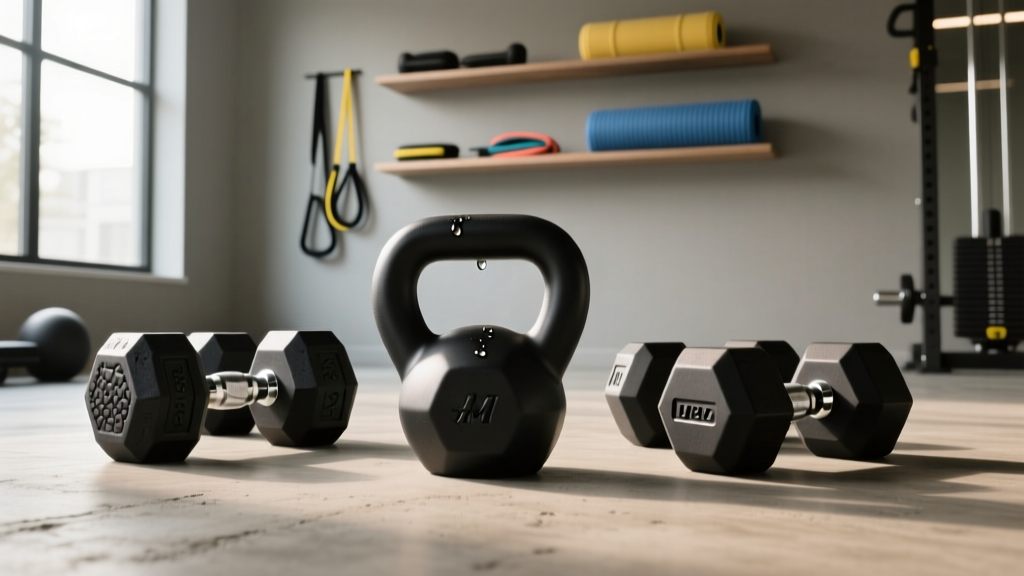
Rubber vs Urethane Care for Your 30 Min Full Body Dumbbell Workout
Learn how to maintain rubber hex and urethane dumbbells for high-volume 30 min full body dumbbell workout routines. Expert care, cleaning, and storage tips.

The Toll of High-Volume Training on Free Weights
When you commit to a daily 30 min full body dumbbell workout, your equipment endures hundreds of ground contacts, heavy sweat exposure, and constant friction each week. High-rep circuits featuring dumbbell thrusters, renegade rows, and goblet squats mean your weights are constantly being set down, picked up, and subjected to environmental stressors. While the heads of your dumbbells take the brunt of the physical impact, the materials they are made from dictate their lifespan and your maintenance routine.
In the home and commercial gym space, the debate almost always narrows down to two primary materials: rubber hex and urethane. Both offer floor protection and noise reduction compared to bare steel or iron, but their molecular structures react entirely differently to sweat, UV light, and impact. Understanding these differences is the key to protecting your investment and ensuring your gear survives years of high-volume training.
Material Science: Why Rubber and Urethane Age Differently
To maintain your equipment, you must first understand what it is made of. Rubber hex dumbbells are typically manufactured from vulcanized recycled rubber or virgin styrene-butadiene rubber (SBR). While cost-effective, natural and synthetic rubbers are susceptible to ozone cracking, UV degradation, and oxidation. Over time, the plasticizers in the rubber evaporate, leading to the dreaded 'chalky' residue and brittle edges.
Urethane (specifically cast polyurethane or PU), on the other hand, is a high-performance elastomer. According to material science evaluations reviewed by Garage Gym Labs, urethane features superior abrasion resistance and is virtually impervious to UV light and ozone. It does not off-gas volatile organic compounds (VOCs) like cheap rubber, making it the undisputed king of indoor air quality and long-term durability. However, this premium performance comes with a steeper upfront cost and requires a slightly different cleaning approach to maintain its factory finish.
⚠️ The Sweat Corrosion Factor
Regardless of whether you choose rubber or urethane for the heads, the steel handle is your biggest vulnerability. Human sweat has an acidic pH ranging from 4.5 to 7.0. During an intense 30 min full body dumbbell workout, acidic sweat pools in the knurling. If left unneutralized, it will oxidize the steel core and compromise the internal bond between the steel handle and the rubber/urethane head, leading to catastrophic failure where the head snaps off during a lift.
Head-to-Head Comparison Matrix
Before diving into specific maintenance protocols, review how these two materials stack up against each other in a high-volume training environment as of 2026.
| Feature | Rubber Hex Dumbbells | Urethane Dumbbells |
|---|---|---|
| Average Cost (per lb) | $2.20 - $3.00 | $4.50 - $6.50 |
| UV & Ozone Resistance | Poor (Requires UV protectants) | Excellent (Inherently stable) |
| Edge Chipping | Moderate to High (on concrete) | Very Low (High elasticity) |
| Odor / Off-Gassing | High (Recycled) to Low (Virgin) | None |
| Cleaning Agent | Mild Soap / Rubber Cleaner | Simple Green Pro HD / Mild Soap |
Maintenance Protocols for Rubber Hex Dumbbells
Rubber hex dumbbells, such as the widely popular Rogue Rubber Hex Dumbbells, are the workhorses of home gyms. However, their edges are prone to chipping if dropped on un-matted concrete, and the rubber compound requires specific hydration to prevent drying out.
1. The Cleaning Routine
Never use harsh degreasers, bleach, or ammonia-based cleaners on rubber. These chemicals strip the protective waxes and oils inherent in the vulcanization process, accelerating the drying and cracking phases. Instead, use a microfiber cloth dampened with warm water and a few drops of pH-neutral dish soap (like Dawn). Wipe down the heads immediately after your workout to remove acidic sweat and chalk dust.
2. UV Protection and Hydration
If your home gym is in a garage with windows or a sunroom, UV rays will destroy rubber hex dumbbells over time, causing them to turn gray and crumble. Every three months, apply a light coat of 303 Aerospace Protectant. Unlike silicone-based products (e.g., Armor All), which leave a dangerous, slippery residue that compromises your grip during heavy presses, 303 bonds to the rubber, providing UV blockage and moisture retention without altering the surface friction.
3. Edge Preservation
The sharp corners of hex dumbbells are structural weak points. Always use at least 3/4-inch thick horse stall mats or high-density EVA foam flooring. Dropping rubber hex dumbbells directly onto concrete during the eccentric phase of a renegade row will eventually cause the rubber to separate from the steel core.
Maintenance Protocols for Urethane Dumbbells
Urethane dumbbells represent the pinnacle of free weight durability. They are virtually indestructible under normal training conditions, but their premium aesthetic and smooth finish require care to prevent cosmetic scuffing and dirt embedding.
1. Deep Cleaning the Elastomer
Urethane is non-porous, meaning sweat and dirt sit on the surface. However, if dirt is ground into the micro-texture of the urethane, it can look permanently stained. For deep cleaning, dilute Simple Green Pro HD (the purple formula, which is safe for metals and elastomers) at a 10:1 ratio with water. Spray onto a cloth—not directly onto the dumbbell, to avoid liquid seeping into the handle joint—and wipe firmly.
2. Avoiding Solvents
While urethane is highly chemical resistant, prolonged exposure to strong solvents like acetone, MEK (methyl ethyl ketone), or paint thinners can cause the surface to swell or soften. Keep your dumbbells away from garage workbenches where these chemicals are used.
3. Temperature Acclimation
Urethane becomes harder and slightly more brittle in freezing temperatures. If you train in an unheated garage in the winter, allow the dumbbells to acclimate to room temperature before subjecting them to high-impact drops, as the shock absorption properties are marginally reduced below 32°F (0°C).
Expert Insight: The most common failure point in premium urethane dumbbells isn't the urethane itself—it's the steel handle. If you are doing a 30 min full body dumbbell workout that includes high-rep farmer's carries or lunges, your grip sweat will pool at the exact junction where the urethane meets the steel knurling. This causes 'crevice corrosion.' Always wipe the handle joints completely dry after training.
Handle and Knurling Care: The Great Equalizer
Whether you buy $2/lb rubber hex or $6/lb urethane, the steel handle requires identical maintenance. The knurling (the cross-hatch pattern cut into the steel) provides grip but also traps dead skin, chalk, and sweat.
- Weekly Brushing: Use a stiff nylon brush (never wire, which damages the zinc or chrome plating) to scrub the knurling while spraying with a 50/50 mix of water and white vinegar. The mild acidity of the vinegar neutralizes the alkaline salts left behind by dried sweat.
- Monthly Oiling: After brushing and drying, apply a few drops of 3-in-One Multi-Purpose Oil or food-grade mineral oil to a rag and rub it into the knurling. Let it sit for 10 minutes, then wipe it completely dry with a clean towel. This displaces microscopic moisture and prevents rust.
- Plating Inspection: If you notice the chrome or zinc plating flaking off near the head joint, the structural integrity of the handle may be compromised. At this stage, retire the dumbbell from heavy overhead movements to prevent injury.
Cost vs. Longevity: The 5-Year Projection
When outfitting a gym for high-frequency use, the initial price tag can be deceiving. A 50-pound pair of rubber hex dumbbells might cost $125, while a comparable urethane pair from a premium brand like Rogue Fitness will cost upwards of $300.
However, in a commercial or heavy-use home environment, rubber hex dumbbells typically show severe edge degradation, odor retention, and cosmetic fading within 3 to 4 years. Urethane dumbbells, when cleaned with the protocols above, routinely outlast 10 years of daily abuse, maintaining their exact dimensions, shock absorption, and aesthetic appeal. For athletes dedicated to long-term progression and daily 30 min full body dumbbell workout routines, urethane is ultimately the more economical choice when amortized over a decade.
Frequently Asked Questions
Can I use baby wipes to clean my dumbbells after a workout?
Yes, but with caution. Most commercial baby wipes or gym wipes contain mild alcohols and aloe. While fine for occasional use on urethane, frequent use of alcohol-based wipes on rubber hex dumbbells will accelerate the evaporation of the rubber's plasticizers, leading to premature drying and cracking. Stick to a damp microfiber cloth for daily use.
How do I fix the 'chalky' white residue on my rubber dumbbells?
That white residue is oxidation and blooming (where sulfur and waxes from the vulcanization process rise to the surface). You can remove it by scrubbing the heads with a mixture of warm water and baking soda, followed by a thorough application of 303 Aerospace Protectant to restore the deep black color and seal the surface.
Do urethane dumbbells smell?
No. High-quality cast urethane is entirely odorless. If a 'urethane' dumbbell smells like chemicals or tires, it is likely a cheap rubber blend mislabeled or coated with a thin layer of synthetic paint to mimic the look of urethane. Always buy from reputable fitness manufacturers to ensure you are getting true elastomeric polyurethane.
More gear to consider
All reviews
Power Rack vs Squat Rack vs Squat Stand: Incline Dumbbell Curl Setup
Maintaining Your P90X Dumbbells: Rubber Hex vs Urethane Care

EZ Curl Bar vs Straight Bar & Cap Barbell Dumbbell Set with Rack
2026 Trend Report: Urethane vs Rubber Hex for the Dumbbell Superman
Cast Iron vs Competition Kettlebells & Chrome Dumbbell Maintenance
