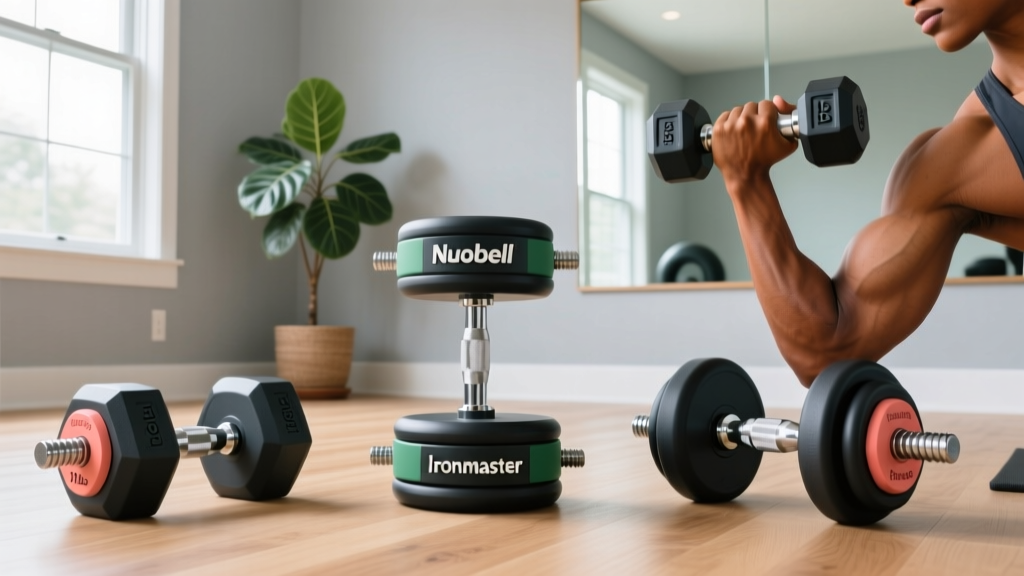
T Bar Row with Dumbbells: Beginner Guide for Home Gyms
Learn how to perform a T bar row with dumbbells at home. This beginner guide covers setup, form, and why neoprene hex weights are the safest choice.

The Home Gym Hack: Mastering the T Bar Row with Dumbbells
The traditional T-bar row is a staple for building a thick, muscular back. It typically requires a landmine attachment, a barbell, and a V-bar handle—equipment that most beginners and home gym owners simply do not have. However, you can replicate the exact biomechanics of this elite back-builder using a single heavy dumbbell. Learning how to execute a T bar row with dumbbells is one of the most effective hacks for home gym enthusiasts looking to target the latissimus dorsi, rhomboids, and rear deltoids without investing in bulky cable machines.
But there is a critical safety caveat: you cannot use just any dumbbell for this floor-based straddle exercise. Using round rubber or metal dumbbells introduces a severe rolling hazard that can lead to catastrophic lower back injuries. This is where the neoprene coated dumbbell for home use becomes an absolute necessity. In this step-by-step beginner guide, we will break down the exact setup, the biomechanics of the pull, and why neoprene hex dumbbells are the only safe choice for this movement.
⚠️ Critical Safety Warning: The Anti-Roll Factor
When performing a straddle row, the weight is positioned directly between your feet and beneath your center of gravity. If a round dumbbell shifts or rolls during the eccentric (lowering) phase, your lumbar spine will instantly round under load, risking disc herniation. Neoprene hex dumbbells feature flat, matte edges that grip hardwood, rubber matting, and carpet, completely eliminating the rolling hazard.
Why Neoprene Coated Dumbbells Dominate Floor Exercises
Not all dumbbell coatings are created equal. While urethane is the gold standard for commercial gym drop-sets due to its extreme durability, it is notoriously slick and hard (typically measuring around 90A on the Shore durometer scale). Neoprene, on the other hand, is a synthetic rubber that is softer, slightly porous, and features a high-friction matte finish. According to Cleveland Clinic's orthopedic and spinal health resources, maintaining a stable base of support is the primary factor in preventing shear forces on the lumbar spine during hinged movements.
2026 Market Pricing & Top Models for Home Use
If you are outfitting your home gym specifically for floor-based rows, here is what you should look for in the current 2026 market:
- CAP Barbell Neoprene Hex (Model SDN Series): The industry standard for home gyms. A single 40 lb or 50 lb dumbbell (ideal for beginner to intermediate T-bar rows) costs between $65 and $85. The contoured chrome handle provides a secure grip even when sweating.
- Yes4All Neoprene Coated Hex: A budget-friendly alternative, usually priced around $1.40 to $1.60 per pound. The hex heads are slightly more rounded than CAP's, but still provide adequate anti-roll stability.
- Tone Fitness Hex Dumbbells: Often found in big-box stores, these feature a thicker neoprene coating. A 35 lb model retails for roughly $55. Excellent for beginners mastering the hip hinge.
Coating Comparison Matrix for Straddle Rows
| Coating Type | Shape | Floor Grip (Friction) | Safety for T-Bar Straddle Row | Avg. Cost per Lb (2026) |
|---|---|---|---|---|
| Neoprene | Hex / Flat Edge | High (Matte finish) | Excellent (Highly Recommended) | $1.40 - $1.80 |
| Virgin Rubber | Round / 12-Sided | Medium (Can squeak/slip) | Poor (High roll risk) | $1.50 - $2.00 |
| Urethane | Hex / Round | Low (Very slick) | Dangerous (Do not use on floor) | $2.50 - $4.00 |
| Cast Iron | Round | Very Low (Slides easily) | Dangerous (Floor damage + roll risk) | $1.00 - $1.50 |
Step-by-Step: Executing the T Bar Row with Dumbbells
Now that you have the correct equipment, it is time to master the movement. The biomechanics of this exercise mimic a horizontal pull, heavily targeting the mid-back. As noted by ExRx.net's biomechanical exercise directory, horizontal pulling movements are essential for balancing out the anterior chain and correcting postural kyphosis caused by modern desk work.
Step 1: The Setup and Stance
Place a single, heavy neoprene hex dumbbell (e.g., 35 to 50 lbs) horizontally on the floor. Stand with your feet slightly wider than shoulder-width apart, straddling the dumbbell. Your toes should be pointed slightly outward. The dumbbell should be positioned so that the handle is aligned with the middle of your arches.
Step 2: The Hip Hinge and Grip
Push your hips back as if you are trying to close a car door with your glutes. Keep your spine completely neutral—do not round your lower back. Bend your knees just enough to reach the dumbbell. Place both hands on the handle, overlapping your fingers or using an alternating (mixed) grip if the handle is too short for a standard double-overhand grip. Pro Tip: If your grip fails before your back does, use a pair of figure-8 lifting straps looped around the handle.
Step 3: The Concentric Pull
Brace your core as if you are about to be punched in the stomach. Drive your elbows up and back toward the ceiling. Do not think about pulling with your hands; instead, imagine trying to crush an orange in your armpits at the top of the movement. Squeeze your shoulder blades together forcefully at the peak of the contraction. The dumbbell should travel in a straight vertical line, grazing your inner thighs.
Step 4: The Eccentric Lowering
Lower the dumbbell slowly under control, taking a full two to three seconds to return it to the floor. Do not let the weight yank your shoulders forward at the bottom. Maintain the hip hinge position throughout the entire set; your torso angle should not change between reps.
Common Beginner Mistakes & How to Fix Them
Even with the safest neoprene equipment, poor form will limit your muscle growth and invite injury. Watch out for these frequent errors:
Mistake 1: The 'Bicep Curl' Row
The Issue: Beginners often initiate the pull by bending their elbows and curling the weight, shifting the tension entirely onto the biceps brachii.
The Fix: Relax your grip slightly and focus entirely on driving the elbows backward. Think of your hands as mere meat-hooks connecting your lats to the dumbbell.
Mistake 2: Torso Rising (Cheating)
The Issue: As the set gets difficult, lifters will stand up slightly, using momentum from their legs and lower back to heave the weight upward.
The Fix: Drop the weight by 10 lbs. Your torso must remain locked at a 45-degree angle. If you cannot pull the weight without rising, the load is too heavy for your current lat strength.
Mistake 3: Cervical Spine Hyperextension
The Issue: Looking up at the mirror or ceiling during the hinge places massive compressive forces on the cervical vertebrae.
The Fix: Pack your chin. Your neck should remain in a neutral line with your spine. Look at a spot on the floor about three feet in front of you.
Programming: Sets, Reps, and Progression
Because the T bar row with dumbbells is a compound, multi-joint movement, it should be performed early in your workout when your central nervous system is fresh.
Expert Programming Tip: For hypertrophy (muscle growth), aim for 3 to 4 sets of 8 to 12 repetitions. Rest for 90 to 120 seconds between sets. Once you can comfortably perform 4 sets of 12 reps with a 50 lb neoprene hex dumbbell with perfect form, it is time to either increase the weight or transition to a dual-dumbbell bent-over row to accommodate heavier loading.
Sample Back Day Integration
- Pull-Ups or Lat Pulldowns: 3 sets of 8-10 (Vertical Pull)
- T Bar Row with Dumbbells (Neoprene Hex): 4 sets of 8-12 (Heavy Horizontal Pull)
- Single-Arm Dumbbell Row: 3 sets of 10-15 (Unilateral Isolation)
- Face Pulls or Rear Delt Flyes: 3 sets of 15-20 (Postural/Scapular Health)
Frequently Asked Questions
Can I use two dumbbells instead of one for a T-bar row?
Using two dumbbells simultaneously is technically a standard bent-over row, not a T-bar row. The T-bar row is defined by a neutral, close grip (palms facing each other) which allows for a greater range of motion and deeper lat stretch. To replicate this with dumbbells, you must use a single heavy dumbbell and grip the handle or the top head with both hands close together.
Will the neoprene coating tear if I drag it on the floor?
High-quality neoprene (like the CAP Barbell SDN series) is highly resistant to tearing. However, you should lift the dumbbell slightly off the floor at the bottom of the movement rather than aggressively slamming or dragging it, which can prematurely degrade the coating and expose the cast iron core to rust.
What if my home gym only has round rubber dumbbells?
If you only own round rubber dumbbells, do not attempt the straddle T-bar row. The risk of the dumbbell rolling and injuring your lower back is too high. Instead, perform a chest-supported dumbbell row on an incline bench, or use a single-arm row supported by a sturdy chair or rack.
More gear to consider
All reviews
Power Rack vs Squat Stand for Benching with Dumbbells

Olympic Barbell Weight & Knurling Guide: Integrating WeGym Dumbbells

Power Rack vs Squat Stand: Home Bicep Workout Without Dumbbells

Barbell Collar Comparison: Securing Hip Thrusts vs. a Butt Workout with Dumbbells
Best Adjustable Dumbbell for Spider Curls: 2026 Setup Guide