Can You Use HSA for Home Gym Equipment? Build a $500 Setup
Discover if you can use HSA for home gym equipment. We break down IRS rules, the LMN process, and a complete 2026 budget home gym setup under $500.

Can You Use HSA for Home Gym Equipment? The 2026 IRS Rules
Building a home gym in 2026 doesn't require dropping $3,000 on a commercial-grade power rack. With mid-tier commercial gym memberships now averaging $55 to $75 per month, a carefully curated sub-$500 setup offers massive long-term ROI. But the ultimate financial hack for fitness enthusiasts isn't just finding budget gear—it's leveraging pre-tax dollars. This brings up one of the most common questions we receive at FitGearPulse: can you use HSA for home gym equipment?
The short answer is yes, but with strict caveats. According to IRS Publication 502, expenses for 'general health' or 'general fitness' are strictly prohibited from being paid with Health Savings Account (HSA) or Flexible Spending Account (FSA) funds. You cannot simply buy a set of dumbbells to 'get in shape' and expense it.
⚠️ The Medical Necessity RequirementTo legally use HSA funds, the equipment must be prescribed to treat a specific, diagnosed medical condition (e.g., Type 2 Diabetes, clinical obesity with a BMI over 30, hypertension, or post-surgical physical rehabilitation). You must obtain a Letter of Medical Necessity (LMN) from your primary care physician before purchasing.
If your physician provides an LMN detailing how resistance training will mitigate your specific ICD-10 coded diagnosis, your $500 budget setup becomes 100% HSA-eligible, effectively giving you a 20% to 30% discount depending on your marginal tax bracket.
The $448 Budget Home Gym: Value Analysis Matrix
When building a gym under $500, every dollar must serve a distinct biomechanical purpose. We've eliminated single-use machines and focused on versatile, high-yield tools that allow for progressive overload across all major movement patterns.
| Equipment Category | Recommended 2026 Model | Est. Price | Biomechanical Value & HSA Status |
|---|---|---|---|
| Adjustable Dumbbells | Flybird 5-52.5 lbs (Pair) | $160 | Replaces 15 weight sets. Essential for unilateral loading. (Eligible with LMN) |
| Adjustable Bench | Flybird 12-Position FID Bench | $130 | 800lb capacity. Flat/Incline/Decline unlocks full chest and shoulder ROM. (Eligible with LMN) |
| Vertical Pulling | Rogue Doorway Pull-Up Bar | $43 | 16-gauge steel leverages door frame physics. Crucial for latissimus dorsi development. (Eligible with LMN) |
| Suspension / Stability | Yes4All Wooden Gymnastic Rings | $38 | Instability recruits 30% more stabilizer muscles than fixed bars. (Eligible with LMN) |
| Flooring | BalanceFrom 3/4-inch EVA Mats (24 sq ft) | $45 | Protects subfloor from impact; provides joint cushioning. (Eligible with LMN) |
| Variable Resistance | WODFitters 4-Band Pull-Up Assist Set | $32 | Assists pull-ups and adds accommodating resistance to presses. (Eligible with LMN) |
| Total Investment | $448 | Leaves $52 buffer for shipping/taxes or HSA admin fees. | |
Biomechanics on a Budget: Avoiding Cheap Gear Failure Modes
When restricted to a $500 budget, the temptation is to buy the absolute cheapest items available. This is a critical error that leads to injury and wasted funds. Here is our value analysis on why we selected the specific models above.
The Adjustable Dumbbell Dilemma
High-end adjustable dumbbells like the Nuobell or Bowflex 552s cost upwards of $350-$400 alone, devouring the entire budget. Conversely, ultra-cheap 'spin-lock' dumbbell handles require manual plate changes that ruin workout density and heart-rate maintenance. The Flybird 5-52.5 lbs dial system offers the best middle ground. While the internal plastic gear rack isn't as robust as steel, the failure mode only occurs if you drop them. By treating them with care and never dropping them from the top of a chest press, they provide reliable 5-pound increments necessary for progressive overload on isolation movements like lateral raises.
Vertical Pulling: Leverage vs. Friction
Many budget guides recommend telescopic, friction-mounted hallway pull-up bars. Do not buy these. The failure mode of a friction bar slipping mid-rep can result in severe rotator cuff tears or spinal compression. The $43 Rogue Doorway Pull-Up Bar uses the actual architectural leverage of your door frame's trim, transferring the load horizontally into the studs. It is a vastly superior safety investment for just $15 more than a friction bar.
Flooring and Stability Hacks
While 3/4-inch EVA foam is excellent for joint protection and dropping light dumbbells, it compresses under heavy, concentrated loads. If you are doing heavy incline presses on your Flybird bench, the foam can create a micro-wobble. Pro-Tip: Place a 2x2 foot scrap of 3/4-inch plywood under the bench legs to distribute the weight and eliminate instability, saving you from buying expensive rubber horse stall mats.
According to the American College of Sports Medicine (ACSM), incorporating both resistance and suspension training is vital for functional longevity. Gymnastic rings allow your wrists and elbows to rotate naturally during dips and rows, drastically reducing the joint impingement commonly caused by fixed, straight-bar movements.
Step-by-Step: Funding Your Setup via HSA
If you have secured a Letter of Medical Necessity from your doctor, follow this exact workflow to ensure your purchase complies with IRS regulations and avoids tax penalties.
- Secure the LMN: Your doctor must write a letter on official letterhead stating your diagnosis (with ICD-10 code), the prescribed treatment (resistance training/home gym equipment), and the duration of the necessity.
- Check HSA Administrator Portals: Some providers, as noted in the Fidelity HSA Eligible Expenses Guide, require you to upload the LMN to their portal before making the purchase to unlock the HSA debit card for that specific merchant category code (MCC).
- Make the Purchase: If pre-approval isn't required, buy the equipment using your personal card and save the itemized receipt (showing exact model names and prices).
- Submit for Reimbursement: Upload the itemized receipt and the LMN to your HSA dashboard for tax-free reimbursement.
- Archive for Audits: The IRS can audit HSA withdrawals up to 7 years later. Keep a physical and digital folder containing your LMN, receipts, and the corresponding IRS Publication 502 guidelines for that tax year.
Long-Term ROI: $448 Setup vs. Commercial Gym
Let's run the math on a standard 2026 commercial gym membership. A mid-tier facility averages $25/month, but once you add the mandatory $49 annual maintenance fee, initiation fees, and the hidden cost of commuting (gas and time), the true annual cost hovers around $450.
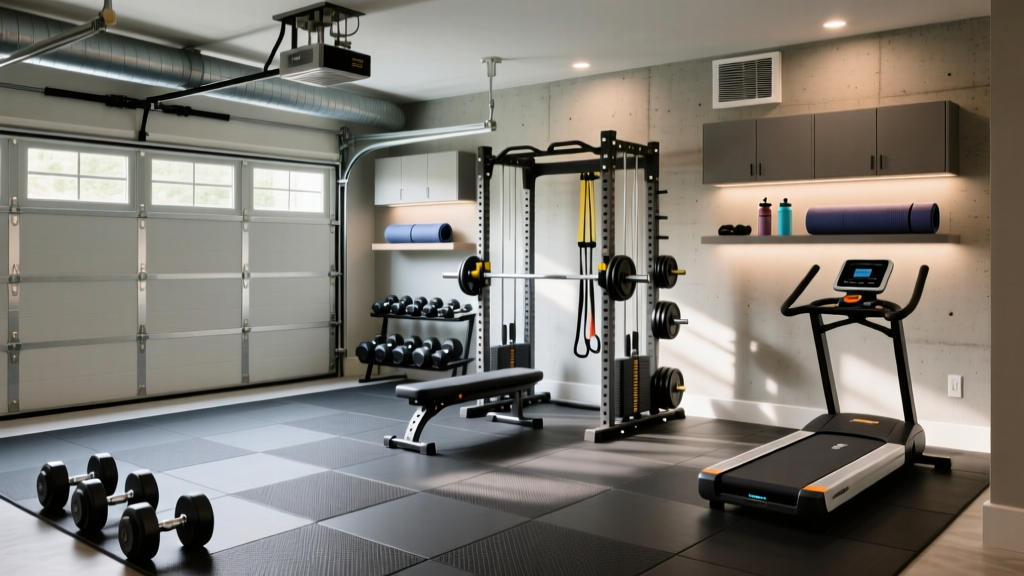
By deploying $448 of HSA funds (which are pre-tax, effectively lowering your out-of-pocket cost to roughly $315-$350 depending on your marginal tax rate), you acquire a permanent physical asset. This budget setup covers 90% of the exercises required for hypertrophy and cardiovascular health. While it lacks the cable crossovers and saunas of a luxury club, the biomechanical stimulus provided by adjustable dumbbells, rings, and a pull-up bar is more than sufficient to build a highly aesthetic, functional, and healthy physique from your garage or spare bedroom.
More gear to consider
All reviews
Where to Donate Fitness Equipment When Upgrading Home Gyms
Must Have Equipment for a Home Gym: Couples Setup Guide
Protecting Your TuffStuff AXT 5 Home Gym in Outdoor Setups

Ideal Home Gym Size and Shared Setup Guide for Couples

Complete Home Gym Setup & Floor Plans: Best Home Gym Shelf Picks