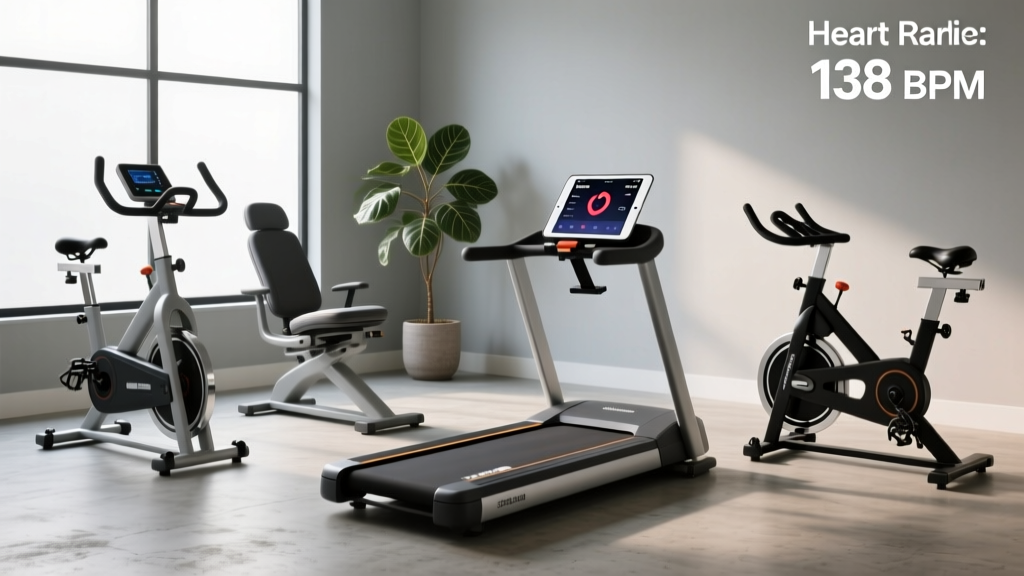
Upright, Recumbent, Spin Bikes & iPad Stand for Treadmill Mounts
Compare upright, recumbent, and spin bikes. Our hands-on review tests ergonomics, resistance, and if your iPad stand for treadmill works on each type.

Building the ultimate home cardio setup in 2026 requires more than just picking a machine; it requires understanding how your equipment integrates with your digital ecosystem. As a senior reviewer for FitGearPulse, I have tested dozens of indoor cycling machines over the past decade. One of the most common questions I receive from readers is about cross-compatibility: specifically, whether the universal iPad stand for treadmill setups they already own will work on a stationary bike. The short answer? It depends entirely on the bike type and its handlebar geometry.
In this comprehensive guide, we break down the biomechanical differences between upright, recumbent, and spin bikes, review our top 2026 picks, and solve the tablet-mounting dilemma so you can stream your favorite fitness classes without buying redundant accessories.
The Biomechanics of Indoor Cycling: Which Frame Fits Your Body?
According to the American Heart Association, indoor cycling is a premier aerobic exercise that elevates cardiovascular health while minimizing the joint impact associated with running. However, not all bikes engage the body equally. Understanding the structural differences is critical before making a purchase.
1. Spin Bikes (Indoor Cycling Bikes)
Spin bikes are designed to mimic the aggressive geometry of outdoor road bikes. They feature a heavy flywheel (typically 35 to 45 lbs) positioned at the front, a narrow saddle, and drop-style or bullhorn handlebars.
- Biomechanics: Requires significant core engagement and allows for out-of-the-saddle climbing. The hip angle is closed (around 45-55 degrees), which heavily recruits the glutes and hamstrings.
- Best For: High-Intensity Interval Training (HIIT), athletic conditioning, and users who want an authentic road-cycling feel.
- The Catch: The aggressive posture can cause lower back or neck strain for beginners or those with pre-existing spinal issues.
2. Upright Stationary Bikes
Upright bikes feature a more relaxed, vertical seating position with a wider, cushioned saddle and higher handlebars. The flywheel is usually lighter (15 to 25 lbs) and often enclosed within the frame.
- Biomechanics: The hip angle is more open (70-80 degrees), reducing strain on the lumbar spine. It engages the quadriceps more predominantly than a spin bike.
- Best For: Steady-state cardio, casual riders, and users who want a comfortable, traditional gym-style experience.
- The Catch: The smaller saddle and lack of back support can lead to seat discomfort during rides longer than 45 minutes.
3. Recumbent Bikes
Recumbent bikes place the rider in a laid-back, reclined position with a full bucket seat and backrest. The pedals are positioned in front of the body rather than directly beneath it.
- Biomechanics: Eliminates upper body and core strain entirely. The Mayo Clinic frequently recommends recumbent cycling for rehabilitation, as it removes axial loading from the spine and isolates the lower body.
- Best For: Seniors, physical therapy patients, individuals with sciatica or lower back pain, and multitaskers.
- The Catch: Lower overall caloric burn per hour compared to spin bikes due to the lack of upper body and core engagement.
When evaluating bikes, look at the 'Q-Factor'—the horizontal distance between the outside of the pedal attachment points. Spin bikes typically have a narrow Q-Factor (150mm-160mm) to mimic road bikes, while recumbent and upright bikes often feature a wider Q-Factor (170mm+). A narrower Q-Factor is generally better for knee tracking and preventing IT band friction during high-cadence rides.
The Console Dilemma: Will Your iPad Stand for Treadmill Work on a Bike?
Many home gym owners purchase a heavy-duty, universal iPad stand for treadmill use, assuming the friction-clamp or bolt-on mount will easily transfer to their new stationary bike. This is where many run into hardware conflicts.
Treadmill handrails are generally thick, straight, and heavily padded, measuring between 1.5 inches (38mm) and 2.0 inches (50mm) in diameter. Standard treadmill tablet mounts are engineered specifically for this girth. Stationary bikes, however, present a completely different structural challenge.
| Machine Type | Handlebar Diameter | Treadmill Mount Compatibility | Recommended Mounting Solution |
|---|---|---|---|
| Treadmill (Standard) | 1.5' - 2.0' | Perfect Fit | Standard Friction Clamp |
| Spin Bike (Drop Bars) | Variable / Tapered | Poor (Slips on tapers) | Roving Arm / Stem Bolt Mount |
| Upright Bike | 1.0' - 1.25' | Fair (Requires shims) | Adjustable Bike-Specific Clamp |
| Recumbent Bike | 0.75' - 1.0' (Side Grips) | Fail (Too thin/angled) | Console Stem Drill or Floor Stand |
The Verdict on Cross-Compatibility: If you are using a premium iPad stand for treadmill rails that utilizes a silicone tension-band system (like those from Rokform or Quad Lock), you can often adapt it to an upright bike's straight handlebar section. However, for spin bikes with tapered aerobars or recumbent bikes with narrow side-grips, you will need to invest in a dedicated bike stem mount or a freestanding floor tablet stand positioned in front of the flywheel.
2026 Hands-On Review: Top Stationary Bike Picks
After logging over 300 miles across the latest models this year, here are our top picks for every type of rider, including notes on their screen-mounting real estate.
Best Spin Bike: Schwinn IC4 (Approx. $899)
The Schwinn IC4 remains a dominant force in the 2026 indoor cycling market. It features a 40-pound perimeter-weighted flywheel and 100 levels of silent magnetic resistance.
- Pros: Dual-sided pedals (SPD clips and toe cages), integrated Bluetooth for Zwift and Peloton App, incredibly stable frame.
- Cons: The handlebars are heavily tapered. Your standard treadmill mount will not grip the center safely during out-of-saddle sprints.
- Mounting Hack: The IC4 has a pre-drilled hole on the handlebar post meant for the included media tray. Remove the tray and use an M6 bolt to attach a custom VESA-compatible tablet arm.
Best Upright Bike: Sole Fitness U90 (Approx. $1,199)
For users who despise the hunched posture of a spin bike, the Sole U90 offers a premium, gym-quality upright experience. It boasts a heavy 27-pound flywheel and a massive 10.1-inch Android console, but its multi-grip handlebars provide ample straight sections for mounting.
- Pros: Exceptional warranty (Lifetime frame), heavy-duty 350 lb weight capacity, self-generating power options.
- Cons: Bulky footprint; the console is proprietary and difficult to bypass if you prefer a BYOD setup.
- Mounting Hack: The horizontal crossbar of the U90 handlebars is exactly 1.25 inches thick. A standard universal iPad stand for treadmill with an adjustable silicone grip will fit perfectly here if tightened securely.
Best Recumbent Bike: NordicTrack Commercial R14 (Approx. $1,799)
Recumbent bikes are all about comfort and longevity. The R14 features a commercial-grade aluminum frame, a ventilated lumbar-support seat, and a massive 26-inch HD touchscreen that pivots.
- Pros: The pivoting screen allows you to do off-bike floor workouts guided by iFit trainers. Whisper-quiet magnetic resistance.
- Cons: High price point; requires a mandatory iFit subscription to unlock the machine's full automated resistance features.
- Mounting Hack: Because the R14 already features a massive 26-inch screen, third-party tablet mounts are entirely unnecessary. Save your money and skip the iPad mount altogether.
When adapting an iPad stand for treadmill to a spin bike, be acutely aware of sweat trajectory. On a treadmill, sweat falls downward onto the belt. On a spin bike, your forward-leaning posture causes sweat to drip directly off your chin and nose onto the handlebars and screen. Always use a magnetic, quick-release tablet case rather than a rigid plastic claw mount, allowing you to instantly pull the screen away during intense, high-sweat intervals to prevent water damage to your device's charging port.
Expert Decision Matrix: Matching Your Goals to the Machine
Use this quick framework to finalize your purchase based on your primary fitness objectives and physical limitations.
- Goal: Maximum Caloric Burn & Athletic Performance
Choose: Spin Bike. The ability to stand and engage the upper body for stabilization increases metabolic demand. Ensure you buy a dedicated bike stem-mount for your tablet to handle the aggressive shaking of sprint intervals. - Goal: Joint Rehabilitation & Low-Impact Steady State
Choose: Recumbent Bike. The 150-degree open hip angle and lumbar support eliminate spinal compression. Opt for a model with a built-in screen rather than relying on a tablet mount, as side-grip handlebars are notoriously difficult to clamp onto. - Goal: Casual Cardio & Reading/Multitasking
Choose: Upright Bike. The vertical posture is ideal for reading a book or watching a movie. The thick, straight handlebars make it the most compatible option for repurposing your existing iPad stand for treadmill accessories.
Final Thoughts on Home Gym Integration
The landscape of home cardio in 2026 is entirely digital, and your hardware must support your software habits. While upright, recumbent, and spin bikes each offer distinct biomechanical advantages, the way you interact with your screen dictates the longevity of your workout routine. Before dragging your treadmill accessories over to your new bike, measure the handlebar diameter with a pair of digital calipers. If the girth doesn't match, invest in a $30 bike-specific roving arm mount. It is a small price to pay to protect a $1,000 tablet and ensure your digital fitness experience remains seamless, safe, and sweat-proof.
More gear to consider
All reviews
Manual vs Motorized Treadmills: Setup with RUNN Treadmill Sensor
Treadmill Interval Workout Noise: Troubleshooting & Cardio Comparison
Cardio Machine Noise Comparison & Treadmill Incline Percentage
Stationary Bike Maintenance vs Treadmill Walk Workout Machine Care

The TweeklyNutrition Treadmill Guide: 2026 Buyer Matrix