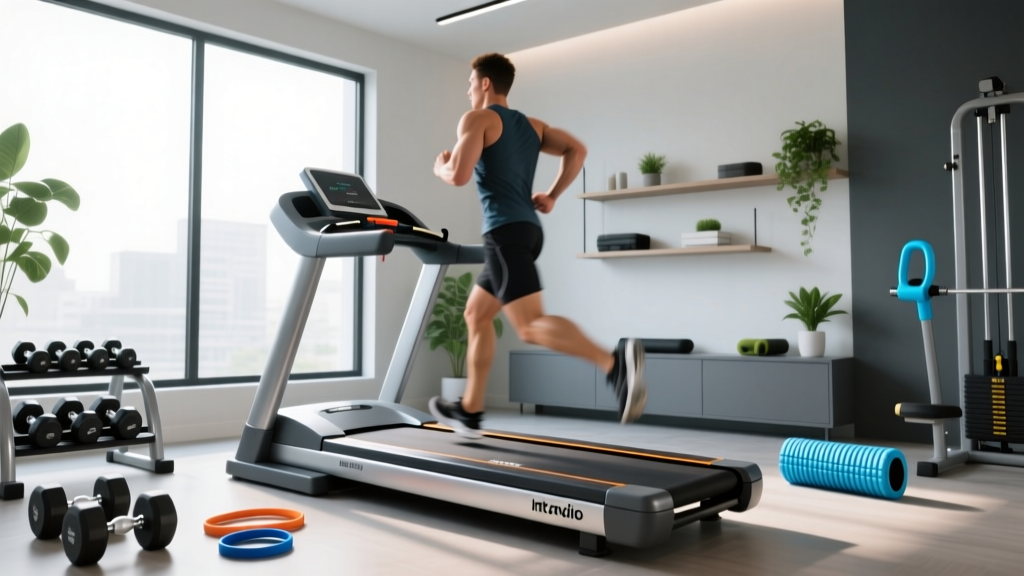
Treadmill Interval Workout Noise: Troubleshooting & Cardio Comparison
Fix loud treadmill interval workout noise with our troubleshooting guide. Compare cardio machine decibel levels and learn soundproofing tips.

High-intensity interval training (HIIT) is one of the most time-efficient methods to boost cardiovascular health and burn calories. However, executing a rigorous treadmill interval workout in a home gym introduces a unique acoustic challenge: extreme noise. The rapid acceleration of the motor, combined with the heavy, repetitive foot strikes of sprinting, can generate enough low-frequency vibration to rattle floor joists and disturb household members or neighbors.
As of 2026, modern cardio equipment features advanced brushless DC motors and improved deck dampening, yet noise remains a primary complaint among home gym owners. This guide bridges the gap between biomechanics and acoustic engineering, offering a comprehensive cardio machine noise level comparison and a deep-dive troubleshooting manual to silence your treadmill during peak interval sprints.
The Decibel Breakdown: Cardio Machine Noise Level Comparison
To understand the acoustic footprint of your training, we must measure noise in decibels (dB). According to the World Health Organization (WHO), prolonged exposure to noise above 70 dB can begin to cause environmental stress, while sudden spikes above 80 dB are highly disruptive in residential settings.
The table below compares the acoustic output of popular home cardio machines during both steady-state cardio and high-intensity interval peaks.
| Machine Type (Popular 2026 Model) | Steady-State Noise (dB) | Interval Peak Noise (dB) | Primary Noise Source |
|---|---|---|---|
| Treadmill (e.g., Sole F80 / NordicTrack 1750) | 55 - 62 dB | 78 - 86 dB | Footstrike impact, motor surge, belt friction |
| Air Bike (e.g., Assault AirBike Pro X) | 60 - 65 dB | 75 - 82 dB | Chain/belt drive, massive air displacement |
| Rowing Machine (e.g., Concept2 Model D) | 50 - 55 dB | 70 - 76 dB | Flywheel fan, seat roller on aluminum rail |
| Elliptical (e.g., NordicTrack SE9i) | 40 - 45 dB | 48 - 55 dB | Drive joint friction, minor pedal bearing hum |
| Spin Bike (e.g., Peloton Bike+) | 35 - 40 dB | 42 - 48 dB | Magnetic resistance hum, flywheel bearing |
Common Mistakes Causing Excessive Treadmill Noise During Intervals
Before assuming your treadmill's motor is failing, evaluate your training mechanics and maintenance habits. Most noise complaints during interval training stem from user error or deferred maintenance.
1. Over-Striding and Heel-Striking at High Speeds
When transitioning from a walking recovery phase to a 10 mph sprint, many users over-stride, landing heavily on their heels. This biomechanical error sends a massive shockwave directly through the treadmill deck and into the floor. According to the American Council on Exercise (ACE), proper sprint mechanics require a mid-foot strike with a high cadence. Heel-striking not only increases joint impact but amplifies low-frequency structural noise that travels through walls.
2. Ignoring Belt Tension and Lubrication Cycles
A treadmill interval workout demands rapid torque from the motor. If the running belt is too loose, it will slip and snap against the deck during acceleration, creating a loud, rhythmic thwack-thwack sound. Conversely, a dry belt generates intense friction, resulting in a high-pitched squeal and forcing the motor to draw excess amperage, which manifests as a loud electrical hum.
3. Failing to Decouple the Machine from the Floor
Placing a 250-pound treadmill directly on hardwood, laminate, or a suspended wooden subfloor turns your floor joists into a giant acoustic amplifier. Without a proper vibration-dampening mat, the kinetic energy from interval sprints will rattle light fixtures in the room below.
Troubleshooting Guide: Fixing Treadmill Squeaks and Thuds
If your treadmill is excessively loud during interval sprints, follow this step-by-step diagnostic protocol to isolate and eliminate the noise.
- The Belt Deflection Test: Turn off and unplug the machine. Lift the running belt in the exact center of the deck. It should lift between 2 to 3 inches. If it lifts higher, the belt is too loose and will slip during sprints. If it barely lifts, it is over-tightened, causing motor strain and bearing whine. Adjust the rear roller bolts in quarter-turn increments.
- The Silicone Lubrication Protocol: Most modern treadmills require 100% silicone liquid lubricant. Apply exactly 1 ounce under the belt on both the left and right sides. Run the treadmill at 3 mph for 5 minutes to distribute the silicone. Never use WD-40 or petroleum-based products, as they will dissolve the belt backing and ruin the deck.
- Motor Hood Resonance Check: During rapid speed changes, the plastic motor hood can vibrate against the metal frame. Remove the hood (usually secured by 4 to 6 Phillips screws) and check for loose internal wiring or a misaligned cooling fan. Apply small strips of weatherstripping foam tape where the plastic hood contacts the metal frame to eliminate plastic-on-metal rattling.
- Deck Inspection: If you hear a harsh, scraping thud, your deck may be worn through to the wood or phenolic core. Inspect the deck surface under the belt. If you see deep grooves or bare wood, the deck must be replaced (typically a $120–$180 part cost for brands like Sole or ProForm).
Soundproofing Your Home Gym for High-Intensity Training
Troubleshooting the machine is only half the battle; managing the acoustic environment is equally critical for apartment dwellers and those with shared walls.
- Invest in Vulcanized Rubber Mats: Standard PVC puzzle mats are insufficient for the impact forces of a treadmill interval workout. Purchase a 3/8-inch thick, high-density vulcanized rubber horse stall mat or a dedicated fitness equipment mat (costing between $80 and $150). This mass absorbs low-frequency impact vibrations before they reach the subfloor.
- Utilize Anti-Vibration Isolation Pads: For an extra layer of decoupling, place 3-inch rubber isolation pucks (like those used for washing machines) under the treadmill's leveling feet. This creates an air gap that severely limits structural noise transfer.
- Strategic Placement: Never place a treadmill in the center of a room, which can create a bass resonance effect. Position the machine near a load-bearing wall or directly over a floor joist to minimize floor deflection.
"Acoustic management in home gyms isn't just about volume; it's about frequency. Treadmill sprints generate low-frequency impact noise (20Hz - 100Hz), which requires mass and decoupling to stop, whereas elliptical squeaks are high-frequency and easily blocked by standard insulation."
— Acoustic Engineering Principles for Residential Spaces
FAQ: Treadmill Interval Workout Noise
Are commercial-grade treadmills quieter for interval training?
Generally, yes. Commercial models (like the Matrix T7xe or Life Fitness Club Series) feature heavier frames (often exceeding 350 lbs) and thicker, reversible phenolic decks. The sheer mass of the machine absorbs much of the vibrational energy that lighter, $800 residential models transmit into the floor. However, the motor surge noise during rapid acceleration remains similar across all motorized treadmills.
Will a manual (curved) treadmill solve my noise problem?
Curved non-motorized treadmills (like the Technogym Skillmill or AssaultRunner) eliminate motor surge noise entirely. However, the noise of your foot striking the slat belt remains. While the peak decibel level might drop from 85 dB to 75 dB, the rhythmic impact noise is still highly noticeable in multi-story homes.
How often should I lubricate my belt if I do HIIT daily?
The standard manufacturer recommendation is every 150 miles or 3 months. However, if you are performing daily treadmill interval workouts, the extreme friction and heat generated during sprint phases degrade the silicone faster. Inspect the belt monthly; if it feels dry to the touch beneath the surface, apply a fresh half-ounce of 100% silicone lubricant.
More gear to consider
All reviews
How Fast Can a Shrimp Run on a Treadmill? (Curved vs Motorized)
Flylinktech Treadmill Review: 2026 Walking Pad Comparison

Stair Climber vs Pro2000 Treadmill: Home Buying Guide

Rowing Guide & Technique: Rower vs NordicTrack Treadmill Screen
Beyond ProForm Treadmills Reviews: Space-Saving Bike Types
