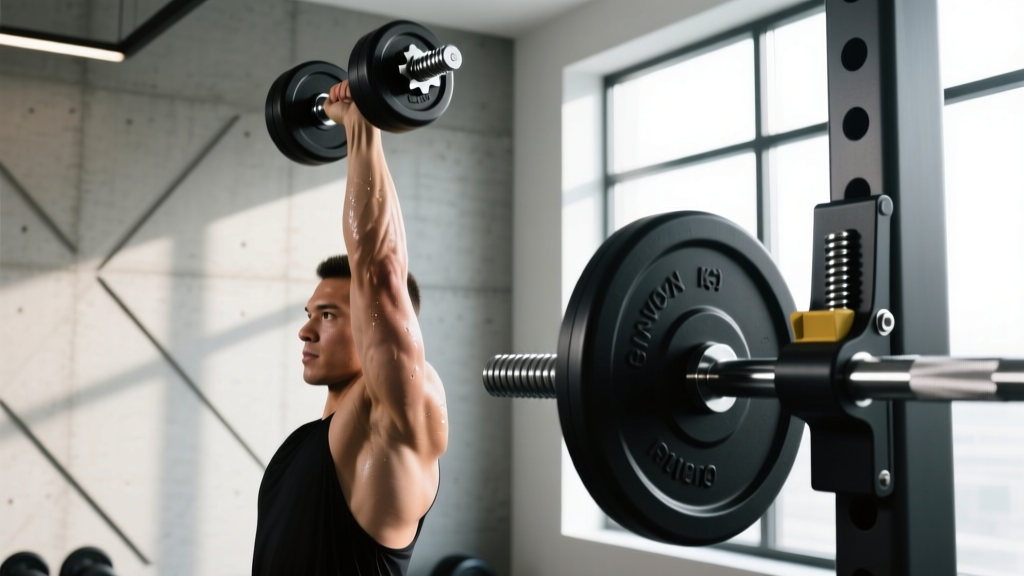
Upgrading From Standing Dumbbell Calf Raises: Collar Guide
Master standing dumbbell calf raises and learn how to safely upgrade to barbell work with our beginner's comparison of barbell collars and clamps.

The Foundation: Perfecting Standing Dumbbell Calf Raises
Before you load up a barbell, mastering the standing dumbbell calf raises is a non-negotiable rite of passage for beginners. This foundational movement isolates the gastrocnemius (the large, visible calf muscle) while teaching your central nervous system the necessary balance and mind-muscle connection required for heavier, more complex lower-body lifts.
According to biomechanics data cataloged by ExRx, performing this movement with an extended knee specifically targets the gastrocnemius, whereas bent-knee variations shift the load to the soleus. To execute this properly as a beginner:
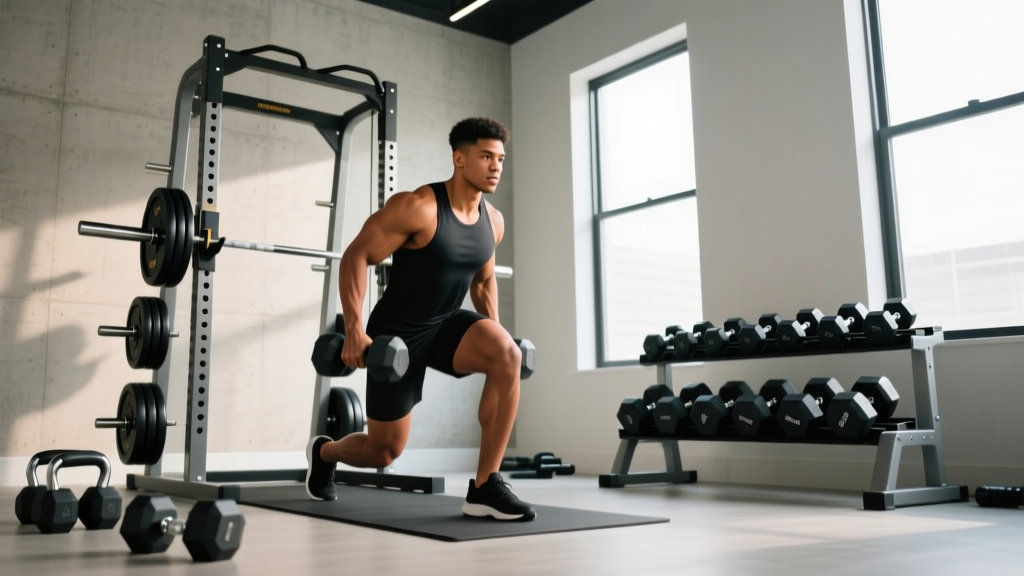
- The Setup: Stand on a 2-to-3-inch elevated surface (like a wooden calf block or weight plate) holding a 25 lb to 50 lb hex dumbbell in each hand. Keep your knees locked but not hyperextended.
- The Eccentric Phase: Lower your heels below the platform edge for a deep, 2-second stretch. This loaded stretch is critical for muscle hypertrophy.
- The Concentric Phase: Drive through the balls of your feet, squeezing the calves at the top for a full 1-second pause. Avoid bouncing or using momentum.
The Transition: Why Dumbbells Eventually Fall Short
While standing dumbbell calf raises are excellent for the first 6 to 12 months of training, they have a hard ceiling. Once you can comfortably rep out with 70 lb dumbbells in each hand (140 lbs total), grip fatigue and spatial awkwardness will hinder your progress. This is the exact moment beginners must transition to barbell calf raises, hack squats, or traditional barbell back squats.
However, moving to a barbell introduces a critical safety variable that dumbbells don't have: lateral plate migration. When you perform explosive calf raises or heavy squats, the sleeves of the barbell rotate. Without proper securing mechanisms, weight plates can slide outward, shift the bar's center of gravity, and cause catastrophic tipping. This brings us to the most vital, yet frequently misunderstood, piece of gym hardware: the barbell collar.
Barbell Collar and Clamp Types Comparison
Choosing the right collar is about matching your training style, budget, and barbell type. Below is a deep dive into the four primary collar types available on the market in 2026.
1. Spring Collars (The Budget Beginner Choice)
These are the standard, wire-spring clips found in almost every commercial gym. They cost between $5 and $12 per pair. While they are incredibly fast to apply, they offer the lowest security rating. Under heavy, dynamic loads (like drop sets or explosive calf raises), spring collars can slowly inch outward, and they completely fail to prevent the inner plates from rattling or shifting.
- Best For: Light isolation work, quick supersets, and tight budgets.
- Failure Mode: Metal fatigue over time causes the spring tension to weaken, leading to plates sliding off during angled lifts.
2. Lock-Jaw / Clamp Collars (The Modern Standard)
As highlighted in BarBend's comprehensive guide, clamp-style collars have become the gold standard for home and garage gyms. Models like the Lock-Jaw Pro or Rogue Aluminum Collars use a hard-plastic or anodized aluminum body with a reinforced nylon clamping mechanism. They typically cost between $25 and $40 per pair.
- Best For: General strength training, powerlifting, and Olympic lifting.
- Edge Case Warning: Cheaper plastic clamp collars can become brittle and crack if left in an unheated garage gym during winter months (below 50°F). Always opt for glass-reinforced nylon or aluminum.
3. Spinlock Collars (The Traditionalist)
These thread onto the grooved ends of standard 1-inch bars or specialized Olympic bars. While they offer absolute security (they physically cannot slide off without being unscrewed), they are painfully slow to remove and add negligible weight to the bar. They are largely obsolete for modern quick-change training but remain popular in traditional bodybuilding setups.
4. Lever / Quick-Release Collars (The Heavy Duty Option)
Premium options like the Eleiko Sport Lock Collars (priced around $65 to $85) use a mechanical lever system that applies immense, uniform pressure against the sleeve. They weigh exactly calibrated amounts (often 2.5 kg or 5 lbs per pair) and are certified for international weightlifting competitions.
Comparison Matrix: Which Collar Should You Buy?
| Collar Type | Avg. Price (2026) | Security Level | Application Speed | Added Weight |
|---|---|---|---|---|
| Spring Clip | $5 - $12 | Low | Very Fast | ~0.2 lbs |
| Clamp (e.g., Rogue Aluminum) | $30 - $40 | High | Fast | 2.5 lbs (pair) |
| Spinlock | $15 - $25 | Maximum | Very Slow | ~1.0 lbs |
| Lever (e.g., Eleiko) | $65 - $85 | Maximum | Moderate | 5.5 lbs (pair) |
Step-by-Step: Securing Your Barbell for Calf Raises
When transitioning from standing dumbbell calf raises to a barbell Smith Machine calf raise or a freestanding barbell calf raise, proper collar placement is vital for your safety.
- Load the Plates Tight: Push your bumper or cast-iron plates flush against the inner sleeve collar of the barbell. There should be zero gap.
- Slide the Collar On: If using a clamp-style collar (like the widely used Rogue Aluminum Collars), slide it onto the sleeve until it physically touches the outermost plate.
- Engage the Lock: Pull the lever or clamp shut. You should hear a distinct click, and the collar should not be able to slide even when pushed firmly with your thumb.
- The "Shake Test": Before getting under the bar, lift one end of the barbell slightly and give it a gentle shake. If you hear plates clanking laterally, the collar is not tight enough.
Real-World Edge Cases & Safety Warnings
"The most common mistake beginners make is assuming the collar's weight doesn't count. If you are tracking your progressive overload meticulously, remember that a pair of aluminum clamps adds 2.5 lbs to your total lift."
Angled Sleeve Degradation: If you are performing standing calf raises on a leg press machine or using a specialized calf block where the barbell rests at an extreme angle, gravity will constantly pull the plates downward against the collar. In these specific scenarios, spring clips are highly dangerous. You must use a high-tension clamp or lever collar to prevent the plates from slowly creeping outward mid-set.
Sleeve Diameter Tolerances: Not all Olympic bars are created equal. While the standard is 50mm, some cheaper, imported bars measure 49.2mm. If you buy premium collars calibrated exactly for 50mm, they may feel loose on a budget barbell. Always measure your barbell sleeve with digital calipers before investing in $80 competition-grade lever collars.
Frequently Asked Questions
Can I use barbell collars on standard 1-inch dumbbells?
No. Barbell collars are machined specifically for 50mm (Olympic) or 25mm (Standard barbell) sleeves. If you are doing standing dumbbell calf raises with adjustable spinlock dumbbells, you must use the specific star-nuts or 1-inch spring clips designed for those handles.
Do I need collars if I'm only using the Smith Machine?
Yes. Even though a Smith Machine is locked into a fixed vertical track, the barbell sleeves still rotate when you unrack and rack the weight. Without collars, plates can shift, altering the balance of the bar and potentially causing the hooks to miss the safety catches.
How often should I replace my clamp collars?
High-quality aluminum or reinforced nylon collars should last 5 to 10 years. However, if the inner rubber padding becomes compressed, torn, or loses its grip, it is time to replace them to ensure your plates remain locked tight during heavy lifts.
More gear to consider
All reviews
Dumbbell Prone Press Setup: Bumper vs Iron Plate Rack Guide

Cast Iron vs Competition Kettlebell Care & Dumbbell Step Up for Glutes

Dumbbell Rack Storage & Value: Does Setup Impact Skull Crusher Form?

Cast Iron vs Competition Kettlebells vs Lat Exercises Using Dumbbells
PowerBlock Elite Dumbbells and Neoprene Home Setup