Stability Ball vs BOSU Ball: Durability & Yoga Mat Wall Storage
Compare stability ball vs BOSU ball durability, cleaning protocols, and lifespan. Plus, discover space-saving yoga mat wall storage tips for home gyms.

The Material Showdown: PVC vs. Urethane-Backed Vinyl
When outfitting a home gym or commercial studio in 2026, the debate between a traditional stability ball and a BOSU ball often centers on exercise selection. However, from a maintenance and longevity perspective, the real battle lies in their polymer construction. Understanding these material differences is the first step in preventing premature equipment failure.
The premium stability ball market is dominated by slow-deflate PVC (Polyvinyl Chloride) matrices. Take the TheraBand Pro Series Stability Ball (retailing around $35-$45), for example. It utilizes a multi-layered PVC shell designed to withstand up to 1,200 pounds of static load. The plasticizers embedded in the PVC keep the material pliable, but they are highly susceptible to degradation from ozone, UV light, and harsh chemical cleaners.
Conversely, the BOSU Pro NexGen (priced between $130-$150) features a dual-texture, latex-free urethane and vinyl blend dome mounted to a rigid ABS plastic base. Urethane offers vastly superior abrasion resistance and tensile strength compared to standard PVC, meaning it resists micro-tears from repetitive friction against gym flooring. However, the seam where the flexible dome meets the rigid base is a known failure point if the unit is routinely over-inflated or subjected to extreme temperature fluctuations.
⚠️ Real-World Failure Mode Alert: The most common cause of BOSU dome delamination is the use of bleach-based disinfectants, which dry out the urethane. For stability balls, the primary failure mode is 'zipper splitting' along the equator seam caused by under-inflation combined with heavy dynamic loading (e.g., medicine ball slams).Maintenance Protocols for Maximum Longevity
According to equipment care guidelines referenced by the National Academy of Sports Medicine (NASM), proper sanitation and inflation management are non-negotiable for inflatable fitness gear. Human sweat contains urea and lactic acid, which slowly eat away at the protective coatings of both PVC and urethane surfaces.
The 2026 Cleaning Matrix
| Equipment Model | Approved Cleaning Agent | Strictly Avoid | Expected Lifespan |
|---|---|---|---|
| TheraBand Pro PVC Ball | 1:4 White Vinegar to Water solution | Bleach, Ammonia, Essential Oils | 2–4 Years |
| BOSU Pro NexGen Dome | pH-Neutral Dish Soap (e.g., Dawn) + Microfiber | Lysol wipes, Alcohol, Abrasive pads | 5–8 Years |
| Power Systems UltraFit Ball | Commercial Quat-Free Gym Wipes | Citrus-based degreasers | 1–3 Years |
Inflation and Temperature Dynamics
Air pressure inside your gear fluctuates with ambient room temperature. A stability ball inflated to its maximum 9-inch diameter in a 75°F (24°C) room will lose roughly 10% of its internal pressure if the room drops to 60°F (15°C) overnight. This thermal contraction causes the PVC to sag, creating stress wrinkles along the seams. The American Council on Exercise (ACE) recommends checking inflation levels bi-weekly and allowing the ball to acclimate to room temperature for 2 hours before adding air to prevent over-pressurization and seam blowouts.
Space-Saving Gear Protection: Storage Solutions
When comparing the longevity of a stability ball vs BOSU ball, floor storage is the silent killer. Leaving inflatable gear on the floor invites punctures from dropped dumbbells, pet claws, and friction against rough concrete. To maximize the lifespan of your expensive fitness gear, you must elevate it off the ground. This requires a strategic approach to home gym organization, starting with clearing the floor perimeter.
Implementing Yoga Mat Wall Storage & Ball Racks
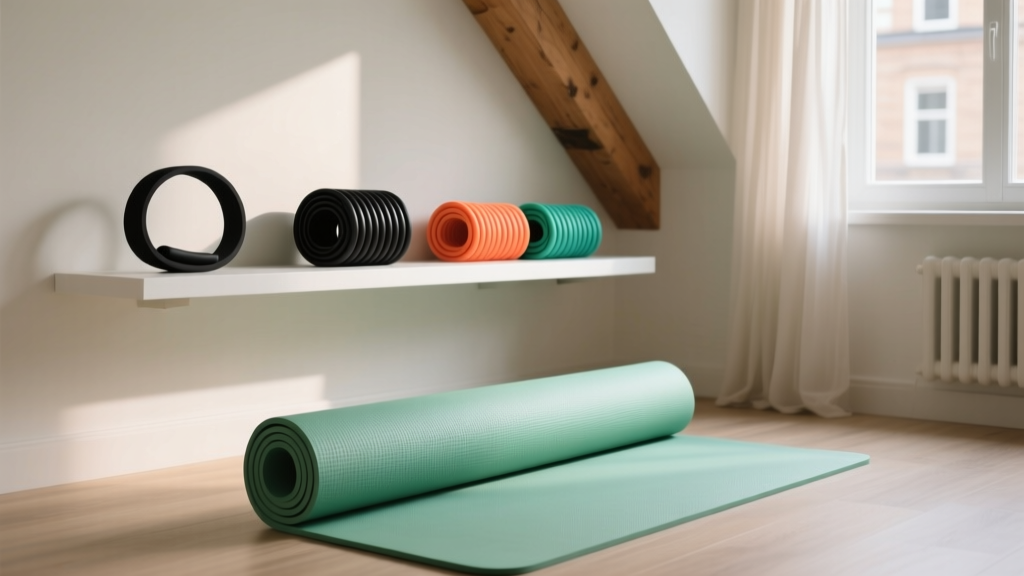
By utilizing dedicated yoga mat wall storage systems, you reclaim valuable floor square footage, allowing you to install specialized ball racks or safely tuck your inflatable gear into climate-controlled, UV-protected corners. Here is how to execute a high-end storage setup in 2026:
- Install a Slatwall Panel: Mount a 4x8-foot PVC slatwall panel on a primary stud wall. This serves as the anchor for all your lightweight accessories and yoga mat wall storage hardware.
- Deploy Mat Cradles: Use 2-inch acrylic slatwall cradles or DIY cutouts from 1.5-inch ABS plastic pipe (cut to 4-inch depths) to hold rolled yoga mats horizontally. This prevents the mats from developing permanent creases and keeps them away from floor moisture.
- Integrate Ball Hoops: Below the mat storage, install heavy-duty steel wire hoops (rated for 50+ lbs) to cradle your stability balls. For BOSU balls, utilize flat shelf brackets with a non-slip rubber mat liner to rest the rigid base securely.
- UV Protection: Ensure your newly organized wall storage is positioned away from direct southern-facing windows. UV radiation accelerates the breakdown of PVC plasticizers by up to 40% over a 12-month period.
"Proper equipment storage isn't just about aesthetics; it is a critical component of risk management. A ruptured stability ball during a loaded overhead squat can lead to catastrophic injury. Vertical storage systems that incorporate yoga mat wall storage and elevated ball racks ensure gear is visually inspected every time it is retrieved."
— Equipment Safety Guidelines, ExRx (Exercise Prescription on the Internet)
Cost of Ownership: 2026 Pricing & Replacement Cycles
Looking purely at the initial price tag is a mistake. The true cost of ownership factors in replacement cycles and the collateral damage caused by equipment failure.
- Standard PVC Stability Ball ($25 - $45): Requires replacement every 2 to 3 years in a heavy-use environment due to micro-punctures and plasticizer leaching. 5-Year Cost: ~$75.
- Premium BOSU NexGen ($140 - $160): With proper pH-neutral cleaning and elevated storage, the dome and base will easily last 6 to 8 years. 5-Year Cost: ~$150 (No replacement needed).
While the BOSU requires a higher upfront investment, its urethane construction and rigid base eliminate the risk of sudden catastrophic deflation, making it the superior choice for heavy, dynamic movements like plyometric jumps and weighted lunges. The traditional stability ball remains the undisputed king for isolated core work, pelvic floor rehabilitation, and ergonomic desk seating, provided it is meticulously maintained.
Frequently Asked Questions (FAQ)
Can I use a stability ball as a desk chair in 2026?
Yes, but with strict limitations. Ergonomic experts advise using a stability ball as a chair for no more than 20 to 30 minutes at a time to prevent spinal compression and postural fatigue. Ensure the ball is properly inflated so your hips are slightly higher than your knees, and keep it away from the sharp casters of your desk chair.
How do I fix a slow leak in my BOSU dome?
Minor punctures in the urethane dome can be repaired using a specialized vinyl/urethane patch kit (like Tear-Aid Type B). Clean the area with isopropyl alcohol, apply the patch, and let it cure for 24 hours. However, if the leak originates from the seam where the dome meets the plastic base, the unit is generally considered compromised and should be replaced for safety reasons.
Does yoga mat wall storage damage the mats?
Not if done correctly. Storing mats rolled loosely in horizontal wall cradles is actually better for their longevity than stuffing them into tight bins. Avoid hanging heavy, thick PU-leather mats vertically by a single strap, as gravity will stretch and warp the polyurethane surface over time.
More gear to consider
All reviews
Resistance Band Buying Guide: Levels, Types & Average Yoga Mat Size

Exercise Ball Size Guide: Space Layouts and Using a Yoga Mat on Carpet

Beyond the Yoga Mat: 2026 Market Trends for Loop vs Tube Bands

Stability Ball vs BOSU Ball & Sesame Street Yoga Mat Budget Guide

Resistance Band Set Levels vs Red Light Yoga Mat: 2026 Guide