
Beyond the Yoga Mat Discount: Foam Roller Density & Size Compared
Scored a yoga mat discount? Before you checkout, compare foam roller density and size to find the perfect myofascial release tool for your recovery kit.

The Bundle Dilemma: Maximizing Your Yoga Mat Discount
Scoring a premium yoga mat discount is a massive win for your home gym setup. However, if you are using those savings to bundle a recovery tool—often to hit a free-shipping threshold or complete a 2026 wellness package—do not just toss the cheapest foam cylinder into your cart. Foam roller density and size selection dictate whether you actually achieve myofascial release or just endure pointless surface friction. According to research published in the National Institutes of Health (NIH), self-myofascial release (SMR) via foam rolling can acutely improve flexibility and range of motion without negatively impacting muscle performance, but only when the correct density is applied to the target tissue.
In this head-to-head comparison, we bypass the generic, low-density cylinders and pit two industry titans against each other: the TriggerPoint GRID 13-inch (a firm, multi-density, short roller) and the OPTP PRO-ROLLER Soft Density 36-inch (a plush, full-length spinal cradle). By the end of this guide, you will know exactly which tool belongs in your cart alongside your new mat.
The Physics of Compression: EVA vs. Hollow Cores
To understand why density matters, we must look at material science. Most budget rollers use solid Ethylene-Vinyl Acetate (EVA) foam with a Shore A hardness rating between 30 and 40. While adequate for beginners, this material compresses entirely under the weight of an adult male's thoracic spine, bottoming out and providing zero localized pressure to deep-tissue adhesions.
Premium rollers utilize either Expanded Polypropylene (EPP) or hollow Acrylonitrile Butadiene Styrene (ABS) plastic cores wrapped in varying thicknesses of EVA. The Cleveland Clinic notes that applying targeted, firm pressure to muscle knots helps break up fascial adhesions and stimulate blood flow. A hollow core allows manufacturers to create a rigid foundation that maintains its structural integrity, enabling the outer foam layers to be mapped with different densities (e.g., flat zones for sweeping, tubed zones for deep tissue).
Bundle Buyer's Pro-Tip: If your yoga mat discount code requires a minimum cart value of $100+, a 36-inch high-density roller is the most cost-effective way to reach that threshold while securing a lifelong, high-utility recovery tool.Head-to-Head Showdown: TriggerPoint GRID vs. OPTP PRO-ROLLER
Contender A: TriggerPoint GRID 13” (The Targeted Multi-Density)
The TriggerPoint GRID 13-inch is the gold standard for localized, deep-tissue work. Priced around $39.99, it features a rigid ABS hollow core wrapped in a multi-density EVA exterior. The surface is mapped into three distinct zones: flat (palm), tubed (fingers), and high-firmness (thumb). This design mimics the hands of a massage therapist, allowing you to pinpoint the IT band, calves, and gluteus medius with aggressive precision. Because it is only 13 inches long and 5.5 inches in diameter, it is highly portable and perfect for targeting single limbs.
Contender B: OPTP PRO-ROLLER Soft Density 36” (The Spinal Cradle)
Retailing at approximately $74.00, the OPTP PRO-ROLLER 36-inch takes a completely different philosophical approach. Made from solid, closed-cell EVA foam with a softer Shore A rating (around 35), this roller is not designed for aggressive knot-crushing. Instead, its 36-inch length and 6-inch diameter make it the ultimate tool for longitudinal spinal alignment, Pilates exercises, and gentle thoracic extension. It spans the entire width of the human torso, allowing for bilateral symmetry work that shorter rollers simply cannot accommodate.
Density & Size Selection Matrix
| Feature | TriggerPoint GRID 13" | OPTP PRO-ROLLER Soft 36" |
|---|---|---|
| Core Material | Hollow ABS Plastic | Solid Closed-Cell EVA |
| Effective Density | Firm / Multi-Zone (Shore A 50+) | Soft / Uniform (Shore A 35) |
| Primary Use Case | Deep tissue, IT band, travel | Spinal alignment, Pilates, gentle release |
| Weight Capacity | 500+ lbs (Core supported) | 250 lbs (Before bottoming out) |
| 2026 Avg. Price | $39.99 | $74.00 |
The Sizing Framework: 12", 24", or 36"?
Size selection is just as critical as density. Buying a roller that is too short for your intended use leads to awkward balancing acts that reduce the therapeutic pressure. Use this framework to finalize your decision:
- The 12" to 13" (Travel & Target): Ideal for packing in a gym bag or targeting specific, narrow areas like the calves, forearms, and neck. It forces you to isolate one limb at a time, which is excellent for correcting left-to-right muscle imbalances.
- The 24" (The Versatile Middleweight): The most popular size for general gym-goers. It is wide enough to roll out the upper back (thoracic spine) and both quadriceps simultaneously, but short enough to store in a standard closet or under a bed.
- The 36" (Full-Body & Alignment): Mandatory for physical therapy, Pilates, and longitudinal spinal work. If you need to lie vertically with the roller supporting your head, thoracic spine, and sacrum simultaneously to open up your chest and correct kyphotic posture, 36 inches is the only acceptable length.
Edge Cases and Failure Modes
Even premium gear fails if misused. Understanding the failure modes of these materials will protect your investment.
- Thermal Deformation (EPP/EVA): Solid foam rollers are highly susceptible to heat. Leaving an EVA or EPP roller in the trunk of a car during summer months (where internal temperatures can exceed 130°F) will cause permanent thermal warping. The roller will develop a flat spot, rendering it useless for smooth rolling.
- Surface Chunking (Hollow Cores): The TriggerPoint GRID's exterior foam is glued to the ABS core. If used outdoors on rough concrete or asphalt instead of indoor gym flooring or your newly acquired yoga mat, the friction will tear the EVA foam, causing 'chunking' where pieces of the grid pattern peel away.
- Hygiene Degradation: Closed-cell EVA (like the OPTP) resists sweat and bacteria absorption. Open-cell foams or cheap, porous budget rollers will absorb sweat, leading to microbial growth and a persistent odor within 3 to 4 months of heavy use.
Warning: Never use a hard, high-density foam roller directly on the lumbar spine (lower back) or the cervical spine (neck). The lack of rib cage protection in the lumbar region means aggressive rolling can cause spinal hyperextension and muscle spasms. Stick to the thoracic spine and glutes for hard-density tools.
Expert Verdict: Which Should You Add to Your Cart?
If your primary goal is to aggressively work out delayed onset muscle soreness (DOMS), target the IT band, and you need a tool that survives being tossed into a gym bag, the TriggerPoint GRID 13-inch is the undisputed champion of localized density. Its multi-zone surface provides a level of fascial manipulation that soft rollers simply cannot achieve.
However, if your home practice revolves around yoga, Pilates, and postural correction, and you are using that yoga mat discount to build a holistic wellness space, the OPTP PRO-ROLLER 36-inch is mandatory. Its ability to support the entire spine for passive chest-opening stretches makes it an irreplaceable accessory for flexibility and alignment.
Ultimately, the best recovery routine often incorporates both. But if you must choose just one to bundle with your new mat today, let your specific mobility bottlenecks dictate the density and size you select.
More gear to consider
All reviews
Medicine Ball Weight Selection on a Maji Printed PVC Yoga Mat
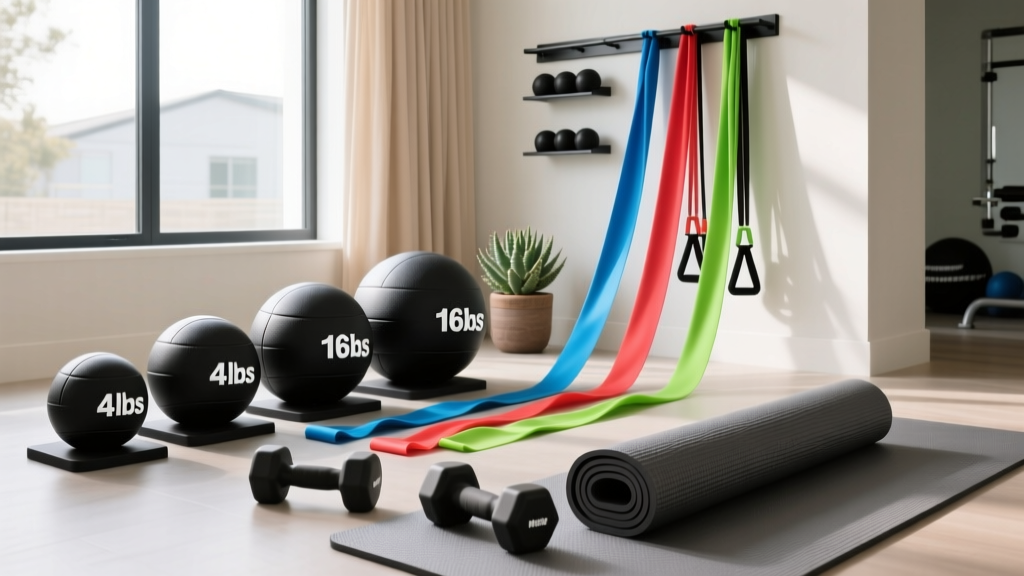
Medicine Ball Weight Selection Guide & Yoga Mat Substitute Tips
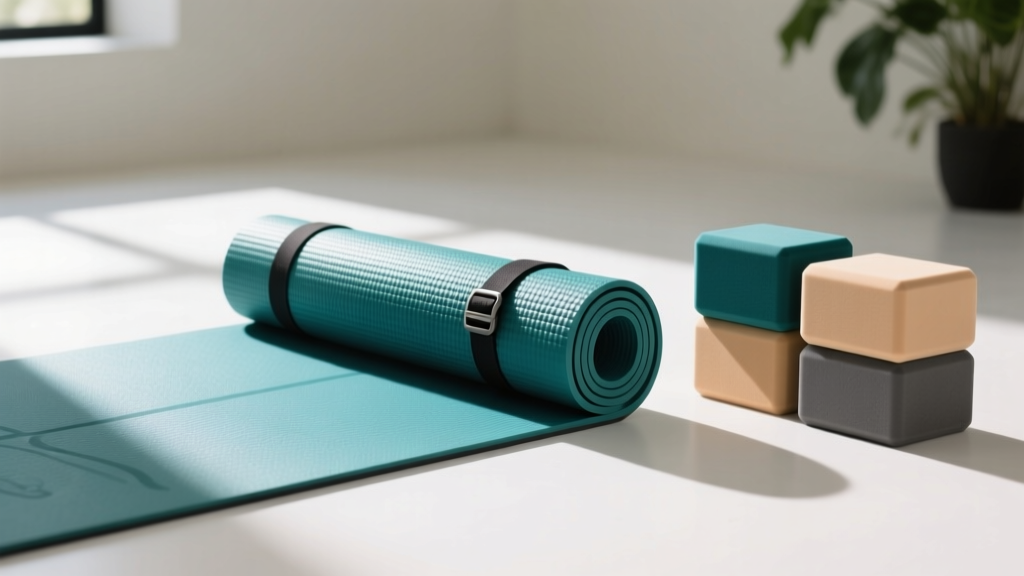
Nautilus Yoga Mat With Strap vs Custom Block Kits: 2026 Value Guide

Medicine Ball Weight Selection & Yoga Mat Care Instructions

Medicine Ball Weight Selection Guide: Building a Floor Routine Beyond the Standard Size for Yoga Mat
