Space Layout for a Dumbbell Circuit Routine: Rubber Hex vs Urethane
Master your home gym layout for a dumbbell circuit routine. We compare rubber hex vs urethane bells for spatial efficiency, rack footprints, and flow.

The Spatial Reality of High-Volume Dumbbell Training
Designing a home gym in 2026 requires treating your square footage like premium real estate. When your primary training modality is a fast-paced dumbbell circuit routine, spatial efficiency is no longer just about aesthetics; it is a critical factor in safety, workflow, and equipment longevity. The industry debate between rubber hex dumbbells and urethane dumbbells usually centers on durability, drop tolerance, and smell. However, from a space optimization and layout design perspective, the differences in head geometry, rack compatibility, and material tolerance fundamentally alter your gym's floor plan.
If you are converting a 10x10 spare bedroom, a single-car garage, or a narrow basement corridor into a functional training space, the physical footprint of your storage solutions and the 'active zone' required for dynamic movements will dictate your success. Let us break down the exact spatial, environmental, and geometric differences between rubber hex and urethane dumbbells to help you engineer the perfect layout.
Material Geometry: Hex vs. Round Urethane
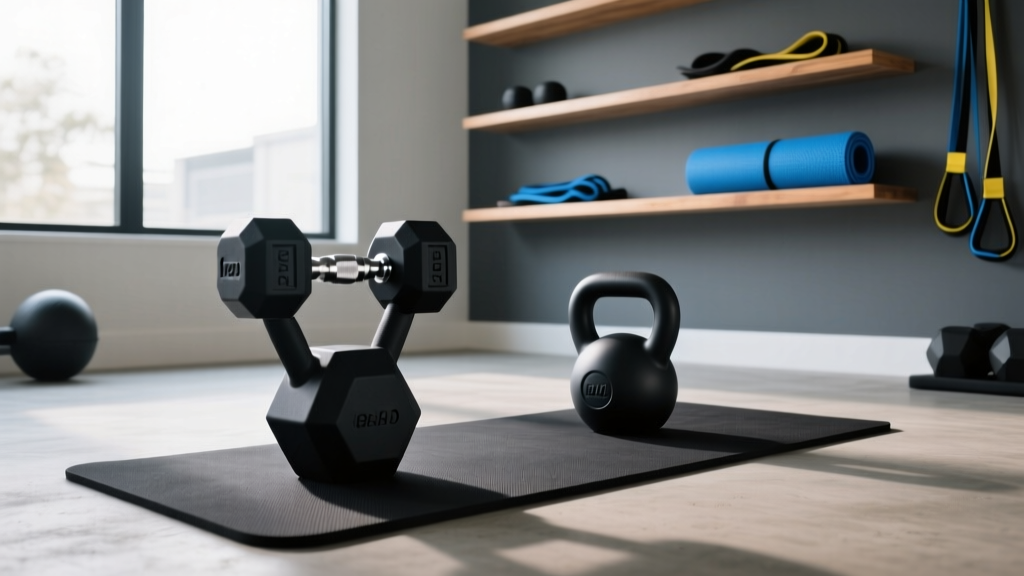
The most immediate spatial difference between these two bell types lies in their head geometry. Rubber hex dumbbells, such as the highly popular REP Fitness Rubber Hex series, feature flat, angular edges. Urethane dumbbells, particularly premium offerings like Rogue Urethane, are predominantly round or feature heavily chamfered, contoured edges.
Flat Shelving vs. Saddle Racks
Hex bells can be stored on flat, tiered steel racks or even directly on heavy-duty floating wall shelves. Because they do not roll, you can push a flat storage rack flush against a wall, losing only the depth of the rack frame (usually 24 inches) to your floor plan. Round urethane bells, however, require contoured 'saddle' racks to prevent them from rolling off and becoming a hazard. Saddle racks require a deeper footprint to accommodate the cradle angle. A standard 3-tier saddle rack often pushes 28 to 30 inches deep. In a compact room, that extra 4 to 6 inches of depth per rack can be the difference between a functional walkway and a bottleneck.
The 2026 Rack Footprint & Cost Matrix
| Feature | Rubber Hex Dumbbells | Urethane Dumbbells |
|---|---|---|
| Average Cost (2026) | $1.39 - $1.69 / lb | $2.99 - $3.49 / lb |
| Standard Rack Type | Flat Tiered Rack / Wall Shelf | Contoured Saddle Rack |
| Rack Depth Footprint | 24 inches (Flush to wall) | 28 - 30 inches (Requires clearance) |
| Head Diameter Variance | High (Small bells have massive heads) | Low (Compact, uniform sizing) |
| Wall Proximity Storage | Excellent (Flat sides sit flush) | Poor (Round edges require cradles) |
Note: While urethane bells have a higher upfront cost, their uniform head sizing means a 5-50lb set requires significantly less horizontal shelf width compared to rubber hex bells, which feature comically oversized heads on the lighter 5lb and 10lb pairs to maintain a uniform mold.
Environmental Footprint: Odor and Off-Gassing in Compact Rooms
Space optimization is not solely about physical dimensions; it also encompasses air quality and environmental comfort. In a compact, poorly ventilated room—such as a converted closet, a small basement, or an insulated garage bay—the off-gassing of cheap imported rubber hex bells can make a 150-square-foot room entirely unbearable during high-exertion circuits.
'In enclosed home gym environments, the olfactory footprint of recycled rubber can cause fatigue and headaches, severely impacting the viability of high-intensity interval training. Urethane is virtually odorless, making it the only viable choice for unventilated spare rooms.' — BarBend Equipment Analysis
If your layout forces you to store your dumbbells within three feet of your primary breathing zone during a dumbbell circuit routine, urethane's lack of volatile organic compounds (VOCs) and odor makes it a non-negotiable upgrade for spatial layouts that lack dedicated HVAC returns.
Designing the Triangle Layout for a Dumbbell Circuit Routine
When engineering a dedicated zone for a fast-paced dumbbell circuit routine, the arrangement of your equipment must facilitate seamless transitions. We recommend the 'Triangle Flow' layout for compact spaces, which minimizes unnecessary steps and keeps the center of the room clear for dynamic movements.
- Point A: The Storage & Transition Zone. Place your dumbbell rack at the narrowest point of the room. If using hex bells on a flat rack, push it flush into a corner. If using urethane on a saddle rack, leave a 12-inch gap behind the rack to allow for wall clearance and cable management if you have integrated smart screens.
- Point B: The Active Drop Zone. This is the center of your triangle. You need a minimum of 6x6 feet of dedicated rubber flooring (3/4-inch thick vulcanized rubber mats). This is where the bulk of your circuit (e.g., thrusters, renegade rows, goblet squats) takes place.
- Point C: The Recovery & Accessory Corner. Positioned opposite the rack, this space holds a small plyo box, a kettlebell, or a mat for floor work. During a circuit, you move from A (grab bells) to B (execute) to C (active recovery/core) and back to A.
Edge Cases: Drywall Gouging and Drop Zone Math
In tight spaces, the physical shape of the dumbbell head interacts directly with your walls and baseboards. Rubber hex bells have sharp, 90-degree corners. When space is constrained, executing movements like dumbbell snatches, cleans, or even simply walking past a wall with bells in hand will inevitably result in the sharp hex corners gouging your drywall or chipping the rubber itself, leaving permanent black scuff marks on white paint.
Urethane bells feature rounded, chamfered edges. If a urethane bell swings too close to a wall during a tight-corridor lunge, it will glance off with a dull thud, saving your drywall and preserving the integrity of the bell.
⚠️ The Drop Zone Clearance Rule
When mapping out your floor plan for a circuit routine, calculate your Drop Zone using this formula:
(Your Wingspan + 24 inches) x (Your Height + 12 inches)
For a 6-foot tall lifter with a 72-inch wingspan, your absolute minimum safe drop zone is roughly 8 feet wide by 7.5 feet deep. If your room cannot accommodate this footprint, you must restrict your circuit routine to movements that keep the bells below the waist, or invest in wall-mounted padding to protect against lateral swings.
Final Verdict: Which Bell Wins the Space-Constrained Gym?
The choice between rubber hex and urethane dumbbells ultimately depends on your budget and your room's specific architectural limitations. If you are designing a layout in a well-ventilated garage with flat wall space, rubber hex dumbbells offer a budget-friendly, high-density storage solution that can be mounted on heavy-duty floating shelves to completely eliminate floor rack footprints.
However, if your dumbbell circuit routine takes place in a compact, enclosed spare room where every inch of depth matters, air quality is a concern, and wall protection is paramount, urethane dumbbells are the superior investment. Their uniform sizing reduces horizontal shelf clutter, their odorless nature preserves your indoor environment, and their rounded edges protect your walls during high-fatigue, tight-space movements. Optimize your space by matching the bell's geometry to your room's reality, and your home gym will function as efficiently as a commercial facility.
More gear to consider
All reviews
50kg Adjustable Dumbbell Set: 2026 Heavy-Duty Comparison
Best Romanian Deadlift Dumbbell Alternative: EZ Curl vs Straight Bar

Bumper vs Iron Plates: Space-Saving Racks to Hold Dumbbells

EZ Curl Bar vs Straight Bar: Best Arm Tools After Dumbbell Lifts for Chest

Barbell Collar Types Compared: Heavy Lifts & Ab Dumbbell Workouts
