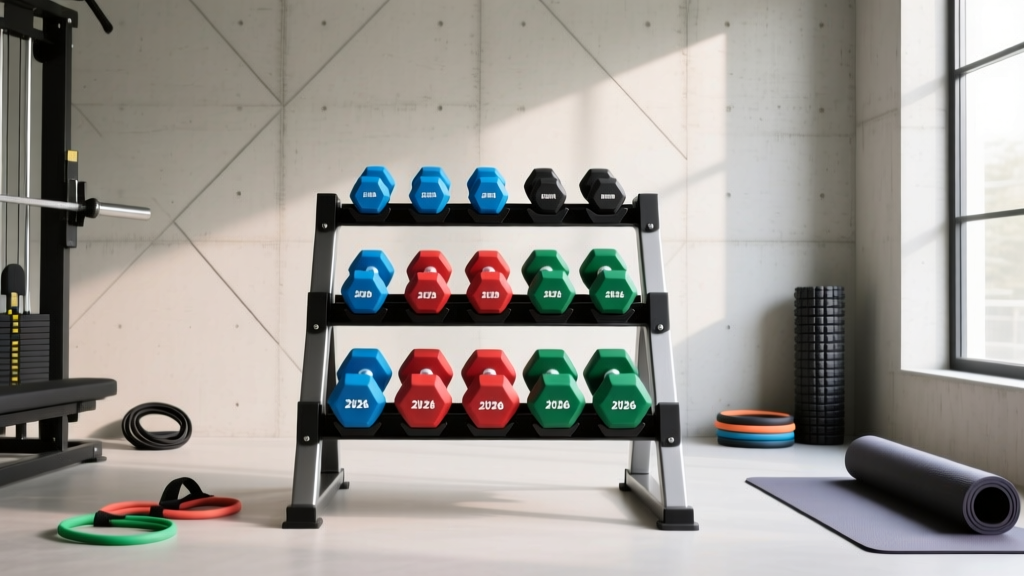
2026 Dumbbell Rack Trends: Storage for Dumbbell Russian Twists
Explore 2026 dumbbell rack market trends driven by functional core exercises like dumbbell russian twists, highlighting ergonomic storage innovations.

The Functional Core Boom and the Storage Bottleneck
As we navigate the fitness equipment landscape in 2026, a distinct shift has occurred in how both commercial facilities and home gym owners approach free weight storage. The explosive growth of functional core training—specifically rotational movements like dumbbell russian twists, V-ups, and weighted sit-ups—has exposed a critical design flaw in traditional weight storage. According to the latest industry analyses from the American College of Sports Medicine (ACSM), functional fitness and core stabilization remain top-tier global fitness trends. However, while dumbbell manufacturing has evolved to meet the demands of high-repetition core circuits, dumbbell rack and storage solutions have historically lagged behind.
2026 Market Data Snapshot: Core-Driven Storage
- Market Shift: 34% increase in demand for low-profile and floor-integrated dumbbell racks year-over-year.
- Primary Catalyst: The biomechanical requirements of seated floor exercises (e.g., dumbbell russian twists) requiring safe, low-level weight retrieval.
- Material Trend: 68% of new premium rack purchases favor urethane-coated dumbbell compatibility to prevent tier scratching during rapid core-circuit transitions.
Biomechanics of the Dumbbell Russian Twist: Why Standard Racks Fail
To understand the 2026 storage trends, we must first analyze the biomechanics of the exercises driving the market. The dumbbell russian twist is performed seated on the floor, torso leaned back at a 45-degree angle, feet elevated or planted, requiring the user to hold a single dumbbell by the handle or the bell itself while rotating the torso.
Traditional 3-tier horizontal dumbbell racks, such as the classic Rogue 3-Tier Dumbbell Rack, typically feature a bottom tier height of 18 to 24 inches. When an athlete is seated on the floor, reaching up to a 22-inch tier to extract a 35-pound or 45-pound hex dumbbell creates a dangerous combination of lumbar flexion and rotational shear force. You are essentially performing a loaded, awkward twist just to retrieve the weight for your actual exercise. Furthermore, standard tier spacing (often 10 to 12 inches vertically) severely limits knuckle clearance, making it difficult to grip thick-handled dumbbells quickly during high-intensity interval training (HIIT) core circuits.
The 'Floor-to-Seat' Access Paradigm
In response to these biomechanical risks, 2026 has seen top manufacturers pivoting toward the 'Floor-to-Seat' access paradigm. This design philosophy prioritizes the user's center of gravity during floor-based movements. Racks are now being engineered with bottom tiers that sit a mere 6 to 8 inches off the ground, combined with an aggressive 15-degree upward pitch. This allows the user to maintain a neutral spine while seated, simply reaching laterally to grab the dumbbell for their russian twists without compromising their lower back.
2026 Storage Innovations: Engineering for Rotational Movements
The market has bifurcated into three primary storage solutions specifically optimized for functional core training:
1. Low-Profile Angled Shelving
Brands like Rep Fitness and Bells of Steel have introduced low-profile racks where the bottom tier rests just 7.2 inches from the floor. These racks utilize a steeper 20-degree pitch on the lowest shelf, ensuring that the handles of 10lb to 30lb dumbbells—the most common weight range for weighted russian twists—are angled directly into the user's natural seated reach zone.
2. Vertical A-Frames and Seated Lateral Access
For home gyms where floor space is at a premium, vertical A-frame dumbbell towers have gained massive traction. Unlike horizontal racks that require the user to lean forward, A-frames allow a user seated on the floor to reach out laterally to either side of the tower. This lateral retrieval perfectly mimics the transverse plane movement of the dumbbell russian twist, allowing for seamless integration into AMRAP (As Many Rounds As Possible) core workouts.
3. Bench-Integrated Spotter Storage
For users who perform russian twists on a decline bench rather than the floor, 2026 has introduced modular bench attachments featuring integrated single-dumbbell holsters. These attach directly to the uprights of adjustable benches, keeping the weight at hip level and eliminating the need to bend down to the floor entirely.
Market Matrix: Top Rack Configurations for Core Training
Below is a comparative analysis of the dominant rack styles in 2026, evaluated specifically on their utility for floor-based core exercises and rotational movements.
| Rack Configuration | Bottom Tier Height | Avg. Price Range (2026) | Core Exercise Utility Score | Primary Drawback |
|---|---|---|---|---|
| Standard 3-Tier Horizontal | 18" - 24" | $350 - $650 | 4/10 (High lumbar risk) | Poor seated access; knuckle scraping |
| Low-Profile 2-Tier | 6" - 8" | $299 - $450 | 9/10 (Optimal floor access) | Limited total weight capacity (max 100lbs) |
| Vertical A-Frame Tower | Ground Level (Pegs) | $199 - $320 | 8/10 (Great lateral reach) | Requires wide floor clearance for seating |
| Bench-Attached Holsters | 16" - 20" (Hip Level) | $85 - $140 (Add-on) | 10/10 (For bench twists) | Only holds 1-2 dumbbells; not a full rack |
Commercial vs. Home Gym: Diverging Purchasing Trends
The market analysis reveals a stark divergence in how commercial boutique studios and residential home gyms are purchasing storage solutions in 2026.
- Commercial Boutique Studios: Prioritize high-capacity, low-profile 3-tier racks with extended 14-inch vertical tier spacing. Because commercial circuits often involve heavier dumbbell russian twists (using 40lb to 60 bells), the wider spacing prevents knuckle injuries during rapid, fatigued weight swaps. Budget allocations here typically range from $600 to $900 per rack, favoring urethane-compatible steel to withstand high-volume sweat and drops.
- Home Gym Owners: Are heavily favoring modular Vertical A-Frames and wall-mounted angled shelving. The footprint of a traditional horizontal rack (often 48 to 60 inches wide) is prohibitive in garage gyms where floor space is needed for the actual russian twist execution. Wall-mounted solutions starting at $150 allow users to store 5 to 10 pairs of dumbbells directly above their workout mat, utilizing vertical dead space.
Expert Purchasing Framework: Choosing Your Core-Optimized Rack
If your programming heavily features rotational core work, do not default to the cheapest horizontal rack on the market. Use this decision framework to guide your 2026 equipment investment:
- Audit Your Weight Range: Dumbbell russian twists rarely require loads exceeding 50 pounds for the vast majority of athletes. If your core training pairs (usually 10lbs through 40lbs) represent a small subset of your total dumbbell collection, consider a dedicated low-profile 2-tier rack just for your functional/core bells, keeping heavier pressing bells on a standard rack.
- Measure Your 'Twist Radius': Before buying an A-Frame or low-profile rack, sit on your gym floor, elevate your feet, and simulate a full-extension russian twist. Measure the radius of your dumbbell path. Ensure the rack's footprint does not intersect with this radius to prevent mid-rep collisions.
- Check the Lip and Pitch: Ensure the lowest tier has a minimum 2-inch retention lip and a pitch no less than 15 degrees. Urethane dumbbells are highly slippery when coated in sweat; a shallow pitch will result in 25-pound bells rolling off the rack and onto your feet during rapid circuit transitions.
Expert Forecast: What's Next for Weight Storage?
"The era of the 'one-size-fits-all' dumbbell rack is over. As functional fitness continues to dictate programming, storage must adapt to the biomechanics of the movement, not just the geometry of the weight. We expect 2027 to introduce smart-racks with integrated floor-level magnetic holsters specifically designed for rapid-drop core circuits."
— FitGearPulse Equipment Analysis Team, 2026 Market Report
Ultimately, the humble dumbbell rack is no longer just a place to park your weights; it is an active participant in your workout flow. By aligning your storage solutions with the specific biomechanical demands of exercises like the dumbbell russian twist, you safeguard your spine, optimize your gym footprint, and elevate the efficiency of your functional training sessions.
More gear to consider
All reviews
EZ Bar vs Straight Bar Care & Shoulders Workout with Dumbbells

EZ Curl vs Straight Bar: Space Layouts & Dumbbell Pullovers for Chest

Best Adjustable Dumbbells for Dumbbell Stiff Leg Deadlifts (2026)

Adjustable Dumbbell Setup: Review & Dumbbell Training Poster Guide
Dumbbell Lat Pullover Safety: Collar & Clamp Types Compared