Smith Machine Squat vs Leg Press vs Neoprene Dumbbells for Home Use
We compare the smith machine squat vs leg press and test if neoprene coated dumbbells for home use can deliver similar quad and glute hypertrophy.

The Heavy Metal Debate: Gym Machines vs. Home Free Weights
When building a lower-body training program, lifters are often caught in a crossfire of biomechanical opinions. The classic smith machine squat vs leg press debate has dominated commercial gym floors for decades. Both machines offer distinct advantages for isolating the quadriceps and glutes without the extreme systemic fatigue of a free-weight barbell back squat. But what happens when you don't have access to a commercial gym? Can a simple neoprene coated dumbbell for home use genuinely compete with hundreds of pounds of steel sleds and guided bar tracks?
In this comprehensive head-to-head comparison, we break down the exact biomechanics, failure modes, and hypertrophy outcomes of these three modalities. Whether you are outfitting a commercial facility or building a garage gym in 2026, understanding the mechanical tension and joint stress profiles of these exercises is critical for long-term progress.
Expert Insight: The Axial Loading Factor
"The primary differentiator between guided machines and free weights is axial loading and core stabilization requirements. While machines allow you to push closer to true muscular failure safely, free weights like dumbbells demand rigorous trunk stiffness, which can sometimes become the limiting factor before the target leg muscles are fully fatigued."
Biomechanics Breakdown: Smith Machine vs. Leg Press
To understand how home dumbbells fit into the hierarchy, we first must establish the baseline of the gym machines. According to biomechanical analyses cataloged by ExRx.net, the squat pattern relies heavily on the coordinated extension of the hip, knee, and ankle joints.
The Smith Machine Squat
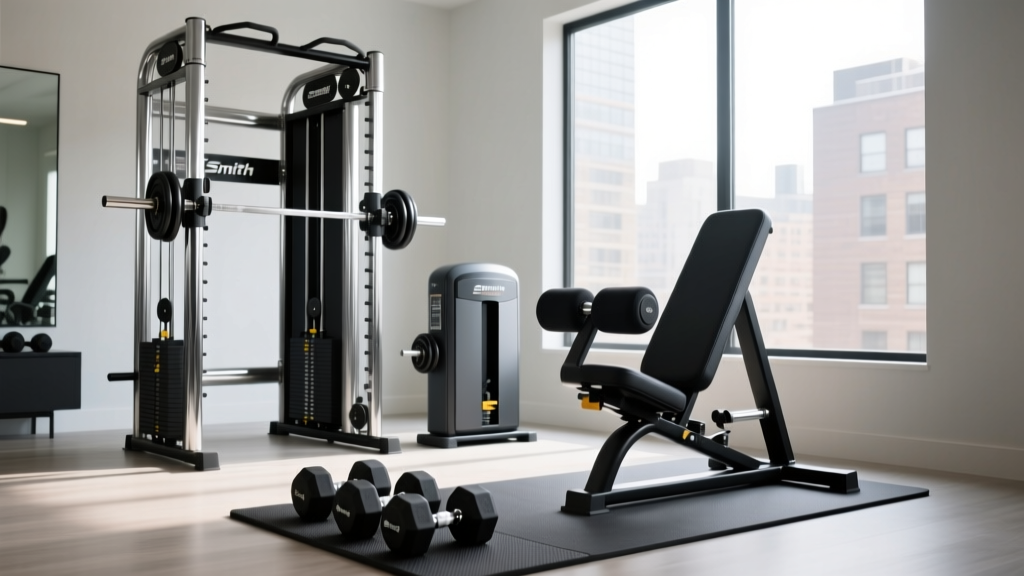
The Smith machine locks the barbell into a fixed vertical or 7-degree angled track. This eliminates the need for the lifter to balance the load in the frontal and transverse planes.
The Advantage: You can place your feet further forward, reducing shear force on the lumbar spine while maximizing knee flexion for intense quadriceps isolation.
The Failure Mode: Because the path is fixed, any deviation in individual anthropometry (e.g., femur length) can result in unnatural joint stacking, leading to patellar tendon strain or lower back discomfort at the bottom of the movement.
The 45-Degree Leg Press
The leg press removes axial loading entirely. Your back is supported by a padded backrest, meaning your core and spinal erectors are taken out of the equation.
The Advantage: Unmatched ability to load the lower body with massive absolute weight (often 400 to 800+ lbs) safely. As noted in the ACE Fitness Exercise Library, foot placement on the sled dictates the muscular bias: low and narrow for quads, high and wide for glutes and hamstrings.
The Failure Mode: Ego lifting often leads to lumbar flexion ("butt wink") at the bottom of the sled track, which can cause severe herniation risks when under heavy compressive loads.
The Home Gym Challenger: Neoprene Coated Dumbbells
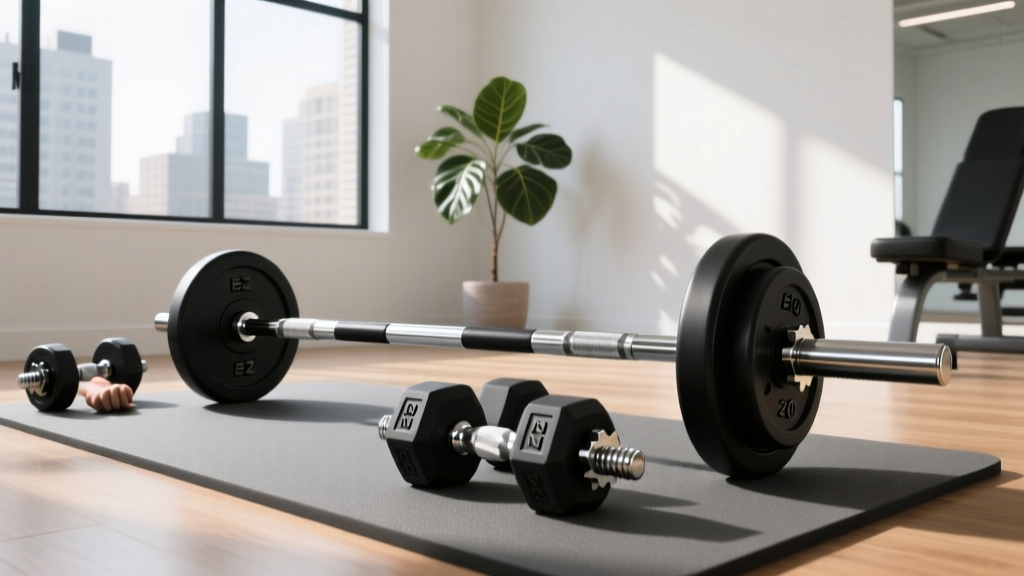
If you are training at home, dropping $4,000 on a commercial leg press or a 700-pound Smith machine rig is rarely practical. Enter the neoprene coated dumbbell for home use. Unlike traditional cast iron or rubber hex dumbbells, neoprene offers a unique set of benefits for high-rep, sweat-heavy home environments.
- Grip Integrity: Neoprene provides a slightly tacky, sweat-resistant surface that prevents slipping during heavy goblet or front-rack squats.
- Floor Protection: The synthetic rubber shell absorbs impact, protecting garage epoxy or hardwood floors from chips and cracks.
- Acoustic Dampening: Dropping a neoprene dumbbell generates significantly less noise than bare iron, a crucial factor for apartment or shared-space home gyms.
Top-tier options like the CAP Barbell Hex Neoprene or Yes4All Premium Coated sets typically cost between $1.20 and $1.80 per pound in 2026. However, they generally max out at 50 lbs per dumbbell, capping your total bilateral load at 100 lbs. How do you stimulate growth with 100 lbs when you are used to pressing 400 lbs on a sled?
Head-to-Head Comparison Matrix
| Feature | Smith Machine Squat | 45° Leg Press | Neoprene Dumbbell (Home Use) |
|---|---|---|---|
| Max Load Capacity | 300 - 500+ lbs | 500 - 1000+ lbs | 20 - 100 lbs (Total) |
| Axial Spine Loading | Moderate to High | Zero (Supported) | Low to Moderate (Front Rack) |
| Core Stabilization | Low (Guided Track) | Zero | High (Anti-extension demand) |
| Primary Limiting Factor | Quad/Glute Failure | Quad Failure / Hip Flexion | Grip Strength / Arm Fatigue |
| Equipment Footprint | ~45 sq. ft. | ~60 sq. ft. | ~4 sq. ft. (Storage Rack) |
| Estimated Cost (2026) | $2,500 - $5,000 | $3,000 - $7,000 | $150 - $400 (Full Set) |
Bridging the Hypertrophy Gap: Programming Neoprene Dumbbells
The research published in the Journal of Strength and Conditioning Research consistently demonstrates that mechanical tension and proximity to failure are the primary drivers of muscle hypertrophy, regardless of the absolute load used. Since a neoprene coated dumbbell for home use limits your absolute load, you must manipulate time under tension and unilateral leverage to match the stimulus of a Smith machine or Leg Press.
1. The Bulgarian Split Squat (The Great Equalizer)
Holding two 40 lb neoprene dumbbells (80 lbs total) while performing Bulgarian split squats places the entire load onto a single leg. This effectively mimics the unilateral tension of a 240 lb bilateral leg press. The neoprene coating ensures that grip fatigue doesn't prematurely end the set before your vastus lateralis reaches failure.
2. 1.5 Rep Tempo Goblet Squats
Take a single 50 lb neoprene dumbbell in a goblet hold. Lower yourself to the bottom of the squat, come halfway up, go back down, and then stand fully. That is one rep. This technique doubles the time spent in the stretched position (where muscle damage and hypertrophy signaling are highest), compensating entirely for the lack of heavy sled weight.
3. Pre-Exhaustion Leg Extensions
Perform bodyweight sissy squats or banded leg extensions to near failure, then immediately pick up your neoprene dumbbells for walking lunges. By pre-fatiguing the quads, the 100 lb total dumbbell load will feel like 300 lbs on the leg press.
"Muscle tissue does not have eyes; it cannot see the number on the side of the leg press sled. It only recognizes tension, stretch, and metabolic stress. A pair of hex dumbbells, utilized with advanced intensity techniques, will trigger the exact same mTOR pathways as a commercial machine."
Durability and Maintenance: Neoprene vs. Machine Cables
When investing in home or gym equipment, long-term maintenance is a hidden cost. Commercial Smith machines require regular linear bearing lubrication and cable tension checks. Leg presses demand strict attention to guide rod greasing to prevent sled stuttering.
Conversely, a high-quality neoprene coated dumbbell for home use is virtually indestructible. The cast iron core will not warp, and the neoprene shell resists UV degradation, sweat corrosion, and temperature fluctuations in uninsulated garages. The only maintenance required is an occasional wipe-down with a mild disinfectant to preserve the grip texture.
Frequently Asked Questions (FAQ)
Can I build massive legs using only neoprene dumbbells at home?
Yes, but it requires a shift in training methodology. You must rely heavily on unilateral movements (lunges, step-ups, split squats) and advanced tempo manipulations (pause reps, slow eccentrics) to achieve the necessary mechanical tension that machines provide through sheer absolute weight.
Why choose neoprene over rubber or urethane dumbbells?
Neoprene is generally softer and more tactile than hard rubber, making it more comfortable to hold in a goblet position against the chest. Urethane is the most durable and odorless, but it is significantly more expensive and features a harder, more slippery surface when heavily sweating, making neoprene the superior choice for high-rep home leg workouts.
Is the Smith Machine safer than free-weight dumbbell squats?
For beginners, the Smith machine provides a false sense of security. While it prevents the bar from falling forward or backward, the fixed track can force the knees and lower back into compromised shear angles if the user's foot placement is incorrect. Dumbbells allow the body to self-organize its natural joint paths, often making them inherently safer for the joints despite requiring more balance.
Final Verdict: Which Modality Wins?
If your goal is pure, unadulterated bilateral overload and you have the space and budget, the 45-degree leg press remains the undisputed king of lower-body isolation, while the Smith machine offers a excellent middle-ground for controlled quad sweeps.
However, for 90% of home gym owners, the neoprene coated dumbbell for home use represents the most versatile, cost-effective, and joint-friendly investment you can make. By mastering unilateral tempos and embracing the metabolic burn of high-rep goblet and split squats, you can absolutely replicate the hypertrophy outcomes of heavy commercial machines without sacrificing your garage space or your spinal health.
More gear to consider
All reviews
EZ Curl Bar vs Straight Bar & Hack Squat Alternative Dumbbell Trends

Safe Lower Back Exercise Dumbbell Home Setup Guide

Barbell or Dumbbell Bicep Curls: Neoprene Mistakes & Fixes

Space-Saving Layouts for Your 12 Week Dumbbell Workout Plan PDF

Barbell Collar Types Compared: Secure Lifts & Cable Rows with Dumbbells