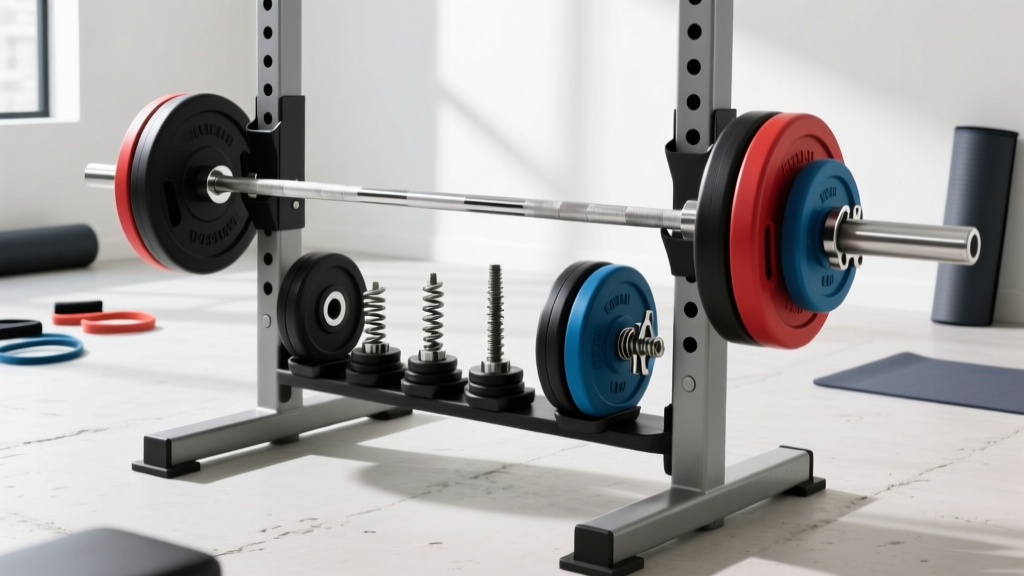
Beyond the Single Dumbbell Bench Press: Barbell Collar Guide
Master the transition from the single dumbbell bench press to barbells. Compare spring, clamp, and screw-down collars for a safer home gym setup.

Why Transition From the Single Dumbbell Bench Press?
Mastering the single dumbbell bench press is a foundational rite of passage for beginner lifters. By pressing one dumbbell at a time, you build crucial unilateral strength, engage your core to prevent torso rotation, and identify left-to-right muscle imbalances. However, as you progress into 2026, you will inevitably hit a ceiling. Commercial gyms rarely stock dumbbells heavier than 100 to 120 pounds, and maneuvering massive dumbbells into the starting position wastes energy and risks shoulder impingement.
Transitioning to a standard 45-pound Olympic barbell allows for infinite progressive overload and superior central nervous system adaptation. But moving from the controlled environment of dumbbells to a 7-foot barbell introduces a new variable: lateral plate migration. If a plate slides off one side of the bar during a heavy set, the resulting weight shift can cause catastrophic injury. This is where understanding barbell collars and clamps becomes non-negotiable.
The Anatomy of Barbell Collars: What Actually Keeps You Safe?
Not all collars are created equal. According to NSCA guidelines on bench press safety, securing the sleeves of the barbell is a mandatory step before every single lift. Yet, beginners often rely on whatever is lying around the gym floor. Let us break down the three primary collar categories, their exact failure modes, and their real-world pricing.
1. Spring Clips (The Beginner Trap)
Spring clips are the standard, low-cost metal clips found in most commercial gyms. They rely on the tension of 100-150 PSI spring steel to grip the barbell sleeve.
- Average Cost: $8 to $12 per pair.
- Grip Force: Roughly 15 to 25 pounds of lateral resistance.
- Failure Mode: Metal fatigue. After approximately 500 to 800 repetitions, the spring loses tension. Furthermore, they notoriously slip on zinc or chrome-finished barbell sleeves, especially if the bar is coated in chalk or sweat.
2. Polymer Clamp Collars (The Home Gym Favorite)
Brands like Lock-Jaw utilize glass-reinforced nylon and a cam-lever mechanism to clamp down on the sleeve. They are incredibly popular for garage gyms due to their speed and ease of use.
- Average Cost: $30 to $45 per pair (e.g., Lock-Jaw LITE or Pro models).
- Grip Force: 100+ pounds of lateral resistance.
- Failure Mode: Environmental brittleness. If you train in an unheated garage in winter temperatures below 40°F (4°C), the nylon hinges can become brittle and snap if dropped from overhead.
3. Aluminum Screw-Down / Spin-Lock Collars (The Gold Standard)
Machined from 6061 aircraft-grade aluminum, these collars slide onto the sleeve and use a steel thumbscrew to lock the plates in place. As highlighted in BarBend's extensive barbell collar testing, these are the safest option for heavy, dynamic, or dropped lifts.
- Average Cost: $45 to $65 per pair (e.g., Rogue AB-2 Aluminum Collars).
- Grip Force: Virtually immovable; limited only by the structural integrity of the barbell sleeve itself.
- Failure Mode: Thread stripping. Impatient lifters who cross-thread the steel screw into the aluminum housing can ruin the collar, though this is entirely user-error.
Comparison Matrix: Choosing the Right Collar for Your Routine
| Collar Type | Best For | Application Speed | Safety Rating (Bench) | Estimated 2026 Price |
|---|---|---|---|---|
| Spring Clips | Light isolation, warm-ups | 1-2 Seconds | Low (High Slip Risk) | $10 |
| Polymer Clamps | Hypertrophy, fast supersetting | 3-5 Seconds | High | $35 |
| Screw-Down Aluminum | Heavy 1RM, Powerlifting, Drops | 8-12 Seconds | Maximum (Bombproof) | $55 |
| Competition Calipers | Olympic Weightlifting meets | 5-8 Seconds | Maximum | $85+ |
Step-by-Step: Transitioning and Securing Your Barbell
When moving from the single dumbbell bench press to the barbell bench press, your setup routine must become a rigid ritual. Follow this exact sequence to ensure maximum safety and mechanical efficiency.
- Load the Inner Plates First: Slide your heaviest plates (e.g., 45lb / 20kg) onto the sleeve first, ensuring they sit flush against the inner collar of the barbell.
- Add Progressive Bumper or Iron Plates: Load lighter plates outward. This lowers the center of gravity of the sleeve stack and reduces lever-arm stress on the collar.
- Leave a 1/4-Inch Gap: Do not pack the plates so tightly that the collar cannot seat properly. Leave a tiny fraction of an inch for the collar to bite into the outermost plate.
- Seat the Collar Flush: Push the collar completely against the outer plate. If using a polymer clamp, ensure the inner teeth are fully engaged on the smooth part of the sleeve, not overlapping the lip.
- Lock and Verify: Engage the clamp or tighten the screw. Physically tug the collar outward with your hand. If it moves even a millimeter, unlock, reseat, and lock again.
⚠️ Critical Safety Warning: The 'Widowmaker' Effect
Never bench press heavy loads without collars. If you fail a rep and tilt the bar to dump the weight (a common spotter-less escape tactic), the plates will slide off one side. The sudden shift in momentum will violently launch the barbell off your chest, often resulting in severe facial, dental, or cervical spine injuries. Always use screw-down or high-quality clamp collars when benching without a spotter.
2026 Expert Recommendations for Home Gyms
Based on current market availability and long-term durability testing, here are the exact models we recommend for lifters graduating from dumbbell work:
Best Overall: Rogue AB-2 Aluminum Barbell Collars
Priced at roughly $55.00 per pair on the Rogue Fitness equipment catalog, the AB-2 is the undisputed king of home gym collars. The 6061 aluminum body is anodized to resist scratching, and the steel thumbscrew features a wide, knurled head that can be tightened securely even with chalky hands. They weigh just 0.56 lbs each, meaning they will not throw off your calibrated plate math.
Best for Speed: Lock-Jaw LITE V2
At around $29.99, the Lock-Jaw LITE V2 uses a reinforced resin that is lighter than their Pro model but maintains exceptional grip strength. The quick-release lever allows you to strip the bar in under three seconds, making it ideal for drop-sets and rest-pause training where time under tension and rapid weight changes are paramount.
Best Budget Alternative: Harbinger Bio-Fit Spring Clips
If you absolutely must use spring clips for light accessory work (like floor presses or light tricep extensions), the Harbinger Bio-Fit clips ($12.99) feature contoured handles that save your thumbs from the blistering pain associated with cheap, generic gym clips. However, do not use these for heavy benching or overhead pressing.
Frequently Asked Questions (FAQ)
Do I need collars if my barbell has textured sleeves?
Textured or knurled sleeves (often found on specialized powerlifting bars) provide slightly more friction against iron plates. However, this friction is entirely insufficient to stop a 45-pound plate from sliding during a dynamic movement or an uneven lift. You must always use collars, regardless of sleeve texture.
Will polymer clamps damage my barbell's zinc finish?
High-quality polymer clamps like Lock-Jaw use smooth, high-density nylon teeth that grip via compression rather than abrasion. They will not scratch or strip a zinc or chrome finish. Conversely, cheap metal spring clips with rough, unpolished edges can cause micro-scratches that eventually lead to rust on the sleeves.
How tight should a screw-down collar be?
Tighten the thumbscrew until you feel firm resistance, then give it one final quarter-turn. You should not be using pliers or excessive brute force, as this will strip the internal aluminum threads. Hand-tight with maximum grip strength is the engineered sweet spot.
The Bottom Line: The single dumbbell bench press is an exceptional tool for building a foundation, but the barbell is where absolute strength is forged. Respect the iron, protect your joints, and invest $40 to $60 in a premium set of barbell collars. It is the cheapest insurance policy you will ever buy for your home gym.
More gear to consider
All reviews
Power vs Squat Rack vs Stand & One Arm Dumbbell Row Muscles Worked

Dumbbell Exercises for Chest and Shoulders: Neoprene Mistakes

Market Analysis: Bumper Plate vs Iron Plate Demand and the Rise of Water Exercise Dumbbells

Beyond Dumbbell Meaning: Cast Iron vs Competition Kettlebells 2026

EZ Curl Bar vs Straight Bar: Budget & Dumbbells High Pull Value
