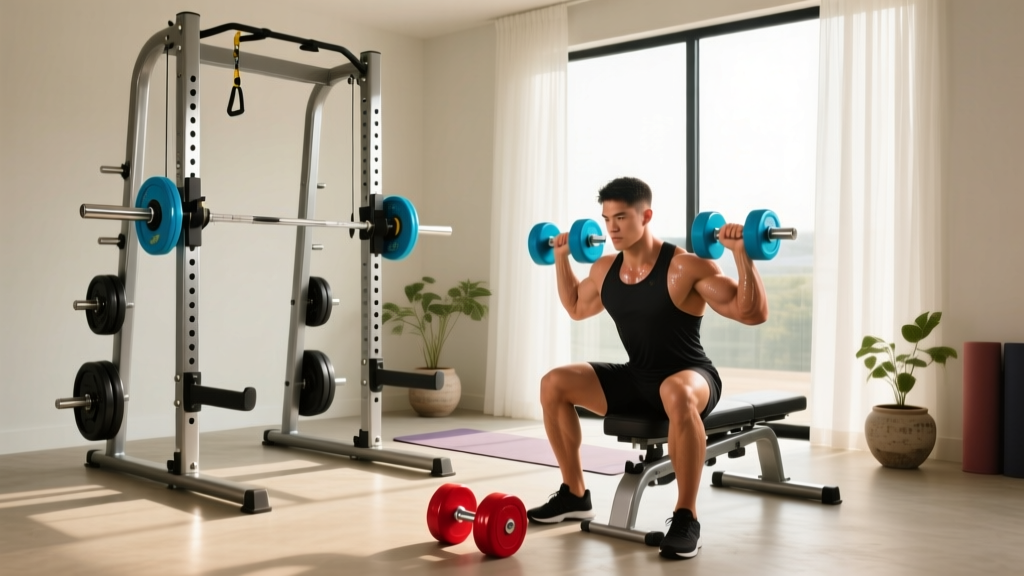
Power Rack vs Squat Stand: Deltoid Muscle Dumbbell Workouts & Squats
Compare power racks, squat racks, and squat stands to find the best rig for heavy squats and your favorite deltoid muscle dumbbell workout routines.

The Home Gym Dilemma: Heavy Compounds vs. Isolation Accessory Work
Building a functional home gym in 2026 requires balancing spatial constraints with training versatility. While most lifters prioritize a rig for heavy barbell squats and bench presses, a well-rounded physique demands dedicated isolation work. This is where the intersection of heavy rack infrastructure and a targeted deltoid muscle dumbbell workout becomes critical. Choosing between a power rack, a squat rack (half rack), and a squat stand is not just about barbell safety; it is about how the equipment supports your accessory movements, cable attachments, and bench positioning for optimal shoulder hypertrophy.
Shoulder joints are notoriously vulnerable. According to guidelines referenced by the ACE Fitness exercise library, proper stabilization and controlled eccentric loading are paramount for deltoid development. A flimsy squat stand might suffice for a quick barbell back squat, but it fails to provide the structural ecosystem needed for heavy seated dumbbell presses, chest-supported lateral raises, and cable-based rear deltoid work. Below, we break down the structural contenders, analyze real-world 2026 pricing, and demonstrate how to optimize your rig for complete shoulder development.
The Structural Contenders: Definitions and Footprints
1. The Power Rack (Full Cage)
A power rack consists of four primary uprights connected by crossmembers, creating a fully enclosed 'cage.' It features adjustable J-cups and safety spotter arms or straps on all four sides. Modern power racks, like the Rep Fitness PR-4000 or Titan T-3, utilize 3x3-inch 11-gauge steel tubing with 5/8-inch hole spacing (Westside spacing) in the bench press zone. The primary advantage is absolute safety for solo lifters and a massive attachment ecosystem, including lat pulldown towers and cable crossover systems.
2. The Squat Rack (Half Rack)
Half racks typically feature two main uprights with extended front spotter arms, or four uprights but an open front profile. They save floor space compared to a full cage but still offer a pull-up bar and some attachment compatibility. They are ideal for Olympic lifting variations where the barbell must be dropped or bailed forward, but they lack the enclosed safety of a power rack for heavy dumbbell pressing.
3. The Squat Stand
Squat stands are minimalist setups featuring two independent or lightly braced uprights. Models like the Rogue SML-2C use heavy-duty steel but rely on a wide base or bolt-down configuration for stability. They have the smallest footprint (often under 16 square feet) but offer zero native support for cable attachments or complex bench setups.
Head-to-Head Comparison Matrix
| Feature | Power Rack (e.g., Titan T-3) | Half Rack (e.g., Rogue HR-2) | Squat Stand (e.g., Rogue SML-2C) |
|---|---|---|---|
| Footprint | 48' x 48' (16 sq ft) | 48' x 48' (w/ spotter arms) | 48' x 48' (w/ stabilizers) |
| Steel Gauge & Profile | 11-Gauge, 3x3' | 11-Gauge, 3x3' | 11-Gauge, 3x3' |
| Safety Spotting | Enclosed (Pins/Straps) | Front Spotter Arms | Basic Spotter Arms (Risky) |
| Cable Attachment Ready | Yes (Lat/Row/Crossover) | Limited (Lat Tower only) | No |
| Avg. 2026 Base Price | $549 - $799 | $695 - $850 | $445 - $545 |
Optimizing the Rack for a Deltoid Muscle Dumbbell Workout
Why does your choice of rack matter for a deltoid muscle dumbbell workout? The shoulder is a complex ball-and-socket joint comprising three distinct heads: anterior (front), lateral (side), and posterior (rear). Targeting all three requires varied angles, heavy loads, and constant tension. Here is how different racks facilitate or hinder this process.
The Anterior Head: Heavy Seated Dumbbell Presses
Pressing heavy dumbbells overhead while seated on a 90-degree utility bench poses a unique risk. If you fail a rep, dropping the dumbbells laterally can damage your flooring or, worse, cause rotator cuff strain if you attempt to catch them awkwardly. Inside a fully enclosed power rack, you can install heavy-duty nylon safety straps at shoulder height. If you fail, you simply let the dumbbells drop safely onto the straps. Squat stands cannot accommodate this safety mechanism, forcing lifters to use lighter weights or risk injury.
The Lateral Head: Chest-Supported and Leaning Raises
To isolate the lateral deltoid without engaging the traps, lifters often perform chest-supported lateral raises. By setting an adjustable FID (Flat/Incline/Decline) bench to a 45-degree angle inside a power rack or half rack, you can use the uprights to brace your feet or attach resistance bands to the base crossmembers for accommodating resistance. Furthermore, leaning lateral raises require a sturdy vertical post to lean against. The 3x3-inch uprights of a bolted-down squat stand work for this, but the lack of a surrounding cage means dropped dumbbells can roll away or damage nearby walls.
The Posterior Head: Cable Crossovers and Face Pulls
Dumbbells alone are suboptimal for the rear delts because the resistance curve drops off at the bottom of the movement. The National Strength and Conditioning Association (NSCA) emphasizes the importance of constant tension for hypertrophy, which is best achieved via cables. Only a power rack equipped with a lat/low-row pulley attachment or a dual cable crossover system allows for high-quality face pulls, reverse flyes, and single-arm rear deltoid pull-downs. If you choose a squat stand, you will need to purchase a separate, freestanding cable machine, negating any spatial or financial savings.
Real-World Model Breakdown & 2026 Pricing
Titan Fitness T-3 Series Power Rack
Specs: 3x3' 11-gauge steel, 82' height, 1000 lb capacity.
Price: $549 - $599 (Base model, shipping included).
Verdict: The T-3 is the undisputed king of budget-friendly versatility. The 82-inch height fits perfectly in standard 8-foot ceilings, allowing for seated overhead dumbbell pressing without hitting the top crossmember. Its extensive attachment lineup makes it a complete ecosystem for any deltoid muscle dumbbell workout.
Rogue Fitness SML-2C Squat Stand 2.0
Specs: 3x3' 11-gauge steel, 90' height, 1000 lb capacity.
Price: $545 (Plus expensive shipping costs).
Verdict: An engineering marvel for minimalists. The SML-2C is incredibly stable for its size, but the 90-inch height can be problematic for low ceilings, and the complete lack of cable attachment points means your rear deltoid training will be limited to dumbbell bent-over rows and band pull-aparts.
Rep Fitness PR-4000 Power Rack
Specs: 3x3' 11-gauge steel, 5/8' hole spacing, 80' or 93' height options.
Price: $699 - $849 (Depending on height and color).
Verdict: The premium choice. The PR-4000 features sandwich-style J-cups (protecting your barbell knurling) and a robust attachment ecosystem. It is the ideal rig for lifters who treat their home gym as a commercial-grade bodybuilding facility.
Edge Cases and Failure Modes to Avoid
- The Ceiling Height Trap: Many lifters buy a 90-inch or 93-inch power rack only to realize they cannot perform standing overhead presses or pull-ups in their 8-foot (96-inch) ceiling basement. Always subtract 6 inches from your ceiling height for clearance. If you have low ceilings, opt for an 80-inch or 82-inch rack and perform your deltoid muscle dumbbell workout seated.
- The Bolt-Down Imperative: Squat stands and half racks are front-heavy when loaded with barbell squats or when a lifter aggressively re-racks heavy dumbbells. If you cannot bolt your rack into concrete, you must purchase rear weight storage horns and load them with heavy bumper plates to act as a counterbalance. A tipping squat stand is a catastrophic failure mode.
- Safety Strap vs. Steel Pin: For dumbbell pressing, always use nylon safety straps rather than steel spotter pins. Dropping a 100 lb dumbbell onto a steel pin will dent the dumbbell, damage the pin, and create a jarring shockwave through your wrist. Straps absorb the kinetic energy silently and safely.
Final Verdict: Which Rig Wins?
If your primary goal is raw powerlifting and you have severe spatial limitations, the Rogue SML-2C Squat Stand is a masterpiece of minimalism. However, for the majority of lifters seeking a balance of heavy compound safety and the versatility to execute a comprehensive deltoid muscle dumbbell workout, the Power Rack is the only logical choice.
'The modern power rack is no longer just a cage for squats; it is the central nervous system of the home gym. The ability to integrate cable pulleys, safety straps for heavy dumbbell pressing, and adjustable bench angles makes it an indispensable tool for complete muscular development.' - FitGearPulse Editorial Team, 2026
Invest in a 3x3-inch power rack with 5/8-inch spacing, pair it with a high-quality FID bench, and add a lat/row cable attachment. This setup will safeguard your heavy squats while providing the exact biomechanical environment your deltoids need to grow.
More gear to consider
All reviews
Setup Guide: Neoprene Dumbbell for Arms Exercise at Home

Power Rack vs Squat Rack vs Stand: The Leg Dumbbell Exercise Guide
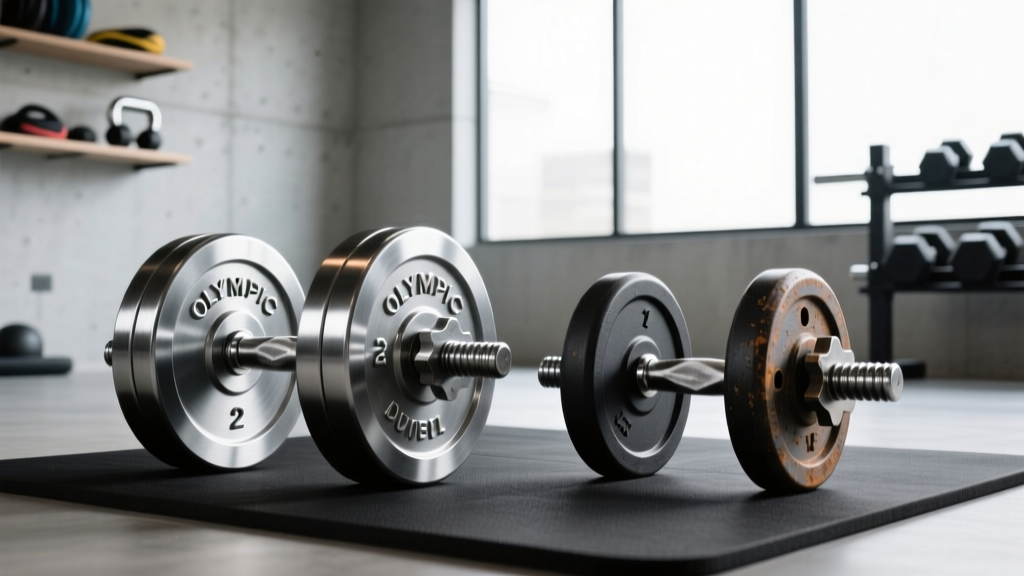
Olympic vs Standard Plates: Trap Work & Shrug Exercise Dumbbell
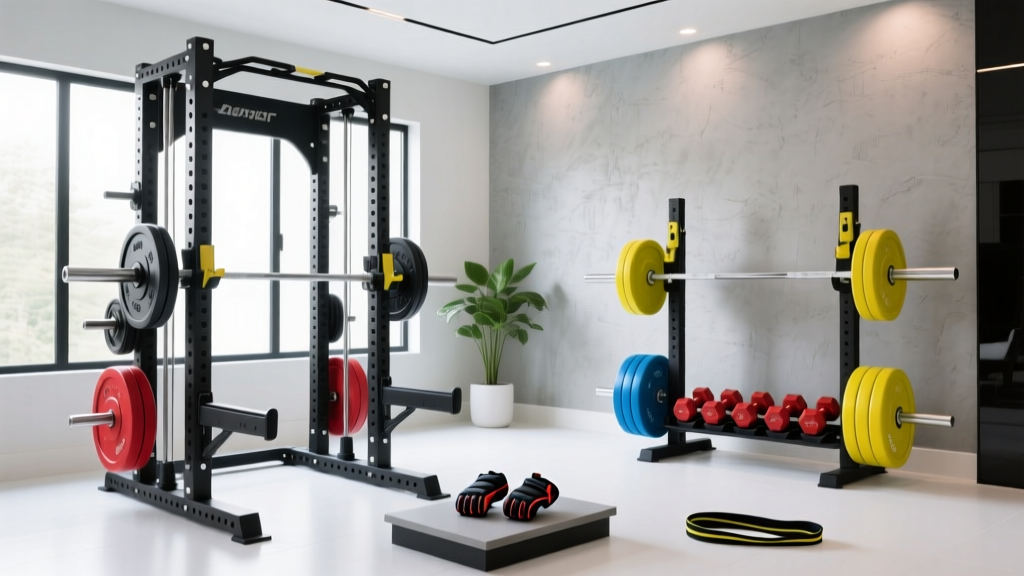
Power Rack vs Squat Rack: Beyond Dumbbell Exercises at Home No Bench

Loadable Dumbbell Maintenance: Honoring the Dumbbell Origin
