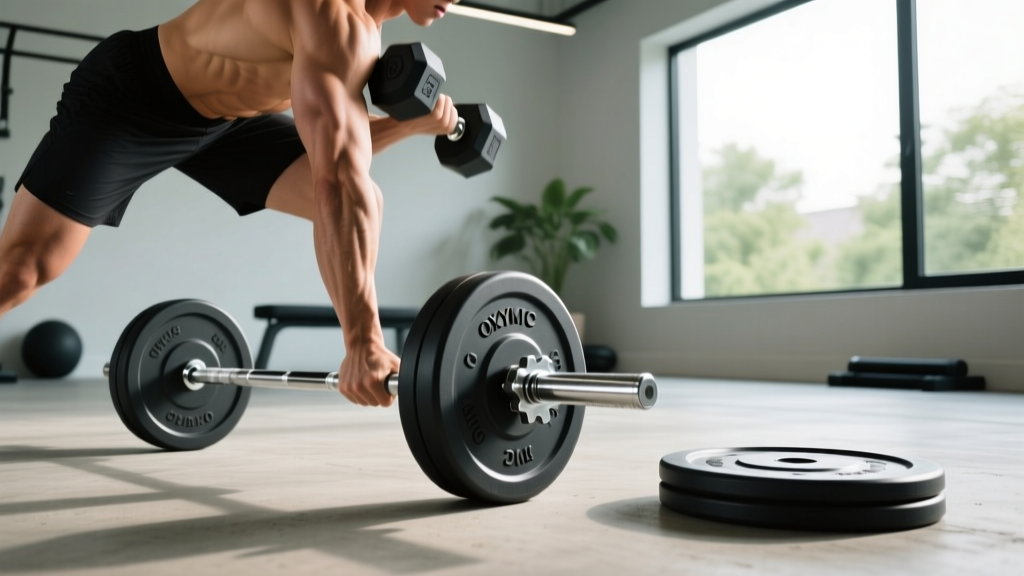
Single Arm Dumbbell Clean: Olympic vs Standard Plate Loading Errors
Avoid catastrophic failures during the single arm dumbbell clean. We troubleshoot Olympic vs standard plate mistakes for loadable dumbbells and grip plates.

The single arm dumbbell clean is a premier unilateral power builder, demanding explosive hip extension, precise timing, and immense grip strength. While most lifters rely on fixed hex or urethane dumbbells, those pushing past the 100-pound threshold per hand often turn to loadable dumbbells or Olympic grip plates. This is where the weight plate types Olympic vs standard debate transitions from a matter of gym preference to a critical safety hazard.
In 2026, the home and garage gym market is saturated with loadable handles, but mixing up 1-inch standard plates and 2-inch Olympic plates for ballistic movements remains a leading cause of equipment failure and wrist injuries. This troubleshooting guide dissects the common mistakes lifters make when loading plates for the single arm dumbbell clean and provides a concrete framework for building a safe, heavy-duty unilateral setup.
The Biomechanical Stress of the Catch Phase
To understand why plate selection matters, we must analyze the physics of the single arm dumbbell clean. During the 'catch' phase—when you drop under the weight and receive it in the front rack position—the loadable dumbbell experiences massive deceleration forces and rotational torque.
If you are cleaning a 120-pound loadable dumbbell, the momentary G-force at the bottom of the catch can spike the effective stress on the handle sleeve and collar to over 250 pounds. Standard 1-inch equipment is simply not engineered to withstand this repetitive, high-velocity shear stress. Choosing the wrong plate ecosystem doesn't just ruin your workout; it risks a catastrophic collar failure mid-movement.
Mistake #1: Using Standard 1-Inch Spin-Locks for Ballistics
The most frequent and dangerous error is attempting heavy single arm dumbbell cleans with standard 1-inch threaded spin-lock handles. These budget-friendly handles (typically costing between $25 and $40 for a pair) are designed for slow, controlled movements like floor presses or goblet squats.
The Failure Mode: Vibrational Loosening
Standard spin-lock collars rely on threaded friction. The explosive acceleration of the first pull and the violent deceleration of the catch create high-frequency vibrations. Over a set of 5 reps, these vibrations systematically unscrew the spin-lock collar. By the final rep, the collar is loose enough that a 25-pound standard plate can slide off the sleeve during the transition from the clean to the front squat, leading to severe foot injuries or asymmetrical spinal loading.
⚠️ SAFETY WARNING: Never use 1-inch standard threaded collars for any movement where the weight leaves the ground explosively. The yield strength of most generic 1-inch chrome handles begins to bend at dynamic loads exceeding 80 pounds per hand.Mistake #2: Misunderstanding Olympic Grip Plate Ergonomics
Lifters who upgrade to the 2-inch Olympic ecosystem often purchase Olympic grip plates (plates with integrated handles, such as those from Titan Fitness or Rogue) to mimic a dumbbell. While these are vastly superior to pinching a smooth 45-pound iron plate, they introduce a new set of biomechanical errors during the single arm dumbbell clean.
- Grip Width Discrepancy: A standard fixed dumbbell has a handle diameter of roughly 35mm and a neutral grip width. Olympic grip plates force your hand into a wider, often slightly pronated or supinated position depending on the plate's mold, altering the bar path during the second pull.
- Center of Mass Shift: Grip plates are inherently wider than standard iron plates. When held by the top handle, the center of mass sits further away from your forearm, increasing the lever arm and placing excessive strain on the wrist extensors during the catch.
Comparison Matrix: Standard vs. Olympic Ecosystems for Cleans
When configuring a loadable setup for unilateral Olympic variations, the choice between standard and Olympic plates dictates your ceiling for progression and safety. Below is a direct comparison of how these plate types perform under the specific demands of the single arm dumbbell clean.
| Feature | Standard (1-Inch) Plates | Olympic (2-Inch) Plates |
|---|---|---|
| Sleeve Diameter | 25mm (1 inch) | 50mm (2 inches) |
| Max Safe Dynamic Load | ~80 lbs (per handle) | 150+ lbs (with proper handle) |
| Collar Security | Threaded Spin-Lock (Poor) | Lock-Jaw / Spring (High) |
| Rotational Whip | High (Bends under torque) | Low (Rigid steel sleeves) |
| Suitability for Cleans | Not Recommended | Highly Recommended |
Mistake #3: Sleeve Length and Collar Slippage on Olympic Loadables
Assuming you have correctly chosen the Olympic route, the next major troubleshooting point involves the loadable dumbbell handle itself. Premium options like the Rogue Loadable Dumbbell Handle (priced around $95) or the adjustable Ironmaster Quick-Lock system (around $169) feature 50mm Olympic sleeves. However, lifters frequently make collar selection errors.
The Spring Collar Error
Many athletes use standard 2-inch spring collars on loadable dumbbells to save time. During a heavy single arm dumbbell clean, the dumbbell often rotates violently in the air to align with the front rack position. This rotation generates centrifugal force that can cause cheap spring collars to inch outward. If the collar breaches the sleeve lip, the plates dump instantly.
The Fix: You must use positive-locking collars. Lock-Jaw collars or specialized threaded end-caps (like the Ironmaster screw-in mechanism) physically bind the plates to the sleeve, eliminating the risk of slippage regardless of rotational torque.
Step-by-Step: Auditing Your Loadable Dumbbell Setup
Before stepping up to the platform for heavy unilateral cleans, run through this mandatory equipment audit to ensure your Olympic plate configuration is secure.
- Inspect the Sleeve Bushings: Spin the empty Olympic loadable handle. If the sleeve grinds or catches, the internal bronze bushings are shot. A seized sleeve will cause the plates to spin independently of your wrist, tearing your calluses during the clean turnover.
- Calculate the Center of Mass: Load your heaviest plates closest to the knurling. If you are using a mix of 25lb and 10lb Olympic plates, placing the 10lb plates on the inside shifts the weight outward, making the single arm dumbbell clean feel artificially heavier and harder to control in the rack.
- Verify Collar Flushness: Ensure your locking collars sit completely flush against the outermost plate. Any gap allows for 'plate chatter'—the micro-collisions between plates during the first pull that degrade your grip endurance before you even reach the catch.
Never use 10-pound or 15-pound Olympic bumper plates on a loadable dumbbell for cleans. These thin bumpers have a high failure rate at the steel insert ring when subjected to the asymmetrical dropping forces of a missed single arm clean. Stick to machined steel or urethane grip plates for unilateral loading.
Frequently Asked Questions
Can I use standard plates if I double-nut the spin-lock collars?
No. Double-nutting (using two threaded collars tightened against each other) on a 1-inch handle mitigates vibrational loosening, but it does not solve the structural weakness of the 1-inch sleeve itself. The dynamic shear force of dropping a heavy single arm dumbbell clean into the rack position can still bend a standard 1-inch chrome sleeve, permanently ruining the handle and risking a mid-air snap.
Are adjustable dumbbells like Nuobell safe for single arm cleans?
While modern adjustable dumbbells are incredible for hypertrophy and general strength, most manufacturers explicitly void the warranty if they are used for explosive Olympic movements. The internal locking pins and plastic cradles of dial-adjustable dumbbells are not rated for the high-impact drop of a heavy clean. Dedicated Olympic loadable handles remain the only safe choice for this specific movement.
How do I transition from fixed dumbbells to loadable plates for cleans?
According to strength and conditioning guidelines reviewed by experts at Garage Gym Reviews, you should transition to loadable Olympic handles once you exceed your gym's maximum fixed dumbbell weight (usually 100-120 lbs). Start with 70% of your max fixed dumbbell clean to acclimate to the different grip diameter and center of mass of the Olympic loadable handle before attempting PRs.
More gear to consider
All reviews
EZ Curl Bar vs Straight Bar & Dumbbell Step Up Muscles Worked

Full Leg Workout with Dumbbells: Space Layouts & Hex vs Urethane

Power Rack vs Squat Stand for Your Womens Full Body Dumbbell Workout
Bumper Plate vs Iron Plate Comparison: Upgrading Beyond 75 lb Dumbbells

How to Choose Adjustable Dumbbells for a Triceps Workout at Home (2026)
