Troubleshooting Your Arm Day Dumbbell Workout With Neoprene Weights
Fix common neoprene dumbbell mistakes and optimize your arm day dumbbell workout at home with our expert troubleshooting guide and gear tips.

The Hidden Pitfalls of Neoprene Dumbbells for Arm Training
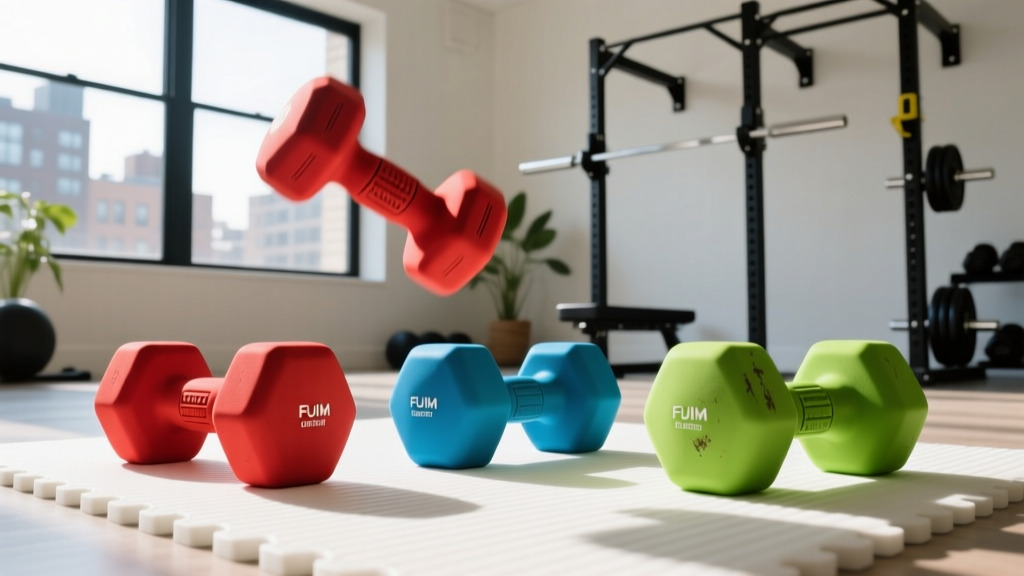
Neoprene-coated dumbbells are the undisputed entry-level champions of the home gym. In 2026, brands like CAP Barbell and Yes4All continue to dominate the market, offering cast-iron cores wrapped in synthetic rubber at an accessible $1.50 to $2.50 per pound. They are quiet, floor-friendly, and visually distinct. However, when it comes to executing a high-volume, highly specific arm day dumbbell workout, these weights present unique mechanical and environmental failure modes that most lifters ignore until their progress stalls.
Small muscle groups like the biceps brachii, brachialis, and the three heads of the triceps require precise load management, strict tension, and impeccable grip stability. Neoprene dumbbells, by their very material nature, can actively work against these requirements if not properly maintained and programmed. This troubleshooting guide will diagnose the most common mistakes lifters make with neoprene weights and provide actionable, expert-level solutions to salvage your arm day.
Mistake #1: The Grip Slip Phenomenon and Material Degradation
The most frequent complaint during high-rep arm isolation work is the "grip slip." Neoprene (polychloroprene) is slightly porous. Over months of use, it absorbs sebum, dead skin cells, and sweat. This creates a microscopic, slick film on the handle that drastically reduces the friction coefficient precisely when your forearms are fatiguing during heavy hammer curls or triceps extensions.
⚠ Troubleshooting Warning: Do not use harsh chemical degreasers or bleach on neoprene. These chemicals break down the synthetic rubber bonds, causing the coating to become gummy and eventually peel away from the cast-iron core.The Fix: Restoring Tackiness and Grip Integrity
- The 70% Isopropyl Protocol: Once a month, wipe the handles down with a 70% isopropyl alcohol solution. This breaks down the lipid (oil) buildup without degrading the neoprene matrix. Allow them to air dry completely.
- Strategic Chalking: If you are a heavy sweater, liquid chalk (magnesium carbonate suspended in alcohol) is superior to powder chalk for home gyms. It dries instantly, fills the microscopic pores of the neoprene handle, and restores grip for the duration of your arm day dumbbell workout without creating a mess on your floors.
- The Urethane Upgrade Path: If your neoprene handles are already permanently slick and peeling at the seam, it is time to retire them for isolation work. Upgrading to a urethane-coated set (like those from Rogue or REP Fitness) provides a permanently tacky, non-porous grip that will outlast neoprene by a decade.
Mistake #2: The 5-Pound Jump Problem in Micro-Muscles
Standard neoprene dumbbell sets are manufactured in 5-pound increments (e.g., 10, 15, 20, 25 lbs). For compound movements like goblet squats, this is fine. For an arm day dumbbell workout, this is a recipe for joint strain and stalled hypertrophy. The biceps and triceps are relatively small muscle groups. Jumping from a 15 lb to a 20 lb dumbbell represents a massive 33% increase in load. According to research on dose-response relationships in resistance training, excessive load jumps compromise time-under-tension and force you to rely on momentum rather than muscular contraction (Schoenfeld et al., 2017).
Overcoming the Neoprene Progression Gap
Instead of buying expensive fractional magnetic plates, use these mechanical troubleshooting tactics to force adaptation without changing the physical weight of your neoprene dumbbells.
| Progression Tactic | Execution Protocol | Hypertrophy Stimulus |
|---|---|---|
| Tempo Manipulation | Use a 3-1-3-0 tempo (3s eccentric, 1s pause, 3s concentric). Eliminates the stretch reflex. | Maximizes mechanical tension with lighter neoprene weights (10-15 lbs). |
| 1.5 Rep Method | Full rep, lower halfway, back up, lower fully. That equals one rep. | Doubles time in the mid-range where the biceps brachii is most active. |
| Pre-Exhaustion | Perform bodyweight triceps pushdowns (using a towel on a door) to failure before dumbbell extensions. | Pre-fatigues the muscle so lighter neoprene weights feel significantly heavier. |
| Isometric Holds | Hold the peak contraction (90-degree flexion) for 5 seconds on the final 3 reps. | Increases metabolic stress and cellular swelling without requiring heavier loads. |
Mistake #3: Environmental Storage Failures
Neoprene is highly susceptible to UV degradation and extreme temperature fluctuations. A common mistake is storing neoprene dumbbell sets on a concrete garage floor or near a sunlit window. UV exposure causes the synthetic rubber to oxidize, turning it chalky, brittle, and prone to flaking off onto your skin and clothes. Furthermore, concrete acts as a moisture wick; leaving cast-iron cored dumbbells on bare concrete can lead to internal rusting that eventually bubbles up and splits the neoprene from the inside out.
"The lifespan of a neoprene dumbbell is dictated entirely by its storage environment. Keep them indoors, climate-controlled, and elevated on a wooden or rubber-lined rack to easily extend their functional life past the 5-year mark."
— FitGearPulse Equipment Lab, 2026 Durability Report
The Optimized Arm Day Dumbbell Workout (Neoprene Edition)
This routine is specifically engineered to bypass the limitations of neoprene dumbbells. It prioritizes strict isolation, leverages the hex-shape for stability, and utilizes the tempo tactics mentioned above to ensure maximum hypertrophy even if your heaviest neoprene pair caps out at 25 lbs. For proper anatomical targeting, we focus on the distinct functions of the elbow flexors and extensors (ExRx Anatomy Directory).
1. Incline Dumbbell Curls (Stretch Focus)
The incline curl places the long head of the biceps in a stretched position, which is highly correlated with muscle damage and subsequent growth.
- Setup: Set an adjustable bench to 45 degrees. Let your arms hang straight down with a 10-15 lb neoprene dumbbell in each hand.
- Execution: Curl the weight up without moving your elbows forward. Squeeze at the top, then lower slowly for a 3-second count.
- Volume: 3 sets of 10-12 reps. Rest 90 seconds.
2. Cross-Body Hammer Curls (Brachialis Focus)
Targeting the brachialis (the muscle underneath the biceps) pushes the biceps up, creating the illusion of thicker arms. The hex shape of neoprene dumbbells makes them easy to grip in a neutral position.
- Setup: Stand tall, dumbbells at your sides in a neutral grip (palms facing your torso).
- Execution: Curl the right dumbbell across your chest toward your left shoulder. Lower and repeat on the other side.
- Volume: 3 sets of 12 reps per arm. Use the 1.5 Rep Method on the final set.
3. Overhead Dumbbell Triceps Extension (Long Head Focus)
The long head of the triceps crosses the shoulder joint, meaning it is only fully stretched and activated when the arm is raised overhead (Mayo Clinic Strength Training Guidelines).
- Setup: Sit on a bench with back support. Cup the inside of a single heavier neoprene dumbbell (15-25 lbs) with both hands.
- Execution: Lower the weight behind your head until you feel a deep stretch in the triceps, then press back up to lockout.
- Volume: 4 sets of 12-15 reps. Focus on a 2-second pause at the bottom stretch.
4. Floor Skull Crushers (Lateral/Medial Head Focus)
Using the floor prevents elbow flare and protects your joints, a necessary precaution when using fixed-weight dumbbells that might be slightly too heavy for strict form.
- Setup: Lie on the floor, knees bent. Hold dumbbells straight up over your chest, palms facing each other.
- Execution: Hinge only at the elbow, lowering the dumbbells until they lightly tap the floor beside your ears. Press back up.
- Volume: 3 sets to technical failure. If grip slip occurs, drop the weight by 5 lbs and immediately continue to failure.
Frequently Asked Troubleshooting Questions
Why do my neoprene dumbbells smell like chemicals?
Neoprene dumbbells can off-gas volatile organic compounds (VOCs) when exposed to high heat, such as being left in a hot car or a sun-baked garage. To neutralize the odor, wipe them down with a mixture of white vinegar and water, then leave them in a well-ventilated, shaded indoor area for 48 hours.
Can I drop neoprene dumbbells at the end of a set?
No. While the neoprene coating protects your floors from scratches, it does not protect the internal cast-iron core from the shock of impact. Dropping them on hard surfaces will cause the iron to shift, resulting in a wobbly handle or a split seam. Always lower them under control to preserve the structural integrity of the hex mold.
Are neoprene dumbbells suitable for heavy compound lifts?
Neoprene is best reserved for isolation movements and high-rep metabolic conditioning. For heavy compound lifts (like Romanian Deadlifts or Bulgarian Split Squats), the thick, rubberized handle diameter can cause premature grip fatigue. For heavy lifting, bare steel, chrome, or knurled urethane handles are vastly superior for force transfer.
More gear to consider
All reviews
Cast Iron vs Comp Kettlebells & How to Train Rear Delts With Dumbbells

Olympic vs Standard Plates: Choosing Dumbbells for Building Muscle
Racking & Maintaining the Best Chest Workout Dumbbells

Barbell Collar Types Compared: Heavy Squats to Dumbbell Push Day

Supinated Dumbbell Bicep Curl: Rubber Hex vs Urethane 2026 Trends
