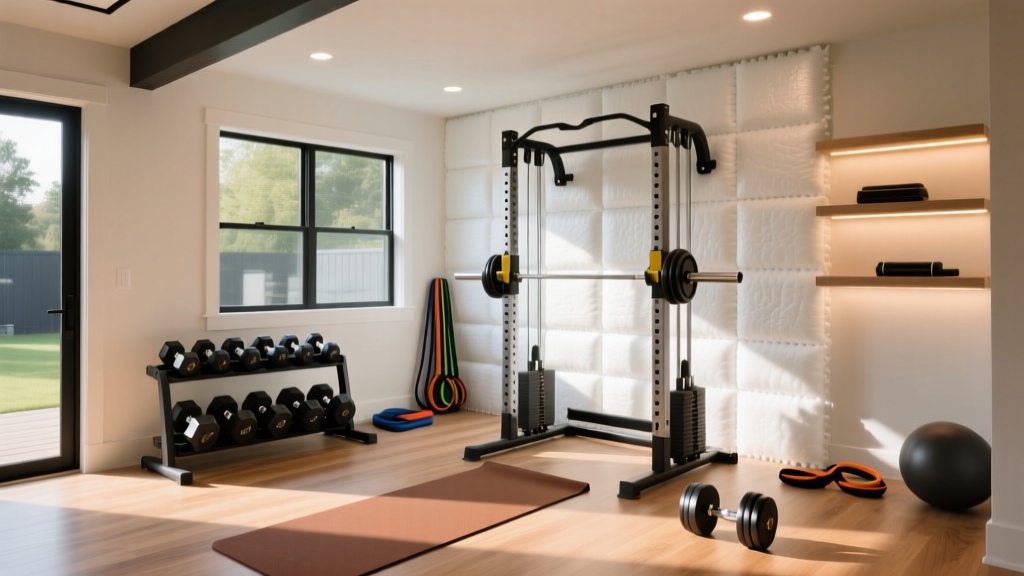
Home Gym Shed Conversion: Rigid Foam vs. Spray Foam Insulation
Planning a home gym shed conversion? We compare rigid foam board vs. closed-cell spray foam insulation for temperature control and rust prevention.

The Hidden Enemy of the Backyard Gym: Moisture and Temperature Swings
Executing a successful home gym shed conversion requires far more than just rolling out rubber mats and racking a power cage. The most critical phase of any shed gym renovation is managing the building envelope. Uninsulated or poorly insulated sheds act as thermal batteries, trapping heat in the summer and freezing in the winter. Worse, the rapid temperature shifts create condensation, leading to the rapid oxidation of cast-iron plates, steel barbells, and machine cables.
When tackling home gym renovation and remodeling tips for outbuildings, insulation is your first line of defense. In this head-to-head comparison, we evaluate the two dominant DIY insulation products for shed conversions: Owens Corning FOAMULAR 250 Extruded Polystyrene (XPS) and the Touch 'n Seal EnviroTec Closed-Cell Spray Foam Kit. We will break down R-values, installation realities, moisture management, and exact 2026 pricing for a standard 10x12 shed.
⚠️ The 'Sweat Box' Failure Mode: According to Building Science Corporation, when warm, moisture-laden air from your breathing and sweating hits the cold interior sheathing of an uninsulated shed, it immediately condenses. This hidden moisture rots wood framing and rusts gym equipment from the inside out. Air sealing is just as critical as thermal resistance.Head-to-Head Product Matrix: FOAMULAR vs. Touch 'n Seal
Both products offer excellent moisture resistance, but their application methods and structural benefits differ wildly. Below is a direct comparison based on a standard 10x12 shed (approx. 340 sq. ft. of wall and ceiling cavity space).
| Feature | Owens Corning FOAMULAR 250 (1-inch XPS) | Touch 'n Seal EnviroTec (Closed-Cell Kit) |
|---|---|---|
| R-Value per Inch | R-5.0 | R-6.5 to R-7.0 |
| Material Cost (10x12 Shed) | ~$350 - $420 (approx. 12 sheets) | ~$680 - $750 (600 board-ft kit) |
| Air Sealing Capability | Poor (Requires canned spray foam at seams) | Excellent (Expands to fill all gaps) |
| Structural Rigidity | Minimal | High (Adds racking strength to walls) |
| Labor & PPE Required | Low (Utility knife, tape measure) | High (Tyvek suit, organic vapor respirator) |
The Budget Route: Installing Rigid Foam Board (FOAMULAR 250)
Owens Corning FOAMULAR 250 is a favorite among DIY shed remodelers due to its accessibility at big-box hardware stores and ease of cutting. The U.S. Department of Energy notes that rigid foam boards are highly effective for exterior and interior retrofits where space is at a premium.
Step-by-Step Remodeling Workflow
- Framing Prep: Most prefab sheds feature 2x4 wall studs spaced 24 inches on-center. Ensure all wiring for your gym lighting and HVAC is roughed in before insulating.
- Cut and Cobble: Score the 4x8 XPS sheets with a utility knife and snap them to fit snugly between the studs. Leave a 1/4-inch gap around the perimeter of each board to allow for expansion and sealant.
- The Critical Air Seal: This is where most shed conversions fail. You must use a high-quality polyurethane sealant like Great Stuff Pro Gaps & Cracks to fill the perimeter of every single foam board. If air can bypass the foam, condensation will form on the exterior sheathing.
- Rim Joist Treatment: Do not forget the rim joists (the perimeter band where the floor meets the wall). Cut small wedges of XPS and foam them in place. This prevents cold floor drafts from ruining your deadlift sessions.
"The biggest mistake I see in shed gym remodels is treating rigid foam like batt insulation. Foam doesn't stop air movement on its own; the canned spray sealant at the edges is what actually creates the vapor barrier." — Mike Guertin, Building Science Expert
The Premium Route: Closed-Cell Spray Foam (Touch 'n Seal)
If your shed is situated in a region with extreme humidity or temperature swings, closed-cell spray foam is the undisputed champion. The Touch 'n Seal EnviroTec 600 board-foot kit provides both a high R-value (R-6.5 per inch) and a complete, seamless vapor barrier.
Application Realities and Edge Cases
- Temperature Constraints: The chemical tanks must be kept between 70°F and 80°F for at least 24 hours prior to use. If you are remodeling your shed in early spring or late fall, you must bring the tanks inside your main house overnight, or the yield will drop by up to 40%.
- Overfilling and Bowing: Closed-cell foam expands with tremendous force. If you overfill a 2x4 stud cavity, the foam will bow the interior plywood sheathing or exterior siding. Apply in 1-inch lifts, allowing 5 minutes of cooling time between passes.
- Shaving and Drywall: Once cured, the foam will likely expand past the face of your studs. You must use a specialized foam saw or a serrated bread knife to shave it flush before hanging your interior plywood or drywall.
Subfloor Remodeling: The Foundation of a Shed Gym
Insulating the walls and ceiling is only half the battle. The floor of a shed gym takes massive impact loads from dropped dumbbells and barbells. Most sheds sit on pressure-treated skids with a 3/4-inch plywood subfloor. This setup will bounce, causing the 'trampoline effect' that can snap equipment and injure joints.
The 'Floating Floor' Renovation Technique
To properly remodel a plywood shed floor for heavy lifting, follow this layered approach:
- Moisture Seal: Paint the existing plywood subfloor with Zinsser B-I-N Shellac-Based Primer. This locks out ground moisture migrating up from the skids.
- Thermal Break: Lay down a 1/2-inch layer of FOAMULAR XPS directly over the plywood. This provides an R-2.5 thermal break, keeping the floor from feeling like ice in the winter.
- Impact Layer: Top the foam with 3/4-inch tongue-and-groove AdvanTech subflooring. Screw it through the foam and into the original plywood joists every 8 inches. This distributes point-loads from dropped 45lb plates across a wider area.
- Surface Layer: Finish with 3/4-inch vulcanized rubber horse stall mats (e.g., Tractor Supply Co. or Rogue Fitness). Do not glue the mats; let them float to accommodate seasonal expansion.
2026 Cost Analysis: 10x12 Shed Insulation Budget
When planning your home gym shed conversion budget, factor in the hidden costs of consumables and prep work. Here is a realistic breakdown for a 10x12 shed (120 sq. ft. floor, 168 sq. ft. walls, 144 sq. ft. ceiling).
| Material / Task | FOAMULAR Method | Spray Foam Method |
|---|---|---|
| Insulation Material | $380 (12 sheets @ $31/ea) | $720 (Two 600bd/ft kits) |
| Sealants & Adhesives | $110 (8 cans Great Stuff Pro) | $0 (Included in kit) |
| PPE & Prep Supplies | $25 (Gloves, tape) | $85 (Respirator, Tyvek, drop cloths) |
| Total Envelope Cost | $515 | $805 |
Climate Control Pairings for the Insulated Shed
Once your shed is sealed and insulated, you must manage the internal climate. Human respiration and heavy exertion introduce massive amounts of water vapor into the air. Without mechanical ventilation and dehumidification, your equipment will still rust.
The Mini-Split Solution: The MrCool DIY 12,000 BTU Ductless Mini-Split (Model DIYS12HP230A) is the gold standard for shed gyms. It provides both heating and cooling while actively dehumidifying the space. Remodeling Tip: This unit requires a dedicated 20-amp, 230V circuit. You will likely need to trench a direct-burial UF-B 12/2 cable from your main home panel to a subpanel in the shed, adding roughly $400-$600 in electrical remodeling costs.
The Portable Alternative: If trenching power is impossible, pair a Whynter ARC-14S Portable AC with a commercial dehumidifier like the Yaufey 35-Pint Basement Dehumidifier. You must install a through-wall exhaust vent for the portable AC, sealing the perimeter with the same spray foam used on your walls.
Frequently Asked Questions
Do I need a separate plastic vapor barrier if I use spray foam?
No. Closed-cell spray foam is classified as a Class II vapor retarder at just 1.5 inches thick. Adding a polyethylene sheet over the foam can actually trap moisture inside the wall cavity, leading to mold. Let the foam do its job.
Will insulating my shed completely stop my barbells from rusting?
Insulation stops condensation caused by thermal bridging (cold walls meeting warm air). However, it does not remove ambient humidity. You must run a dehumidifier set to 45% relative humidity during and after workouts to protect bare steel and knurled handles.
Can I insulate the roof rafters, or do I need to insulate the attic floor?
For a shed gym, you want the entire interior volume to be inside the 'conditioned envelope.' Insulate the underside of the roof decking directly. This prevents your HVAC system from wasting energy trying to cool or heat a vented attic space that is entirely separate from your workout area.
More gear to consider
All reviews
Home Gym Setup Guide: Floor Plans for Home Gym Workout Exercises

Luxury Home Gym Design: The Complete Setup & Floor Plan Guide

Couples Gym: Upgrading the Men's Health Home Gym Awards 2021 Beginner Kettlebell

Compact Home Gym Equipment Ideas: Apartment Setup Guide
Weatherproof Outdoor Home Gym Flooring Installation Guide
