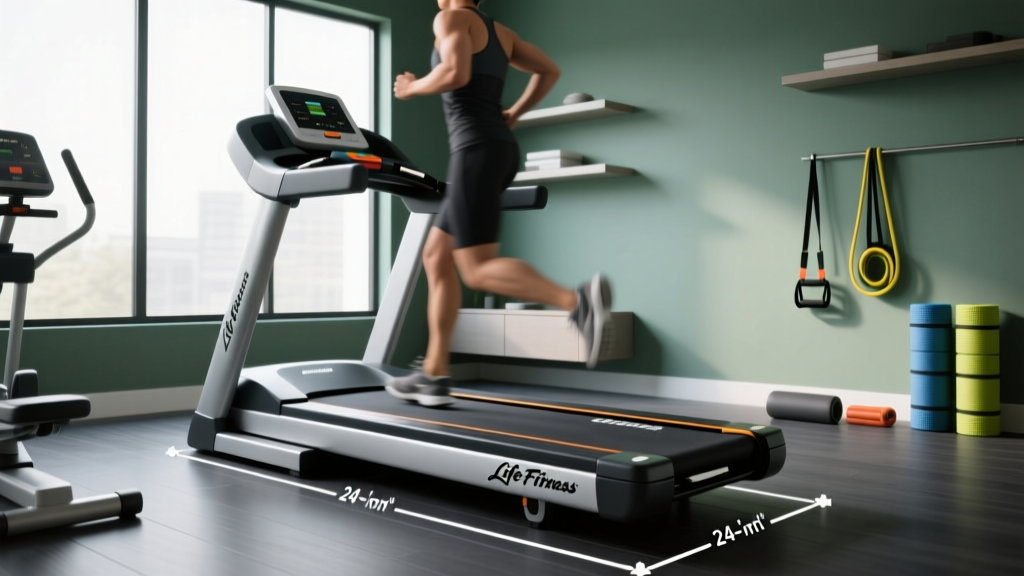
Schiller TMX428 Treadmill 110V or 220V: Voltage & Feature Comparison
Explore the Schiller TMX428 treadmill 110V or 220V requirements. Compare clinical vs. commercial treadmill features, motors, and voltage specs.

The Clinical vs. Commercial Divide in Cardio Equipment
When outfitting a cardiac rehabilitation center, a sports science laboratory, or an advanced home biohacking facility, standard commercial cardio machines often fall short of the rigorous demands of diagnostic testing. This brings us to a highly specific but critical equipment query: the Schiller TMX428 treadmill 110V or 220V configuration dilemma. Unlike consumer-grade treadmills designed for steady-state jogging, medical-grade stress test treadmills like the Schiller TMX428 are engineered for precise, protocol-driven cardiopulmonary exercise testing (CPET) and electrocardiogram (ECG) monitoring.
As of 2026, the integration of AI-driven ECG analysis and real-time metabolic cart syncing has made the electrical and mechanical stability of these machines more important than ever. A voltage drop or motor controller lag during a Bruce Protocol stress test can introduce artifact noise into the ECG readout, potentially leading to misdiagnosed ST-segment deviations. This in-depth buying guide dissects the electrical requirements, motor architectures, and feature sets of clinical treadmills compared to high-end commercial alternatives.
Decoding the Schiller TMX428 Treadmill 110V or 220V Question
The Schiller TMX428 is a specialized medical device. Its electrical configuration is not merely a matter of regional plug types; it fundamentally dictates how the facility's electrical infrastructure must be prepared to handle dynamic load changes. When a 250 lb patient is pushed to a 20% incline at 5.5 mph, the amperage draw spikes dramatically.
110V/120V Configurations (North American Standard)
In North America, the 110V/120V setup is standard, but it requires strict adherence to clinical electrical codes. According to guidelines referenced by the National Fire Protection Association (NFPA) regarding healthcare facilities, medical diagnostic equipment must be on dedicated circuits to prevent electromagnetic interference (EMI) and voltage sag.
- Circuit Requirement: 20-Amp dedicated NEMA 5-20R receptacle.
- Voltage Sag Risk: If placed on a shared 15-Amp circuit, the initial startup torque or max-incline load can drop the voltage below 105V. This triggers the treadmill's internal PWM (Pulse Width Modulation) motor controller to overcompensate, generating heat and EMI that disrupts sensitive 12-lead ECG monitors.
- Best For: Outpatient cardiology clinics and sports science labs in the US and Canada with standard commercial build-outs.
220V/240V Configurations (International & High-Density Facilities)
The 220V/240V configuration is standard in Europe, Asia, and increasingly preferred in newly constructed, high-density North American medical campuses due to its electrical efficiency.
- Circuit Requirement: 10-Amp to 15-Amp dedicated circuit (depending on regional IEC or NEMA standards).
- Efficiency Gain: Higher voltage halves the amperage draw for the same wattage output. This drastically reduces resistive heating in the facility's wiring and minimizes the risk of voltage drop over long cable runs from the breaker panel.
- Best For: International hospitals, large-scale cardiac rehab wings, and facilities utilizing heavy-duty 220V medical imaging equipment on the same isolated power grids.
Feature Comparison Matrix: Medical vs. Premium Commercial
To understand where the Schiller TMX428 sits in the broader cardio equipment market, we must compare it against top-tier commercial treadmills often mistakenly purchased for clinical use. Below is a 2026 feature comparison matrix.
| Feature | Schiller TMX428 (Medical) | Woodway 4Front (Commercial) | Precor TRM 731 (Commercial) |
|---|---|---|---|
| Primary Use Case | ECG Stress Testing, CPET | High-Performance Athletic Training | Health Club, Luxury Home Gym |
| Voltage Options | 110V-120V / 220V-240V (Configurable) | 110V-120V (Standard US) | 110V / 220V (Region Dependent) |
| Motor Type | High-Torque DC with Medical-Grade PWM | AC Brushless (Slat Belt Drive) | AC Brushless (3.0 HP Continuous) |
| Speed Accuracy | ± 0.1 km/h (Calibrated for Protocols) | ± 0.2 km/h | ± 0.25 km/h |
| Max Incline | 25% (Precise 1% increments) | 15% | 15% |
| Belt / Deck System | Low-friction orthopedic belt, rigid deck | Vulcanized rubber slats, ball bearings | Integrated Footplant Technology (IFT) |
| Estimated Price (2026) | $14,500 - $18,000 | $9,500 - $11,500 | $8,000 - $10,500 |
Motor Controllers and ECG Artifact Mitigation
One of the most critical, yet frequently overlooked, differences between a medical treadmill and a commercial one is the motor controller's relationship with electromagnetic interference. The American College of Sports Medicine (ACSM) emphasizes that equipment used for diagnostic exercise testing must not introduce artifact noise that mimics cardiac arrhythmias or ischemia.
Commercial treadmills utilize standard DC or AC motor controllers that switch power at frequencies which can sometimes bleed into the frequency bands monitored by 12-lead ECG machines (typically 0.05 Hz to 100 Hz). The Schiller TMX428 utilizes heavily shielded, medically certified PWM controllers. These controllers are designed with advanced filtering capacitors and isolated grounding pathways to ensure that the electrical noise generated by the motor's commutation is entirely suppressed before it can travel through the patient's body and into the ECG leads.
The Importance of Speed and Grade Calibration
In a standard fitness setting, if a treadmill displays 6.0 mph but is actually moving at 5.9 mph, the user simply burns slightly fewer calories. In a clinical setting, this discrepancy invalidates the metabolic equivalent (MET) calculations required for surgical clearance or disability assessments. Medical treadmills feature internal optical encoders that continuously verify belt speed and incline angle, feeding this data back to the main logic board to make micro-adjustments in real-time, ensuring strict adherence to standardized protocols like the Bruce, Balke, or Naughton stress tests.
Real-World Installation Failure Modes
When installing high-draw cardio equipment, especially in retrofitted clinical spaces, electrical failure modes are a leading cause of logic board corruption. Below is a critical warning for facility managers and home-gym builders.
⚠️ Critical Installation Warning: The Shared Neutral TrapA common failure mode in 110V clinical installations occurs when electricians use a multi-wire branch circuit (shared neutral) for adjacent outlets. When the treadmill's motor engages the incline mechanism while the cooling fan or nearby centrifuge cycles on, the shared neutral can experience harmonic distortion and voltage fluctuations. This specific edge case has been known to corrupt the EEPROM on medical treadmill logic boards, requiring a $1,200+ board replacement and complete factory recalibration. Always insist on a dedicated circuit with an isolated ground (IG) receptacle for diagnostic cardio equipment.
Deck and Belt Mechanics: Why Clinical Treadmills Feel Different
Users transitioning from a commercial slat-belt treadmill to a medical stress-test treadmill often note a firmer, less forgiving running surface. This is by design. Clinical treadmills prioritize a rigid, highly stable deck to ensure consistent foot-strike mechanics and accurate force distribution. A heavily cushioned deck, while comfortable for marathon training, introduces vertical oscillation variables that can complicate the analysis of a patient's gait or the precise measurement of oxygen consumption (VO2) via metabolic carts. The belts used on machines like the TMX428 are typically thicker, low-friction orthopedic belts treated with specialized lubricants to minimize the static electricity buildup that can otherwise interfere with wireless telemetry heart rate monitors.
Buying Framework: Which Architecture Fits Your Facility?
Selecting the right treadmill requires aligning the machine's architecture with your primary operational goals. Use this decision framework to guide your 2026 purchasing strategy:
- Choose the Medical-Grade (110V/220V Configurable) Route If: Your primary use case involves diagnostic ECG stress testing, CPET metabolic analysis, or post-cardiac event rehabilitation where protocol exactness and EMI shielding are non-negotiable. Ensure your facility's electrical panel can support dedicated 20A (110V) or 10A (220V) isolated circuits.
- Choose the Premium Commercial Route (e.g., Woodway, Precor) If: Your facility focuses on athletic performance, general physical therapy, or high-volume health club usage. These machines offer superior shock absorption for joint health and higher top speeds (up to 25 mph on some models) but lack the EMI shielding and protocol-level precision required for diagnostic cardiology.
Ultimately, understanding the technical nuances behind the Schiller TMX428 treadmill 110V or 220V configurations is about more than just finding the right wall plug. It is about respecting the intersection of electrical engineering, biomechanics, and diagnostic medicine to ensure patient safety and data integrity.
More gear to consider
All reviews
Film an OK Go Video on Treadmill: Quiet Cardio Noise Guide
2026 Trend Report: The Compact Treadmill for Endurance

Hey Play Treadmill vs UREVO: 2026 Budget Feature Comparison

Treadmill Calibration: Curved Manual vs Motorized Setup Guide
Elliptical vs Treadmill: WalkingPad C2 Mini Foldable Treadmill Test