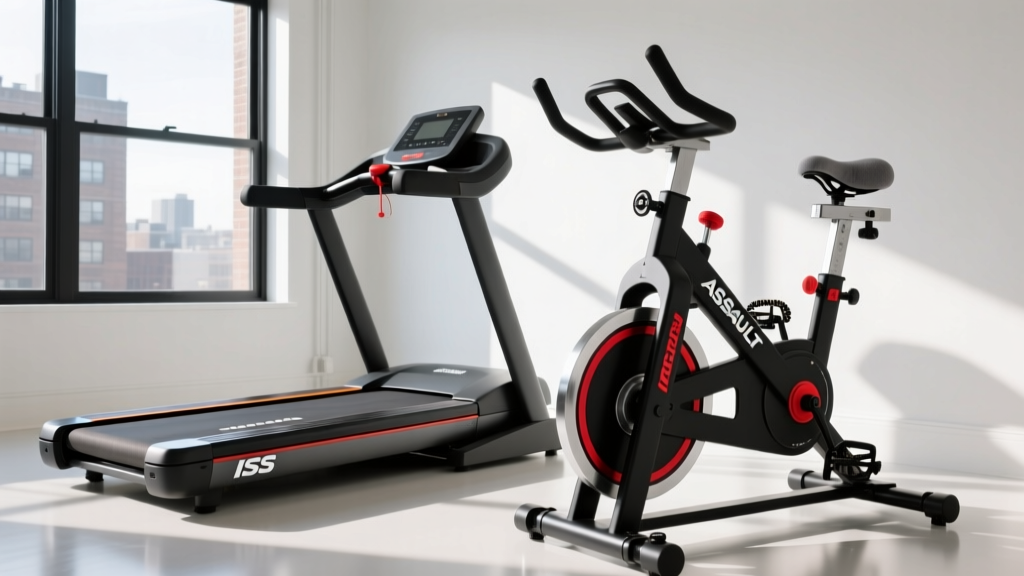
ISS Treadmill vs Air Bike: Assault Maintenance Guide
Compare ISS treadmill upkeep with Assault Air Bike maintenance. Learn drivetrain care, belt tensioning, and longevity tips for 2026 home gym cardio machines.

The Mechanical Divide: ISS Treadmill vs. Air Bike Architecture
When outfitting a high-performance home gym in 2026, the debate often lands on motorized versus wind-resistant cardio. Specifically, owners of an ISS (Integrated Shock System) treadmill often wonder how their strict deck-and-belt maintenance routines compare to the drivetrain upkeep required by air bikes. While an ISS treadmill demands precise 100% silicone lubrication, belt tracking, and motor vacuuming to prevent overheating, the air bike presents a completely different mechanical beast. Without a motor to burn out, air bikes rely entirely on human kinetic energy transferred through chains or belts to spin a massive fan blade.
According to equipment longevity data highlighted by the American Council on Exercise (ACE), wind-resistance cardio machines generally outlast motorized treadmills by 3 to 5 years, provided the drivetrain and sealed bearings are properly maintained. However, neglecting an air bike's chain tension or ignoring carbon dust accumulation on belt-driven models will lead to catastrophic pedal-arm failure. This guide bridges the gap between traditional treadmill care and the rigorous demands of air bike maintenance, focusing heavily on the Assault AirBike lineup versus its top competitors.
Air Bike vs. Assault Bike: The Ultimate Maintenance Comparison
The term 'air bike' is often used interchangeably with 'Assault Bike,' but Assault Fitness is just one pioneer in a market now crowded with alternatives like the Rogue Echo Bike and the Titan Air Bike. Understanding the mechanical differences between these models is the first step in establishing a longevity protocol.
| Model | Drivetrain Type | Maintenance Interval | Common Failure Point | Part Replacement Cost |
|---|---|---|---|---|
| Assault AirBike Classic | 1/2 x 1/8" Roller Chain | Every 3-6 months | Chain stretch / Sprocket wear | $25 - $45 |
| Assault AirBike Elite | Kevlar Belt Drive | Annually (Tension check) | Carbon dust bearing intrusion | $60 - $85 |
| Rogue Echo Bike | Gates Carbon Belt Drive | Annually | Fan hub bearing seizure | $30 - $50 |
| Titan Air Bike | Budget Roller Chain | Monthly | Pedal arm wobble / Chain snap | $15 - $30 |
The National Strength and Conditioning Association (NSCA) notes that high-intensity interval training (HIIT) on air bikes generates immense lateral torque. Budget models like the Titan often suffer from pedal arm wobble within the first year due to inferior crank bearings, whereas the Assault Classic and Elite utilize heavy-duty, sealed cartridge bearings that withstand years of maximal-effort sprints.
Step-by-Step: Assault AirBike Chain & Belt Care
Unlike an ISS treadmill, where you simply apply silicone beneath the walking belt, air bike drivetrains require mechanical adjustment and chemical cleaning. Here is how to service the two most popular Assault models.
Servicing the Assault Classic (Chain Drive)
- Degrease: Remove the plastic chain guard. Spray a biodegradable degreaser (like Simple Green) onto the chain and sprockets. Wipe away the black sludge with a microfiber cloth.
- Inspect for Stretch: Pull the chain away from the front sprocket. If it exposes more than half a tooth, the chain is stretched and must be replaced to prevent sprocket gouging.
- Lubricate: Apply a dry PTFE (Teflon) bicycle chain lube. Avoid wet lubes or WD-40, as they attract dust and pet hair, creating a grinding paste that destroys the sealed bottom bracket.
- Check Tension: The chain should have roughly 1/4 inch of vertical play. Adjust the rear wheel axle nuts to tighten if necessary.
Servicing the Assault Elite & Rogue Echo (Belt Drive)
- Vacuum Carbon Dust: Belt drives do not require lube, but they shed microscopic carbon and rubber dust. Use a shop vac with a brush attachment to clean the fan hub and belt guard quarterly.
- Test Deflection: Press your thumb into the center of the belt. It should yield exactly 10mm to 15mm (about 1/2 inch). A belt that is too tight will prematurely destroy the fan's sealed bearings; too loose, and the belt will skip teeth during heavy sprints.
- Align the Tracking: Spin the fan by hand. If the belt rides up against the inner or outer flange of the sprocket, loosen the idler pulley and adjust the alignment until the belt tracks dead center.
The most common non-mechanical killer of air bikes is sweat intrusion. Saline drips directly from the user's chin onto the fan hub and bottom bracket. Over 12 to 18 months, this saltwater eats through the grease in the sealed bearings, causing a loud grinding noise and eventual seizure. Pro Tip: Drape a towel over the handlebars during use, and wipe down the fan cage and bottom bracket with a damp, fresh-water cloth after every session to neutralize salt deposits.
Longevity Showdown: Treadmill Decks vs. Air Bike Bearings
To put air bike maintenance into perspective, consider the upkeep of a premium ISS treadmill. Treadmill longevity hinges on friction management. If an ISS treadmill deck is not lubricated with 100% silicone every 150 miles (or roughly every 3 months), the friction will draw excess amperage, eventually frying the motor control board—a $250 to $400 repair.
Conversely, air bikes have no motor to fry. Their longevity is dictated by sealed bearings and crank arms. While a treadmill belt might need replacing every 4 years ($80-$120), an air bike's bottom bracket cartridge can last 5 to 7 years before needing a $20 replacement. The trade-off is that air bike consoles are notoriously fragile. The vibration from the massive fan blade can loosen ribbon cables behind the LCD screen. Securing these connections with a dab of dielectric grease during your annual belt/chain service will prevent console blackouts.
5-Year Cost of Ownership Matrix
When deciding between motorized and wind-resistance cardio, the long-term financial footprint is a critical metric for 2026 home gym planners.
| Maintenance Category | ISS Treadmill (5-Year Cost) | Assault AirBike Classic (5-Year Cost) | Assault AirBike Elite (5-Year Cost) |
|---|---|---|---|
| Lubricants / Cleaners | $60 (Silicone) | $30 (PTFE Lube / Degreaser) | $0 |
| Wear Parts (Belts/Chains) | $150 (Walking Belt) | $40 (Replacement Chain) | $75 (Kevlar Belt) |
| Electronic / Motor Repairs | $250 (Control Board Risk) | $0 | $0 |
| Bearing Replacements | $40 (Roller Bearings) | $30 (Bottom Bracket) | $30 (Bottom Bracket) |
| Total Estimated Upkeep | $500 | $100 | $105 |
Expert FAQs on Cardio Machine Longevity
Can I use WD-40 on my Assault AirBike chain?
No. WD-40 is a solvent and water displacer, not a long-term lubricant. Using it will strip the factory grease from the chain's internal rollers, leading to rapid metal-on-metal wear and a noisy, grinding drivetrain. Always use a dedicated dry PTFE or bicycle-specific chain lube.
Why is my air bike squeaking from the handlebars?
Handlebar squeaks are rarely caused by the pivot joints themselves. In 90% of cases, the noise originates from the pivot bushings drying out or the mounting bolts vibrating loose against the steel frame. Remove the handlebar pivot bolts, apply a thin layer of marine-grade lithium grease to the nylon bushings, and torque the bolts to 15 Nm.
How does room humidity affect air bike vs. treadmill lifespan?
High humidity (above 60%) accelerates oxidation on the exposed steel components of an air bike, particularly the fan cage and chain. Treadmills suffer differently; high humidity can cause the MDF deck of a treadmill to warp or swell if the silicone seal is compromised. For both machines, maintaining a climate-controlled room with a dehumidifier is the single best investment for equipment longevity.
More gear to consider
All reviews
XTERRA 6.6 Treadmill vs Stationary Bikes: Budget & Value

Air Bike vs Assault Bike Guide & Precor Treadmill Maintenance

Elliptical vs Treadmill: 2026 Trends & LSRZ Sport Treadmill Data

Under Desk Treadmill for Office Use Review: Space Layouts & How to Turn On Nordic Track Treadmills

Treadmill Motor Size Guide & NordicTrack T10 Treadmill Review
