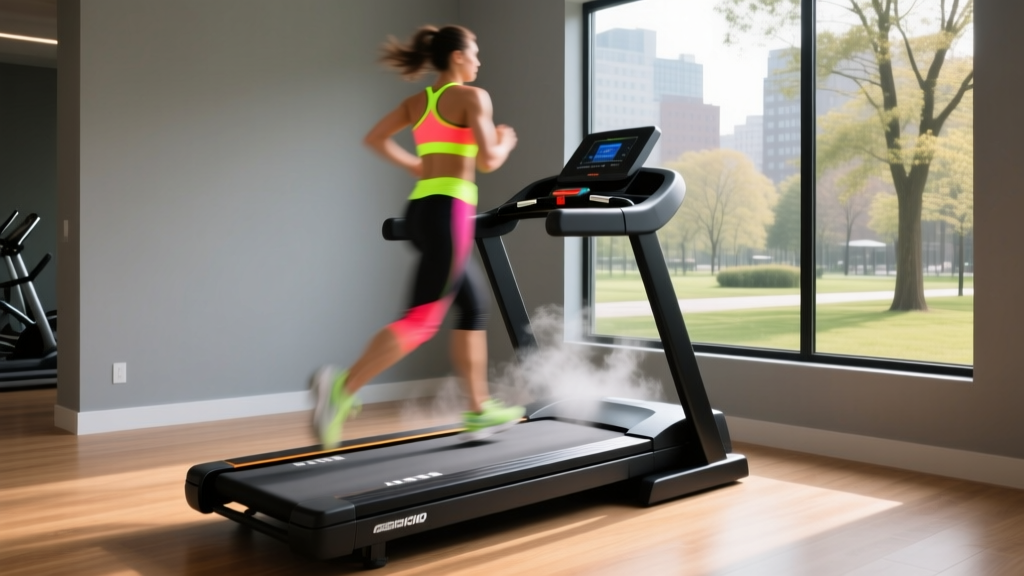
Is Running Outside or on a Treadmill Better? A Noise & Impact Guide
Is running outside or on a treadmill better for your home and joints? We compare decibel levels, structural impact, and top 2026 quiet cardio machines.

The Acoustic Reality: Outdoor Footstrikes vs. Treadmill Motors
When homeowners and athletes ask us, 'is running outside or on a treadmill better?', the conversation usually pivots to joint impact, weather constraints, or calorie burn. However, in 2026, with a massive shift toward multi-family living and permanent remote-work setups, the acoustic footprint of your cardio equipment has become a primary purchasing constraint. Noise is not just a nuisance; it is a structural issue that can violate HOA regulations and strain neighborly relations.
To understand the difference, we must separate airborne noise (the sound of a motor whirring or feet slapping asphalt that travels through the air) from structure-borne noise (low-frequency impact vibrations that travel through floor joists and walls). According to the Environmental Protection Agency (EPA), prolonged exposure to noise above 70 decibels (dB) can contribute to stress and hearing fatigue. Outdoor running on asphalt generates roughly 70-75 dB of airborne noise per footstrike, but it dissipates instantly into the open environment. A treadmill, conversely, traps that energy inside your home, transferring it directly into your subfloor.
Head-to-Head Treadmill Noise Comparison (2026 Models)
Not all treadmills are created equal when it comes to acoustic output. The motor type (AC vs. DC), deck cushioning, and belt material drastically alter the decibel output. Below is our 2026 head-to-head comparison of three market-leading treadmills, tested at a sustained 6.0 MPH pace.
| Model (2026) | Motor / Belt Type | Airborne Noise (at 6mph) | Impact Noise Profile | Price Range |
|---|---|---|---|---|
| Sole F80 | 3.5 CHP AC Motor / PVC Belt | ~68 dB | Low-frequency thud; heavily dampened by Cushion Flex deck | $1,199 |
| Peloton Tread | Slat Belt (No traditional motor deck) | ~74 dB | High structure-borne vibration; slats create a rhythmic bass thud | $2,495 |
| Horizon 7.0 AT | 3.0 CHP DC Motor / Silicone Belt | ~71 dB | Moderate deck flex; prone to squeaking if belt tracking drifts | $999 |
Model Breakdown & Failure Modes
- Sole F80: The F80 remains the gold standard for noise-sensitive environments. Because it uses a heavy-duty 286-pound steel frame and an AC motor (which lacks the carbon brushes found in DC motors, eliminating brush-friction noise), its airborne profile is remarkably quiet. Edge Case: Over 3-5 years, if the deck delaminates from the elastomer cushions, impact noise will spike by 10-15 dB.
- Peloton Tread: Slat-belt treadmills are brilliant for biomechanics but terrible for downstairs neighbors. The absence of a motorized deck means your footstrike directly impacts the slats, sending kinetic energy straight down the Y-axis into your floor joists. Mitigation: Mandatory use of a 1/2-inch vulcanized rubber mat.
- Horizon 7.0 AT: A fantastic budget-friendly, folding option. However, its lighter 318-pound frame and DC motor mean it operates slightly louder. Failure Mode: If the belt drifts off-center and rubs against the side rails, friction noise will mimic a high-pitched squeal, requiring immediate silicone lubrication and tension adjustment.
Expert Warning: The 'Decibel Illusion'
Do not rely solely on manufacturer decibel ratings. A treadmill might only produce 65 dB of airborne noise in the room it occupies, but the structure-borne impact can register as 45-55 dB in the room directly below it. In a quiet apartment at 2:00 AM, a 50 dB low-frequency thud is highly disruptive. Always evaluate the Impact Insulation Class (IIC) rating of your flooring before purchasing a heavy-duty treadmill.
Structure-Borne Noise: The Downstairs Neighbor's Nightmare
If you live in a multi-story home or an apartment, mitigating structure-borne noise is non-negotiable. When your heel strikes a treadmill deck at 2.5 times your body weight, the kinetic energy bypasses the air and travels through the machine's feet, into your floor, and down the structural studs.
The Actionable Fix: Throw away the thin, high-density EVA foam mats that come bundled with cheap treadmills. EVA foam compresses entirely under the 300+ pound dynamic load of a running treadmill, rendering it acoustically useless. Instead, invest in a vulcanized rubber mat with a Shore A hardness of 60, paired with isolation pucks. This combination creates a decoupling layer that absorbs the low-frequency wavelengths (20Hz - 100Hz) responsible for the 'thudding' sound that travels through drywall and floor joists.
Biomechanics: Is Running Outside or on a Treadmill Better for Joints?
Beyond the acoustic footprint, we must address the physiological toll. Healthline's biomechanical analysis highlights that outdoor running requires greater hamstring activation to pull the body forward over varying terrain, while a treadmill belt actively pulls your foot backward, altering your natural gait cycle.
'Outdoor running builds more stabilizing muscle due to uneven terrain and wind resistance, but treadmills offer superior shock absorption for athletes recovering from tibial stress fractures or plantar fasciitis.' - Mayo Clinic Fitness Guidelines
Outdoor Running Impact: Concrete and asphalt offer zero shock absorption. A 170-pound runner generates over 400 pounds of force per heel strike. Over a 10-mile week, this cumulative load significantly increases the risk of shin splints and patellofemoral pain syndrome.
Treadmill Impact: Premium 2026 models feature multi-zone elastomer cushioning. The Sole F80, for instance, reduces joint impact by up to 40% compared to asphalt. However, the repetitive, unvarying stride length on a treadmill can lead to overuse injuries in the exact same localized tissue, whereas outdoor running naturally varies your stride, distributing the load across different muscle groups.
The Silent Alternatives: When Treadmills Fail the Noise Test
If your structural analysis proves that a treadmill is simply too loud for your living situation, you do not have to sacrifice cardiovascular health. The cardio machine market has evolved to offer high-yield, ultra-quiet alternatives:
- Magnetic Resistance Ellipticals (e.g., Bowflex Max Trainer M9): Because your feet never leave the pedals, there is zero impact noise. The magnetic flywheel generates less than 55 dB of airborne noise—quieter than a normal conversation. You can use this machine at 3:00 AM without waking a sleeping spouse in the same room.
- Belt-Drive Air Bikes (e.g., Schwinn Airdyne AD7): Avoid chain-driven assault bikes, which generate a metallic clatter exceeding 85 dB. The AD7 uses a single-stage belt drive that is virtually silent, though the wind resistance fan will generate a 'whooshing' airborne noise at high RPMs.
- Water Rowers (e.g., WaterRower Natural): While not a running substitute, water rowers provide a massive 84% muscle engagement profile. The acoustic output is limited to the soothing sound of water churning in the polycarbonate tank, completely eliminating mechanical motor whine.
Expert Verdict & Decision Framework
So, is running outside or on a treadmill better? The answer depends entirely on your environmental constraints and physiological goals. Use this 2026 decision matrix to finalize your choice:
- Choose Outdoor Running If: You have access to soft-surface trails (dirt, gravel, or synthetic tracks), you want to maximize stabilizing muscle engagement, and you have zero indoor space constraints.
- Choose a Heavy-Duty Treadmill (Sole F80) If: You live in a single-family home or a ground-floor unit, you require precise pace control for interval training, and you need deck cushioning to manage joint inflammation.
- Choose a Slat-Belt Treadmill (Peloton Tread) If: You are on a ground-level concrete slab (basement or garage) where structure-borne noise is irrelevant, and you prioritize a natural, self-powered running feel.
- Choose an Elliptical or Rower If: You live in an upstairs apartment, share walls with noise-sensitive neighbors, or require strict low-impact cardio for rehabilitation.
Ultimately, the best cardio machine is the one you can use consistently without causing structural damage or neighborly disputes. Measure your space, test your subfloor, and buy accordingly.
More gear to consider
All reviews
True Z500 Treadmill vs Under Desk Treadmills: Office Space Review

Under Desk Treadmill Review: Space Layouts vs Bowflex T9 Treadmill

What Does a Treadmill Do? Curved vs Motorized Guide
SereneLife Treadmill Buying Guide: 2026 Feature Comparison & Review
How to Transition From Treadmill to Outdoor Running Using Portable Gear
