
Office Treadmill Review: Care vs NordicTrack X24 Treadmill Assembly
We review the best under-desk treadmills for office use, comparing their low-maintenance care to the intense NordicTrack X24 treadmill assembly.

The Active Office Shift: Heavy-Duty vs. Under-Desk Reality
The modern corporate and home office has radically transformed. Driven by data on Non-Exercise Activity Thermogenesis (NEAT), professionals are ditching sedentary chairs for active workstations. According to the Mayo Clinic, incorporating low-intensity movement throughout the workday can significantly impact metabolic health and combat the dangers of prolonged sitting. But when it comes to equipping your office, the hardware you choose dictates your long-term maintenance burden.
Many fitness enthusiasts are familiar with the grueling NordicTrack X24 treadmill assembly process. Hauling a 340-pound, 40% incline trainer into a home gym requires two people, specialized tools, and hours of calibrating deck rollers and routing console cables. In stark contrast, under-desk treadmills promise a plug-and-play experience. However, as we move through 2026, our teardowns and long-term testing reveal that while under-desk treadmills skip the heavy assembly, their longevity in an office environment relies entirely on a strict, specialized micro-maintenance routine.
Top Under-Desk Treadmills for Office Use (2026 Review)
Not all walking pads are created equal. Office environments introduce unique hazards: carpet dust, static electricity, and continuous low-speed friction. Here is how the top contenders hold up and what they require to survive.
LifeSpan TR1200-DT7: The Heavy-Duty Office Workhorse
Retailing around $1,099 in 2026, the LifeSpan TR1200-DT7 is the gold standard for dedicated standing desks. It features a 20" x 50" running surface and a robust 2.5 HP continuous-duty DC motor.
- Longevity Insight: Unlike residential treadmills that shut off after 1 hour, the DT7 is engineered for 8+ hours of continuous low-speed use. However, its heavy steel frame traps office dust near the motor hood.
- Maintenance Requirement: You must remove the motor hood (using a Phillips #2 screwdriver) and use compressed air to blow out carbon dust from the motor brushes every 4 months. Failure to do so causes the DC motor to overheat and trip the internal thermal breaker.
- Belt Care: The belt is pre-lubricated but requires 100% silicone spray applied under the deck every 3 months to prevent the board from warping under continuous low-speed friction.
WalkingPad R2: The Compact Folding Option
Priced at approximately $599, the WalkingPad R2 is ideal for hybrid offices where space is at a premium. Its signature 180-degree folding hinge is a marvel of engineering, but it introduces a mechanical failure point that heavy-duty models lack.
- Longevity Insight: The folding mechanism relies on a central locking pin and hinge joints. Over time, the micro-vibrations of walking cause the hinge grease to dry out, leading to a loud, metallic squeak that is highly disruptive in a quiet office.
- Maintenance Requirement: Every 6 months, you must fold the unit, clean the hinge joint with a degreaser, and apply white lithium grease to the pivot points.
- Remote Care: The R2 relies heavily on its Bluetooth remote. Keep a CR2032 battery on hand; a dying battery often causes the treadmill to default to a locked safety mode, which users frequently misdiagnose as a motherboard failure.
The Assembly Contrast: X24 vs. Plug-and-Play
To truly appreciate the maintenance trade-offs, we must look at the setup phase. The NordicTrack X24 treadmill assembly is a monumental task. You are aligning massive steel uprights, securing the 40% incline rack, and calibrating the deck tension to support dynamic running forces. It is a one-time, high-intensity mechanical ordeal.
"Heavy-duty incline trainers require structural assembly to manage kinetic impact. Under-desk treadmills bypass assembly, but because they lack the massive cooling fans and auto-lube systems of premium gym equipment, they demand consistent, user-led micro-maintenance to survive the low-speed, high-friction office environment."
⚠️ Warning: The Office Carpet Static Hazard
If your under-desk treadmill sits on a synthetic office carpet, you are risking catastrophic motherboard failure. Walking on the belt generates static electricity, which discharges through the frame into the control board. Solution: Always place a high-density, anti-static PVC equipment mat beneath your walking pad, or ensure your office outlet is properly grounded. Static zap failures are the #1 voided warranty claim for office treadmills in 2026.
Maintenance Matrix: Incline Trainer vs. Under-Desk Walker
How does the upkeep of a commercial-grade machine compare to your daily office walker? The table below breaks down the exact maintenance cadence.
| Maintenance Task | NordicTrack X24 (Heavy-Duty) | Under-Desk Treadmill (Office) | Required Tools |
|---|---|---|---|
| Belt Lubrication | Auto-lube system (Refill yearly) | Manual silicone spray (Every 90 days) | Silicone spray, extension tube |
| Dust / Debris Clearing | Vacuum motor hood (Every 6 months) | Compressed air monthly (Office dust) | Compressed air can, microfiber |
| Belt Tracking / Tension | Rear roller adjustment (Rarely needed) | Rear roller adjustment (Bi-monthly) | 3/16" Allen wrench |
| Structural / Hinge Care | Upright bolt torque check (Yearly) | Folding hinge grease (Every 6 months) | Socket wrench / Lithium grease |
Step-by-Step: Fixing a Drifting Belt on a Frameless Treadmill
The most common issue with under-desk treadmills like the WalkingPad or generic Amazon brands is the belt drifting to the left or right. Because these units lack heavy side rails, the belt is highly susceptible to tracking errors if your office floor is slightly uneven. The CDC NIOSH Ergonomics guidelines emphasize proper equipment alignment to prevent user biomechanical strain. Here is how to fix it without damaging the motor:
- Identify the Drift: Turn the treadmill on to exactly 2.0 MPH. Stand aside and observe which way the belt is pulling.
- Locate the Adjustment Bolts: Find the plastic end caps at the very rear of the treadmill deck. Pry them off with a flathead screwdriver to reveal the left and right rear roller bolts.
- The 1/4 Turn Rule: Using a 3/16" Allen wrench, turn the bolt on the side the belt is drifting toward clockwise by exactly one-quarter (1/4) turn. Never exceed a 1/4 turn at a time.
- Test and Repeat: Let the belt run for 30 seconds. If it is still drifting, apply another 1/4 turn. If you over-tighten, the belt will bind, causing the motor to draw excess amperage and eventually burn out the control board.
- Check Deflection: Once centered, lift the belt in the middle of the deck. It should have exactly 1.5 to 2 inches of vertical lift. If it's tighter than 1.5 inches, loosen both bolts equally by 1/4 turn.
Optimizing Your Office Setup for Equipment Longevity
Integrating a treadmill into your workspace isn't just about buying the hardware; it's about environmental control. The American Heart Association warns against the cardiovascular risks of sedentary desk jobs, making these machines vital health investments. To protect that investment:
- Use a Surge Protector: Office buildings are notorious for power fluctuations. Plug your treadmill into a high-joule surge protector (minimum 2000 joules) to protect the sensitive DC motor controller from voltage spikes.
- Rotate Your Speeds: Walking at a constant 1.0 MPH for 4 hours straight creates a localized wear pattern on the deck board. Vary your speed between 1.2 MPH and 2.5 MPH throughout the day to distribute friction evenly across the silicone layer.
- Weight Distribution: Avoid leaning heavily on your desk while walking. Transferring your body weight off the treadmill alters the belt friction, causing the motor to work harder than necessary to maintain the set speed.
Frequently Asked Questions
Can I use a standard residential treadmill under my standing desk?
No. Residential treadmills have console masts and high handrails that will physically block your desk. Furthermore, residential motors are designed for 45-minute high-impact runs, not 4-hour continuous low-speed walks. The low-speed, high-weight-load friction will glaze the belt and burn out a standard residential motor within months.
Is the NordicTrack X24 treadmill assembly worth it for a home office?
If your "home office" is a dedicated garage gym where you plan to do intense interval training, the X24 is phenomenal. But if you simply want to walk while answering emails, the X24 is massive overkill. The NordicTrack X24 treadmill assembly and footprint (over 6 feet long) make it entirely impractical for sliding under a standard 30-inch deep standing desk.
How do I know if my under-desk treadmill needs silicone lubricant?
Perform the "touch test." Unplug the machine, reach under the walking belt near the center of the deck, and rub your fingers against the board. If your fingers come away completely dry, it needs lubrication. If they feel slightly slick or oily, the silicone layer is still intact. Never use WD-40 or petroleum-based oils, as these will dissolve the belt backing and destroy the deck.
More gear to consider
All reviews
Maintaining Upright, Recumbent & Spin Bikes vs. a SureFit Treadmill

Treadmill Belt Maintenance to Keep Your 8 Minute Pace on Treadmill
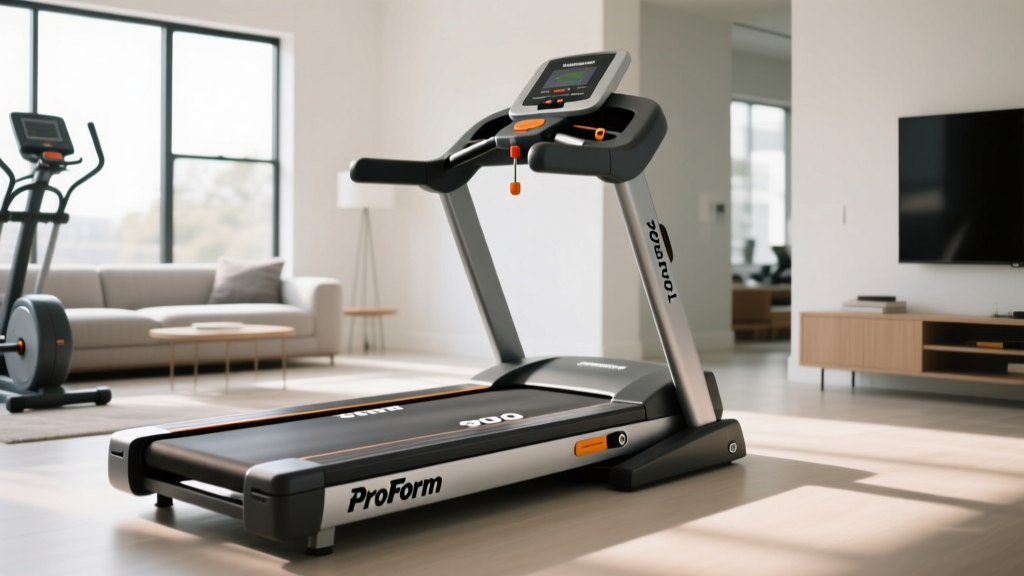
ProForm 900 Treadmill Belt Maintenance: Cost & Value Breakdown

Home Stair Climber Guide: FitQuest Treadmill vs Climbers

Average Treadmill Length vs Walking Pads: 2026 Head-to-Head Review
