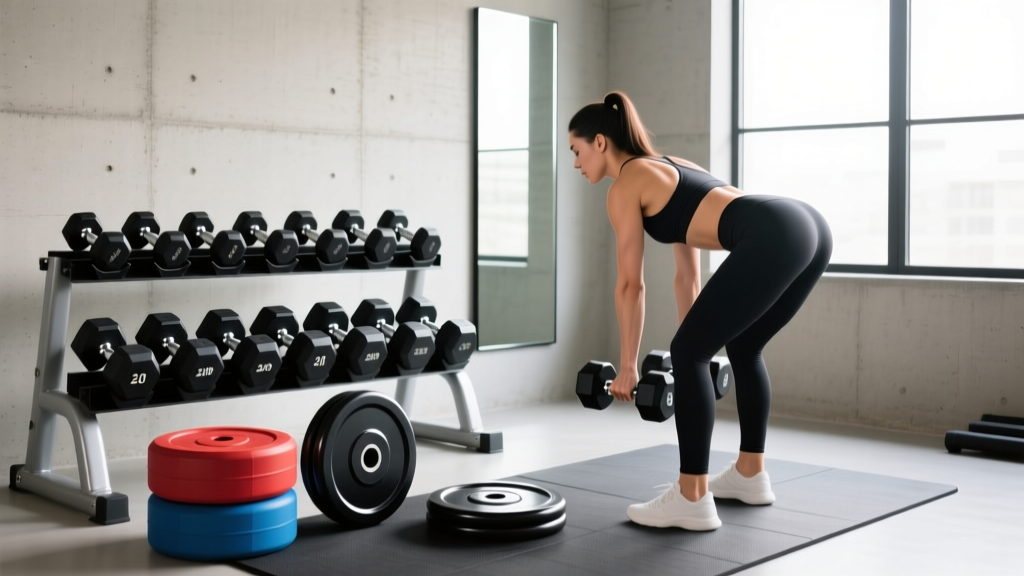
Rubber Hex vs Urethane Dumbbells: Care & Storage Rack Longevity
Compare rubber hex vs urethane dumbbells for longevity. Learn cleaning protocols, handle maintenance, and how a proper storage rack prevents edge damage.

The Material Science of Dumbbell Degradation
When outfitting a garage gym or commercial facility, the debate between rubber hex dumbbells and premium urethane dumbbells usually centers on upfront costs and odor. However, from a maintenance and longevity perspective, these two materials age, fail, and respond to environmental stressors in fundamentally different ways. Understanding the polymer science behind your free weights is the first step in protecting your investment.
Rubber hex dumbbells are typically manufactured using a blend of recycled and virgin rubber, vulcanized under heat and pressure. They generally sit around an 85 on the Shore A durometer hardness scale. While cost-effective (averaging $1.50 to $2.50 per pound), the hexagonal geometry creates six distinct stress points. When dropped, kinetic energy concentrates on these sharp corners, leading to micro-tears that eventually result in 'corner chunking' over a 3-to-5-year lifespan.
Urethane dumbbells, on the other hand, are cast from high-density polyurethane elastomers. Premium models, such as the REP Fitness Urethane Dumbbells, boast a Shore A hardness of 88 to 92, combined with vastly superior tensile strength. Urethane absorbs and disperses impact energy laterally rather than concentrating it, making it highly resistant to tearing, UV degradation, and the infamous 'gym rubber' off-gassing smell. Priced between $3.00 and $5.00 per pound, urethane is a long-term asset that requires a different, more nuanced maintenance approach to justify the premium.
Expert Insight: The number one cause of premature urethane failure is not dropping—it is core delamination caused by extreme temperature fluctuations during storage. Never store urethane dumbbells in uninsulated sheds where temperatures swing below freezing and back to high heat within 24 hours.Why Your Dumbbell and Kettlebell Storage Rack is a Maintenance Tool
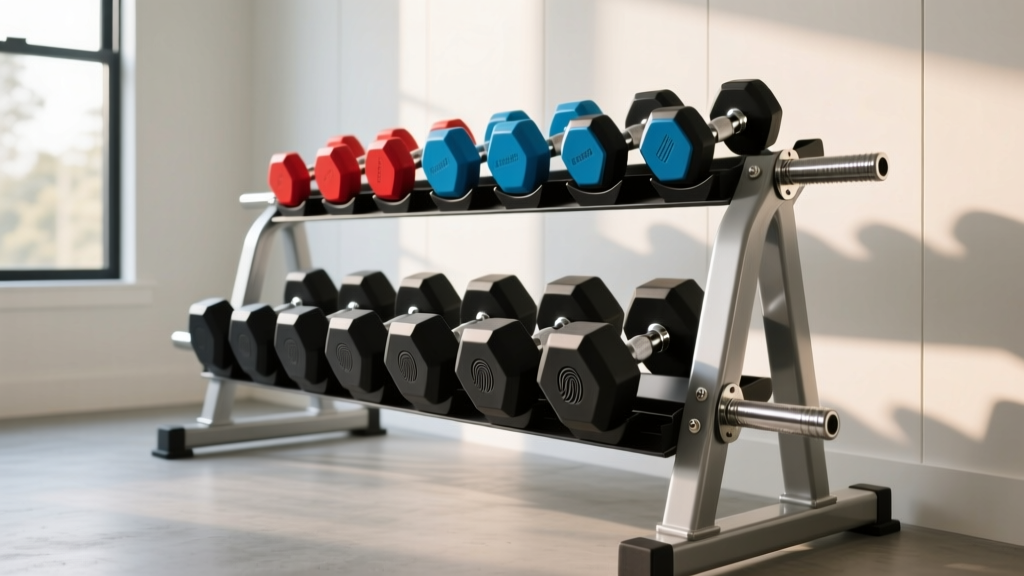
Most lifters view storage as a mere organizational convenience. In reality, a properly engineered dumbbell and kettlebell storage rack is a critical piece of maintenance equipment that directly dictates the lifespan of your free weights. Leaving weights scattered on a concrete floor or improperly stacked on wooden shelves accelerates degradation through three primary mechanisms:
- Edge Compression and Flat-Spotting: When heavy rubber hex dumbbells are left resting on a single corner on an uneven concrete floor for weeks at a time, the constant static load can cause permanent deformation, or 'flat-spotting,' on the rubber edge. A tiered steel rack distributes this weight properly.
- Moisture Wicking and Handle Rust: Garage floors are notorious for sweating due to hydrostatic pressure and temperature differentials. Dumbbells left on the floor wick moisture directly into the steel handles via capillary action, causing internal rust that eventually bleeds out and seizes the weight heads. Elevating them on a rack eliminates floor moisture transfer.
- Abrasive Racking Damage: If your storage rack features bare steel shelves, the daily friction of sliding weights on and off will strip the rubber coating and scuff the urethane. Look for racks with UHMW (Ultra-High Molecular Weight) polyethylene liners or thick rubber padding on the shelf lips to act as a sacrificial buffer.
Material-Specific Cleaning Protocols
Sweat is highly corrosive. It contains urea, lactic acid, and sodium chloride (salt). When left to dry on dumbbell handles and weight heads, the salt accelerates oxidation, while the acids break down the chemical bonds in lower-grade rubbers. However, the cleaning agents you use must be matched to the specific polymer of your dumbbells.
| Cleaning Agent | Rubber Hex Dumbbells | Urethane Dumbbells | Notes & Ratios |
|---|---|---|---|
| Distilled White Vinegar | ✔ Safe | ✔ Safe | Mix 10:1 (Water:Vinegar). Neutralizes sweat pH without degrading polymers. |
| Simple Green (All-Purpose) | ✘ Avoid | ⚠ Caution | High alkalinity strips natural oils from rubber, causing premature drying and cracking. |
| Mild Dish Soap (Dawn) | ✔ Safe | ✔ Safe | Use 3 drops per 16oz warm water. Excellent for removing chalk and sebum. |
| Acetone / Bleach | ✘ Destructive | ✘ Destructive | Causes immediate micro-cracking and destroys the structural integrity of the coating. |
Troubleshooting Rubber 'Blooming'
If your rubber hex dumbbells develop a white, powdery residue, do not panic. This is not mold; it is a chemical process called 'blooming.' During vulcanization, sulfur and protective waxes are added to the rubber compound. Over time, or when exposed to temperature drops, these waxes migrate to the surface to protect the rubber from ozone. To remove it, wipe the dumbbells with a dry microfiber cloth and apply a very light mist of 303 Aerospace Protectant. This restores the dark finish and provides a UV-blocking barrier.
Addressing Urethane Scuffs
Urethane is incredibly tough, but it can pick up scuff marks from steel racks or chalky hands. Never use abrasive chemical solvents to clean urethane. Instead, use a melamine sponge (commonly known as a Magic Eraser) lightly dampened with water. The micro-abrasive structure of the melamine lifts the scuff marks out of the urethane's pores without compromising the material's structural density.
Handle and Knurling Preservation: The Hidden Failure Point
According to facility maintenance guidelines outlined by the National Strength and Conditioning Association (NSCA), the handle is often the first component of a dumbbell to fail, long before the weight heads degrade. The maintenance protocol depends entirely on the handle's finish:
- Hard Chrome Handles: Chrome provides excellent rust resistance but is porous at a microscopic level. Wipe down with a dry brush after every use to remove chalk from the knurling. Once a month, apply a light coat of 3-in-One oil or WD-40 Specialist Corrosion Inhibitor, let it sit for 10 minutes, and wipe it completely dry. Leaving it wet will attract dust and create a grinding paste in the knurling.
- Black Oxide Handles: Black oxide offers a raw steel feel but provides almost zero inherent rust protection. These must be wiped down immediately after use and oiled bi-weekly. If you live in a high-humidity environment (above 60% relative humidity), black oxide handles on dumbbells are not recommended unless you are religious about maintenance.
- Stainless Steel Handles: Found on premium urethane dumbbells, stainless steel requires the least maintenance. A simple wipe-down with a damp cloth and occasional brushing with a nylon-bristle brush to clear chalk from the knurling valleys is all that is required to maintain its structural integrity and grip.
Environmental Controls for Garage Gyms
The environment in which your weights live when not in use dictates their ultimate lifespan. Garages and sheds are hostile environments for fitness equipment. To maximize the longevity of both rubber hex and urethane dumbbells, implement the following environmental controls:
- Humidity Management: Keep ambient humidity below 55%. If you live in a humid climate, run a dehumidifier in your gym space. For enclosed storage cabinets, place large, rechargeable silica gel desiccant packs to absorb trapped moisture.
- UV Protection: Direct sunlight is the enemy of rubber hex dumbbells. UV rays break down the carbon bonds in the vulcanized rubber, causing it to become brittle and crumble. Ensure your dumbbell and kettlebell storage rack is positioned away from south-facing windows or garage doors that receive direct afternoon sun.
- Temperature Stability: As mentioned, extreme cold makes polymers brittle. Dropping a 50-pound urethane dumbbell that has been sitting in a 20°F (-6°C) garage dramatically increases the risk of the urethane shattering or separating from the internal steel core. Allow weights to acclimate to room temperature before heavy, high-impact drop sets.
"The difference between a set of dumbbells that lasts 3 years and one that lasts 15 years rarely comes down to how often they are lifted. It comes down to how they are cleaned, how they are racked, and the humidity of the room they sleep in."
Summary: Choosing and Maintaining Your Arsenal
If you are on a strict budget and willing to commit to a rigorous monthly cleaning and oiling routine, rubber hex dumbbells offer phenomenal value. However, you must accept that the hexagonal corners will eventually round and degrade, especially if dropped on bare concrete. If you want a 'buy it for life' set that requires minimal chemical maintenance, resists UV and ozone damage, and protects your floors, urethane is the undisputed champion. Regardless of your choice, pairing your free weights with a high-quality, padded storage rack and adhering to pH-neutral cleaning protocols will ensure your equipment outlasts your fitness goals.
More gear to consider
All reviews
Plate Care: Bumper vs Iron for Barbell or Dumbbell Bench Press

Loadable Dumbbells vs Finger Dumbbells: Budget Breakdown

EZ Bar vs Straight Bar Care for Your Dumbbell Functional Workout
How to Store and Maintain Your Set Dumbbell Rack for Longevity

Barbell Collar Types: Safety Guide for American Dumbbells Users