
Olympic vs Standard Plates: Fueling Your Leg Exercise with Dumbbells
Compare Olympic vs standard weight plates for your home gym. Discover how your choice impacts barbell lifts and every leg exercise with dumbbells.

The Infrastructure Dilemma: 2-Inch vs. 1-Inch Ecosystems
Building a home gym in 2026 requires more than just buying the cheapest iron you can find on marketplace apps. When outfitting your squat rack, the debate between Olympic and standard weight plates is the foundational decision that will dictate your equipment ecosystem for the next decade. While beginners often gravitate toward the lower upfront cost of standard plates, experienced lifters know that the 2-inch Olympic standard is non-negotiable for heavy, progressive overload.
But this decision extends far beyond the barbell. The plate infrastructure you choose directly influences the quality, safety, and effectiveness of your accessory work—specifically when you transition to a targeted leg exercise with dumbbells. In this head-to-head comparison, we break down the biomechanical limits, cost-per-pound economics, and ecosystem lock-in effects of Olympic versus standard plates, helping you build a leg-day arsenal that won't fail you when the weight gets heavy.
Head-to-Head Specifications Matrix
Before diving into the nuanced failure modes of each setup, let us look at the raw data comparing the two dominant weight plate formats available on the market today.
| Feature | Olympic Plates (2-Inch) | Standard Plates (1-Inch) |
|---|---|---|
| Center Hole Diameter | 50mm (approx. 2 inches) | 25mm (approx. 1 inch) |
| Average Cost Per Pound | $1.80 – $3.50 / lb | $0.90 – $1.40 / lb |
| Max Barbell Load Capacity | 800 – 1,500+ lbs | 200 – 350 lbs (sleeve yielding risk) |
| Dumbbell Ecosystem | Fixed Hex, Urethane, Premium Adjustables | Spinlock, Threaded Collar, Cast Iron |
| Resale Value Retention | High (70-90% of retail) | Low (Scrap or giveaway pricing) |
Olympic Plates: The 2-Inch Heavy-Duty Standard
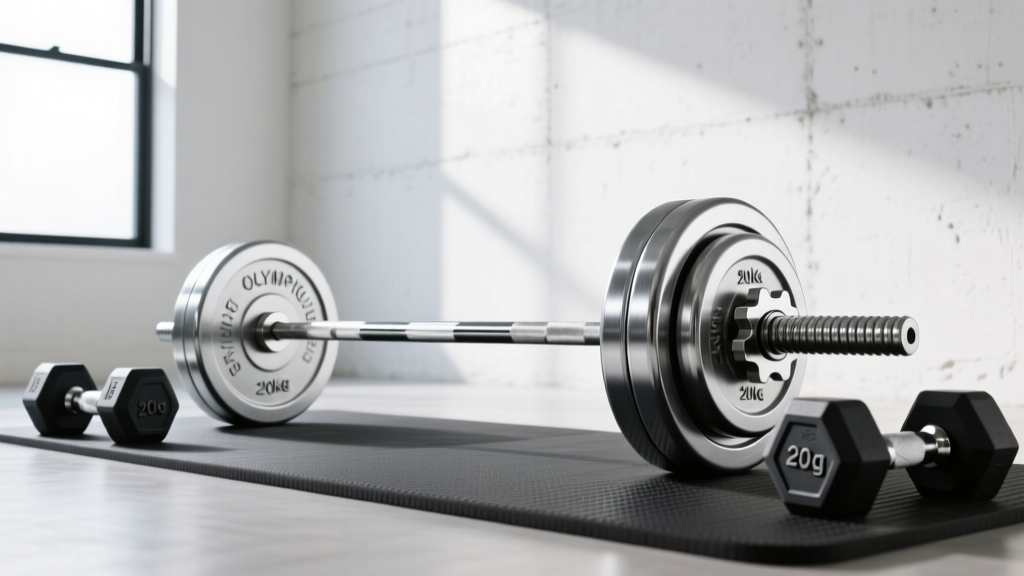
Olympic plates are the undisputed standard in commercial gyms, powerlifting federations, and serious home garages. The 50mm center hole accommodates heavy-duty steel barbell sleeves that resist bending and deformation under extreme loads.
Top Tier Models and Pricing
- Rogue Fleck Plates: Featuring a proprietary fleck color pattern and dead-blow acoustic dampening, these are currently priced around $2.50 per pound. They are machined to a strict 1% weight tolerance.
- Titan Fitness 2.0 LB Precision Bumpers: An excellent budget-to-mid-range Olympic option, offering virgin rubber and stainless steel inserts for roughly $2.15 per pound when bought in sets.
- Rep Fitness Urethane Grips: Priced at a premium $3.50+ per pound, these offer virtually indestructible housings and ergonomic handles for plate-loaded machines.
Standard Plates: The 1-Inch Budget Entry
Standard plates, featuring a 1-inch (25mm) center hole, are typically cast from lower-grade iron and sold in big-box sporting goods stores. They are designed for light-duty home use, rehabilitation, and beginners who are not yet moving significant weight.
The Hidden Costs of 'Cheap' Iron
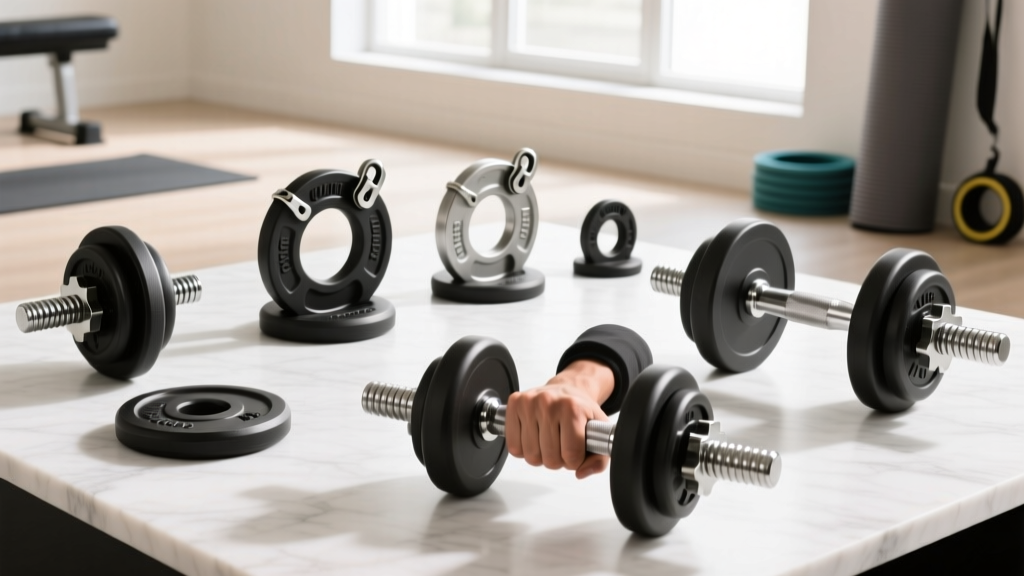
While you can easily find standard cast iron sets on clearance for $0.90 per pound, the hidden cost lies in the equipment required to use them. Standard plates require 1-inch dumbbell handles and threaded spinlock collars. These collars are notorious for loosening mid-set, and the 1-inch dumbbell sleeves are physically too short to hold more than 40-50 lbs of standard plates per hand, artificially capping your progressive overload potential.
Expert Insight: The biggest mistake new home gym owners make is buying a 300lb standard plate set, only to realize 14 months later that their 1-inch barbell is permanently bent from heavy squats, forcing them to sell the entire lot at a massive loss to upgrade to Olympic.
The Ecosystem Effect: How Plate Choice Impacts Your Leg Exercise with Dumbbells
You might be wondering why an article about weight plates is discussing dumbbells. The answer lies in ecosystem lock-in. Your choice of barbell plates almost always dictates the type of dumbbells you will purchase to complement your routine.
When you are programming a demanding leg exercise with dumbbells—such as heavy Bulgarian split squats, walking lunges, or Romanian deadlifts (RDLs)—the physical integrity of your dumbbells is just as critical as your barbell plates.
The Spinlock Failure Mode
Lifters who buy standard plates usually default to standard 1-inch spinlock dumbbells to save money. However, performing a dynamic leg exercise with dumbbells using spinlock handles introduces severe safety and performance edge cases:
- Collar Slippage: During the eccentric (lowering) phase of a dumbbell RDL, the vibration and angle changes can cause threaded spinlock collars to back off. A loose 25lb plate shifting on a 1-inch sleeve can crush toes or ruin the biomechanics of the lift.
- Sleeve Length Limitations: Standard 14-inch dumbbell handles simply do not have the sleeve length to accommodate more than two or three standard 1-inch plates. If your leg exercise with dumbbells requires 60 lbs per hand, standard spinlocks physically cannot hold the weight.
- Bulk and Clearance: Standard plates have a massive diameter relative to their weight. Trying to perform a deficit reverse lunge (a highly effective leg exercise with dumbbells) is nearly impossible with standard plates because the bulky iron hits the floor before your knee reaches full depth.
The Olympic Advantage for Accessory Work
Conversely, lifters who invest in Olympic plates from day one typically allocate their remaining budget toward high-quality fixed hex dumbbells or premium adjustable sets (like PowerBlock or Nuobell). Fixed urethane hex dumbbells feature compact, dense heads that allow for deep ranges of motion during split squats and lunges. Because they do not rely on threaded collars, there is zero risk of plates shifting during explosive movements. The Olympic mindset prioritizes dense, secure iron, which translates directly to safer, more effective accessory leg work.
Long-Term ROI and Resale Value
Let us look at the financial reality of upgrading in 2026. The used fitness equipment market is highly liquid for Olympic gear, but virtually dead for standard gear.
- Olympic ROI: If you buy a 300lb set of Rogue Echo Bumpers for $750 and decide to upgrade to competition-calibrated steel plates three years later, you can reliably sell the used bumpers on local marketplaces for $600–$650. Your net cost of ownership is roughly $100 over three years.
- Standard Depreciation: A $300 standard plate set has almost zero resale demand among serious lifters. You will likely end up donating it to a local school or giving it away for free just to reclaim the floor space in your garage.
Final Verdict: Which Should You Buy?
If your current squat max is under 150 lbs, you have zero plans to ever lift heavier, and you strictly use your equipment for light circuit training, a standard plate set will technically suffice. However, for 95% of home gym builders, Olympic plates are the only logical investment.
By committing to the 2-inch Olympic standard, you future-proof your barbell lifts, eliminate the risk of sleeve yielding, and open the door to purchasing the dense, secure hex dumbbells required to safely execute any heavy leg exercise with dumbbells. Skip the 1-inch detour, invest in a quality Olympic plate set from Rogue, Titan, or Rep Fitness, and build a leg-day foundation that will last a lifetime.
More gear to consider
All reviews
Top Loadable Dumbbells for the Incline Dumbbell Press Exercise

Best Loadable Pec Fly Dumbbells: 2026 Hands-On Review
Barbell Clamp Types & How to Work Out Triceps with Dumbbells

Barbell Collar Types & How to Deadlift with Dumbbells Safely
Beyond Arm Workouts with Dumbbells at Home: Barbell Guide
