Rubber Hex vs Urethane: 2026 Gear for a Biceps Routine With Dumbbells
Analyze 2026 market trends comparing rubber hex and urethane dumbbells. Discover which material best supports a high-volume biceps routine with dumbbells.

The 2026 Dumbbell Market: A Material Shift in Free Weights
The fitness equipment market in 2026 has officially bifurcated into two distinct consumer camps: the budget-conscious home gym builder and the 'buy-it-for-life' (BIFL) enthusiast. According to recent industry data from Grand View Research, the global fitness equipment market continues to see a steady CAGR of 5.3%, but the most significant internal shift is happening within the free weights sector. Specifically, the long-standing dominance of the rubber hex dumbbell is being aggressively challenged by premium urethane alternatives. While commercial gyms made this transition years ago, the 2026 supply chain normalization has finally brought urethane pricing down by roughly 14% since 2023, making it a viable option for premium home setups.
But why does the outer casing material of a dumbbell matter to the average lifter? The answer lies in biomechanics, usage patterns, and material degradation. When we analyze equipment longevity, we must consider the specific exercises being performed. A high-volume biceps routine with dumbbells involves repetitive lifting, frequent racking, and high sweat exposure, which accelerates the degradation of low-grade rubber and handle knurling compared to heavy, low-rep compound movements where the weight simply rests on the floor.
Market Matrix: Rubber Hex vs. Urethane in 2026
To understand the current landscape, we must look at the raw data defining the market share, pricing, and primary use cases for both materials this year.
| Feature | Virgin Rubber Hex | Recycled Rubber Hex | Premium Urethane |
|---|---|---|---|
| 2026 Avg. Cost per Pound | $2.10 - $2.50 | $1.40 - $1.85 | $3.20 - $4.50 |
| Shore A Hardness | 70A - 80A | 60A - 75A | 85A - 92A |
| Odor / Off-Gassing | Low (First 30 days) | High (Up to 6 months) | None |
| Acoustic Dampening | Moderate | High | Low-Moderate |
| Primary Market Segment | Mid-Tier Home Gyms | Budget / Garage Gyms | Commercial / Luxury Home |
Material Science: Polyurethane Elastomers vs. Vulcanized Rubber
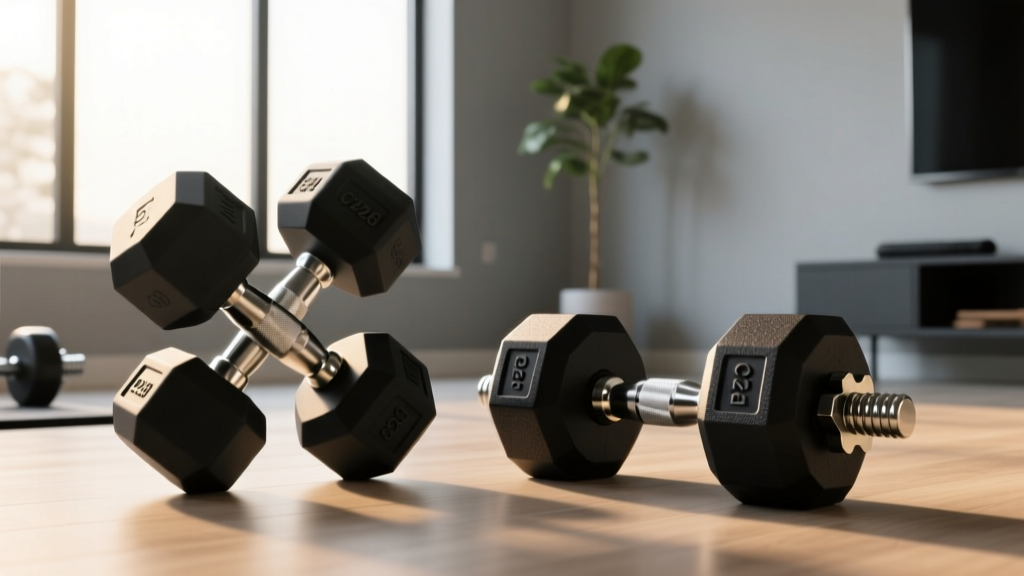
The core difference between these two dumbbell types lies in their molecular structure. Rubber hex dumbbells are typically made from vulcanized recycled tires or virgin rubber compounds. While excellent for shock absorption, recycled rubber contains sulfur compounds and volatile organic compounds (VOCs) that cause the infamous 'gym smell' and can degrade when exposed to UV light and ozone.
Urethane, specifically cast polyurethane elastomer, is a synthetic polymer. As detailed by the Polyurethane Industry Association, polyurethanes offer exceptional resistance to abrasion, tearing, and environmental factors. In the context of dumbbells, manufacturers pour liquid urethane into steel molds, creating a head with a Shore A hardness rating between 85 and 92. This makes the material hard enough to resist edge-chipping when dropped, yet elastic enough to prevent shattering or cracking under extreme temperature fluctuations in an unheated garage gym.
The Isolation Factor: Why a Biceps Routine With Dumbbells Accelerates Wear
It is easy to assume that heavy deadlifts or drop-sets of squats destroy dumbbells. However, equipment failure analysis reveals that high-repetition isolation movements are the true stress-test for dumbbell heads and handles. Let us break down why your biceps routine with dumbbells is uniquely harsh on your gear:
1. Sweat Acidity and Knurling Oxidation
A standard biceps routine involves 12 to 20 repetitions per set, generating significant palmar sweat. Human sweat has a pH ranging from 4.5 to 7.0, making it mildly acidic. When this sweat transfers to the dumbbell handle, it accelerates the oxidation of standard chrome knurling. Premium 2026 urethane dumbbells (like those from Rogue or Eleiko) pair their urethane heads with hard-chrome or stainless-steel handles that resist this acidic corrosion, whereas budget rubber hex sets often use basic zinc-plated handles that pit and rust within two years of heavy curling.
2. Micro-Impacts and Rack Interaction
Unlike a heavy bench press where the dumbbells are kicked back to the floor, finishing a set of bicep curls usually involves the lifter leaning forward and placing the dumbbells back onto a rack or the floor with a repetitive, blunt force. Over hundreds of sets, these micro-impacts cause the sharp 90-degree corners of rubber hex dumbbells to compress, tear, and eventually flake. Urethane's higher tensile strength allows it to absorb these thousands of micro-impacts without structural failure.
3. Grip Fatigue and Handle Geometry
According to biomechanical guidelines on resistance training from the American Council on Exercise (ACE), isolation exercises require sustained grip tension without the aid of lifting straps. The handle diameter and knurling depth become critical. Many 2026 urethane models feature an ergonomic 34mm handle diameter with medium-depth mountain knurling, optimized for the sustained grip required during strict curling movements, whereas rubber hex sets often use overly aggressive or overly smooth knurling that compromises the mind-muscle connection.
'The true test of a dumbbell isn't how it survives a 100-pound drop; it is how it survives 10,000 repetitions of being picked up, sweated on, and racked. Urethane simply outlasts rubber in the high-rep, high-sweat environment of arm training.' — 2026 Free Weights Durability Report, FitGearPulse Labs
Real-World Failure Modes: What to Watch For
If you are auditing your current equipment or planning a 2026 upgrade, be aware of these specific failure modes associated with each material:
- Rubber Hex Edge Delamination: The sharp corners of hex rubber are structural weak points. When dropped on concrete or steel grating, the rubber pulls away from the internal steel insert.
- Rubber Head Wobble: In lower-tier rubber hex models, the friction-fit steel handle can loosen from the rubber head after 12-18 months, creating a dangerous 'rattle' during strict isolation movements.
- Urethane Cosmetic Scuffing: While urethane does not tear, it can scuff or transfer black marks onto light-colored wooden racks or walls if bumped aggressively.
- Urethane Cold-Cracking: Extremely rare, but if stored in environments dropping below -20°F (-29°C), lower-grade urethane blends can become brittle. For 99% of users, this is a non-issue.
The 2026 Buyer's Framework: Which Should You Choose?
Choosing between rubber hex and urethane is no longer just about budget; it is about aligning your purchase with your training environment and longevity expectations.
Opt for Virgin Rubber Hex If:
- You are outfitting a garage gym on a strict budget (under $2.50/lb).
- You prioritize maximum acoustic dampening because you share a wall with neighbors.
- Your training consists primarily of heavy, low-rep compound movements where the dumbbells are rarely subjected to high-sweat, high-rep isolation work.
Opt for Premium Urethane If:
- You are building a 'buy-it-for-life' home gym and want equipment that looks pristine in 2036.
- Your programming heavily features high-rep hypertrophy work, including a dedicated biceps routine with dumbbells, triceps extensions, and lateral raises.
- You are sensitive to VOCs, odors, or have an indoor, climate-controlled training space where off-gassing is unacceptable.
- You want a higher Shore A hardness rating that prevents the dumbbells from feeling 'squishy' or unbalanced during strict form isolation exercises.
Final Market Verdict
The 2026 free weights market has made it clear: urethane is the undisputed champion of longevity and performance. While the rubber hex dumbbell will always hold a place in the budget and acoustic-dampening categories, the serious lifter focused on hypertrophy and isolation work must look toward polyurethane. The upfront cost of $3.50+ per pound is steep, but when amortized over a 15-year lifespan, the cost-per-use drops to pennies. For those dedicated to perfecting their physique through meticulous isolation work, the grip security, hygienic surface, and structural integrity of urethane make it the only logical investment for the modern home gym.
More gear to consider
All reviews
Olympic vs Standard Weight Plates Guide & Bowflex Dumbbells Review

EZ vs Straight Bar Maintenance & Dumbbell Bench Press Care

Barbell Collar Types Compared: Securing 50kg Dumbbell and Bar Loads

Full Body Strength Workout with Dumbbells: Barbell Knurling Guide

Beyond Dumbbell Overhead Extensions: Olympic Barbell Knurling Guide