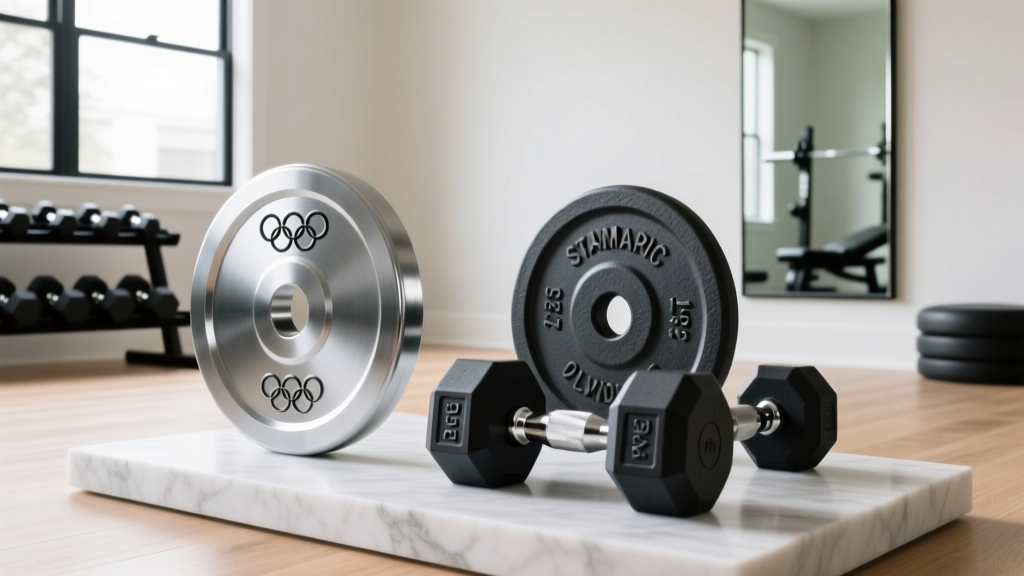
Rubber Hex vs Urethane Dumbbells: Value Guide for 3 lbs Dumbbells & Up
Compare rubber hex and urethane dumbbells with our budget breakdown. Discover the true cost per pound, from 3 lbs dumbbells to heavy commercial sets.

The Material Showdown: Budgeting for Your Dumbbell Rack
Building a comprehensive free weight rack in 2026 requires a strategic approach to capital allocation. Whether you are outfitting a commercial facility or a high-end garage gym, the debate between rubber hex dumbbells and urethane dumbbells remains the most critical purchasing decision you will face. While most buyers focus on the heavy tiers (50 to 100 lbs), a true value analysis must account for the entire spectrum, including the often-overlooked micro-weights used for rehabilitation and warm-ups. In this guide, we break down the polymer science, long-term depreciation, and exact cost-per-pound metrics to help you decide which material offers the best return on investment, starting from the entry-level 3 lbs dumbbells all the way to heavy commercial pairs.
Key Takeaway: Rubber hex dumbbells offer an unbeatable entry price for light-to-medium weights, but urethane’s superior resistance to sweat, UV light, and physical degradation makes it the undisputed champion for long-term value in heavy-use environments.Polymer Science: What Are You Actually Paying For?
To understand the price gap, you must first understand the chemical composition of the outer shells. The price difference is not arbitrary; it is rooted in material engineering and manufacturing complexity.
Rubber Hex (Styrene-Butadiene and Recycled Blends)
Most budget-friendly rubber hex dumbbells are manufactured using a blend of recycled rubber and virgin styrene-butadiene rubber (SBR). These typically register between 60A and 75A on the Shore durometer scale, giving them a slightly softer, more pliable feel. The primary advantage of rubber is its low production cost. However, the vulcanization process often leaves behind sulfur compounds, resulting in the notorious “new tire” off-gassing smell (Volatile Organic Compounds, or VOCs) that can plague poorly ventilated home gyms for months.
Urethane (Polyurethane Elastomers)
Urethane is a premium synthetic elastomer that registers much higher on the hardness scale, typically between 85A and 95A. According to equipment specifications from Rogue Fitness, high-grade urethane is virtually odorless, highly resistant to abrasion, and impervious to the acidic pH of human sweat. The molding process for urethane requires more precise temperature controls and higher-grade raw materials, which inherently drives up the wholesale cost.
The Micro-Weight Dilemma: Sourcing 3 lbs Dumbbells
When buyers think of hex dumbbells, they usually picture heavy deadlifts and presses. But what about the ultra-light tier? Finding dedicated hex-shaped 3 lbs dumbbells is surprisingly difficult, as most manufacturers reserve the hex-casting molds for weights 5 lbs and above. When 3 lbs dumbbells are produced in rubber or urethane, they are usually part of specialized studio racks, physical therapy kits, or barre sets.
Why do 3 lbs dumbbells matter in a budget analysis? Because they serve a highly specific, non-negotiable biomechanical purpose. The American Academy of Orthopaedic Surgeons (AAOS) frequently recommends starting rotator cuff and shoulder rehabilitation protocols with 1 to 3 lb weights to isolate the supraspinatus and infraspinatus muscles without overloading the joint capsule.
- The Rubber Hex 3 lb Problem: A 3 lb rubber hex dumbbell has a disproportionately large physical footprint. The hex mold requires a minimum volume of material to maintain structural integrity around the steel handle, making a 3 lb rubber hex feel bulky and awkward for delicate isolation work.
- The Urethane Advantage: Because urethane is denser and can be molded with thinner walls while maintaining a 90A hardness, a 3 lb urethane dumbbell can be cast in a more compact, ergonomic profile, making it vastly superior for physical therapy and high-rep endurance work.
2026 Market Pricing: Cost-Per-Pound Breakdown
Let’s look at the hard data. The following table illustrates the average market pricing for commercial-grade rubber hex dumbbells versus premium urethane dumbbells across four distinct weight tiers. Prices reflect average direct-to-consumer retail costs in 2026, excluding freight shipping.
| Weight Tier | Rubber Hex (Price / Pair) | Urethane (Price / Pair) | Rubber Cost Per Lb | Urethane Cost Per Lb |
|---|---|---|---|---|
| 3 lbs (Rehab/Studio) | $18.00 | $32.00 | $3.00 / lb | $5.33 / lb |
| 15 lbs (Light Accessory) | $34.00 | $65.00 | $1.13 / lb | $2.16 / lb |
| 35 lbs (Hypertrophy) | $68.00 | $145.00 | $0.97 / lb | $2.07 / lb |
| 50 lbs (Heavy Compound) | $95.00 | $210.00 | $0.95 / lb | $2.10 / lb |
Analyzing the Data
The most glaring insight from this breakdown is the inversion of value at the ultra-light tier. For 3 lbs dumbbells, the cost-per-pound is astronomically high for both materials due to the fixed costs of the steel handle, knurling, and molding setup. However, as you move into the 15 lb to 50 lb tiers, rubber hex becomes incredibly cost-efficient, dropping below $1.00 per pound. Urethane stabilizes at roughly $2.00 to $2.15 per pound. If you are buying a full 5-50 lb set (in 5 lb increments), a rubber hex set will cost approximately $850, while a comparable urethane set will push past $1,800.
Long-Term Depreciation and Failure Modes
Upfront cost is only half of the value equation. True value analysis requires calculating the depreciation and failure rates of the equipment over a 5-to-10-year lifecycle.
Rubber Hex Failure Modes
- UV and Ozone Degradation: If your gym has large windows or is located in a high-humidity, high-sunlight area, rubber will eventually dry rot. Micro-fissures form on the hex edges, leading to flaking and permanent aesthetic damage.
- Edge Chipping: While the hex shape prevents rolling, the corners bear the brunt of impact when dropped on hard rubber flooring. Over 1,000+ drops, rubber hex corners will compress, tear, and eventually chip away, exposing the inner steel core.
- Sweat Acidity: Human sweat has a pH ranging from 4.5 to 7.0. Over years of use, the acidic nature of sweat breaks down the sulfur bonds in cheap rubber, leaving a permanently greasy, tacky residue on the handles and heads that cannot be cleaned off.
Urethane Failure Modes
- Cosmetic Scratching: Urethane is incredibly tough, but it is not immune to sharp impacts. Dropping a urethane dumbbell onto a jagged surface will result in a permanent gouge or scratch. However, unlike rubber, it will not tear or propagate into a larger crack.
- Cold Brittleness: Polyurethane elastomers become rigid and susceptible to shattering in extreme cold. If you are outfitting an unheated garage gym in a climate where temperatures regularly drop below 40°F (4°C), dropping urethane dumbbells can result in catastrophic cracking.
"In a high-traffic commercial environment, the premium paid for urethane is typically recouped within 36 months simply by avoiding the replacement costs of chipped, degraded rubber hex dumbbells." — FitGearPulse Equipment Lifecycle Report
The FitGearPulse Decision Matrix
How do you translate this data into a purchasing decision? Use this framework to allocate your budget effectively.
Buy Rubber Hex If:
- You are outfitting a home gym on a strict sub-$1,000 budget for a full rack.
- Your gym is climate-controlled, kept out of direct sunlight, and has low humidity.
- You primarily use dumbbells for controlled hypertrophy work (e.g., chest presses, rows) rather than high-impact drop sets.
- You are willing to tolerate a 2-to-4 week off-gassing period to let the VOC smell dissipate.
Buy Urethane If:
- You are purchasing specialized micro-weights (like 3 lbs dumbbells) for physical therapy, where a compact, odorless, and hygienic profile is non-negotiable.
- You run a commercial gym, CrossFit box, or personal training studio where equipment is dropped frequently and exposed to high volumes of sweat.
- You want a “buy it for life” set that will look brand new a decade from now with zero maintenance.
- You have an unheated garage gym in a freezing climate (provided you commit to never dropping them on concrete when cold).
Final Verdict: Maximizing Your Free Weight Budget
The choice between rubber hex and urethane is ultimately a choice between short-term capital preservation and long-term asset retention. For the vast majority of home gym owners, a high-quality rubber hex set offers an unbeatable cost-per-pound ratio that allows you to buy heavier weights sooner. However, if your training regimen relies heavily on the precision of ultra-light 3 lbs dumbbells for rehab, or if you demand a pristine, odorless, and indestructible aesthetic, urethane justifies its 100% price premium. Evaluate your environment, respect the polymer science, and invest in the material that aligns with your decade-long fitness goals.
More gear to consider
All reviews
Incline Dumbbell Chest Setup: Power Rack vs Squat Rack Mistakes
Olympic vs Standard Plates & Dumbbell Walking Lunge Alternative

NordicTrack 55 lb Select a Weight Dumbbells to Olympic Barbell Guide

Power Rack vs Squat Rack vs Stand: Dumbbell Only Leg Workout Guide
EZ Curl Bar vs Straight Bar: Space Layouts for a Boxing Dumbbell Workout