
Olympic vs Standard Plates: Mistakes in Different Dumbbell Lifts
Avoid critical errors in different dumbbell lifts. Our troubleshooting guide compares Olympic vs standard plates for loadable handles, safety, and grip.

The 1-Inch vs 2-Inch Divide: Why It Matters for Loadable Handles
Building a home gym often leads to a critical crossroads: investing in fixed-weight dumbbells or opting for loadable dumbbell handles. While loadable handles are a cost-effective way to scale your weight, they introduce a massive variable into your training—the weight plates. The fitness industry is split between two primary weight plate types: Standard (1-inch / 25mm hole) and Olympic (2-inch / 50mm hole). Confusing these two, or mismatching them to the wrong handle and exercise, is one of the most common equipment errors we see at FitGearPulse.
When you are performing different dumbbell lifts, the outer diameter of the plate, the thickness of the sleeve, and the type of collar used drastically alter the biomechanics and safety of the movement. A standard 1-inch cast iron plate behaves entirely differently than a 2-inch Olympic urethane bumper during a dynamic snatch or a heavy floor press. In this troubleshooting guide, we break down the exact failure modes of mixing up Olympic and standard plates, and how to fix your setup for optimal performance in 2026.
⚠️ Safety Warning: Never attempt to force a 1-inch standard plate onto a 2-inch Olympic sleeve using tape or adapters for heavy pressing movements. The lateral shift creates a severe center-of-gravity imbalance, which can lead to wrist sprains or the plate sliding off mid-lift.Troubleshooting Different Dumbbell Lifts by Plate Type
The physical dimensions of your plates dictate how the dumbbell moves through space. Here is how standard and Olympic plates impact specific movement patterns, along with troubleshooting steps for common mistakes.
1. Dumbbell Bench & Floor Presses (Clearance & Grip Issues)
The Mistake: Using large-diameter Olympic plates (like 45lb bumpers) on loadable handles for dumbbell bench presses, resulting in the plates colliding at the top of the concentric phase.
The Fix: Olympic plates, particularly rubber-coated ones, have a massive outer diameter (up to 17.5 inches for heavier fractions, though 10lb and 25lb tech plates are smaller). When loaded onto an Olympic handle, the overall width of the dumbbell can exceed 20 inches. During a dumbbell bench press, this causes the medial sides of the dumbbells to clash before your pecs fully contract.
Troubleshooting Step: For pressing movements, switch to Standard 1-inch cast iron or urethane-coated plates. Standard plates are significantly narrower in profile. Alternatively, if you must use Olympic handles, purchase 10lb and 25lb Olympic 'tech plates' (which share the smaller diameter of a 45lb plate but are thinner) or use specialized narrow-grip Olympic handles like the Rogue Loadable Dumbbell Handles, which feature a tapered sleeve to keep the weight closer to your grip.
2. Dumbbell Snatches & Cleans (Drop Safety & Shock Absorption)
The Mistake: Performing explosive Olympic-style dumbbell snatches with standard 1-inch cast iron or vinyl-filled plates, then dropping the weight from overhead.
The Fix: Standard plates are not engineered for vertical drops. The 1-inch hole leaves very little structural material around the center ring. When a 50lb standard dumbbell is dropped from shoulder height during a missed snatch, the cast iron frequently cracks, or the vinyl casing splits, leaking sand or concrete onto your gym floor. Furthermore, standard spinlock collars often vibrate loose during the violent first-pull phase of a clean.
Troubleshooting Step: Reserve Olympic rubber or urethane bumper plates for any lift where the dumbbell leaves the shoulder joint or is dropped. The 50mm hub of an Olympic bumper is reinforced with a steel insert designed to absorb high-impact kinetic energy. Pair these with an Olympic handle utilizing a snap-ring or heavy-duty spring collar to guarantee the plates do not shift mid-air.
3. Goblet Squats & Unilateral Lunges (Ergonomics & Clanking)
The Mistake: Holding a heavy loadable dumbbell vertically for Goblet Squats, only to find the handle sleeve digging into your clavicle or the plates clanking loudly against each other.
The Fix: The grip thickness and sleeve length dictate the ergonomics of anterior-loaded lower body lifts. Standard 1-inch handles usually feature a thinner grip (around 28mm-30mm) and shorter sleeves. This makes them easier to hold vertically against the chest, but limits the load to roughly 40-50 lbs before the plates crowd your hands. Olympic handles feature a 50mm sleeve and often a thicker 35mm+ knurled grip. Holding a 50mm sleeve vertically against the sternum is highly uncomfortable.
Troubleshooting Step: For heavy unilateral work like Bulgarian Split Squats or Lunges, let the Olympic dumbbell hang at your side (suitcase carry position) rather than holding it at the chest. If you prefer the Goblet position, utilize standard 1-inch handles with grip-enhancing chalk to manage the thinner bar diameter, as recommended by grip-strength protocols outlined by the National Strength and Conditioning Association (NSCA).
Collar Failure Modes: Spinlock vs. Spring Clamps
The plate type dictates the collar type, and the collar type is where most home-gym accidents occur during dynamic lifts.
- Standard Spinlock Collars: These rely on threaded steel rods. Failure Mode: The threads strip if over-tightened, or the collar vibrates loose during repetitive movements like dumbbell rows. Never use spinlocks for movements involving rapid deceleration.
- Olympic Spring Clamps / Clamping Collars: These use high-tension steel springs or aluminum lever-locks. Failure Mode: Cheap spring collars lose tension over time. Always use lever-lock collars (like the OSO Pro or Rogue HG Collars) for heavy loadable dumbbell work to ensure the 2-inch plates are clamped flush against the sleeve flange.
Troubleshooting Matrix: Quick Fixes for Common Plate Mistakes
| The Mistake | Affected Lifts | Troubleshooting Fix |
|---|---|---|
| Plates clashing at the top of the press | DB Bench, Floor Press, Arnold Press | Switch to narrower Standard 1-inch plates, or use smaller-diameter Olympic tech plates (10s/25s). |
| Plates cracking upon impact | DB Snatches, Cleans, High Pulls | Upgrade to Olympic Urethane Bumpers; abandon cast-iron standard plates for drops. |
| Collars vibrating loose mid-set | DB Rows, Shrugs, Farmer Walks | Replace standard star-nuts with locking lever-collars or high-tension Olympic spring clamps. |
| Handle digging into chest/shoulders | Goblet Squats, Thrusters | Switch to a Standard 1-inch handle for anterior loading; use Olympic handles for suitcase holds. |
2026 Buying Guide: Matching Plates to Your Lifts
If you are outfitting your gym this year, understanding the market pricing and availability of these plate types is crucial for budgeting. The supply chain issues of the early 2020s have fully stabilized, meaning urethane and precision-cast iron are more accessible than ever.
For the Standard 1-Inch Setup (Best for Pressing & Isolation)
Standard setups are cheaper and ideal for strict, controlled movements where the dumbbell does not touch the floor or clash with another bell.
- Handles: Titan Fitness 1' Spinlock Dumbbell Handles (Approx. $49/pair). Great knurling, but limited to 50-60 lbs max capacity per handle due to sleeve length.
- Plates: CAP Barbell 1-Inch Urethane-Coated Plates. Urethane is vastly superior to rubber in 2026, as it does not off-gas foul odors and resists UV degradation if your gym is in a garage.
For the Olympic 2-Inch Setup (Best for Explosive & Heavy Unilateral Work)
Olympic setups bridge the gap between dumbbells and barbells, allowing you to load well over 100 lbs per hand safely.
- Handles: Rogue Loadable Dumbbell Handles (Approx. $135/pair). Featuring a 196,000 PSI steel shaft and a tapered sleeve, these solve the 'clashing plates' issue better than almost anything else on the market.
- Plates: Rogue Echo Bumpers or Hi-Temp Recycled Rubber Plates. According to extensive gear testing by publications like BarBend, pairing loadable Olympic handles with fractional bumper plates (2.5lb, 5lb, 10lb) provides the most versatile micro-loading system for heavy unilateral rows and lunges.
"The ultimate troubleshooting step for loadable dumbbells isn't just about the weight—it's about the spatial geometry of the plates. Mastering the difference between 1-inch and 2-inch setups allows you to manipulate the center of mass, completely changing the stimulus of different dumbbell lifts without buying a single new piece of equipment."
Final Verdict: Stop Sabotaging Your Lifts
Mistaking the utility of Olympic plates for the compactness of Standard plates is a fast track to ruined equipment and compromised form. By auditing your loadable dumbbell setup and matching the plate type to the specific biomechanical demands of your lifts—using Standard for tight-clearance presses and Olympic for high-impact drops—you will drastically improve both safety and muscle recruitment. Evaluate your current plate inventory, swap out the mismatched collars, and train with the precision your programming demands.
More gear to consider
All reviews
Gym Layouts: Bumper vs Iron Plates & Stiff Legged Deadlift Dumbbells
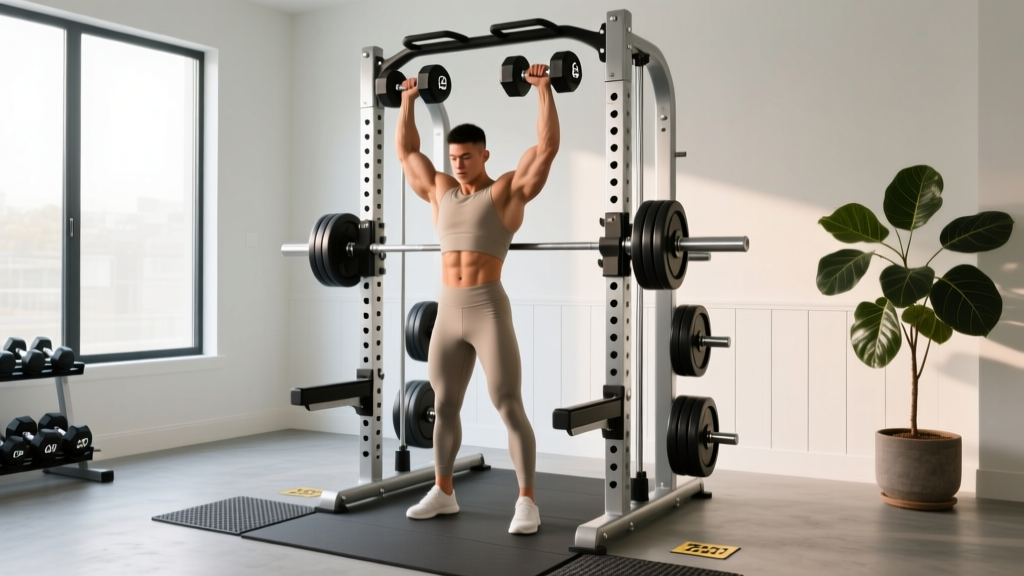
Rack Layouts for the Standing Overhead Press with Dumbbells

Olympic vs Standard: Which Muscle Must Contract to Lift the Dumbbell?

Best Neoprene Dumbbells for the Single Arm Tricep Kickback (2026)

Dumbbell Rack Layouts: Storing Iron and Wrist Straps for Dumbbells
